
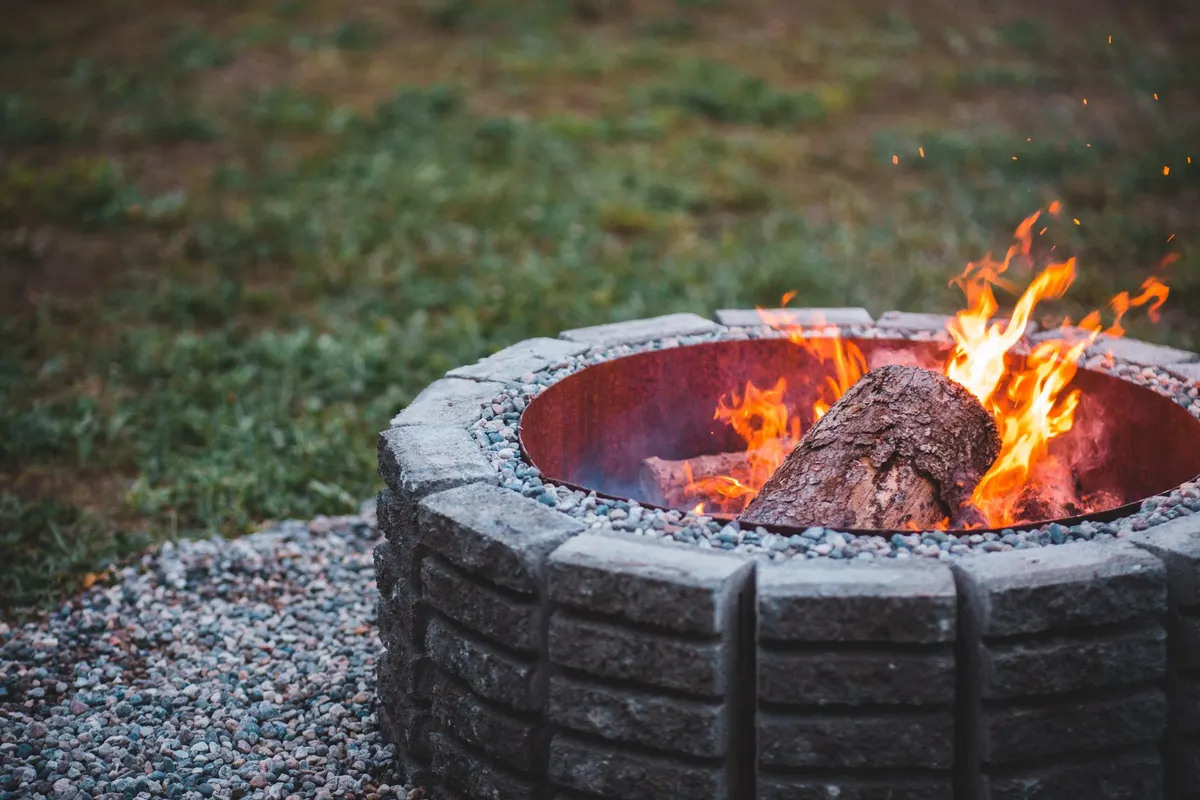
How to Build a Paver Fire Pit (Code-Conscious DIY)
Build a safe, code-compliant paver fire pit in a weekend. Includes a material calculator, burn-area rules, and step-by-step assembly for a 36-inch ring.
Difficulty
intermediateTime
6–8 hours
Est. cost
$120–$250
Tools you'll need
- Cordless drill driver — our review
- Rubber mallet
- 4-foot level
- Tape measure
- Shovel
- String line and stakes
- Plate compactor (rental)
Materials
- 36-inch diameter steel fire ring insert
- 60 concrete pavers (12x6x2 inches each) for the ring
- 4 cubic feet of paver base gravel
- 2 cubic feet of leveling sand
- 6 square feet of weed barrier fabric
- Landscape spikes
Step-by-step
- 1
Call 811 and plan the location
Before digging, call the national 811 hotline to mark buried utilities on your property. Choose a level spot at least 10 feet from any structure, fence, or property line and 20 feet from overhanging tree branches. The ground must drain away from the pit, not toward it.
- 2
Mark and excavate the pad
Drive a stake at the center point of your pit and tie a string at 30 inches from the stake. Use the string to draw a 60-inch diameter circle on the ground. Dig out the entire circle to a depth of 6 inches, sloping the floor slightly outward so water does not pool. Remove all sod and roots.
- 3
Compact the base and lay gravel
Spread 3 inches of paver base gravel evenly across the excavation, wet it lightly with a hose, and compact it with the plate compactor. Add another 3 inches of gravel, compact again. The surface should be level and solid, with no footprints when you walk on it.
- 4
Spread leveling sand
Pour the leveling sand over the compacted gravel and screed it smooth with a straight 2x4 against screed rails (two lengths of pipe set at the correct height). The sand layer should be about 1 inch thick. Avoid walking on the sand once it is leveled.
- 5
Lay the first course of pavers
Set the steel fire ring insert in the center of the sand bed. Arrange concrete pavers side by side around the ring, tapping them down with the rubber mallet. Each paver should touch its neighbor and the ring. Check level across the ring and adjust sand as needed.
- 6
Stack additional courses
Stack the remaining three courses of pavers in a running bond pattern (stagger the vertical joints between courses). Each paver is 2 inches thick; four courses give an 8-inch tall wall. Use the level after each course and tamp with the rubber mallet to settle.
- 7
Backfill and finish
Push soil around the outside of the paver ring to slope away from the pit and prevent erosion. Compact the soil lightly. Sweep polymeric sand or fine gravel into the paver gaps to lock them. Place the weed barrier fabric under the ring insert and pin it with landscape spikes.
Planning and codes: the first (and most important) step
A paver fire pit is one of the most satisfying weekend projects you can add to your outdoor space, but it also comes with real safety and code responsibilities. Before you buy a single paver, call 811 to have utilities marked, measure the required setbacks for your locality, and check if a permit is needed. Many homeowners skip this step, only to be told by the fire marshal to move the pit after it is built. The typical rule: at least 10 feet from any combustible structure and 20 feet from overhanging branches. Your municipality may be stricter, so ask first.
The location should be level and well-drained. Avoid low spots where water collects. The finished pit is about 5 feet in diameter (the surrounding paver pad is 60 inches across) with a 36-inch fire ring. Position it where you have room for seating and traffic flow, and where the prevailing wind will not blow smoke directly into your house or a neighbor's yard.
Materials and dimensions: what you need
The materials list above is for a standard 36-inch diameter fire ring with a 60-inch paver pad (one row of pavers around the ring). If you want a larger or smaller pad, adjust the number of pavers accordingly. The pavers are 12 inches long by 6 inches wide by 2 inches thick, and you need 60 to create a full single ring of 60 pavers (the circumference of a 60-inch diameter circle is about 188 inches, and each paver contributes 12 inches of perimeter, so about 60 pavers per ring). Four courses give an 8-inch tall wall. The steel ring is critical: never build a paver fire pit without an insert, as the heat will crack standard pavers directly exposed to flames.
The base gravel and sand quantities are estimated for a 60-inch diameter circle, 6 inches deep. A plate compactor rental is optional but strongly recommended for a stable, level base that will not settle unevenly. Weed barrier fabric prevents grass and weeds from growing through the paver gaps.
Step-by-step assembly
Step 1: Call 811 and plan the location
This cannot be overstated. A call to 811 is free and mandatory in most states before any digging deeper than 12 inches. Even if your pit is only 6 inches deep, underground lines can be closer to the surface than you think. After marking, choose a level area that meets local setbacks and has good airflow. Mark the center with a stake.
Step 2: Mark and excavate the pad
Tie a string to the center stake at a length of 30 inches (half the 60-inch diameter). Draw a circle in the soil. Dig inside this circle to a depth of 6 inches. The floor should be slightly sloped outward to drain water away from the pit. Remove all sod, roots, and rocks. If the soil is clay-heavy, you may need to grade the floor more aggressively to prevent standing water.
Step 3: Compact the base and lay gravel
Spread paver base gravel in two lifts: 3 inches of gravel, wet and compact, then another 3 inches, wet and compact. Use a plate compactor for best results. The compacted gravel surface must be level and firm. An easy check: walk on it; if you leave footprints, it is not compacted enough.
Step 4: Spread leveling sand
Set screed rails (two lengths of 1-inch PVC pipe or EMT conduit) on top of the gravel, spaced apart. Pour sand between them and screed it flat with a straight 2x4. The sand layer should be about 1 inch thick. Remove the rail carefully and fill the groove with sand. Avoid stepping on the leveled sand.
Step 5: Lay the first course of pavers
Place the steel ring insert at the center. Starting at one point, set pavers in a circle around the ring, tight against it and each other. Use a rubber mallet to tap them flush and level. Check level across the ring and add or remove sand under individual pavers as needed. Complete the full circle.
Step 6: Stack additional courses
Stack the next three courses of pavers directly on top of the first, staggering the joints so no two vertical gaps align (a running bond pattern). Each course is 2 inches high; four courses give an 8-inch wall. Tap each paver into place with the mallet and check level after each full course. The wall should be plumb and even.
Step 7: Backfill and finish
Shovel soil around the outside of the paver ring, sloping it away from the pit at a gentle angle. Compact the soil lightly with a hand tamper. Sweep polymeric sand into the paver gaps to lock them together (follow the product instructions for activation). Finally, cut a piece of weed barrier fabric to sit under the steel ring and extend a few inches outward, pin it with landscape spikes, and place the ring on top. This prevents weeds from growing up inside the ring.
Common mistakes to avoid
The biggest mistake is skipping the 811 call or ignoring local codes. A second common error is using regular clay bricks or cheap concrete pavers not rated for fire. These can crack or explode from heat stress. Another is failing to compact the base adequately, leading to uneven settling and a crooked pit. Also, many builders forget to slope the paver pad away from the pit, causing water to pool around the ring and accelerate rusting. Finally, do not light a fire immediately after building; let the sand and gravel settle for at least a day.
Safety
Safety is the top priority when building or using a fire pit. Always keep a fire extinguisher, garden hose, or bucket of sand nearby when the pit is lit. Never leave a fire unattended. Do not use gasoline, lighter fluid, or other accelerants to start or intensify the fire. Use only seasoned, dry firewood; wet or green wood creates more smoke and can pop and throw sparks. Never burn trash, cardboard, or plywood; the ashes may contain harmful chemicals and the smoke is toxic. Keep children and pets at least 3 feet from the pit at all times. Store ash in a metal container with a lid, away from structures. Inspect the steel ring annually for rust or holes and replace it if compromised.
Advertisement
Frequently asked questions
- What are the typical setback requirements for a fire pit?
- Most U.S. codes require a fire pit to be at least 10 feet from any combustible structure, including houses, decks, fences, and sheds, and 20 feet from overhanging tree branches. Some local amendments may require 15 or 25 feet. Always check with your local fire marshal or building department before starting.
- Can I use any paver for a fire pit?
- No. Use only concrete pavers rated for high heat. Standard red clay bricks can spall or explode from moisture expansion when heated. Look for fire-rated concrete pavers or fire brick. The steel ring insert protects the pavers from direct flames, but the surrounding material must still handle radiant heat.
- Do I need a permit for a DIY paver fire pit?
- Permit requirements vary by jurisdiction. Many towns and counties require a permit for any permanent outdoor fire feature, especially those attached to the ground or built with a foundation. A portable fire pit may be exempt. Call your local building department with the dimensions and depth of excavation to confirm.
- How long does a paver fire pit last?
- With proper base preparation and maintenance, a paver fire pit can last 5 to 10 years or more. The steel ring may rust through eventually and may need replacement. Avoid burning wet or resinous wood (like pine) that creates more ash and acidic residue. Sweep out ash after each use and inspect the pavers annually for cracks.
- Can I build a paver fire pit without a steel ring insert?
- We strongly recommend a steel ring insert. The ring contains the fire, separates the pavers from direct heat, and creates a clean circular shape. Without a ring, the pavers will eventually degrade from thermal shock and the fire may shift them out of place.