
The Best Cordless Drills of 2026
The best cordless drill for most people in 2026 is the Makita XFD131 — a light, well-balanced 18V LXT kit that pairs genuinely useful 440 in-lbs of torque with a 3.0Ah battery and a 30-minute charger in the box. If you already own a battery platform, buy the drill that matches it; if you are starting fresh, the Bosch GSR18V-400 is the cheapest sound entry point and the Milwaukee 2904 is the pick when you need real power and occasional masonry.
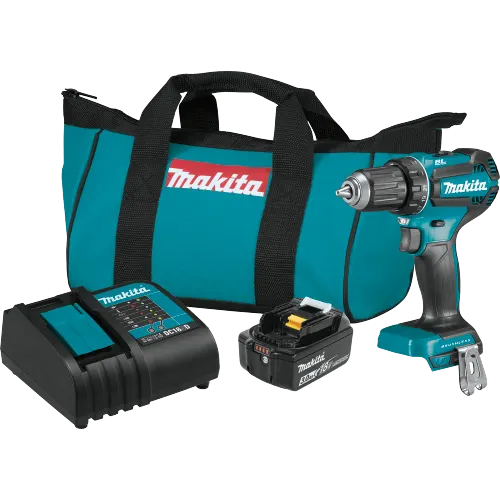
Makita XFD131 18V LXT Driver-Drill Kit
The XFD131 is the most balanced complete kit here: 440 in-lbs of torque, a 3.8 lb body that stays neutral in the hand, and a 3.0Ah battery plus 30-minute rapid charger in the box. It is not the strongest drill in this guide, but it covers nearly every fastening and hole-drilling job a remodeler or serious homeowner runs into, and the LXT platform backing it is the broadest on the market. For anyone on or joining Makita, it is the easiest recommendation of the five.
- ✓ 440 in-lbs handles deck screws and 1-inch spade bits without bogging
- ✓ Kit includes a 3.0Ah battery and 30-minute rapid charger — real runtime out of the box
- ✓ Light and neutrally balanced at 3.8 lbs with the battery installed
- ✓ Backs onto the 300-plus-tool Makita 18V LXT platform
- ✗ 440 in-lbs trails the Milwaukee 2904 on stubborn lag bolts
- ✗ Usually costs more than a comparable Bosch GSR18V-400 kit
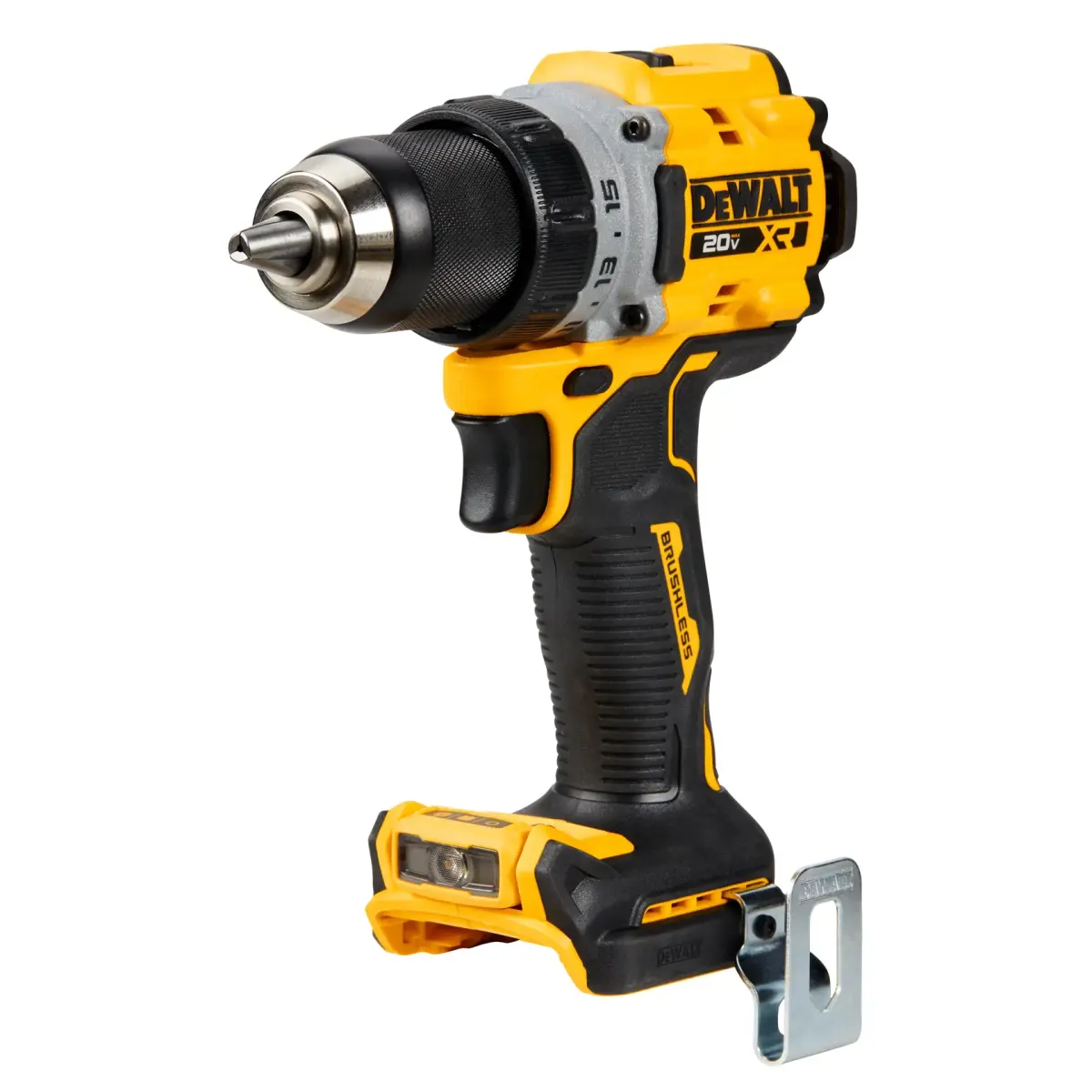
DeWalt DCD800 20V MAX XR Drill
The DCD800 is the most compact and lightest tool in this guide — a 2.82 lb bare tool with a short 6.37-inch head and a 0–2,000 RPM top gear that bores large holes faster than the Makita. Its three-mode 70-lumen LED is the best worklight of the group, which matters when you spend the day in dark cavities and panels. DeWalt does not publish a torque figure, but in the hand it tracks the Makita and Bosch, and now that the DCD801 has launched the DCD800 frequently sells at a discount.
- ✓ Lightest bare tool here at 2.82 lbs with a short 6.37-inch head
- ✓ Fast 0–2,000 RPM top gear clears large holes quickly
- ✓ Best worklight in the group — three-mode 70-lumen LED
- ✓ Often discounted now that the DCD801 has superseded it
- ✗ DeWalt does not publish an in-lbs torque figure
- ✗ The DCD800D2 kit bundles two small 2.0Ah packs rather than one larger battery
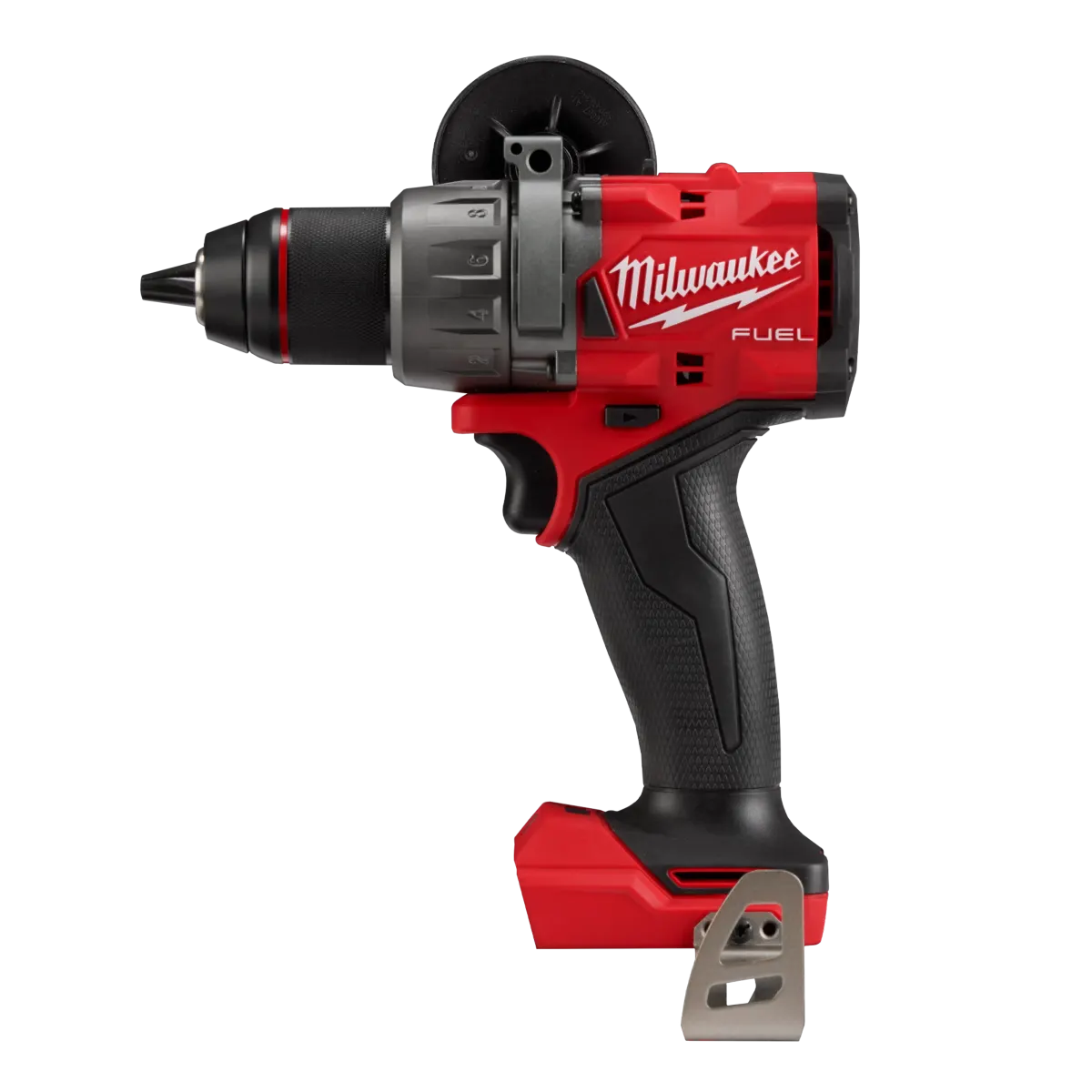
Milwaukee 2904-20 M18 FUEL Hammer Drill/Driver
When the job is large fasteners, big holes, or the occasional masonry anchor, the 2904 is in a different class. Its 1,400 in-lbs of peak torque is more than triple anything else in this guide, and a 33,000-BPM hammer mode adds capability the three drill/drivers lack entirely. The catch is that it ships as a bare tool — no battery, no charger — and at roughly 4.9 lbs it is the heaviest tool here. It only makes sense for M18 owners who genuinely need the power.
- ✓ 1,400 in-lbs of peak torque — by far the most powerful drill in this guide
- ✓ 33,000 BPM hammer mode adds real masonry capability the others lack
- ✓ Fastest top speed at 0–2,100 RPM, plus a carbide-toothed all-metal chuck
- ✓ 5-year warranty and the deep M18 platform
- ✗ Sold as a bare tool — no battery or charger, so the real cost is highest here
- ✗ Heaviest and longest of the five at roughly 4.9 lbs working weight
- ✗ Overkill and over-heavy for light DIY fastening
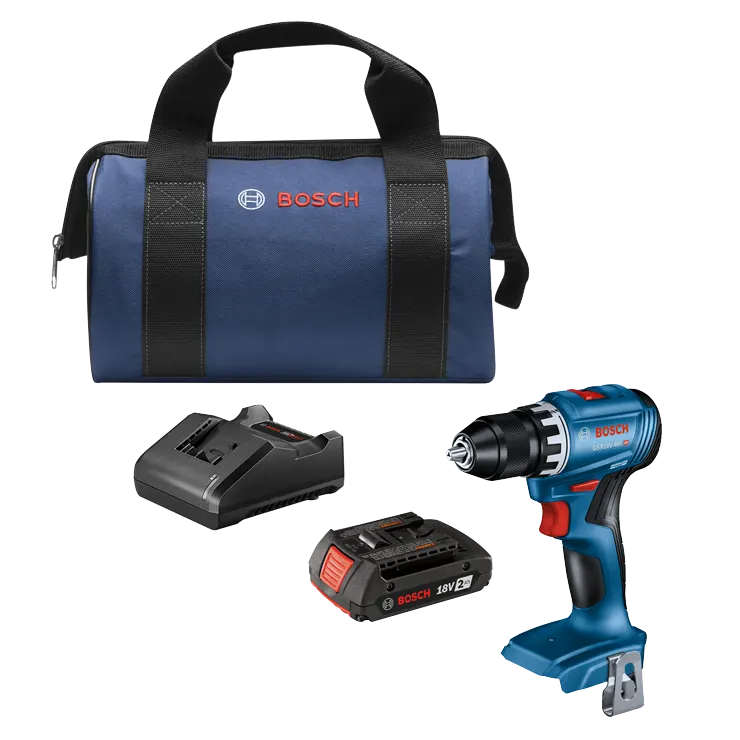
Bosch GSR18V-400 18V Compact Drill
The Bosch is the lightest tool in this guide at 2 lbs 12.8 oz bare, with a short 6.3-inch head and a class-leading 5-year tool warranty — and the complete kit is usually the cheapest of the four reviewed drills. Its 400 in-lbs is the lowest torque rating here, so it bogs sooner on big spade bits and lag screws, but for drywall, cabinet, and deck fastening it is a pleasure to use all day. The thinner US battery platform is the main reason to think twice before building a large fleet on it.
- ✓ Lightest tool here at 2 lbs 12.8 oz bare, ideal for all-day overhead work
- ✓ Class-leading 5-year tool warranty, longer than Makita's or DeWalt's 3 years
- ✓ Usually the cheapest complete kit of the four reviewed drills
- ✓ Fine 20-position clutch for repeatable, damage-free fastening
- ✗ 400 in-lbs is the lowest torque here — bogs sooner on big bits and lag screws
- ✗ B12 kit ships with just one small 2.0Ah SlimPack battery
Ryobi ONE+ PCL206 18V Drill/Driver Kit
The PCL206 is the budget pick that still does the everyday jobs. Its brushed motor is rated at 515 in-lbs of torque — higher on paper than any of the brushless compacts here — and the 24-position clutch and 1/2-inch ratcheting chuck cover routine drilling and driving. It is the lightest in the guide at 2.65 lbs, and the ONE+ platform spans hundreds of affordable tools. The trade-offs are a brushed motor that runs down batteries faster and small 1.5Ah packs in the kit, but for a first drill or an occasional-use tool it is hard to beat the price.
- ✓ 515 in-lbs rated torque from the brushed motor handles routine drilling and driving
- ✓ Lightest tool in this guide at 2.65 lbs with a 24-position clutch
- ✓ Backs onto the large, affordable Ryobi ONE+ 18V platform
- ✓ Kit price routinely undercuts every brushless drill here
- ✗ Brushed motor is less efficient than the brushless rivals and drains packs faster
- ✗ Kit bundles small 1.5Ah batteries, limiting runtime out of the box
- ✗ No hammer mode and a slower 0–1,750 RPM top speed
How we picked
This guide ranks five cordless drills we have reviewed in depth, grouped so that whatever you prioritize — balance, compactness, raw power, value, or price — there is a clear winner. We did not run a controlled lab test, and we do not pretend to have. Instead, every claim here is built from the published manufacturer specifications, the kit configurations actually sold in the US, the warranty terms each brand offers, and the consistent themes in owner reports. Where two tools are close, we lean on the numbers that change day-to-day use: weight, head length, torque, top speed, what comes in the box, and how deep the battery platform runs.
The shortlist is deliberately tight. Four of the five are brushless compacts that compete for the same buyer — the Makita XFD131, DeWalt DCD800, Bosch GSR18V-400, and the heavier-duty Milwaukee 2904 — and the fifth is the budget Ryobi PCL206 for shoppers who want the lowest sound entry price. These are the drills most people actually cross-shop, so ranking them against each other is more useful than padding the list with models nobody compares side by side.
What matters when you choose a cordless drill
Four things decide which of these is right for you, and they rarely all point at the same tool.
The battery platform comes first. A drill is a doorway into an ecosystem of batteries, chargers, and dozens of other tools that share the same pack. If you already own Makita LXT, DeWalt 20V MAX, Milwaukee M18, or Ryobi ONE+ batteries, that ownership outweighs almost every spec difference — buy the drill that fits your packs. If you are starting from nothing, the platform you pick is a longer commitment than the drill itself, so weigh how deep and how affordable each ecosystem is.
Weight and head length decide all-day comfort. A drill you use overhead or in cramped cavities lives and dies on how little it weighs and how short its nose is. The Bosch (2 lbs 12.8 oz bare, 6.3-inch head), the DeWalt (2.82 lbs bare, 6.37-inch head), and the Ryobi (2.65 lbs) are the easiest to maneuver; the Milwaukee, at roughly 4.9 lbs with a 5.0Ah pack and 6.9 inches long, is the one you feel after a day.
Torque sets the ceiling. For drywall, cabinet, deck, and general fastening, anything from 400 in-lbs up does the job, which is why the Bosch, Makita, and Ryobi all fastening-drive comfortably. The ceiling shows up on big spade bits, self-feed bits, hole saws, and large lag bolts — there the Milwaukee's 1,400 in-lbs pulls away from everything else by a wide margin.
What's in the box changes the real price. A bare tool sticker is not the real cost. The Makita kit's 3.0Ah battery and 30-minute charger, the DeWalt kit's pair of 2.0Ah packs, and the Ryobi kit's charger and pack all carry meaningful value, while the Milwaukee 2904 ships bare — add a battery and charger and it becomes the most expensive option here.
Best overall: Makita XFD131
The XFD131 wins the top spot because it gets the most things right at once. Its 440 in-lbs of torque is strong for a compact and covers nearly every job short of heavy structural fastening; at 3.8 lbs with the battery it stays neutral in the hand rather than tipping backward; and the kit includes a genuinely useful 3.0Ah battery and a 30-minute rapid charger, where many rivals bundle smaller 2.0Ah packs and slower chargers. Add the 300-plus-tool LXT platform and you have a drill that is easy to recommend to a remodeler, electrician, or serious homeowner who wants one tool that does almost everything. It loses nothing to the DeWalt or Bosch in everyday use and only yields to the Milwaukee when the job turns heavy.
Best for pros: DeWalt DCD800
For someone already on 20V MAX who values compactness and a great worklight, the DCD800 is arguably the nicer tool to hold. It is the lightest bare tool here at 2.82 lbs, its 6.37-inch head is among the shortest, and its 0–2,000 RPM top gear bores large holes a touch faster than the Makita's 1,900 RPM. The three-mode, 70-lumen LED with a spotlight shutoff is the best light in the group and doubles as a usable work lamp in a dark bay. Two caveats keep it just behind the Makita: DeWalt does not publish an in-lbs torque figure, so cross-brand comparison is fuzzy, and the DCD800D2 kit bundles two small 2.0Ah packs rather than one larger battery. The upside is that with the DCD801 now superseding it, the DCD800 is frequently discounted — which is exactly when it becomes a standout buy.
Best heavy-duty: Milwaukee 2904
The 2904 is the answer to a specific question: what if I need real power and occasional masonry from one drill? At 1,400 in-lbs of peak torque it is in a different league from the compacts — it pulls big self-feed bits and hole saws through framing without bogging and sinks large lag bolts the others strain on. Its 33,000-BPM hammer mode sets anchors in brick and block that leave the three drill/drivers helpless. The price of all that capability is weight and configuration: at roughly 4.9 lbs it is the heaviest tool here, and it ships as a bare tool, so the real cost runs highest once you add an M18 battery and charger. That makes it a poor fit for light DIY fastening and a smart one for M18 owners who genuinely work it hard.
Best value kit: Bosch GSR18V-400
The Bosch is the pick for the buyer who weighs ergonomics, warranty, and price above peak power. It is the lightest tool in the guide at 2 lbs 12.8 oz bare, with a short 6.3-inch head and a 20-position clutch that makes repeatable, damage-free fastening genuinely pleasant. Its 5-year tool warranty is the longest here, and the complete kit is usually the cheapest of the four reviewed drills, which makes it the obvious first cordless drill for many people. The trade-offs are real but narrow: 400 in-lbs is the lowest torque rating in the guide, so it bogs sooner on big bits and lag screws, the B12 kit includes only a single small 2.0Ah pack, and Bosch's US 18V platform is thinner than the big three — a consideration only if you plan to build a large fleet.
Best budget: Ryobi ONE+ PCL206
Not everyone needs brushless efficiency or a premium kit, and the PCL206 is the honest budget answer. Its brushed motor carries a 515 in-lbs torque rating — higher on paper than any brushless compact here — and the 24-position clutch and 1/2-inch ratcheting chuck handle routine drilling and driving without complaint. At 2.65 lbs it is the lightest tool in the guide, and the ONE+ platform spans hundreds of affordable tools that share the same battery. The compromises are exactly what you would expect at the price: the brushed motor is less efficient and drains packs faster than its brushless rivals, the kit bundles small 1.5Ah batteries, and the 0–1,750 RPM top speed is the slowest here. For a first drill, a backup, or an occasional-use tool, none of that outweighs the savings.
How to read these rankings
The ranks are not a strict best-to-worst order — they are a map. The Makita is first because it is the safest single recommendation for the most people, but if you own DeWalt packs the DCD800 is your number one, if you drive lag bolts all day the Milwaukee is, and if your budget is tight the Ryobi is. Start from what you already own and what you actually do with a drill, match it to the award label, and the right pick falls out quickly. Every model here is a tool we would happily hand someone; the differences are about fit, not quality.
A note on testing and honesty
We want to be clear about what this guide is. It is an analytical buying guide that synthesizes verified specifications, real US kit configurations, warranty terms, and the weight of owner experience into a ranked recommendation. It is not a controlled lab shootout, and we have not invented test results to make it look like one. Where a figure is missing — DeWalt's unpublished torque rating is the obvious case — we say so rather than guess. The aim is to get you to the right drill for your platform, your budget, and your work, with the reasoning laid out so you can disagree where your priorities differ from ours.
Advertisement
Frequently asked questions
- What is the best cordless drill in 2026?
- The best cordless drill for most people in 2026 is the Makita XFD131, which balances 440 in-lbs of torque, a light 3.8 lb body, and a complete kit with a 3.0Ah battery and 30-minute charger. If you already own a battery platform, the smarter move is to buy the drill that matches it: the DeWalt DCD800 on 20V MAX, the Milwaukee 2904 on M18, or the Bosch GSR18V-400 for the cheapest sound entry point.
- Do I need a brushless drill?
- A brushless motor is worth it for anyone who uses a drill regularly — it runs cooler, lasts longer, and squeezes more work out of each battery charge, which is why the Makita, DeWalt, Bosch, and Milwaukee picks here are all brushless. For occasional light use, a well-made brushed drill like the Ryobi PCL206 still drives screws and bores small holes perfectly well and costs noticeably less.
- How much torque do I actually need in a cordless drill?
- For everyday fastening, small-to-medium holes, and cabinet or deck work, 400 to 500 in-lbs is plenty — that covers the Bosch (400), Makita (440), and Ryobi (515) picks here. You only need the Milwaukee 2904's 1,400 in-lbs if you regularly drive large lag bolts, bore big holes with self-feed bits, or run hole saws through framing.
- Should I buy a bare tool or a kit?
- Buy a complete kit if you do not already own batteries on that platform, since the battery and charger are most of the value — the Makita, Bosch, and Ryobi picks here all ship as kits. Buy a bare tool like the Milwaukee 2904 only when you already own compatible packs, because adding a battery and charger to a bare tool usually makes it the most expensive option overall.
- Does the battery platform matter more than the drill?
- For most buyers, yes — the platform you choose determines which batteries, chargers, and future tools you can share, so it is a longer-lasting decision than any single drill. Makita LXT, DeWalt 20V MAX, and Milwaukee M18 are the deepest platforms in the US; Bosch's 18V line is smaller, and Ryobi ONE+ is the broadest budget ecosystem. If you already own packs, start there.
- Is a hammer drill worth it for a homeowner?
- A hammer drill is worth it only if you regularly anchor into brick, block, or concrete; for wood, metal, and fastening it adds weight and cost you will not use. Among these picks only the Milwaukee 2904 has a hammer mode. Most homeowners are better served by a lighter drill/driver and renting or buying a dedicated rotary hammer for the rare masonry job.