
Milwaukee 2904 M18 FUEL Drill Review (2026)
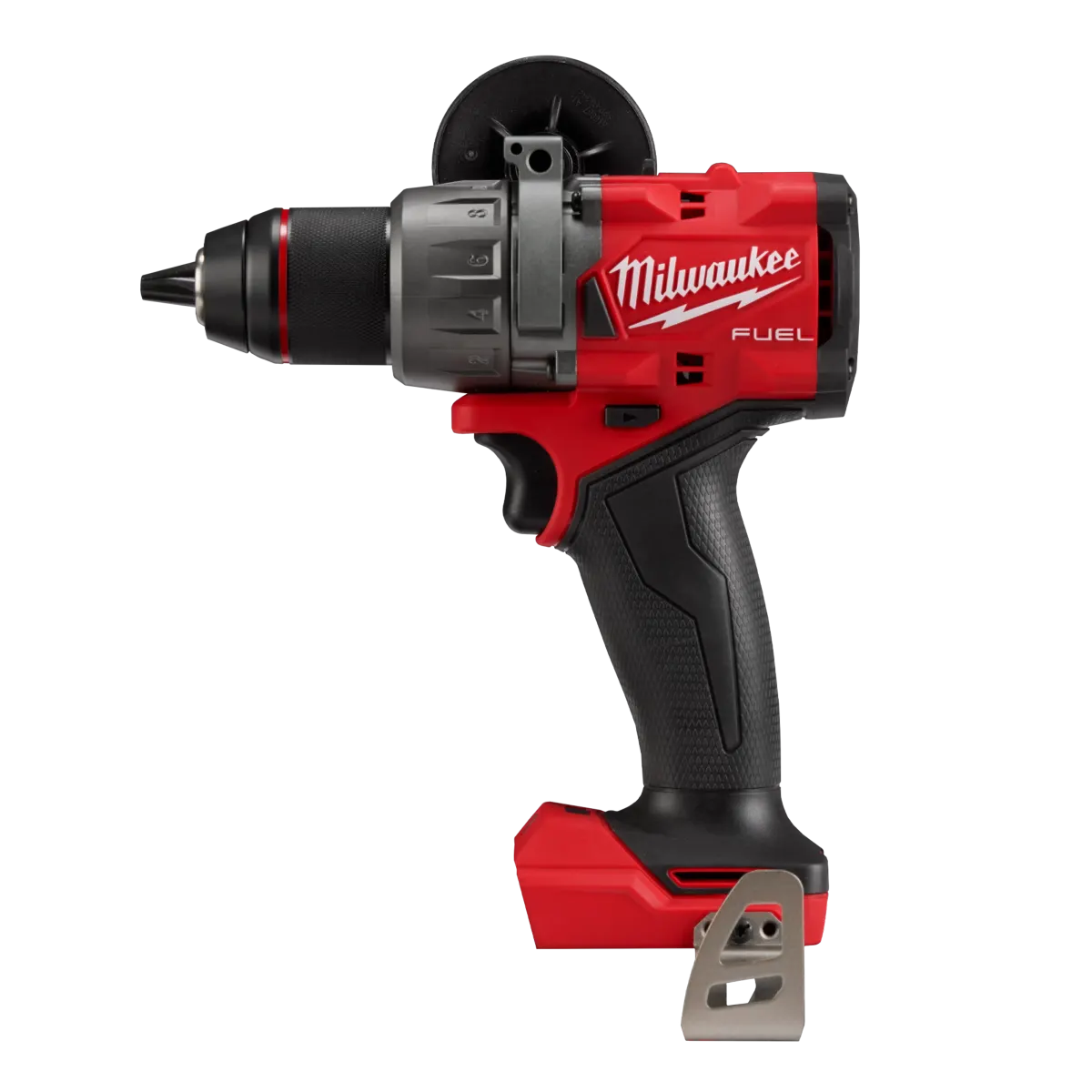
| voltage | 18V (M18 REDLITHIUM lithium-ion) |
|---|---|
| motor | POWERSTATE brushless |
| max Torque | 1,400 in-lbs (peak) |
| speed | 0–550 / 0–2,100 RPM (2-speed); 33,000 BPM hammer mode |
| chuck | 1/2 in. all-metal ratcheting, carbide teeth |
| weight | Approx. 4.9 lbs with XC5.0 battery; 6.9 in. length |
| battery | Bare tool — no battery or charger included |
| warranty | 5-year limited tool warranty |
Pros
- 1,400 in-lbs of peak torque — by far the most powerful drill in this group, in a different class entirely
- Hammer mode at 33,000 BPM adds real masonry capability the other three drills lack
- POWERSTATE brushless motor and two-speed transmission (0–550 / 0–2,100 RPM) for control and speed
- All-metal 1/2-inch ratcheting chuck with carbide teeth grips bits hard under heavy load
- Backs onto the deep, popular M18 platform — hundreds of tools share the same battery
- 5-year tool warranty and Milwaukee's reputation for jobsite durability
Cons
- Sold as a bare tool — no battery or charger included, which raises the real cost significantly
- Heaviest and longest of the four at roughly 4.9 lbs working weight and 6.9 inches
- Overkill for light DIY fastening — the power and weight are wasted on cabinet and drywall screws
- Total cost with an M18 battery and charger is the highest of the group
Who the Milwaukee 2904-20 is for
The Milwaukee 2904-20 is the heavy hitter of this group, and it is not close. Where the Makita XFD131, DeWalt DCD800, and Bosch GSR18V-400 are compact drill/drivers built around portability, the 2904 is an M18 FUEL hammer drill/driver built around power: 1,400 in-lbs of peak torque, a 33,000-BPM hammer mode, a two-speed transmission topping out at 2,100 RPM, and a carbide-toothed all-metal chuck. Line those figures up against the compacts and the positioning is obvious — this tool is for the tradesperson or serious DIYer who drives large fasteners, bores big holes, and occasionally needs to put an anchor into masonry, all with one drill.
The single most important thing to know before buying is that the 2904-20 is a bare tool. It ships with the drill, a side handle, and a belt clip — no battery, no charger. That makes it a poor choice for anyone not already invested in the M18 platform, and a smart one for the many people who already own a pile of M18 REDLITHIUM packs.
Build quality and ergonomics
This is a Milwaukee FUEL tool, and it feels like one — dense, solid, and built for abuse. The all-metal 1/2-inch ratcheting chuck uses carbide teeth that bite into round-shank bits and hold them under the kind of torque that would spin a bit loose in a lesser chuck. The side handle is genuinely necessary here, not a token accessory: at 1,400 in-lbs, the drill can twist hard in your hand if a big bit binds, and the handle gives you the leverage to control it.
The trade-off for all that capability is size and weight. At roughly 4.9 lbs with an XC5.0 battery and 6.9 inches long, the 2904 is the heaviest and longest tool in this comparison — noticeably more than the Bosch's 2 lbs 12.8 oz bare weight or the DeWalt's 2.82 lbs. Owners consistently report it is a tool you feel after a day of overhead work. The grip and balance are good for the class, but there is no hiding that this is a bigger, heavier drill than the compacts it is being compared against.
Drilling and driving performance by material
In wood, the 2904 simply does not bog. Large self-feed bits, big spade bits, and hole saws that would stall the Bosch and slow the Makita pull through framing in low gear thanks to the 1,400 in-lb torque. This is the drill you want for joist and stud boring, ledger work, and any task where the others run out of grunt.
In metal, the 2,100 RPM high gear is the fastest top speed in the group and clears large twist-drilled holes quickly, while low gear gives the torque to push big bits and step bits through thick stock without stalling.
For driving, the 2904 sinks large lag bolts and structural screws that make the compact drills strain — this is its home turf. The reverse is also true: for cabinet screws, drywall, and light deck fasteners, all that power and weight are wasted, and a lighter compact would be the more pleasant tool. The 16-position clutch handles fine fastening when you need it, but you are carrying a lot of drill to drive a #8 screw.
The hammer mode is the capability the other three lack entirely. At 33,000 BPM with a masonry bit, the 2904 will set anchors and drill pilot holes in brick and block — not a substitute for a rotary hammer in concrete, but more than enough for the occasional masonry task that would leave the Makita, DeWalt, and Bosch helpless.
Battery and charging
Because the 2904-20 is a bare tool, the battery is entirely up to you, and the choice shapes the experience. An M18 REDLITHIUM XC5.0 pack is the sensible match — it balances runtime against weight and is what most of the published working-weight figures assume. Smaller CP2.0 or CP3.0 packs cut the weight for lighter work; High Output and FORGE packs maximize runtime and sustained power under the heavy loads this tool is built for. The deep M18 platform means whatever pack you own already fits. Just remember to factor a battery and charger into the price — that bare-tool sticker is not the real cost unless you already have M18 cells on the shelf.
Value versus the other three drills
Against the Makita XFD131 and DeWalt DCD800, the comparison is about purpose, not just specs. The 2904 has more than triple the torque and adds a hammer mode, but it is heavier, longer, and — once you add a battery and charger — the most expensive option, since both of those ship as complete kits with batteries included. If you need the power, the Milwaukee is worth it; if you do everyday fastening, the kits are the smarter spend.
Against the Bosch GSR18V-400, the contrast is starkest. The Bosch is the lightest, cheapest, longest-warrantied compact in the group at 400 in-lbs; the Milwaukee is the heaviest, most powerful, and most expensive at 1,400 in-lbs with hammer capability. They sit at opposite ends of the cordless drill spectrum — the Bosch for light ergonomic everyday work, the Milwaukee for heavy structural and masonry tasks.
The 2904's trump cards over all three are raw torque, the hammer mode, and the M18 platform's depth and durability reputation. Its weaknesses are weight, size, and the bare-tool pricing that makes the real cost the highest here.
Final verdict
The Milwaukee 2904-20 comes in at 4.5 as the most capable drill in this group by a wide margin — 1,400 in-lbs of torque, a genuine hammer mode, and FUEL-grade durability make it the clear choice for anyone who drives large fasteners, bores big holes, or needs occasional masonry capability. It loses half a point only because it is the heaviest and longest tool here and ships as a bare tool, so the real cost runs highest once you add a battery and charger. For M18 owners who need power, it is an easy recommendation. For light everyday fastening, or for anyone wanting a light, complete, affordable kit, the Makita XFD131 or Bosch GSR18V-400 are the better-matched tools.
Advertisement
Frequently asked questions
- Does the Milwaukee 2904-20 come with a battery?
- No, the 2904-20 is a bare tool — it ships with the drill, a side handle, and a belt clip, but no battery or charger. You need an existing M18 REDLITHIUM battery and charger to use it, which is why this model only makes sense for buyers already on the M18 platform.
- How much torque does the Milwaukee 2904 have?
- The Milwaukee 2904 produces 1,400 in-lbs of peak torque, more than triple the Bosch GSR18V-400's 400 in-lbs and over three times the Makita XFD131's 440 in-lbs. It is in a genuinely different power class from the other compact drills in this comparison and handles large lag bolts and self-feed bits the others struggle with.
- Is the 2904-20 a hammer drill?
- Yes, the 2904-20 is a hammer drill/driver — it has a percussion mode delivering up to 33,000 BPM for drilling into brick, block, and concrete with a masonry bit. That sets it apart from the Makita XFD131, DeWalt DCD800, and Bosch GSR18V-400, which are all drill/drivers with no hammer function.
- What is the difference between the 2904 and 2903?
- The 2904 is the hammer drill/driver and the 2903 is the standard drill/driver — they are otherwise the same M18 FUEL Gen 4 platform with the same POWERSTATE motor. Choose the 2904 if you want occasional masonry capability; pick the 2903 to save a little weight and money if you will never drill concrete.
- How fast is the Milwaukee 2904?
- The 2904 runs a two-speed transmission with 0–550 RPM in low gear and 0–2,100 RPM in high gear, the fastest top speed in this comparison. The low gear delivers maximum torque and control for big fasteners, while the 2,100 RPM high gear bores holes and runs small bits quickly.
- Is the Milwaukee 2904 worth it over a compact drill?
- The 2904 is worth it if you regularly drive large fasteners, bore big holes, or need occasional masonry capability, and you already own M18 batteries. For light everyday fastening it is heavier, longer, and more expensive than needed — a Makita XFD131 or Bosch GSR18V-400 kit would serve better and cost less.