
Bosch GSR18V-400 18V Compact Drill Review (2026)
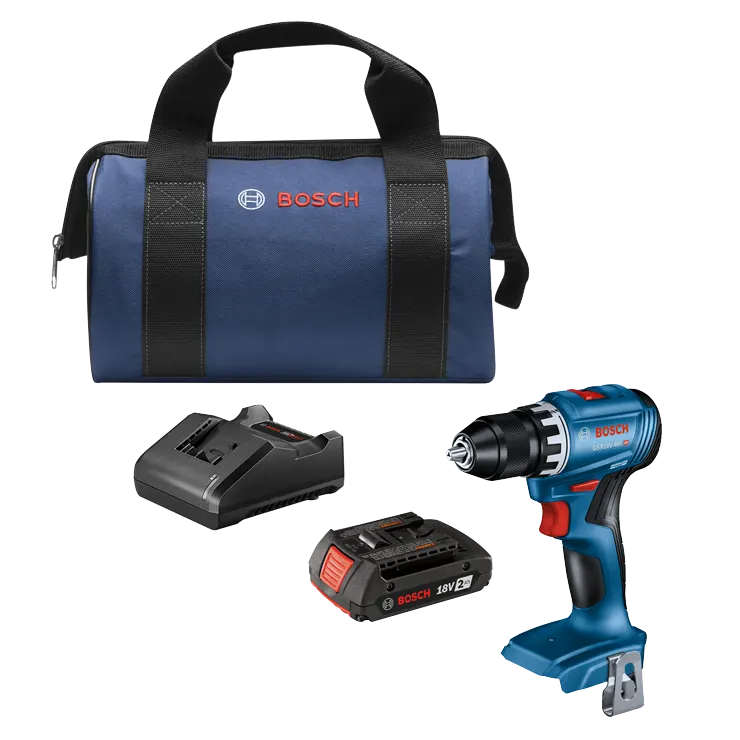
| voltage | 18V lithium-ion |
|---|---|
| motor | Brushless |
| max Torque | 400 in-lbs |
| speed | 0–500 / 0–1,900 RPM (2-speed) |
| chuck | 1/2 in. keyless, all-metal |
| weight | 2 lbs 12.8 oz (bare tool) |
| battery | B12 kit: one 2.0Ah SlimPack + charger + bag (B22 kit: two 2.0Ah) |
| warranty | 5-year limited tool / 5-year charger / 3-year battery |
Pros
- Lightest tool in this group — 2 lbs 12.8 oz bare, ideal for overhead and all-day driving
- Very short 6.3-inch head fits between studs, inside cabinets, and into joist bays
- Class-leading 5-year tool warranty (3-year battery) — longer than Makita's or DeWalt's 3 years
- All-metal 1/2-inch keyless chuck with strong bit retention and a precise 20-position clutch
- Usually the cheapest kit of the four, making it the value pick for first-time buyers
- Brushless motor delivers solid runtime from even the small SlimPack batteries
Cons
- 400 in-lbs of torque is the lowest of the four — it bogs sooner on big spade bits and lag screws
- B12 kit ships with just a single 2.0Ah SlimPack battery, so runtime out of the box is limited
- Bosch's 18V cordless platform is smaller in the US than Makita, DeWalt, or Milwaukee
- No hammer mode — for masonry you need the GSB-series or the Milwaukee 2904
Who the Bosch GSR18V-400 is for
The Bosch GSR18V-400 is the value and ergonomics pick of this group: the lightest, most compact, longest-warrantied drill of the four, aimed squarely at the budget-conscious DIYer and the light-trade user who prizes a tool that disappears in the hand over headline torque numbers. Read the key numbers and the priorities jump out: 400 in-lbs of max torque, a two-speed brushless transmission running 0–500 and 0–1,900 RPM, a 1/2-inch all-metal keyless chuck, a 20-position clutch, and a bare-tool weight of 2 lbs 12.8 oz with a short 6.3-inch head. That weight and head length are the story — this is the drill you reach for when you will be driving screws overhead or in cramped cavities all day.
It is also the easiest drill here to recommend to someone buying their very first cordless tool, because the kit is usually the cheapest of the four and the warranty is the longest. Weigh that against one real drawback, platform depth: Bosch's 18V cordless lineup in the US is smaller than Makita's, DeWalt's, or Milwaukee's, so it is a less obvious foundation if you plan to grow a large fleet.
Build quality and ergonomics
Bosch's reputation for solid, no-drama build holds up here. The 1/2-inch chuck is all-metal with strong bit retention — owners consistently report round-shank bits stay put under driving load. The 20-position clutch is precise and gives fine control over fastener depth, more clutch stops than the DeWalt DCD800's 15. The grip is slim and comfortable, and at 2 lbs 12.8 oz bare this is the lightest tool in the comparison by a clear margin.
The short 6.3-inch head is matched only by the DeWalt DCD800 in this group and beats the Makita XFD131 and Milwaukee 2904 for getting into joist bays, between 16-inch studs, and inside base cabinets. A built-in LED handles dark cavities, though it is a single light rather than the twin LEDs Makita uses or the multi-mode spotlight on the DeWalt. For a drill at this price, the fit and finish are very good.
Drilling and driving performance by material
In wood, the GSR18V-400 handles everyday tasks cleanly — pilot holes, twist bits, and spade bits in the smaller and middle sizes pull through softwood without complaint. Push into large spade and self-feed bits, though, and the ceiling appears: at 400 in-lbs it bogs sooner than the 440 in-lb Makita and well before the 1,400 in-lb Milwaukee, so heavy boring is not its strength.
In metal, the brushless motor holds speed adequately for twist drilling steel in common sizes. It is competent rather than fast; buyers drilling lots of large holes in steel will prefer the higher top speeds of the DeWalt (2,000 RPM) or Milwaukee (2,100 RPM).
For driving, this is the GSR18V-400's comfort zone. Drywall, cabinet, and deck screws are exactly what it was tuned for, and the fine 20-position clutch makes it especially good for repeatable, damage-free fastening — its low weight means your wrist is fresh after hours of screw-driving that would tire you on a heavier tool. The ceiling is large structural fasteners and lag bolts, where the 400 in-lb rating runs out of grunt.
Battery and charging
The kit configuration is where you have to read the model number carefully. The B12 kit ships with a single 2.0Ah SlimPack battery, a charger, and a bag — economical, but limited runtime out of the box and no spare while one charges. The B22 kit doubles up to two 2.0Ah SlimPacks for a modest price bump and is the better buy for anyone working continuously. Either way, these are small packs; the Makita XFD131's bundled 3.0Ah cell gives more screws per charge. The brushless motor makes good use of the small batteries, and you can drop in larger Bosch 18V packs for more runtime, though the SlimPack form factor keeps the tool light, which is the whole point of this drill.
Value versus the other three drills
Against the Makita XFD131, the Bosch is lighter, more compact, longer-warrantied (5 years vs 3), and usually cheaper, but the Makita has more torque (440 vs 400 in-lbs), a larger 3.0Ah bundled battery, a faster 30-minute charger, and a far deeper platform. For a budget first drill the Bosch wins; for a long-term platform investment the Makita does.
Against the DeWalt DCD800, the two are closely matched on size and weight, with the Bosch holding the warranty edge (5 vs 3 years) and a published torque figure, while the DeWalt counters with a faster 2,000 RPM top gear, a superior multi-mode LED, and a two-battery kit. DeWalt also has the deeper US platform.
Against the Milwaukee 2904, the Bosch is in a different category — it is the lightweight value drill, the Milwaukee the heavy-duty hammer-capable powerhouse at 1,400 in-lbs. The Bosch is far lighter, far cheaper as a complete kit (the 2904 is a bare tool), and longer-warrantied, but it cannot match the Milwaukee for raw power or masonry work.
Final verdict
The Bosch GSR18V-400 lands at 4.0 — a very good drill held back from the top of this group only by its category-low 400 in-lb torque, its small bundled battery, and Bosch's thinner US platform. What it does, it does extremely well: it is the lightest and most compact tool here, carries the longest warranty, and is usually the cheapest complete kit, which makes it the standout pick for budget buyers and anyone who values all-day ergonomics over peak power. Heavy users driving large fasteners or planning to build out a big cordless fleet will be happier with the Makita XFD131, DeWalt DCD800, or the high-torque Milwaukee 2904.
Advertisement
Frequently asked questions
- How much torque does the Bosch GSR18V-400 have?
- The GSR18V-400 produces 400 in-lbs of maximum torque, the lowest figure among the Makita XFD131 (440), DeWalt DCD800, and Milwaukee 2904 (1,400). That is still enough for the vast majority of fastening and small-to-medium hole drilling, but it bogs sooner than rivals on large lag screws and big spade bits.
- What is the difference between the GSR18V-400B12 and B22 kits?
- The B12 kit ships with one 2.0Ah SlimPack battery while the B22 kit includes two, otherwise the drill is identical. Choose the B22 if you want a spare pack so you are never waiting on the charger; the B12 is cheaper if you already own Bosch 18V batteries.
- Is the Bosch GSR18V-400 a hammer drill?
- No, the GSR18V-400 is a drill/driver with no hammer mode — the 'GSR' designation means drill/driver, while Bosch's hammer drills carry the 'GSB' prefix. For masonry you would need a Bosch GSB model or the Milwaukee 2904 hammer drill.
- How long is the Bosch GSR18V-400 warranty?
- Bosch covers the GSR18V-400 tool with a 5-year limited warranty and the charger for 5 years, while the 18V batteries carry a 3-year warranty. That tool warranty is the longest in this comparison — Makita and DeWalt both offer 3 years on the tool.
- Is the Bosch GSR18V-400 good for a beginner?
- Yes, the GSR18V-400 is an excellent first drill — it is the lightest and most compact of the four, usually the cheapest, and carries the longest warranty. The only caveat is its 400 in-lbs torque ceiling and Bosch's smaller US battery platform, which matter more as your tool collection grows.
- How much does the Bosch GSR18V-400 weigh?
- The GSR18V-400 weighs 2 lbs 12.8 oz as a bare tool, making it the lightest drill in this group and noticeably lighter than the Makita XFD131 (3.8 lbs with battery) or the Milwaukee 2904. Combined with its short 6.3-inch head, that low weight makes it the easiest to use overhead and in tight spaces.
Ready to buy the GSR18V-400?
We may earn a commission if you buy through these links, at no extra cost to you.