
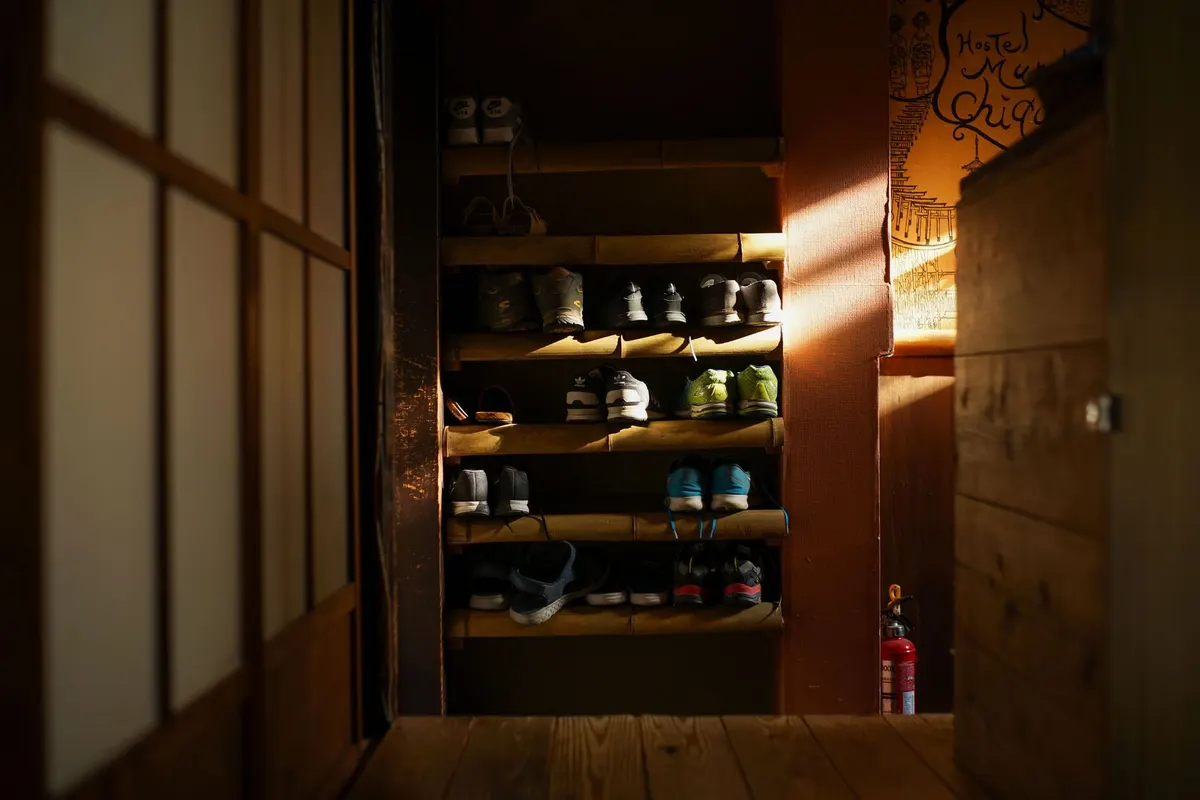
How to Build a Simple Entryway Shoe Rack with Two Shelves
Build a sturdy entryway shoe rack with two shelves from 2x2 lumber and plywood. Includes full cut list, assembly steps, and finishing tips.
Difficulty
beginnerTime
2–3 hours
Est. cost
$30–$50
Tools you'll need
- Cordless drill driver — our review
- Circular saw or miter saw
- Tape measure
- Pencil
- Speed square
- Clamps
- Countersink pilot bit set
- Sandpaper (80, 120 grit)
- Level
Materials
- Three 8-foot 2x2 pine boards (kiln-dried)
- One 2x2x4 pine board or cut from remaining 8-footers
- One 2x4 sheet of 1/2-inch plywood (or hardwood plywood for better finish)
- 1.25-inch wood screws
- 2-inch wood screws
- Wood glue
- 120-grit sandpaper
- Wood finish (optional): paint, stain, or polyurethane
Step-by-step
- 1
Cut all lumber to the cut list
From the 2x2 lumber, cut the following: four legs at 30 inches each, two side rails at 12 inches each (for the bottom shelf), two side rails at 24 inches each (for the top shelf), two front/back rails at 24 inches each for the bottom shelf, and two front/back rails at 24 inches each for the top shelf. From the 1/2-inch plywood, cut two shelves: one at 12x24 inches (bottom) and one at 24x24 inches (top). Use a speed square to mark square cuts and let the saw blade follow the line.
- 2
Assemble the left and right side frames
Each side frame consists of two legs (30 inches) connected by the side rails. For the bottom shelf, attach a 12-inch side rail between two legs, flush with the bottom of the legs (or about 2 inches up if you want a gap). For the top shelf, attach a 24-inch side rail at the top, flush with the leg tops. Apply wood glue, clamp, drill pilot holes, and drive two 1.25-inch screws per joint. Use a speed square to ensure the frame is square. Repeat for the second side frame.
- 3
Connect the side frames with front/back rails
Stand both side frames upright, parallel and 24 inches apart. Attach the front and back rails (24 inches) for the bottom shelf between the legs at the same height as the side rails. Then attach the front and back rails for the top shelf at the top. Use glue and two 1.25-inch screws per joint. Check with a level that the assembly is plumb and the rails are level.
- 4
Attach the bottom shelf
Slide the 12x24-inch plywood shelf onto the bottom rails. It should fit snugly; trim with sandpaper if needed. Apply glue to the rails, then secure the shelf with 1.25-inch screws every 6 inches along the perimeter. Drive screws from underneath through the rails into the plywood for a clean look.
- 5
Attach the top shelf
Place the 24x24-inch plywood shelf on the top rails. Center it so the overhang is equal on all sides (about 1.5 inches if the legs are set back). Apply glue, then screw from underneath through the rails into the shelf using 1.25-inch screws every 6 inches. For extra strength, add a few screws into the front/back rails as well.
- 6
Sand and ease edges
Sand all surfaces with 120-grit sandpaper, focusing on edges and corners to remove splinters. Ease sharp edges with a light sanding. Wipe off dust. For a smoother finish, sand again with 220-grit.
- 7
Apply finish (optional)
The shoe rack can be used as-is, but a coat of paint, stain, or polyurethane will protect the wood and make it easier to clean. Apply two thin coats, sanding lightly between coats with 220-grit. Let cure fully before placing shoes.
Planning and Design
This entryway shoe rack is a straightforward woodworking project ideal for beginners. It consists of a 2x2 lumber frame with two plywood shelves: a deeper top shelf (24x24 inches) for boots and multiple pairs, and a shallower bottom shelf (12x24 inches) for everyday shoes. The total height is 30 inches, making it easy to access without bending. The design is open and airy, helping shoes dry and preventing musty odors.
Before cutting, consider the space where the rack will sit. Measure the width, depth, and height clearance. If your entryway is narrow, you can reduce the width by cutting the rails shorter proportionally. The materials list assumes a 24-inch-wide rack, but you can easily adjust. Remember that 2x2 lumber actually measures about 1.5x1.5 inches, so plan your dimensions accordingly. Also, decide on the finish early; if you plan to paint, consider using primed MDF instead of plywood for a smoother surface.
Cut List
| Part | Quantity | Material | Dimension |
|---|---|---|---|
| Legs | 4 | 2x2 | 30 in |
| Side rails (bottom) | 2 | 2x2 | 12 in |
| Side rails (top) | 2 | 2x2 | 24 in |
| Front/back rails (bottom) | 2 | 2x2 | 24 in |
| Front/back rails (top) | 2 | 2x2 | 24 in |
| Bottom shelf | 1 | 1/2 in plywood | 12 x 24 in |
| Top shelf | 1 | 1/2 in plywood | 24 x 24 in |
Assembly Tips
Use wood glue on every joint for strength. Predrill all screw holes to prevent splitting the narrow 2x2 stock. A countersink bit allows screw heads to sit flush. Clamp each joint before driving screws. Check squareness with a speed square or by measuring diagonals. If you don't have a saw, have the lumberyard cut the pieces to size. Work on a flat surface, like a garage floor, to ensure the frame is not twisted.
Mistakes to Avoid
- Skipping glue: Without glue, screws alone can loosen over time. Always apply a thin, even coat to both surfaces.
- Using too-long screws: 2-inch screws may blow through 2x2 stock. Use 1.25-inch screws for attaching rails to legs; use 2-inch screws only when joining thicker pieces.
- Forgetting to level: An uneven rack will wobble. Place the rack on a level floor and adjust with felt pads or shims if needed. Check with a level in both directions.
- Not sanding: Entryway racks get bumped a lot. Sand all edges to avoid splinters. Pay special attention to corners and the underside of shelves.
- Over-tightening screws: In soft pine, over-driving can strip the hole or cause the wood to crack. Drive until snug, then stop.
Finishing
Painting or staining the rack is optional but recommended. For a painted finish, prime with a high-adhesion primer, then apply two coats of semi-gloss latex paint. For a natural look, apply stain followed by a couple coats of polyurethane. Let each coat dry fully before sanding lightly between coats. If you plan to place the rack outdoors (e.g., covered porch), use exterior-grade paint or sealant. A clear coat will also protect against dirt and moisture from wet shoes.
Safety
Always wear safety glasses when cutting wood or driving screws. Use hearing protection when operating power saws. Keep fingers away from blade paths and use push sticks for narrow pieces. Clamp work securely. Unplug tools when changing bits or blades. Ensure the rack is stable; if it rocks, trim legs or adjust feet. For homes with children, anchor the rack to the wall to prevent tipping. Use a furniture strap or L-bracket into a stud. Also, be mindful of the finish fumes; work in a well-ventilated area and wear a respirator when spraying.
Conclusion
This entryway shoe rack can be built in an afternoon with basic tools. It’s a satisfying project that keeps your entry organized and adds a personal touch. Customize it with paint, trim, or even a bench seat on top for more utility. With proper care, it will last for years and make coming home a little more pleasant.
Advertisement
Frequently asked questions
- What size shoes does this shoe rack accommodate?
- The top shelf is 24 inches deep and wide, large enough for boots or multiple pairs of shoes. The bottom shelf is 12 inches deep but still accommodates most adult shoes up to size 12; oversized boots may need to go on the top shelf.
- Can I adjust the height of the shelves?
- Yes. The leg height is 30 inches total, but you can change the position of the rails to adjust shelf spacing. For example, if you need more space for boots, move the bottom shelf rail lower or the top shelf rail higher. Just ensure the overall structure remains rigid.
- Can I use solid wood instead of plywood for the shelves?
- Yes. Replace the plywood with 3/4-inch solid wood boards (like pine or poplar) glued and screwed together. This will give a more furniture-like appearance but increase cost and weight. For a quick project, plywood is perfectly fine and stable.
- How much weight can this shoe rack hold?
- With proper construction and glue, each shelf can hold 30–40 pounds distributed evenly. The bottom shelf is smaller but still sturdy. For heavy items like stacked boots, it's best to spread the load.
- Do I need to secure the rack to the wall?
- For safety, especially if you have children or the rack is tall and narrow, it's recommended to anchor it to a wall stud using a furniture strap or L-bracket. This prevents tipping.