
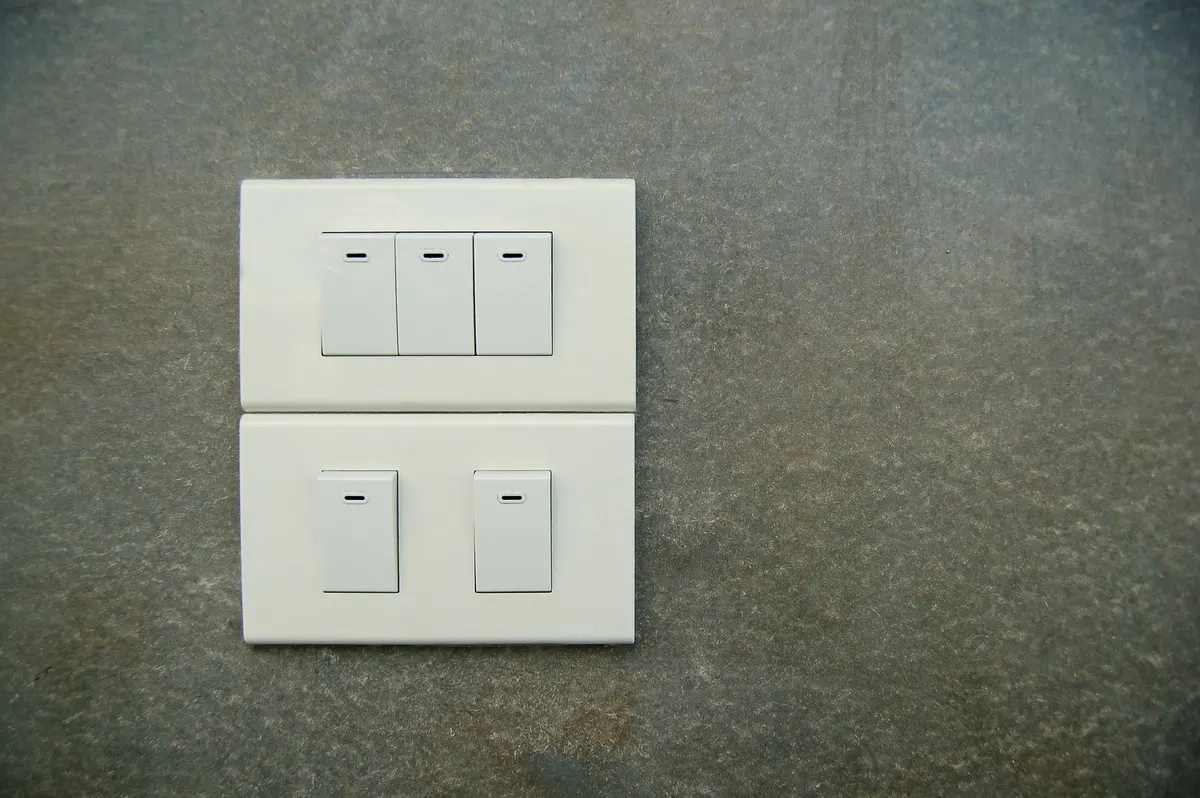
How to Replace a Standard Switch with a Dimmer
Upgrade a standard wall switch to a dimmer in under an hour with basic wiring skills. Includes safety, single-pole wiring, and tips for avoiding common mistakes.
Difficulty
beginnerTime
30–45 minutes
Est. cost
$15–$40
Tools you'll need
- Non-contact voltage tester
- Flathead and Phillips screwdrivers
- Wire stripper/cutter
- Needle-nose pliers
Materials
- Single-pole dimmer switch (compatible with your bulb type — LED, CFL, incandescent)
- Wire connectors (wire nuts) appropriate for the wire gauge
- Electrical tape
- Switch plate (if existing plate is damaged or you want a new look)
Step-by-step
- 1
Turn off power and verify it is off
Go to your main electrical panel and flip the breaker that controls the switch you are replacing. After turning off the breaker, use a non-contact voltage tester to confirm that no power is present at the switch. Touch the tester to the side of the switch (not the faceplate) and then to each wire in the box; it should not beep or light up. If it does, double-check you have the correct breaker — do not proceed until power is confirmed off.
- 2
Remove the old switch plate and switch
Unscrew the two screws on the switch plate and set the plate aside. Then unscrew the two screws holding the switch to the electrical box and gently pull the switch out of the box by its ears, being careful not to touch the wires yet. You should see two or three wires connected to the switch: typically a black (hot) wire on one side, another black or red (switched hot) on the other side, and a bare or green ground wire attached to the green screw.
- 3
Disconnect the old switch
Using your screwdriver, loosen the terminal screws on the old switch and remove the wires. If the wires are inserted into push-in holes on the back of the switch, insert a small screwdriver into the release slot to free them. Do not cut the wires unless they are damaged. Straighten the wire ends with pliers if they are bent. The ground wire may be wrapped around the ground screw — unscrew and unwrap it.
- 4
Prepare the wires for the dimmer
Strip about 1/2 inch of insulation from each wire end if it is not already exposed, using a wire stripper. If the wire ends are nicked or damaged, cut them back to fresh copper and then strip. Twist each stranded wire (if your dimmer has stranded leads) or stranded with solid carefully, but for most dimmers, the leads are solid or stranded and you will use wire nuts. Your dimmer will have two black (or red/black) leads and one green (ground) lead.
- 5
Connect the dimmer wires
Take the two power wires from the dimmer (often called line and load – they are interchangeable for a single-pole dimmer) and connect them to the two wires that were on the old switch. Use a wire nut on each connection: hold the stripped ends together, twist the wire nut clockwise until snug, and give a gentle tug to ensure it is secure. Wrap each wire nut and connection with a layer of electrical tape for added safety. Then connect the dimmer's green ground wire to the bare copper ground wire in the box, either with a wire nut or by wrapping around the ground screw if your dimmer has one.
- 6
Mount the dimmer in the box
Carefully fold the connected wires into the electrical box, pushing them to the back and sides to leave room for the dimmer body. Align the dimmer's mounting tabs with the screw holes in the box, then drive the provided screws in firmly — but not so tight that you crack the dimmer's plastic. Ensure the dimmer sits flush against the wall; if it tilts, readjust the wires inside so they are not pressing against the back of the dimmer.
- 7
Attach the switch plate and restore power
Screw the switch plate onto the dimmer using the provided screws (or your original plate screws if they are appropriate). Ensure the plate is aligned and not cracked. Go back to the panel and flip the breaker to ON. Test the dimmer by turning the knob or sliding the control — the light should dim smoothly. If the light flickers or behaves oddly, turn off the breaker and double-check your wire connections, and verify the dimmer is compatible with your bulb type.
Planning the Project
Replacing a standard toggle switch with a dimmer is a straightforward DIY upgrade that adds ambiance and potential energy savings. Before you start, confirm that your switch is a single-pole switch (controls the light from one location) — not a three-way switch (used in pairs). If you have two or more switches controlling the same light, you need a three-way dimmer, which is slightly different. For this project, stick to single-pole.
You also need the right dimmer for your bulb type. The most common mistake is buying an old-fashioned incandescent dimmer and using it with LEDs — the result is flickering, buzzing, or a limited range. Look for a dimmer labeled "LED compatible" or "CL" (compatible with dimmable CFL and LED). Check the wattage rating: total the wattage of all bulbs on the circuit (e.g., 5 bulbs at 10W each = 50W) and ensure the dimmer rating exceeds that. Dimmers have a maximum wattage, usually 150W for LEDs or 600W for incandescent.
Tools needed are minimal: a non-contact voltage tester is mandatory for safety, plus screwdrivers, wire strippers, and pliers. Materials are a dimmer switch, wire nuts (typically included with the dimmer), and possibly a new switch plate for aesthetics.
Safety First
Electricity is dangerous. Always turn off power at the circuit breaker before working on any wiring. Use a non-contact voltage tester to verify that no voltage is present at the switch before touching any wires. Test the tester on a known live circuit first to ensure it works. If you are unsure about any part of the wiring or if local code requires a licensed electrician, do not hesitate to call a professional. This guide covers only basic single-pole installations — for three-way dimmers or circuits with no neutral, additional expertise is needed.
Common Mistakes to Avoid
- Forgetting to turn off the breaker — always verify with a tester.
- Using the wrong dimmer type — ensure compatibility with your bulbs (LED/CFL/incandescent).
- Not connecting the ground wire — the green or bare wire must be grounded for safety.
- Over-tightening screws — can crack the dimmer or strip threads.
- Mixing up line and load — on a single-pole dimmer, the two power wires are interchangeable, but some dimmers differentiate; follow manufacturer instructions.
- Leaving wire insulation inside the wire nut — strip only enough for a secure connection; exposed copper should be fully covered by the wire nut.
Wiring Details
When you open the existing switch box, you will typically find two black wires (one hot from the breaker, one switched hot going to the light) and a bare copper ground wire. In older homes, you may find a white wire used as a hot — this should be marked with black tape. If your box has a bundle of white wires tied together with a wire nut, those are neutral wires and are not used with a standard dimmer. Do not disturb that bundle; just leave it alone.
Some dimmers have pre-stripped leads, while others have screw terminals. If your dimmer has screw terminals, strip the wire ends to 1/2 inch and form a hook clockwise around the screw before tightening. For dimmers with wire leads, use the included wire nuts or purchase appropriately sized ones.
Testing and Troubleshooting
After restoring power, turn the dimmer slowly from off to full bright. The light should respond smoothly. If it flickers, the dimmer may be incompatible with your bulbs, or you may have a loose connection. If the dimmer does nothing, either power is still off or you connected the wrong wires. Turn off power and check connections against the dimmer's instructions.
Some dimmers have a minimum load requirement — typically 5W for LED, 40W for incandescent. If your total bulb wattage is below this, the dimmer may not work correctly. Add a small nightlight or use a different dimmer with a lower minimum load.
Final Thoughts
Installing a dimmer is one of the easiest electrical upgrades for a homeowner. It gives you control over room mood and can save energy when lights are dimmed. With patience and attention to safety, you can complete this project in less than an hour. Remember: if the wiring looks unusual or you feel unsure, call a professional electrician. Your safety is worth more than any cost savings.
Advertisement
Frequently asked questions
- How do I identify which breaker controls the switch?
- Plug a lamp or a radio into an outlet on the same circuit and have a helper tell you when it turns off as you flip breakers. Alternatively, use a circuit finder. Once you think you have the right breaker, always verify with a non-contact voltage tester at the switch before touching any wires.
- Can I use any dimmer with LED bulbs?
- No, you need a dimmer specifically marked "LED-compatible" or "CL dimmer." Standard incandescent dimmers can cause LEDs to flicker, buzz, or not dim fully. Check the dimmer package and your bulb's packaging for compatibility lists.
- What if my switch has a white wire connected?
- In a standard single-pole setup, a white wire connected to the switch typically indicates a switch loop where the white wire is used as a hot (should be marked with black tape). Do not assume white is neutral — it may be live. If you are unsure, consult a licensed electrician. A dimmer requires a neutral wire only for smart dimmers; basic dimmers do not need neutral.
- My dimmer gets warm when on — is that normal?
- Yes, dimmers generate some heat. However, if it feels hot to the touch or you smell burning, turn off the breaker and check that the dimmer is rated for the total wattage of bulbs on the circuit. Overloading (e.g., many high-wattage bulbs) is a common cause of overheating.