
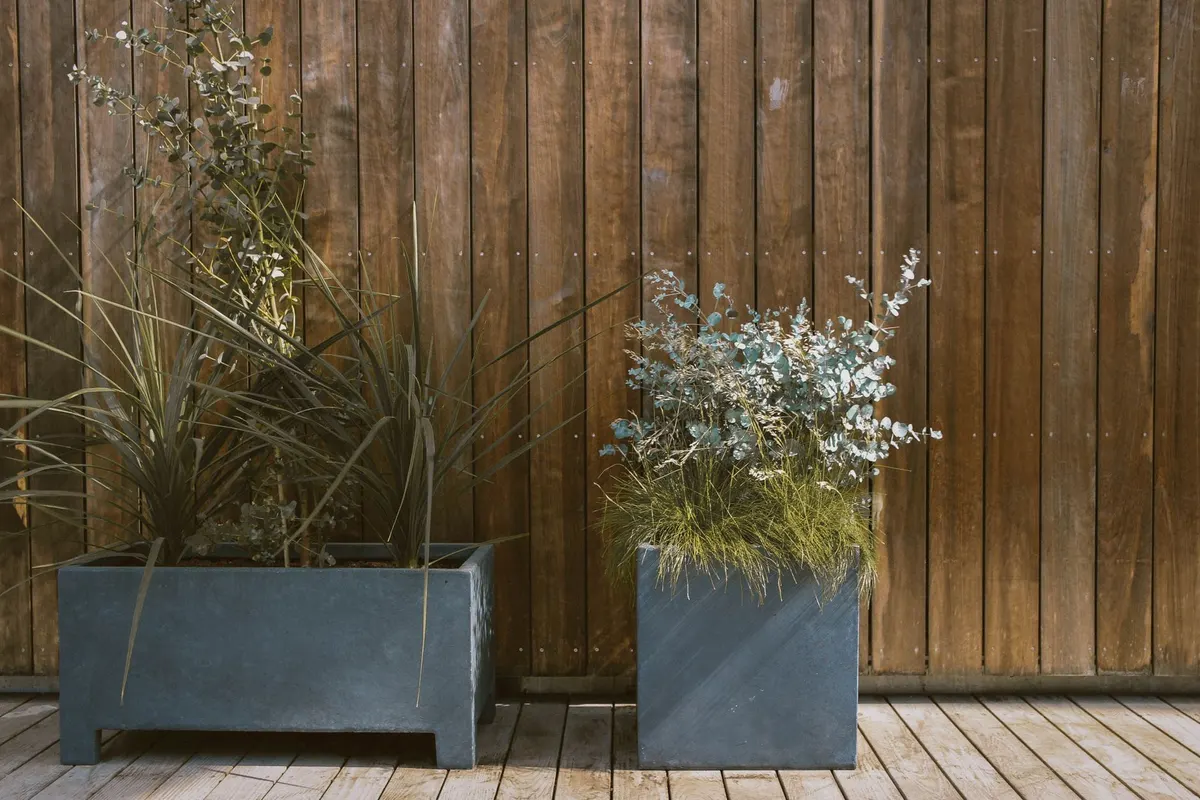
How to Build a Cedar Planter Box for a Patio or Deck
Build a 36x18x18-inch planter box from cedar with a removable bottom for drainage, a full cut list, and assembly tips for a weekend project.
Difficulty
intermediateTime
4–6 hours
Est. cost
$50–$90
Tools you'll need
- Cordless drill driver — our review
- Circular saw — our review
- Speed square
- Tape measure
- Clamps (at least two bar clamps)
- Countersink drill bit
- Sandpaper (80- and 120-grit)
Materials
- 8-foot cedar 1x6 boards (6 pieces for sides and ends)
- 8-foot cedar 1x4 boards (4 pieces for trim and bottom slats)
- Cedar 2x2 board (8 feet for corner posts)
- Exterior wood glue
- 2-inch exterior wood screws (stainless steel or coated)
- 1.5-inch exterior wood screws
- Landscape fabric
- Gravel or small stones for drainage
Step-by-step
- 1
Prepare your lumber and cut list
Start by cutting your cedar boards to size. For a 36-inch long by 18-inch wide by 18-inch tall planter, you need the following pieces: Two side panels: cut from 1x6 boards to 36 inches long (you’ll need 3 boards per side, 6 total for both sides). Two end panels: cut from 1x6 boards to 18 inches long (3 boards per end, 6 total). Four corner posts: cut from 2x2 cedar to 18 inches tall. Four top trim pieces: cut from 1x4 boards to 36 inches (long sides) and 18 inches (short sides). Bottom slats: cut from 1x4 boards to 16.5 inches long (about 6 pieces to span the width). Sand all edges lightly with 80-grit sandpaper to remove splinters, then smooth with 120-grit.
- 2
Assemble the side and end panels
Lay three 36-inch 1x6 boards edge to edge on a flat surface to form a side panel. Apply a bead of wood glue between each board’s edge, then clamp them together. Cut two 16-inch-long strips from a scrap 1x4 to use as batten braces on the inside face. Glue and screw these battens across the panel about 3 inches from the top and bottom using 1.5-inch screws. Check that the panel is flat and the gaps are tight. Repeat to make the second side panel. For the end panels, use three 18-inch 1x6 boards and two 16-inch battens (cut to fit the 18-inch width minus the 1.5-inch batten width). Assemble the same way.
- 3
Attach the corner posts
Stand a side panel on its edge and position a 2x2 corner post flush with the side edge and the bottom of the panel. The post should be 18 inches tall, matching the panel height. Apply glue to the post and clamp it to the side. Drill pilot holes through the panel into the post and drive 2-inch screws every 6 inches along the post. Repeat for the second post on the other end of the same panel. Then attach posts to the second side panel. The posts will sit at the corners of the box, with the side panels between them.
- 4
Join the side panels to the end panels
Position an end panel between the two side panels at one end. The end panel’s ends should butt against the corner posts. Apply glue to the contact area. Clamp the end panel to the posts. Drill pilot holes through the end panel into the posts and drive 2-inch screws every 6 inches. Repeat for the other end panel. Now the four walls are joined into a box. Check that the box is square by measuring diagonals; adjust by pushing corners until both diagonals are equal. Clamp across the top to hold the shape.
- 5
Install the bottom slats and drainage
Cut six 1x4 slats to 16.5 inches long. Arrange them on the bottom of the box with a 1/4-inch gap between slats for drainage. The slats should rest on the bottom of the corner posts and the side battens. Glue and screw each slat in place using 1.5-inch screws, driving into the posts and battens. Leave a half-inch gap at each short end for airflow. After the slats are installed, line the inside of the box with landscape fabric, stapling it to the sides and bottom. Cut a few slits in the fabric over the gaps. Add a 1-inch layer of gravel on top of the fabric for extra drainage.
- 6
Add the top trim
Cut two 1x4 boards to 36 inches for the long sides and two 1x4 boards to 18 inches for the short sides. Miter the ends at 45 degrees for a clean corner look. Apply glue to the top edges of the box, then position the trim flush with the top. Clamp and fasten with 1.5-inch screws every 8 inches, countersunk slightly. The trim covers the rough panel edges and gives a finished appearance. Wipe away any glue squeeze-out immediately.
- 7
Finish and seal the planter
Sand any rough spots, especially around the trim and posts. Apply a clear exterior sealant or a cedar-toned stain to protect the wood from moisture and UV. Let it dry completely (check manufacturer’s instructions). Fill the planter with potting soil and plants, but consider placing a removable liner or pot inside if you want to swap plants easily. The design allows water to drain through the bottom, so place it on a deck or patio where runoff won’t pool.
Why Build a Cedar Planter Box
A cedar planter box is a classic DIY project that adds natural beauty to any patio or deck. This design is 36 inches long, 18 inches wide, and 18 inches tall — a versatile size that fits against a wall, in a corner, or as a centerpiece. Cedar is naturally resistant to rot and insects, making it an ideal choice for outdoor use without heavy chemical treatments. The open-slatted bottom provides excellent drainage, and the removable landscape fabric liner lets water escape while keeping soil contained.
This project uses common dimensional lumber: 1x6 boards for the sides, 1x4 boards for trim and bottom slats, and 2x2 posts for strong corners. The assembly is straightforward with basic power tools and follows the same glue-and-screw method used in furniture building. Even if you have limited woodworking experience, the step-by-step instructions will guide you to a professional-looking result.
Planning Your Build
Before you buy lumber, decide where the planter will sit. Measure the space to confirm the 36x18-inch footprint works. Choose a sunny, level spot for plants. Cedar boards typically come in 8-foot lengths; you’ll need six 1x6 boards, four 1x4 boards, and one 8-foot 2x2. That’s about $50–$90 in materials at typical 2026 prices. Pick straight, knot-free boards when possible; small knots add character but avoid large loose ones.
Cut List
| Part | Quantity | Dimension | Material |
|---|---|---|---|
| Side panels | 6 | 36 in x 5.5 in (1x6) | Cedar |
| End panels | 6 | 18 in x 5.5 in (1x6) | Cedar |
| Corner posts | 4 | 18 in x 1.5 in x 1.5 in | Cedar 2x2 |
| Long top trim | 2 | 36 in x 3.5 in (1x4) | Cedar (mitered ends) |
| Short top trim | 2 | 18 in x 3.5 in (1x4) | Cedar (mitered ends) |
| Bottom slats | 6 | 16.5 in x 3.5 in (1x4) | Cedar |
| Side battens | 4 | 16 in x 2.5 in (cut from 1x4 scrap) | Cedar |
| End battens | 4 | 16 in x 2.5 in (cut from 1x4 scrap) | Cedar |
Note: Actual 1x6 lumber is 0.75 inch thick by 5.5 inches wide; 1x4 is 0.75 by 3.5 inches; 2x2 is 1.5 by 1.5 inches. The bottom slats span the interior width of 16.5 inches (18 inches minus two 0.75-inch board thicknesses).
Fastening and Assembly Tips
Drive screws through pilot holes to prevent splitting, especially near the ends of boards. A countersink bit gives a clean finish. Use exterior wood glue on all joints for long-term strength. For the panels, battens on the inside hold the boards together and add rigidity. When attaching posts, ensure they are flush with the bottom of the panels so the planter sits level. Check squareness frequently; a square planter looks better and sits flat.
Common Mistakes to Avoid
One common mistake is using too long a screw on the bottom slats, which can poke through the sides. Stick to 1.5-inch screws for slats. Another issue is neglecting to leave a 1/4-inch gap between bottom slats; without it, water pools and rots wood quickly. Some builders forget to staple landscape fabric securely — soil can wash out through gaps. Use plenty of staples spaced every 4 inches. Also, avoid overtightening screws that cause the wood to compress and crack. Finally, do not skip sealing the wood if you want it to last more than a couple of seasons.
Safety
Wear safety glasses at all times when cutting or drilling wood. Cedar dust can be an irritant; consider a dust mask when sawing or sanding. Keep hands away from the saw blade path, and use a push stick for narrow cuts. When using a circular saw, ensure the blade guard retracts smoothly and is not jammed. Unplug the saw or remove the battery when changing blades. Clamp workpieces securely before cutting or drilling to prevent kickback. Work in a well-ventilated area when applying sealant or glue. Always follow manufacturer instructions for any finish products.
Finishing Touches
Once the planter is assembled, ease all sharp edges with sandpaper — this prevents splinters and gives a more refined look. A coat of exterior sealer or stain will protect the wood and can be applied with a brush or cloth. Let the finish dry completely before adding soil. The planter can be placed directly on the deck or patio, but adding four small rubber feet or a wooden base strip lifts it off the surface, improving airflow and preventing water stains. Fill with a high-quality potting mix and plants of your choice. For easy seasonal changes, place potted plants inside the planter and surround with filler material.
This planter box is a rewarding weekend project that enhances your outdoor space. With careful assembly and simple maintenance, it will provide years of use.
Advertisement
Frequently asked questions
- Do I need to treat the cedar for outdoor use?
- Cedar is naturally rot-resistant, but applying a clear exterior sealant or stain will extend its life and maintain its color. Unsealed cedar will weather to a gray patina, which many people like. For a deck or patio setting where the planter might get splashed, sealing is recommended.
- Can I use pressure-treated wood instead of cedar?
- Yes, but avoid direct contact with soil if growing edible plants, as the chemicals can leach. Cedar is preferred for organic gardening and better aesthetics. If using pressure-treated wood, line the inside with a plastic barrier separate from the landscape fabric.
- How much soil does this planter hold?
- The interior dimensions are approximately 34 inches long, 16 inches wide, and 16 inches deep, giving about 5 cubic feet of soil. That’s roughly two 2-cubic-foot bags of potting mix plus a bit more.
- What plants work best in a planter this size?
- This size is great for a mix of annuals, small shrubs, or vegetables like tomatoes, peppers, and herbs. You can plant two or three medium-sized plants or up to six smaller ones. Ensure plants have similar sun and water needs.
- How do I prevent the planter from rotting on the bottom?
- Elevate the planter slightly using four small feet or casters, which improves airflow and drainage. The gravel layer and fabric help keep the bottom slats dry. Check periodically that drainage holes are not clogged.