
Best Electric Pressure Washers (2026)
Electric pressure washers have displaced gas from most residential garages — they start instantly, need no fuel or carburetor maintenance, and run at noise levels that let you work without ear protection. This guide focuses on the three corded and cordless electric options available today: the Craftsman CMEPW1700 for light-duty tasks, the Ryobi RY142300 for mid-range versatility, and the EGO HPW3200 for buyers who want both high output and cordless freedom. The DeWalt DXPW3425E is included at rank four as a reference point for buyers comparing electric with gas — but it is a gas machine, and that distinction matters.
EGO HPW3200
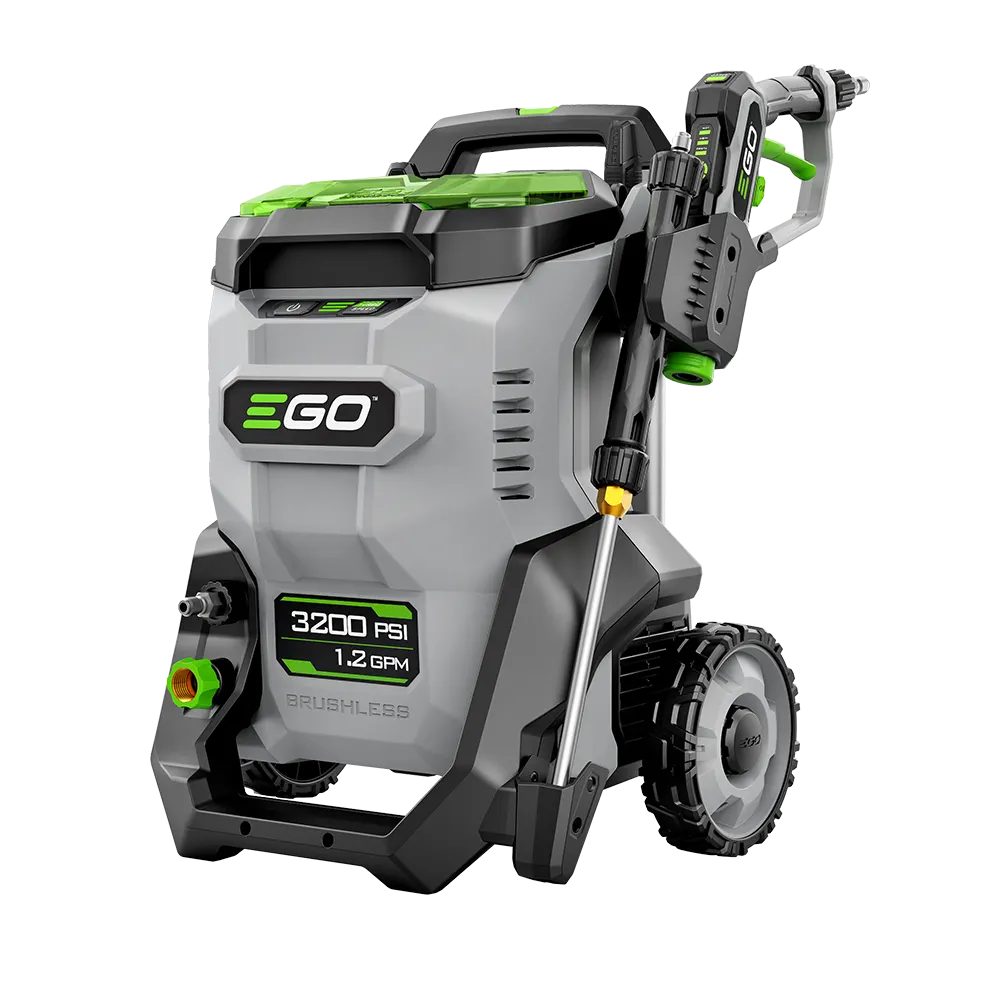
Among electric options, the EGO HPW3200 sits alone at the top for output: 3,200 PSI peak and up to 2.0 GPM from a 56V battery, with no cord to manage and no gas to store. The 25-foot hose extends practical working radius considerably, and at 35 lbs bare it is the lightest of the three electric picks despite its higher PSI rating. The 5-year warranty is the longest in this comparison. For EGO platform users, this is the obvious choice; for new entrants, budget for a 56V battery alongside the bare tool purchase price.
- ✓ 3,200 PSI peak — highest output among the electric options in this group
- ✓ Cordless 56V design removes the outlet-proximity constraint
- ✓ 35 lbs bare — lighter than the corded Ryobi RY142300
- ✓ 25-foot hose and 5-year warranty add practical and long-term value
- ✗ Bare tool price plus a 56V battery makes this the most expensive electric pick
- ✗ Runtime per charge limits use on larger properties without a spare battery
- ✗ 3,200 PSI requires careful tip selection on wood and painted surfaces
Ryobi RY142300
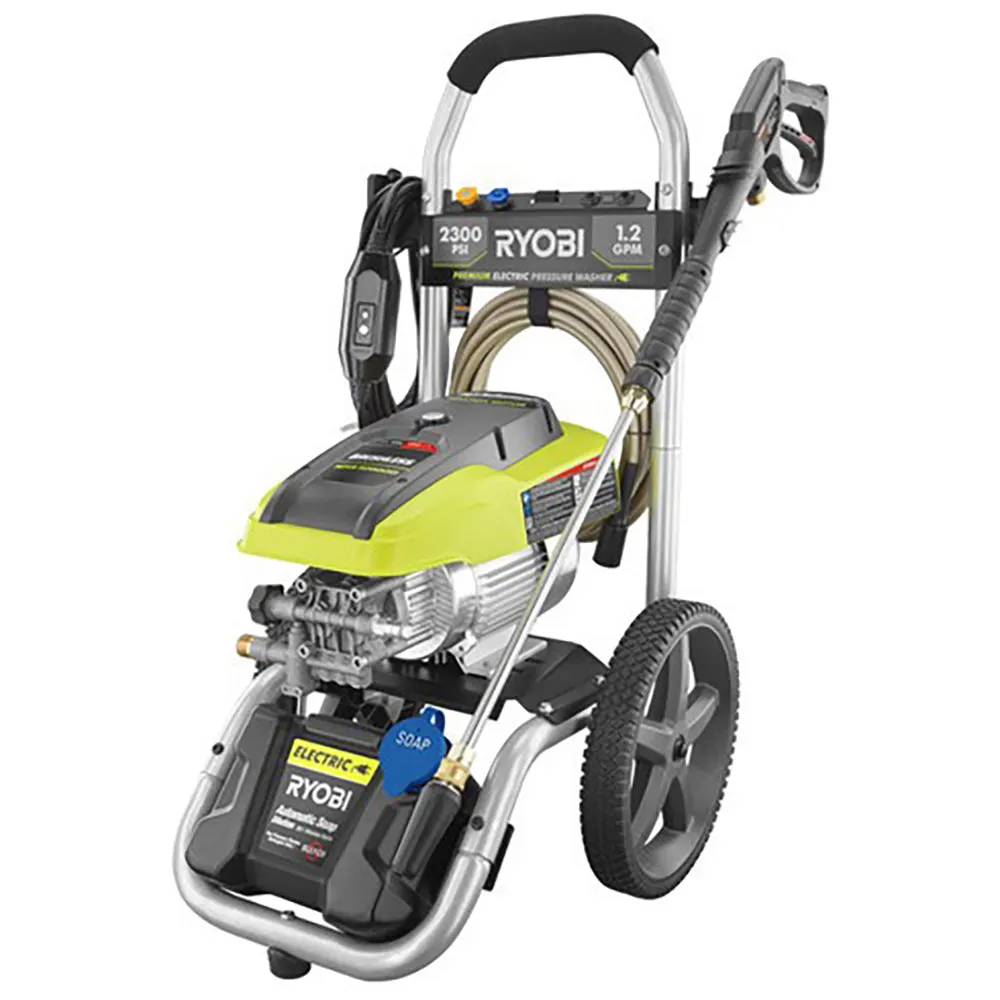
The RY142300 is the electric workhorse of this comparison: 2,300 PSI at 1.2 GPM from a 13A brushless motor that never needs a battery charge and never runs out of runtime. It handles the full range of residential cleaning tasks — driveways, decks, siding, fences, and most vehicle washing — and its five included nozzle tips mean you can dial in the right pressure for each surface without buying accessories. The 3-year warranty is solid, and the brushless motor extends service life beyond cheaper brushed designs.
- ✓ 2,300 PSI covers driveways, decks, siding, and vehicle cleaning
- ✓ Brushless 13A motor for better efficiency and longevity than brushed units
- ✓ Five nozzle tips included — no additional accessories needed for most tasks
- ✓ Unlimited runtime as long as power is available
- ✗ 49.3 lbs is heavy for a corded electric machine
- ✗ Cord and hose management can be cumbersome on large or multi-level properties
Craftsman CMEPW1700
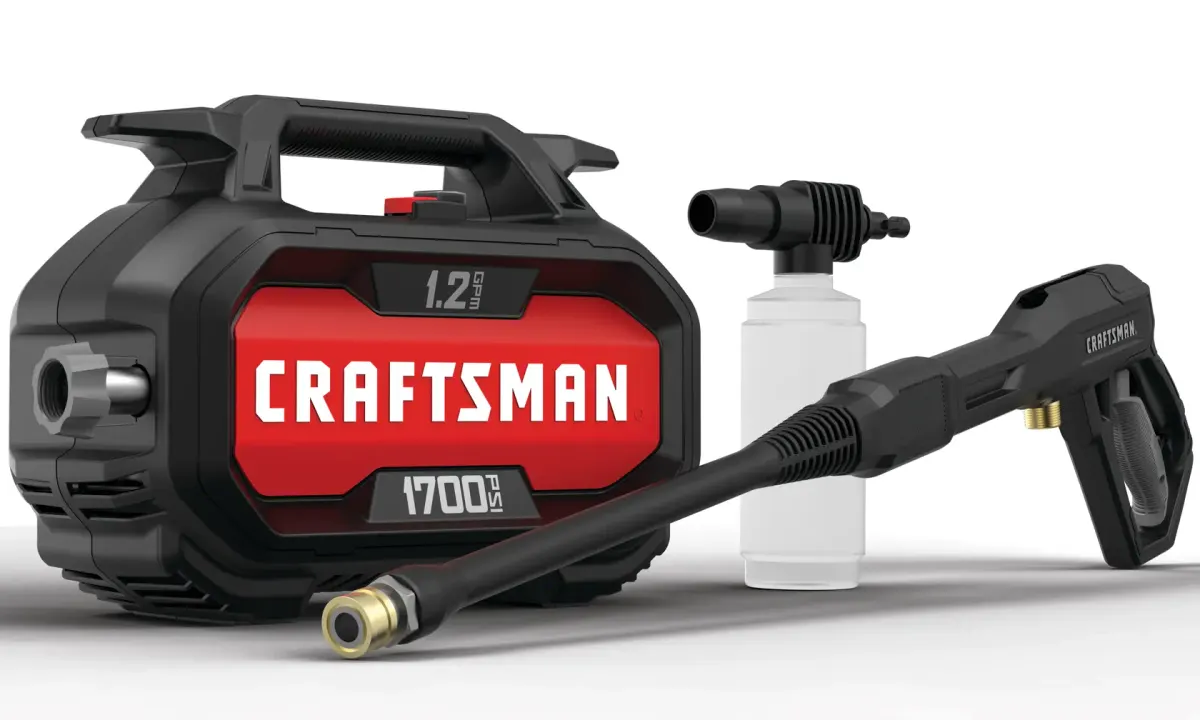
Not every cleaning task needs 2,000-plus PSI, and the CMEPW1700 is the right tool for the jobs that do not: car washing, patio furniture, outdoor cushions, smaller decks, and bikes. At 17.6 lbs it is the lightest machine in this guide by a significant margin, making it the easiest to carry between jobs and store in a small space. The 1,700 PSI output is gentle enough for painted surfaces and delicate materials that the higher-pressure machines risk damaging. A 3-year warranty is reasonable for the price.
- ✓ 17.6 lbs — by far the lightest and easiest to handle machine here
- ✓ 1,700 PSI is safe for cars, furniture, and sensitive surfaces
- ✓ Simple, accessible price point for occasional users
- ✓ 3-year warranty for entry-level pricing
- ✗ 1,700 PSI and 1.2 GPM will not clean deep concrete stains effectively
- ✗ Not the right choice for heavy-duty driveways or stripping tasks
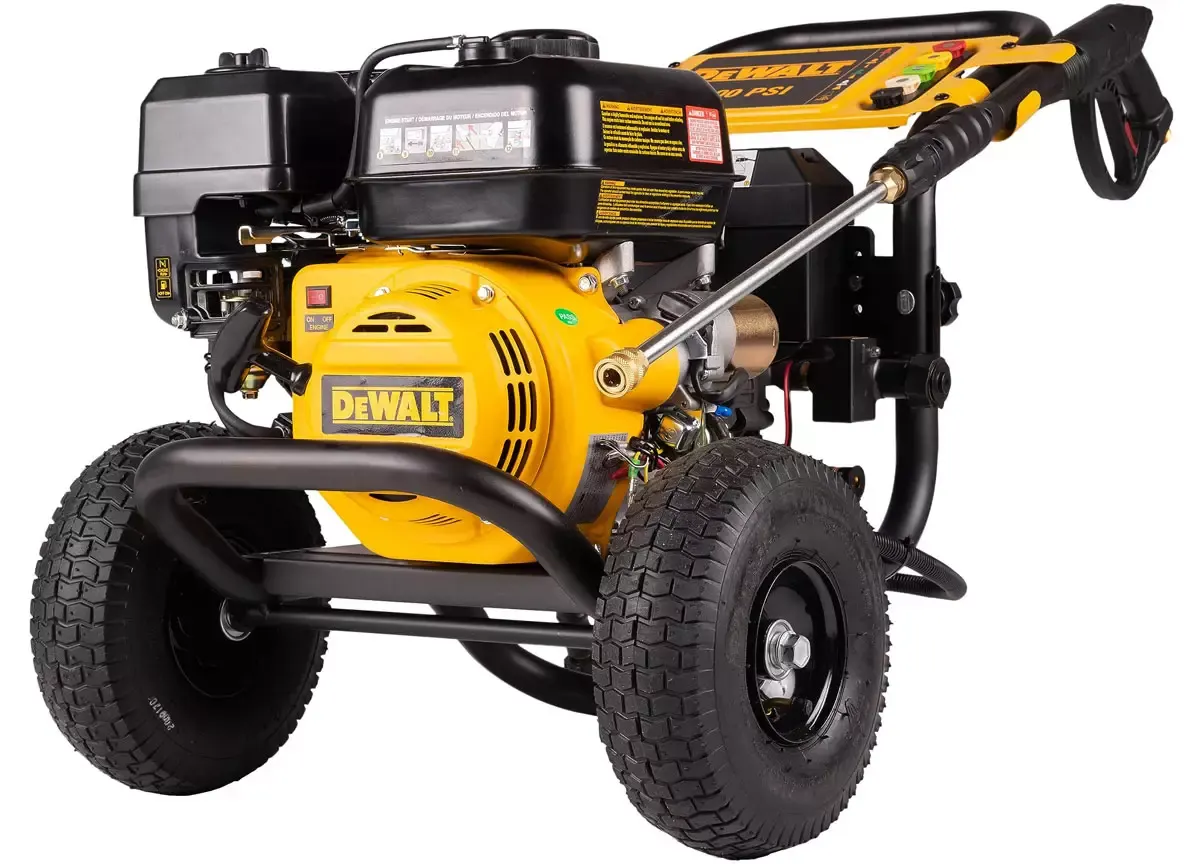
DeWalt DXPW3425E
The DeWalt DXPW3425E is a gas machine — it belongs in this comparison only as a reference point for buyers weighing electric against gas. Its 3,400 PSI at 2.5 GPM is the most powerful output here, electric start removes the pull-cord hassle, and a 5-year warranty backs the investment. But at 81 lbs, with gas storage, oil changes, carburetor maintenance, and winterization all required, it is a specialist tool rather than a residential electric upgrade. If your cleaning work is heavy enough that the three electric picks above fall short, this is the step up — with the understanding that you are taking on a gas machine's full maintenance obligations.
- ✓ 3,400 PSI at 2.5 GPM — the strongest output in this comparison
- ✓ Electric start and a 5-year warranty for a gas machine
- ✓ Unlimited runtime with no battery charge or extension cord required
- ✓ Suitable for heavy surface prep, large concrete areas, and demanding commercial-adjacent tasks
- ✗ Gas machine — requires annual maintenance that electric units avoid entirely
- ✗ 81 lbs is the heaviest option here by a wide margin
- ✗ Gas storage, oil changes, and winterization add ongoing cost and effort
Why electric has become the default choice
Five years ago, gas pressure washers were the standard recommendation for anything beyond light deck rinsing. The gap between electric and gas output justified the maintenance overhead. That calculus has shifted. Corded electric machines at 2,000-plus PSI now clean residential concrete effectively, and cordless units at 3,000-plus PSI have arrived with enough battery capacity to complete a typical driveway or multi-surface session on a single charge.
For most homeowners, electric is now the correct starting point. The question is which electric configuration — corded or cordless — and which PSI tier matches the actual work.
Corded versus cordless: the core trade-off
Corded electric pressure washers connect to a standard outdoor outlet and run indefinitely. They cost less upfront because there is no battery to price in, and their output is consistent from the first minute to the last. The constraint is range: every task happens within extension cord distance of an outlet.
Cordless electric machines like the EGO HPW3200 untether the job completely. Clean on the far side of a detached garage, around a pool deck, or down a driveway without managing cord routing. The trade-off is battery cost and runtime. A 56V EGO battery at 7.5Ah adds significantly to the bare tool price, and a session that runs past the battery's capacity requires a second charged pack or a mid-job pause.
For buyers who own EGO 56V batteries from other tools — blowers, trimmers, mowers — the cordless option costs less in practice because the battery is already on hand. For buyers starting from nothing, the corded Ryobi at 2,300 PSI represents better value per dollar of cleaning power.
PSI tiers and what they actually clean
Electric pressure washers in this guide span three distinct PSI tiers, each with a distinct use profile.
The Craftsman at 1,700 PSI is the light-duty tier. It handles cars, outdoor furniture, bikes, cushions, and smaller deck surfaces where the priority is rinsing and light stain removal without risk of surface damage. At 17.6 lbs it is the easiest machine to carry upstairs to a second-floor deck or load into the back of a car for a trip to wash a boat.
The Ryobi at 2,300 PSI is the mid-range tier that covers the widest range of residential tasks. Driveways, large decks, siding, fences, patio pavers — all within the capability of this output level. Its brushless motor is a genuine differentiator in this class, running more efficiently and lasting longer than comparably priced brushed motor designs.
The EGO at 3,200 PSI peak is the premium electric tier. It reaches output levels that were the exclusive territory of gas machines until recently, all without fuel. The ceiling on 3,200 PSI is surface compatibility — at this pressure, tip selection is critical. A 0-degree or 15-degree tip on softwood or car paint will cause damage. With appropriate nozzle discipline, it cleans concrete, masonry, and heavy grime as effectively as a gas machine in the 2,500 PSI range.
The gas machine in an electric guide
The DeWalt DXPW3425E appears here not as a recommendation for most buyers but as a comparison anchor. Understanding where gas still leads electric helps clarify when the electric machines above are sufficient and when they are not.
Gas leads in two dimensions: sustained output and runtime independence. At 3,400 PSI and 2.5 GPM, the DeWalt produces more cleaning units than any electric machine in this guide. For stripping paint, cleaning very large concrete areas, or working on heavy equipment where the job runs three-plus hours, gas is still more practical than cycling through batteries.
For every other residential use, the electric machines — particularly the EGO at 3,200 PSI — close the gap sufficiently that the gas machine's maintenance burden outweighs its advantages.
Matching machine to owner
Buyers entering the EGO platform, or already in it, should look at the HPW3200 first. The cordless convenience is real, and 3,200 PSI covers every common residential task. Buyers who want reliable output at a mid-range price without a battery investment should look at the Ryobi RY142300 — it is the corded electric that gets the most use cases right for the most people. Buyers who primarily wash cars and occasional furniture should consider the Craftsman CMEPW1700 first; its 17.6 lb weight and 1,700 PSI make it genuinely pleasant to use for light tasks where a 2,300 PSI machine is overkill. And buyers who specifically need gas output should look at the DeWalt with clear eyes about the maintenance commitment they are accepting.
Advertisement
Frequently asked questions
- What makes an electric pressure washer different from a gas model?
- Electric pressure washers use either a corded AC motor or a battery-powered DC motor, while gas models use an internal combustion engine. The practical differences are maintenance burden, noise, and convenience. Electric machines start immediately, need no fuel, produce no exhaust, and require only basic care. Gas machines like the DeWalt DXPW3425E produce higher sustained output but require regular oil changes, carburetor servicing, and winterization. For residential use, the maintenance simplicity of electric typically outweighs the power advantage of gas.
- Is 2,300 PSI enough for a concrete driveway?
- For routine concrete driveway maintenance — dirt, dust, oil stains, and general grime buildup — 2,300 PSI at 1.2 GPM (the Ryobi RY142300) handles most residential driveways adequately. Deep oil stains or long-neglected concrete may benefit from the EGO's 3,200 PSI peak or a surface cleaner attachment, which concentrates pressure in a circular pass for more consistent results. For new staining or mold remediation, a higher-pressure machine combined with a driveway detergent is more effective than raw PSI alone.
- How long does an EGO cordless pressure washer run on one battery?
- Runtime for the EGO HPW3200 varies with throttle setting and task difficulty. On a 7.5Ah battery at moderate pressure, expect 30 to 45 minutes of run time for general residential cleaning. A 56V 5.0Ah battery provides somewhat less. EGO recommends pairing the HPW3200 with a high-capacity pack for extended sessions. For properties requiring more than 45 minutes of continuous use, a spare charged battery is worth having on hand.
- Can I use a pressure washer to clean a car safely?
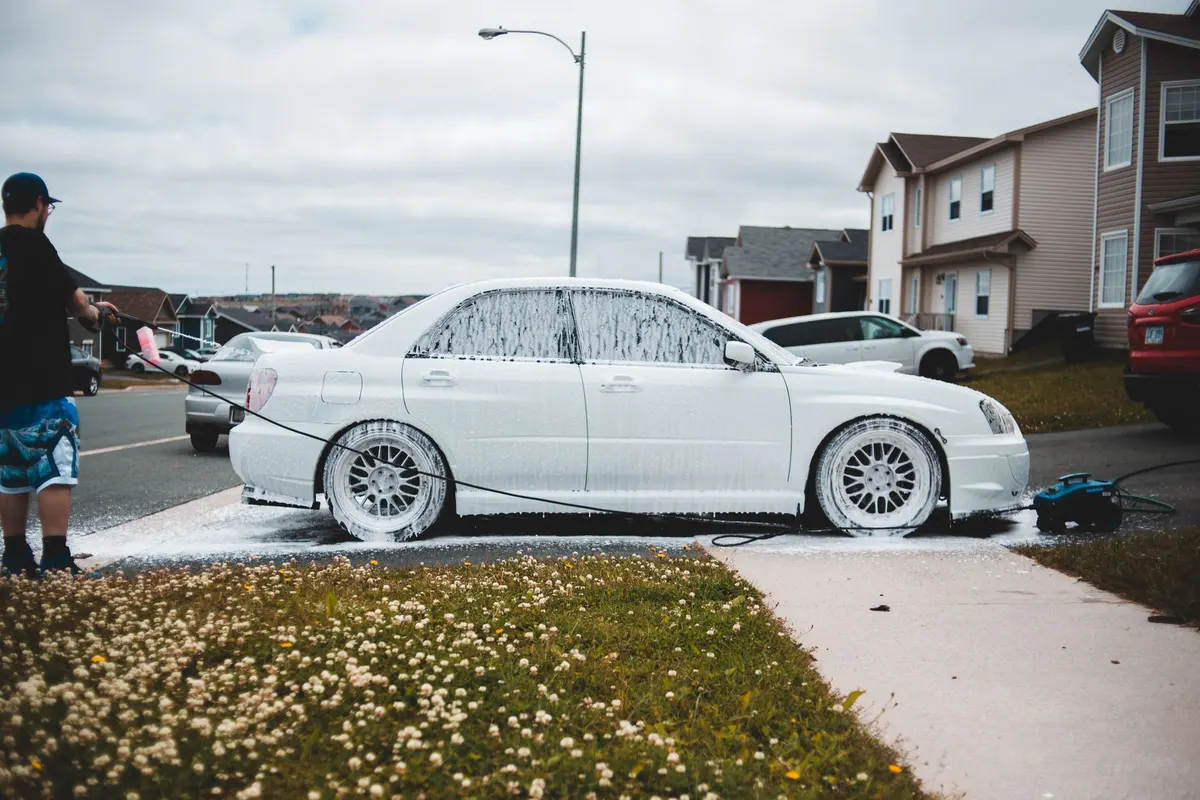
- Yes, with the right machine and tip. The Craftsman CMEPW1700 at 1,700 PSI is the safest choice for car washing — keep the nozzle at least 12 to 18 inches from the surface and use a 40-degree (white) or soap tip. At 2,300 PSI and above, the risk of stripping paint or forcing water into seals increases, particularly on older vehicles or peeling clear coat. If you use the Ryobi at 2,300 PSI for vehicle washing, use the widest tip available and avoid direct angled contact with trim, seals, and emblems.
- Why would I choose corded over cordless for an electric pressure washer?
- Corded electric machines offer three advantages over cordless: lower purchase cost (no battery required), unlimited runtime as long as power is available, and consistent output that does not drop as a battery depletes. For homeowners who clean near the house, garage, or within a reasonable extension cord run, corded is simpler and less expensive. Cordless is the right choice when working far from outlets, cleaning a multi-level home or detached structures, or when you already own the battery platform and want a single-platform outdoor tool setup.