
The Best Cordless Drills for Beginners in 2026
The best cordless drill for a beginner in 2026 is the Bosch GSR18V-400 — it is the lightest tool here at 2 lbs 12.8 oz, carries the longest warranty at 5 years, comes as a complete kit, and its fine 20-position clutch makes it the most forgiving for someone still learning not to strip screws. If you want the lowest price, the Ryobi PCL206 kit is the gentler entry point; if you can spend a little more for a battery platform you will grow into, the Makita XFD131 is the safest long-term first buy.
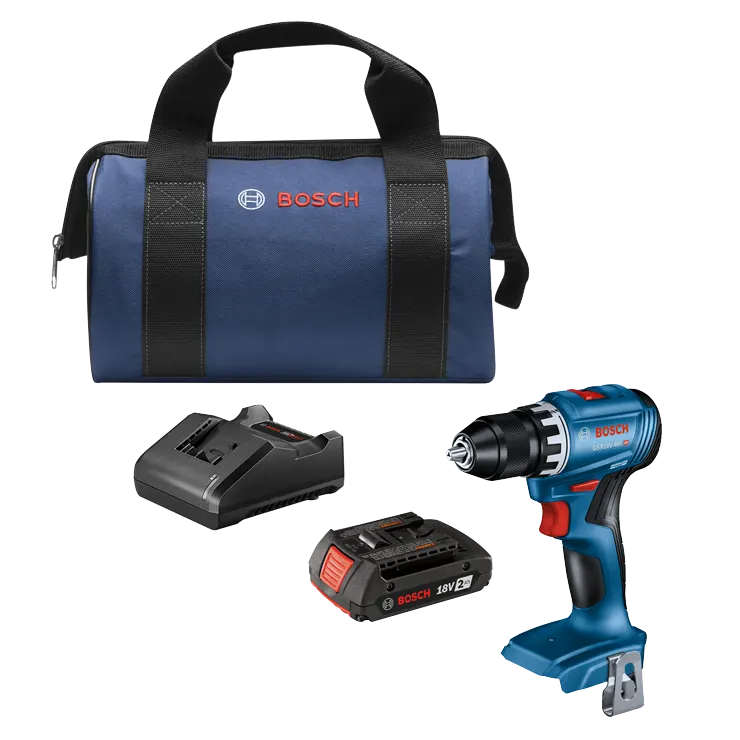
Bosch GSR18V-400 18V Compact Drill
For a first drill, the Bosch checks the boxes that matter most to a beginner: it is the lightest tool of the group at 2 lbs 12.8 oz, the kit is usually the cheapest of the established brushless options, and the 5-year tool warranty is the longest here — reassuring when you are not yet sure how hard you will be on it. The standout for a learner is the 20-position clutch, the finest in this guide, which gives you many small steps to dial in before you over-drive and strip a screw. Its 400 in-lbs ceiling is the lowest of the group, but a beginner rarely runs into it.
- ✓ Lightest tool here at 2 lbs 12.8 oz — easy to control for a new user
- ✓ Fine 20-position clutch is the most forgiving for avoiding stripped screws
- ✓ Longest warranty in the guide at 5 years on the tool
- ✓ Complete kit with battery, charger, and bag at the lowest price of the brushless options
- ✗ 400 in-lbs is the lowest torque here, though beginners rarely hit the ceiling
- ✗ B12 kit includes just one small 2.0Ah battery
Ryobi ONE+ PCL206 18V Drill/Driver Kit
If the priority is spending as little as possible on a first drill, the Ryobi PCL206 is the gentle entry point. It is the lightest tool in this guide at 2.65 lbs, its 24-position clutch is actually the finest here for learning fastener control, and its 515 in-lbs rated torque is more than a beginner needs. The brushed motor and small 1.5Ah kit batteries mean it is less efficient than the brushless picks, but for someone hanging shelves and assembling furniture a few times a month, the savings outweigh the compromises — and ONE+ is a huge, affordable platform to grow into.
- ✓ Lowest price of any pick here for a complete kit
- ✓ Lightest tool in the guide at 2.65 lbs with a fine 24-position clutch
- ✓ 515 in-lbs rated torque is ample for everyday beginner tasks
- ✓ Ryobi ONE+ is a large, low-cost platform to expand into
- ✗ Brushed motor drains batteries faster than the brushless picks
- ✗ Kit bundles small 1.5Ah packs, so runtime is limited
- ✗ Slower 0–1,750 RPM top speed than the brushless drills
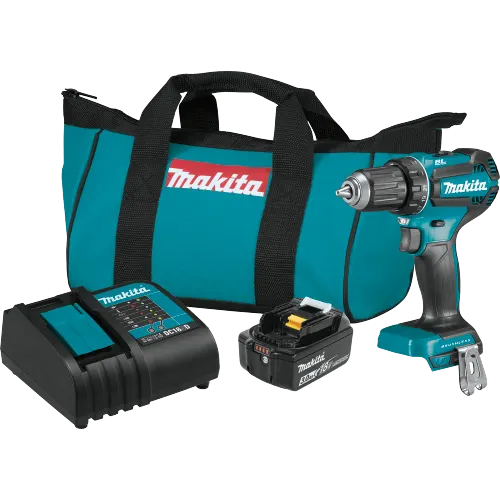
Makita XFD131 18V LXT Driver-Drill Kit
A beginner who is fairly sure the hobby will stick should consider spending a little more on the Makita XFD131. It is light at 3.8 lbs and well-balanced, the kit's 3.0Ah battery and 30-minute charger mean less waiting and more doing, and the 440 in-lbs of torque leaves real headroom as your projects get more ambitious. Most importantly, it buys into the broadest battery platform in the business — the LXT line spans over 300 tools — so a first drill becomes the foundation of a growing kit rather than a dead end.
- ✓ Light and well-balanced at 3.8 lbs with the battery installed
- ✓ Kit includes a larger 3.0Ah battery and a fast 30-minute charger
- ✓ 440 in-lbs leaves headroom as projects get more demanding
- ✓ Buys into the 300-plus-tool Makita LXT platform
- ✗ Costs more than the Bosch or Ryobi starter kits
- ✗ More torque and platform depth than a casual beginner strictly needs
How we picked for beginners
A first cordless drill is a different decision from an expert's. The buyer is not trying to optimize torque-per-dollar or platform depth across a 20-tool fleet — they want a tool that is easy to control, hard to make mistakes with, affordable, and complete in the box. So we re-ranked the drills we have reviewed through a beginner's lens, weighting the things that help a new user and discounting the things only a heavy daily user benefits from. We have not run a lab test, and we do not claim to; the recommendations are built from verified manufacturer specifications, the actual US kit configurations, warranty terms, and the consistent themes in owner experience.
Three models rose to the top for beginners: the Bosch GSR18V-400 for the best all-round first-drill experience, the Ryobi PCL206 for the lowest price, and the Makita XFD131 for the buyer who wants a first tool they can grow into. We deliberately left the high-torque Milwaukee 2904 off this list — its power and weight are wasted on a beginner, and a bare tool is the wrong format for someone with no batteries yet.
What matters when you choose a beginner's drill
Four things should drive a first-drill purchase, and they are not the same four an expert obsesses over.
Weight and control come first. A new user has not built up the muscle memory to manage a heavy, nose-heavy drill, so a light tool is genuinely easier to aim, hold square, and use overhead. The Ryobi (2.65 lbs), the Bosch (2 lbs 12.8 oz bare), and the Makita (3.8 lbs with battery) are all easy to handle; the Milwaukee's near-5 lb working weight is the opposite of beginner-friendly, which is one reason it is not on this list.
Clutch forgiveness prevents the classic beginner mistake. The single most common error a new user makes is over-driving a screw — stripping the head, sinking it too deep, or splitting the wood. The clutch is what saves you: more positions means more small steps to dial in before you go too far. The Ryobi's 24-position and Bosch's 20-position clutches are the finest here, which is a real, practical advantage for someone learning fastener control.
Price keeps a first mistake cheap. Beginners do not yet know how much they will use a drill, so spending less de-risks the purchase. The Ryobi kit is the cheapest pick here by a clear margin; the Bosch is the most affordable of the established brushless kits; the Makita costs more but buys platform depth in return.
Kit completeness matters more than for any other buyer. An expert may already own batteries; a beginner owns nothing. That makes a complete kit — battery, charger, and case in the box — non-negotiable, and it is why a bare tool like the Milwaukee 2904 is the wrong format for a first purchase. All three picks here ship complete.
Best for beginners: Bosch GSR18V-400
The Bosch wins for beginners because it is forgiving in exactly the ways a new user needs. At 2 lbs 12.8 oz bare it is the lightest tool in this guide, so it is easy to hold square and control while you are still learning. Its 20-position clutch is the finest among the established brushless drills, giving you plenty of small steps to find the right setting before you over-drive a screw. The kit is complete and usually the cheapest of the brushless options, and the 5-year tool warranty — the longest here — is reassuring when you do not yet know how hard you will be on it. The only real limitation is the 400 in-lbs torque ceiling, the lowest in the guide, but a beginner driving cabinet screws and hanging shelves almost never reaches it.
Best budget starter: Ryobi ONE+ PCL206
When the goal is to spend as little as possible on a first drill, the Ryobi PCL206 is the gentle on-ramp. It is the lightest tool in this guide at 2.65 lbs, and its 24-position clutch is actually the finest of any pick here — outstanding for a learner dialing in fastener depth. Its 515 in-lbs rated torque is more than a beginner needs, and the ONE+ platform spans hundreds of affordable tools to grow into over time. The compromises are the brushed motor, which is less efficient and drains the small 1.5Ah kit batteries faster than a brushless drill would, and a slower 0–1,750 RPM top speed. For someone assembling furniture and hanging pictures a few times a month, those trade-offs are easy to accept for the savings.
Best to grow into: Makita XFD131
A beginner who already suspects this will become a regular hobby should think about spending a little more on the Makita XFD131. It is light at 3.8 lbs and notably well-balanced, the kit includes a larger 3.0Ah battery and a 30-minute charger so there is less waiting around, and its 440 in-lbs of torque leaves genuine headroom for when projects get more ambitious. The real argument, though, is the platform: the XFD131 buys into Makita's 18V LXT line, the broadest cordless ecosystem in the business at over 300 tools. That turns a first drill into the foundation of a growing collection rather than a tool you outgrow. It costs more than the Bosch or Ryobi, and a casual user may never need its extra torque or platform depth — but for the beginner who is in it for the long haul, it is the safest first buy.
Common beginner mistakes these picks help avoid
The most frequent first-drill regrets are predictable, and the right tool heads them off. Buying a bare tool with no battery is the classic trap — all three picks here avoid it by shipping as complete kits. Stripping screws by over-driving is the next, which is exactly why we weighted clutch fineness so heavily; the Ryobi and Bosch are the most forgiving. Buying far more drill than you need is the third — a beginner does not need 1,400 in-lbs and a hammer mode, and paying for them means carrying extra weight every day. And choosing a platform you will abandon is the slow-burn mistake; if you expect to expand, the Makita's deep LXT line is the antidote, while if you stay casual the Ryobi and Bosch are perfectly sound.
A note on testing and honesty
This is an analytical buying guide, not a controlled lab shootout, and we are not going to dress it up as one. The rankings come from verified manufacturer specifications, the kit configurations actually sold in the US, warranty terms, and the weight of owner experience — reframed around what helps a first-time buyer specifically. Where a number is unavailable we say so rather than invent it. The goal is simple: get a beginner to a drill that is light enough to control, forgiving enough to learn on, complete in the box, and priced to match how much they will really use it.
Advertisement
Frequently asked questions
- What is the best cordless drill for a beginner?
- The best cordless drill for a beginner in 2026 is the Bosch GSR18V-400 — it is light, comes as a complete kit, carries a 5-year warranty, and its fine 20-position clutch makes it the most forgiving for someone still learning not to strip screws. If price is the deciding factor, the Ryobi PCL206 kit is a cheaper, gentler start; if you expect to grow a tool collection, the Makita XFD131 is the safest long-term first buy.
- Do beginners need a brushless drill?
- No — a beginner does not strictly need a brushless drill. Brushless motors run cooler, last longer, and get more work per charge, which is why the Bosch and Makita picks here use them, but a well-made brushed drill like the Ryobi PCL206 drives screws and bores small holes perfectly well for occasional use and costs noticeably less. Choose brushless if you expect to use the drill regularly, brushed if you want the lowest price for light tasks.
- How much torque does a beginner's drill need?
- A beginner needs far less torque than the spec wars suggest — 400 to 500 in-lbs covers hanging shelves, assembling furniture, building simple projects, and general fastening, which is exactly the range the Bosch (400), Makita (440), and Ryobi (515) picks here sit in. You do not need a high-torque hammer drill like the Milwaukee 2904 unless you start driving large lag bolts or drilling masonry.
- What is the clutch on a drill and why does it matter for a beginner?
- The clutch is the numbered collar behind the chuck that stops the drill from turning once a set resistance is reached, which prevents you from over-driving and stripping screws or damaging the workpiece. It matters most for beginners, who have not yet developed a feel for when to stop. The Bosch's 20-position and Ryobi's 24-position clutches give the most small steps to dial in, making both especially forgiving.
- Should a beginner buy a drill kit or just the bare tool?
- A beginner should always buy a complete kit, never a bare tool. A bare tool comes with no battery or charger, so it is useless until you buy those separately — and you have no existing platform to draw from. The Bosch, Ryobi, and Makita picks here all ship as kits with a battery, charger, and case, which is exactly what a first-time buyer needs.
- Is a drill/driver or a hammer drill better for a beginner?
- A drill/driver is the better first tool for nearly every beginner — it is lighter, simpler, and covers wood, metal, and fastening, which is the vast majority of home tasks. A hammer drill adds a percussion mode for masonry and extra weight you will rarely use. All three beginner picks here are drill/drivers; only step up to a hammer drill like the Milwaukee 2904 if you know you will regularly anchor into brick or concrete.