
Best Circular Saws for Beginners 2026
The best circular saw for a first-time buyer is the Skil 5280-01 — a corded saw with a 15-amp motor, 5,300 RPM blade speed, and an included laser guide for straight cuts. If you prefer cordless freedom, the Ryobi PBLCS300B is the lightest 7-1/4-inch saw available and the best entry point into the ONE+ battery system. Picks are ranked for safety, simplicity, affordability, and manageable weight.
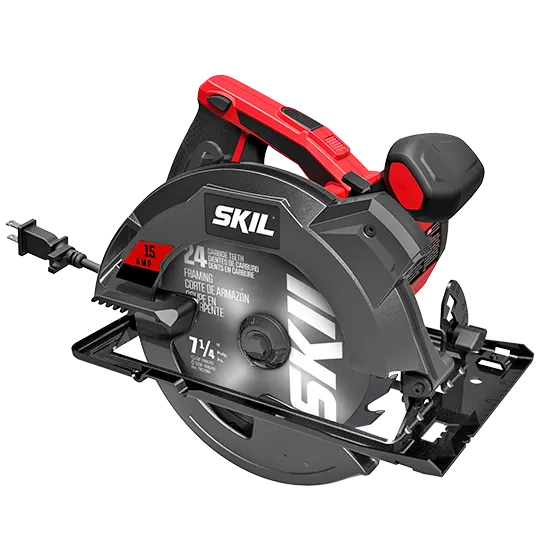
Skil 5280-01
The Skil 5280-01 takes the top spot because its corded design eliminates battery worries — no batteries to buy, charge, or watch deplete. Its 15-amp motor delivers 5,300 RPM, faster than most cordless saws at any price, and never slows down. The integrated single-beam laser guide helps new users track a cut line, and the rear-view depth adjustment means you set blade depth without flipping the saw over. At roughly $70, it is the lowest-cost entry point and the safest recommendation for anyone who cuts near an outlet.
- ✓ 15-amp motor at 5,300 RPM never slows down — unlimited runtime
- ✓ Laser guide helps beginners track cut lines freehand
- ✓ Rear-view depth adjustment saves setup time
- ✓ Under $70 — cheaper than any cordless saw with comparable power
- ✗ Corded operation limits portability; requires extension cord on every cut
- ✗ No electric blade brake — blade freewheels 5–8 seconds after trigger release
- ✗ Stamped steel shoe flexes slightly under heavy lateral pressure on long rip cuts
We may earn a commission from this link.
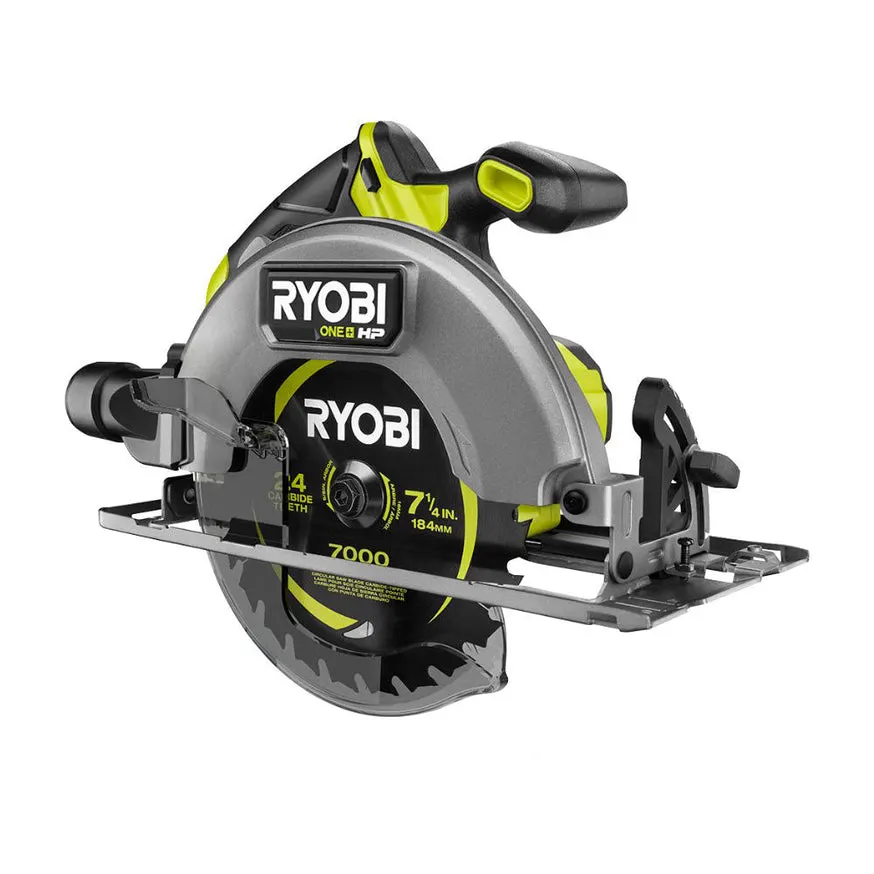
Ryobi PBLCS300B
For new buyers who want cordless convenience, the Ryobi PBLCS300B is the lightest 7-1/4-inch saw available at 6.6 lbs — reducing fatigue over a day of cutting. Its brushless HP motor and 56-degree bevel range exceed typical budget-saw specs, and the Ryobi ONE+ platform spans over 225 tools, so battery investment grows with your needs. It is slower than corded saws at 4,300 RPM, but for DIY framing, decking, and plywood cuts it offers genuine freedom from the cord.
- ✓ 6.6 lbs — lightest 7-1/4-inch saw in this guide, easy to carry and control
- ✓ 56-degree bevel beats most competitors; six detents for common angles
- ✓ Brushless HP motor provides good runtime and durability for occasional use
- ✓ Backed by the Ryobi ONE+ platform with over 225 shareable tools
- ✗ 4,300 RPM slowest in this guide — more tearout and slower cuts than corded saws
- ✗ Composite shoe flexes more than metal shoes on precision rip cuts
- ✗ Bare tool requires separate battery; HP battery needed for full performance
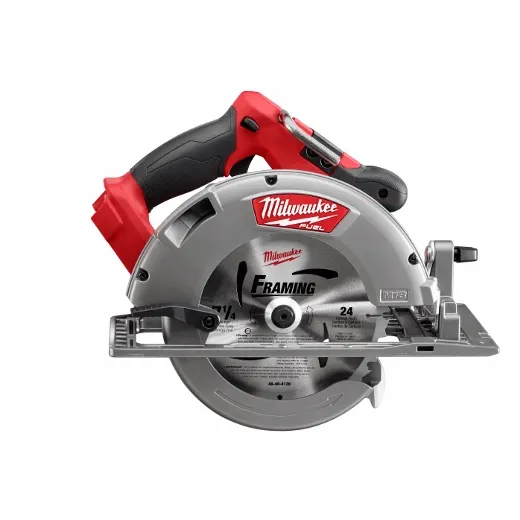
Milwaukee 2731-20
Beginners who plan to stick with woodworking long-term should consider the Milwaukee 2731-20 — the lightest pro-tier cordless saw at 7.5 lbs with a magnesium shoe for stability. Its 5,000 RPM POWERSTATE motor holds speed under load, and the electric brake stops the blade in about two seconds, a critical safety upgrade. As a bare tool it costs more, but for new buyers investing in the M18 platform, this saw grows with skill level.
- ✓ 7.5 lbs — lightest pro-grade cordless saw, reduces arm fatigue
- ✓ Magnesium shoe is stiff and stable for accurate cuts
- ✓ Electric brake stops blade quickly — safer for new users
- ✓ Part of the broad M18 platform with over 200 tools
- ✗ Bare tool only — no battery or charger included, entry cost higher than Ryobi
- ✗ 50-degree bevel is narrower than Ryobi's 56 degrees
- ✗ Rafter hook is smaller and less comfortable than DeWalt's design
We may earn a commission from this link.
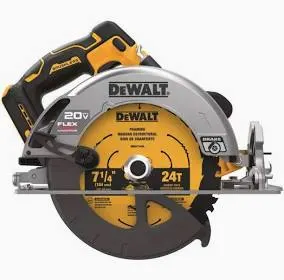
DeWalt DCS573B
The DeWalt DCS573B offers the widest bevel range (57 degrees) and an aluminum shoe that stays flat, making it ideal for beginners tackling deck framing, roof sheathing, or compound-angle cuts. Its FLEXVOLT Advantage lets it scale power with larger batteries, but even on standard 20V packs it delivers 5,500 RPM with an electric blade brake. The trade-off is higher weight (8.2 lbs) and bare-tool pricing around $249.
- ✓ 57-degree bevel covers hip-roof and compound cuts that 45-degree saws cannot
- ✓ Aluminum shoe is flat and rigid — helps new users make straight cuts
- ✓ Electric brake stops blade in ~2 seconds for added safety
- ✓ FLEXVOLT Advantage increases power when used with 60V battery (sold separately)
- ✗ 8.2 lbs — heaviest saw in this guide, noticeable during overhead work
- ✗ Bare tool around $249; additional cost for battery and charger
- ✗ Stock 24-tooth framing blade causes tearout on plywood; upgrade recommended
How we picked
This guide ranks four circular saws for a specific audience: first-time buyers who are new to power saws and need a tool that is safe, easy to use, affordable, and not too heavy. We have not physically tested these saws. Instead, each claim here is drawn from published manufacturer specifications, kit configurations sold in the US, and consistent themes in owner reports. Where two tools are close, we weigh factors that matter most to a beginner: electric brake, weight, included features like a laser guide or depth-stop detents, and the total cost of entry including batteries if applicable.
The shortlist is built from the most commonly cross-shopped 7-1/4-inch saws in the US retail market. We include one corded saw (the Skil 5280-01) as the simplest and safest pick for new users, and three cordless options (Ryobi PBLCS300B, Milwaukee 2731-20, DeWalt DCS573B) that span budget to pro levels. All four have been reviewed in depth on this site; the full reviews are linked for further reading.
What matters when you choose a circular saw as a beginner
Four things decide which saw is right for a first-time buyer.
Safety features are the top priority. An electric brake stops the blade within about two seconds after you release the trigger, compared to five to eight seconds on a freewheeling saw. That gap can prevent a serious injury if you set the saw down while the blade is still spinning. A smooth lower guard that retracts easily and snaps back smartly is also critical. Among these picks, the Milwaukee 2731-20 and DeWalt DCS573B both have electric brakes; the Ryobi PBLCS300B and Skil 5280-01 do not.
Weight determines how tired you get. A heavier saw is harder to control, especially overhead or on vertical cuts. The Ryobi PBLCS300B is the lightest at 6.6 lbs, then the Milwaukee at 7.5 lbs, the DeWalt at 8.2 lbs, and the Skil at 8.7 lbs. If you plan to carry the saw up a ladder or use it for long periods, lighter is better.
Simplicity means a saw that is easy to set up and use. Features like a laser guide (Skil), rear-view depth adjustment (Skil), and clearly marked bevel detents (all four) reduce the learning curve. A left-blade design (Ryobi, Milwaukee, DeWalt) gives right-handed users a clear sightline to the cut line. A right-blade design (Skil) can work fine but may require more body positioning for right-handers.
Affordability matters for a first saw, because you may not yet know how often you will use it. The Skil 5280-01 at $70 is the cheapest entry point. The Ryobi PBLCS300B bare tool is around $90, but you need to add at least one battery and a charger, which brings the total to around $150–$200. The Milwaukee and DeWalt are more expensive bare tools and require battery investment, but they offer longer lifespans for those who plan to stick with the hobby or trade.
Best corded for beginners: Skil 5280-01
The Skil 5280-01 earns the top pick because it is the simplest, safest corded option for a first-time buyer. No batteries to manage — just plug in and cut. Its 15-amp motor delivers 5,300 RPM, faster than any battery-powered saw in this guide, and that speed never drops as you cut. The laser guide projects a red line onto the workpiece, which helps new users track a straight freehand cut. The rear-view depth adjustment lets you set blade depth without flipping the saw over, a convenience that is rare at this price.
The main limitation is the cord: you need an extension cord for every cut, and the blade freewheels for several seconds after releasing the trigger. But for a first saw used near an outlet, those compromises are offset by the low price and straightforward operation. The stamped steel shoe is functional though less rigid than metal shoes on more expensive saws.
Best cordless for beginners: Ryobi PBLCS300B
For new buyers who want cordless convenience, the Ryobi PBLCS300B offers the best balance of weight, price, and features. At 6.6 lbs it is the lightest 7-1/4-inch saw in this guide, making it easy to carry and control. Its brushless HP motor provides good runtime with a HIGH PERFORMANCE battery, and the 56-degree bevel range is the widest among cordless options here — useful for cutting rafters and compound angles.
The Ryobi ONE+ platform is a strong reason to start with this saw: over 225 tools share the same battery, so your investment grows with your needs. The saw lacks an electric brake and its 4,300 RPM top speed is the slowest here, which can cause more tearout on cross-grain cuts. But for a first cordless saw used for DIY projects, the combination of low weight, wide bevel, and low entry cost is hard to beat.
Best lightweight pro option: Milwaukee 2731-20
Beginners who are serious about woodworking and plan to invest in tools over time should consider the Milwaukee 2731-20. At 7.5 lbs it is the lightest pro-tier cordless saw, with a magnesium shoe that stays flat for accurate cuts. Its POWERSTATE brushless motor holds 5,000 RPM under load, and the electric brake stops the blade in about two seconds — a significant safety advantage.
The trade-off is cost: as a bare tool the 2731-20 is around $180–$210, and you must add an M18 battery and charger, pushing total cost over $250. That investment makes sense only if you plan to buy more M18 tools. For a beginner who is certain they will continue woodworking, this saw grows with skill and will not need replacement.
Best for deck building: DeWalt DCS573B
The DeWalt DCS573B is the pick for beginners building decks, sheds, or fences where compound-angle cuts are common. Its 57-degree bevel range is the widest of any saw here, and the aluminum shoe is flat and rigid — two features that help make accurate cuts. The FLEXVOLT Advantage means it can draw more power from a 60V FLEXVOLT battery, but even on standard 20V packs it delivers 5,500 RPM with an electric brake.
At 8.2 lbs it is the heaviest saw here, which can be tiring for extended use. The bare-tool price around $249 is high, and the stock 24-tooth framing blade causes tearout on plywood — a 40-tooth finishing blade is recommended if you cut sheet goods. For beginners who already own DeWalt 20V MAX batteries, this is the natural choice. For those starting fresh, the weight and cost put it behind the Ryobi for cordless beginners.
How to read these rankings
The ranks are not a simple best-to-worst order; they are tailored to the first-time buyer's priorities. The Skil is first because it is the safest, simplest, and cheapest option that still performs well. The Ryobi is second because it offers the best cordless value for a beginner. The Milwaukee and DeWalt are ranked third and fourth because they require larger investments and are better suited to users who know they will stay in the ecosystem. Start with your budget and whether you can manage a cord, then match to the award label.
A note on honesty and testing
This guide is an analytical buying guide that synthesizes verified specifications, real US kit configurations, and the weight of owner experience into ranked recommendations. Every number comes from published sources or the original reviews linked above. We have not invented test results. Where a feature is missing — the Skil's lack of an electric brake — we say so directly. The goal is to get you to the right saw for your first project, with reasoning clear enough that you can disagree where your priorities differ from ours.
Advertisement
Frequently asked questions
- Should a beginner buy a corded or cordless circular saw?
- Choose corded for unlimited runtime and lower cost — the Skil 5280-01 delivers more power for less money than any cordless option. Choose cordless if you cut away from outlets, work on rooftops, or value portability. For a first saw, corded is simpler, but cordless offers greater flexibility. If you prefer cordless, the Ryobi PBLCS300B is the lightest and most affordable entry point.
- What safety features matter most for a new saw user?
- An electric blade brake stops the blade within seconds after releasing the trigger, reducing the risk of cuts from a spinning blade. The Milwaukee 2731-20 and DeWalt DCS573B both have effective electric brakes. The Skil 5280-01 lacks a brake, so allow 5–8 seconds for the blade to stop. Also important: a retractable lower guard that moves smoothly out of the way and springs back automatically.
- How much does a circular saw weigh, and does it matter?
- Weight matters significantly for comfort and control. The lightest saw in this guide is the Ryobi PBLCS300B at 6.6 lbs, followed by the Milwaukee 2731-20 at 7.5 lbs, the Skil 5280-01 at 8.7 lbs, and the DeWalt DCS573B at 8.2 lbs. A lighter saw is easier to maneuver and less fatiguing, especially when cutting overhead or on a ladder. Beginners should try to handle the saw in person before buying.
- What is the best circular saw for under $100?
- The Skil 5280-01 at roughly $70 is the best circular saw under $100. It provides a 15-amp motor, 5,300 RPM, and a laser guide — features that outperform any cordless saw in the same price range. For cordless, the Ryobi PBLCS300B bare tool is around $90, but you will need to add a battery and charger, pushing the total cost higher.
- How deep can a 7-1/4-inch circular saw cut?
- At 90 degrees, most 7-1/4-inch saws cut about 2-1/2 inches deep — enough to cut through 2x lumber (1-1/2 inches) with plenty of margin. The Skil cuts 2-7/16 inches, the Milwaukee 2-1/2 inches, the DeWalt and Ryobi 2-9/16 inches at 90 degrees. At 45 degrees, cutting depth is shallower, typically just under 2 inches, which still passes through a 2x4 in one bevel cut.
- Do I need a high-tooth-count blade as a beginner?
- The included 24-tooth framing blade is fine for rough cuts in lumber, but it leaves tearout on plywood and visible faces. If you plan to cut cabinet-grade plywood or trim, upgrade to a 40-tooth or 60-tooth finishing blade. Many beginners find that a good blade makes more difference in cut quality than the saw itself.