
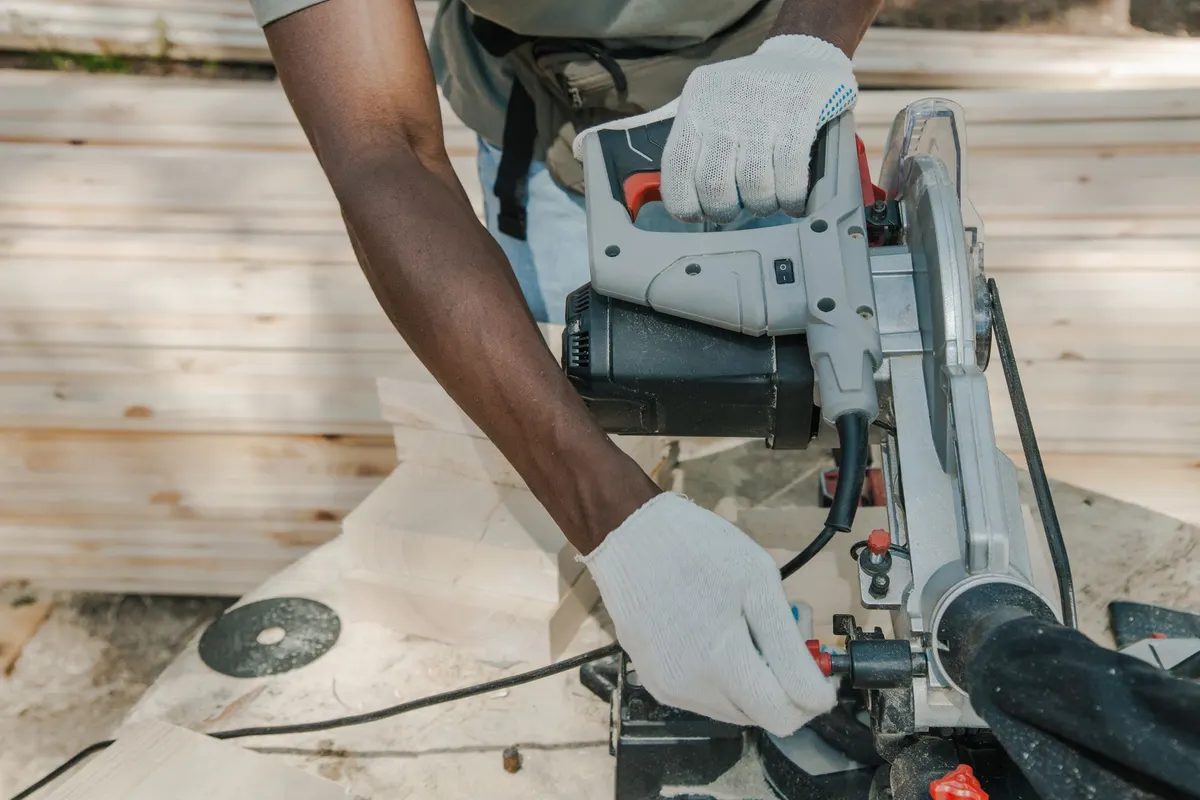
The Best Circular Saws of 2026
Choosing a circular saw in 2026 comes down to one question before anything else: corded or cordless? For framing, rough carpentry, and any jobsite with reliable power access, a corded saw like the Skil 5280-01 delivers consistent 15-amp performance at a fraction of the cordless price. For remodelers, finish carpenters, and anyone who moves constantly between locations, a brushless cordless saw — the DeWalt DCS573B or Milwaukee 2731-20 for pros, the Ryobi PBLCS300B for budget builds — eliminates the extension cord without sacrificing meaningful cutting depth.
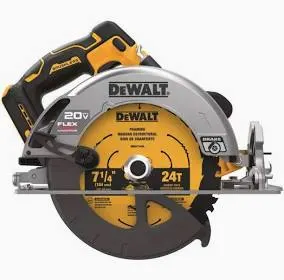
DeWalt DCS573B 20V MAX FLEXVOLT Advantage 7-1/4"
The DCS573B stands apart from typical cordless 7-1/4-inch saws because its FLEXVOLT Advantage motor automatically draws more power from a FLEXVOLT battery when it detects load demand — giving you closer-to-corded performance on thick framing stock without the cord. On a standard 20V MAX pack it still delivers 5,500 RPM and a 2-9/16-inch depth of cut at 90 degrees, bevel capacity from 0 to 57 degrees, and a brushless motor that runs efficiently even when ripping through doubled-up 2x material. At 8.2 lbs bare it is the heaviest cordless pick in this guide, but for a contractor who already owns the 20V MAX or FLEXVOLT ecosystem, the cutting performance is the best argument for the added weight.
- ✓ FLEXVOLT Advantage boosts power automatically when using a FLEXVOLT battery
- ✓ 5,500 RPM no-load speed — highest of the cordless picks in this guide
- ✓ 57-degree bevel capacity covers crown and specialty angle cuts
- ✓ Backed by the deep DeWalt 20V MAX/FLEXVOLT battery platform
- ✗ Sold bare — FLEXVOLT battery and charger add significant cost for new platform buyers
- ✗ 8.2 lbs is the heaviest cordless saw in this guide
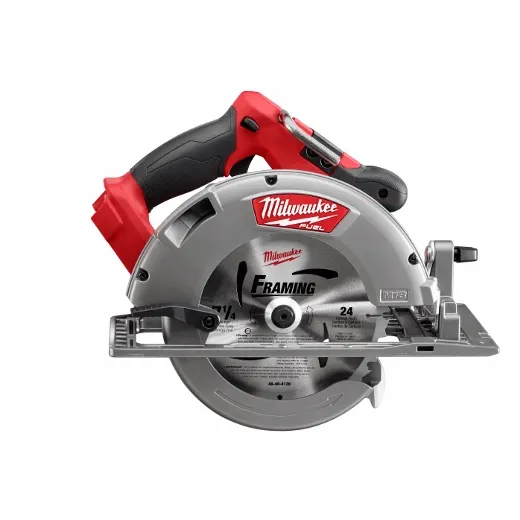
Milwaukee 2731-20 M18 FUEL 7-1/4"
The Milwaukee 2731-20 is built around a magnesium shoe — an unusual material choice at this price that reduces total weight to 7.5 lbs bare while adding rigidity that aluminum shoes cannot match over years of heavy use. Its POWERSTATE brushless motor delivers 5,000 RPM and a 2-1/2-inch depth at 90 degrees, and its 50-degree bevel range covers most production carpentry applications. At $179–210 bare, it is the most expensive cordless saw in this guide, but M18 FUEL tools are the default recommendation for professional framers and finish carpenters who demand durability across an 8-hour day rather than occasional use performance.
- ✓ Magnesium shoe is more durable and rigid than aluminum over a long service life
- ✓ 7.5 lbs bare — lighter than the DeWalt despite a comparable blade size
- ✓ POWERSTATE brushless motor and REDLINK PLUS electronics for consistent power delivery
- ✓ Deep M18 FUEL ecosystem for platform buyers building a professional tool fleet
- ✗ $179–210 bare is the highest bare-tool price among the cordless picks here
- ✗ 50-degree bevel range trails the DeWalt's 57 degrees
We may earn a commission from this link.
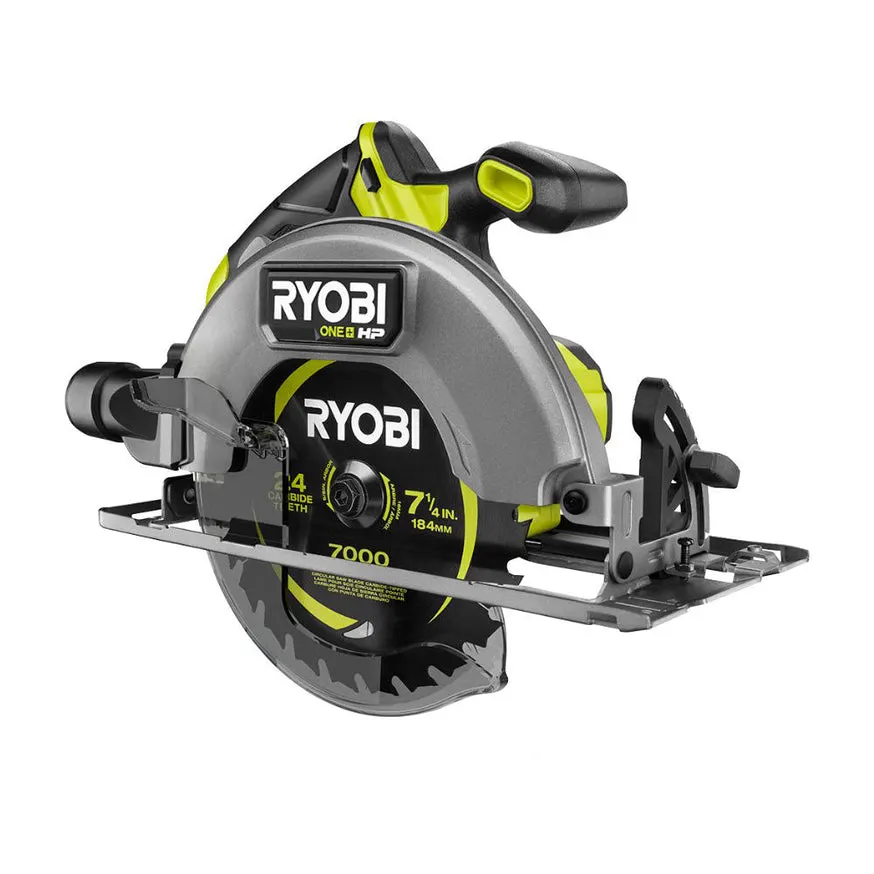
Ryobi PBLCS300B 18V HP Brushless 7-1/4"
The PBLCS300B is the cordless saw for the buyer who wants brushless efficiency and a full 7-1/4-inch blade without paying professional-grade prices. Its left-blade design improves sightlines for right-handed operators — a notable ergonomic advantage that both premium picks lack — and at 4,300 RPM it cuts most dimensional lumber efficiently even if it lacks the high-speed overhead of the DeWalt and Milwaukee. The 56-degree bevel capacity matches the DeWalt's range for practical purposes, and at $79–120 it can be the most affordable cordless 7-1/4-inch brushless saw on the market. The ONE+ HP platform offers more power-hungry tools than the standard ONE+ line, giving buyers a viable upgrade path.
- ✓ Left-blade design improves cut-line visibility for right-handed operators
- ✓ Brushless motor at a fraction of the premium brand prices
- ✓ 56-degree bevel capacity for compound angle and crown-cut applications
- ✓ Lightest cordless 7-1/4-inch saw in this guide at 6.6 lbs
- ✗ 4,300 RPM no-load speed is lower than the DeWalt and Milwaukee picks
- ✗ Ryobi ONE+ HP battery platform has fewer professional-grade tools than M18 or 20V MAX
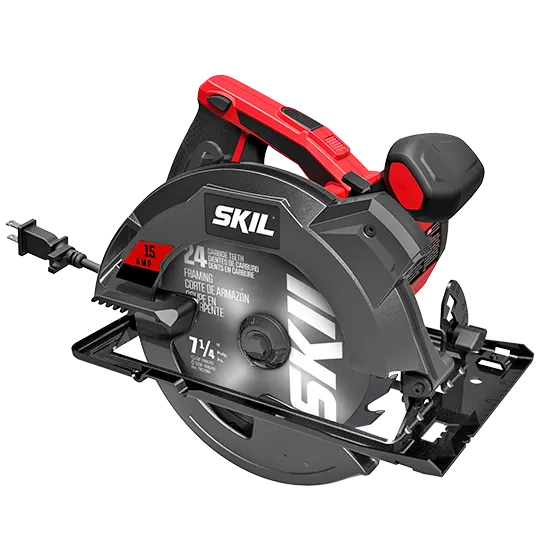
Skil 5280-01 15-Amp 7-1/4" Circular Saw
For a fixed workshop, a garage, or any situation where a power outlet is within reach, the Skil 5280-01 makes the strongest possible case for the corded option: 15 amps and 2.5 HP at 5,300 RPM, a 51-degree bevel range, and a built-in laser guide for straight freehand cuts — all for $65–80. It is heavier than the Ryobi at 8.7 lbs, and it has no battery to charge or replace, which in a fixed-location workflow is a feature rather than a drawback. The laser guide is a differentiator at this price: most cordless saws in this range do not include one, and for users who cut without a straightedge guide, it meaningfully improves accuracy on rip cuts and sheet goods.
- ✓ 15-amp corded power delivers consistent performance regardless of battery state
- ✓ Built-in laser guide for improved accuracy on freehand cuts
- ✓ $65–80 is the lowest price in this guide by a wide margin
- ✓ 51-degree bevel capacity for angled cuts on crown and trim applications
- ✗ Cord limits mobility — not practical for multi-story, roofing, or remote jobsite work
- ✗ 8.7 lbs is the heaviest saw in the guide
- ✗ Brushed motor is less efficient than the brushless cordless picks under sustained load
We may earn a commission from this link.
Corded versus cordless: the choice that shapes everything else
Five years ago, the standard advice for anyone buying a circular saw for serious work was to start corded and go cordless only if mobility was genuinely necessary. That calculus has shifted. The DeWalt DCS573B and Milwaukee 2731-20 reviewed in this guide cut dimensional lumber and sheet goods at speeds and depths that match a 15-amp corded saw for most practical tasks, and they do it without the cord management overhead that adds meaningful friction to mobile jobsite work.
The argument for corded has not disappeared — it has narrowed. For a fixed garage workshop, a stationary construction site with power drops, or any buyer for whom $65 versus $230 is the deciding factor, the Skil 5280-01 is still the right answer. But cordless has become the default for anyone who moves.
This guide covers both: two professional cordless options, one budget cordless option, and one corded budget option. The recommendations are built around US pricing, verified specifications, and the practical realities of common use cases rather than a ranked list that implies one tool is universally superior.
Blade size, depth of cut, and what they mean in practice
All four saws in this guide use the 7-1/4-inch blade format, which is the industry standard for framing and general carpentry. At 90 degrees, the cordless picks deliver between 2-1/2 and 2-9/16 inches of cut depth — enough to clear a doubled 2x6 in a single pass or rip through 3/4-inch sheet goods with several inches of safety margin. The Skil cuts to 2-7/16 inches at 90 degrees, fractionally shallower but sufficient for the same common tasks.
Bevel capacity is where the saws diverge more meaningfully. The DeWalt's 57-degree bevel is the broadest in the guide and covers every compound angle application that comes up in production finish carpentry. The Milwaukee's 50-degree range handles most crown and compound cut work. The Ryobi's 56 degrees is nearly as capable as the DeWalt's for practical purposes. The Skil's 51-degree range covers more than basic 45-degree needs but falls short of the cordless picks on extreme compound cuts.
Speed, power, and how they interact with blade selection
No-load RPM figures — 5,500 for the DeWalt, 5,000 for the Milwaukee, 4,300 for the Ryobi, 5,300 for the Skil — are a proxy for cutting speed but not a complete picture. The quality of the motor under load matters at least as much: a saw that advertises 5,000 RPM but bogs dramatically when it contacts 2x material is less useful than one that holds 4,500 RPM through the cut.
The DeWalt's FLEXVOLT Advantage is the most sophisticated power management system in this guide. When a FLEXVOLT battery detects that the saw's motor is working hard, it automatically shifts from 20V to 60V delivery, keeping RPM consistent through thick stock. The practical result is a cordless saw that behaves more like a corded one during the cuts where corded saws traditionally have the clearest advantage: dense Douglas fir, doubled 2x10 headers, and thick OSB sheathing.
Blade selection interacts with all of these numbers. A quality 40-tooth combination blade (typically included or available for under $20) delivers clean cuts in dimensional lumber at all four saws' rated speeds. Dropping to a framing blade with 24 teeth accelerates cuts in rough stock. Moving up to a 60-tooth fine-finish blade slows all four saws noticeably but produces a result that can go straight to paint or stain without additional sanding.
Shoe material and construction quality
The shoe — the flat base plate that rides along the workpiece — is one of the most understated quality indicators in a circular saw, and the Milwaukee 2731-20's magnesium shoe is the standout in this guide. Magnesium is stiffer per unit of weight than aluminum, which means the bevel detents stay accurate longer and the shoe stays flat rather than developing a bow that throws off cut depth over time. For a professional tool that will be slid across lumber thousands of times over its service life, the material choice matters.
The DeWalt and Ryobi use aluminum shoes, which are adequate for serious use but will develop wear on high-volume framing sites over years. The Skil uses a more standard stamped-metal shoe appropriate for its price point and intended use pattern.
Best overall: DeWalt DCS573B
The DCS573B leads this guide because it solves the central problem of cordless circular saws — inconsistent power under load — better than anything else at a practical price. Its FLEXVOLT Advantage motor management keeps cutting speed consistent through thick material in a way that standard cordless saws cannot match, and its 5,500 RPM no-load speed and 57-degree bevel range cover the full range of framing and carpentry work. The 20V MAX/FLEXVOLT ecosystem is the most compelling reason to buy it: the same battery that powers this saw can power a FLEXVOLT table saw, a 12-inch sliding miter saw, or a 60V MAX outdoor tool.
The weight — 8.2 lbs bare — is the real drawback. Lighter operators or those doing sustained overhead work will feel it after a while. But for production framing and sheet-goods work at ground level, the DCS573B is the most capable cordless 7-1/4-inch saw available without stepping up to a dedicated worm-drive tool.
Best for pros: Milwaukee 2731-20
For the M18 platform owner or the buyer who values long-term durability over raw performance metrics, the 2731-20 is the better fit. Its magnesium shoe is built for the kind of daily abuse a production framing site delivers, and at 7.5 lbs it is lighter than the DeWalt despite using the same blade size. The M18 FUEL line's REDLINK PLUS electronics provide overload protection that extends motor life in sustained-use scenarios.
At $179–210 bare, it is the most expensive cordless saw in this guide, and it makes the most sense for buyers who are already invested in M18 and who plan to use the saw hard over a multi-year service life. For occasional homeowner use, the Ryobi delivers most of the practical capability at a fraction of the cost.
Best cordless value: Ryobi PBLCS300B
The PBLCS300B's left-blade design is an underappreciated advantage for the majority of users. A right-handed operator working with a typical two-handed grip has a direct sightline to the blade on a left-blade saw; on a right-blade saw, the motor housing sits between the operator and the cut line, requiring either a shadow line or an offset pencil mark. For crosscuts and ripping without a fixed straightedge, the left-blade layout reduces error on its own.
At $79–120 and 6.6 lbs, the PBLCS300B is also the lightest and most affordable cordless saw in this guide by a significant margin. Its 4,300 RPM is lower than the premium picks, but for dimensional lumber and sheet goods at the pace a homeowner or part-time remodeler works, the difference is not noticeable in practice.
Best budget corded: Skil 5280-01
For the buyer who has no battery platform and does not anticipate building one, paying $65–80 for a 15-amp corded saw is a rational decision. The Skil 5280-01's laser guide is a genuine differentiator at this price — on freehand crosscuts in dimensional lumber, a well-calibrated laser guide reduces drift and improves cut accuracy without requiring a separate straightedge clamp or snap line. For sheet goods work and precision ripping, add a straightedge guide regardless of the saw; for rough framing and quick crosscuts, the laser earns its keep.
The Skil's 5,300 RPM is competitive with the premium cordless picks, and its 15-amp motor delivers consistent power as long as the cord reaches. The practical limitation is that cord: for roofing, second-floor framing, remote garage projects, and any work more than 50–100 feet from an outlet, the cordless picks become the more functional choice regardless of price.
How to match these picks to your situation
Start with the corded-versus-cordless decision. If you have a fixed power source and cost is the primary constraint, the Skil 5280-01 is difficult to beat. If mobility matters, move to the cordless picks: match the tool to your existing battery platform if you have one, or choose the DeWalt DCS573B as the most capable starting point for a new platform. If you are on a budget but want cordless brushless performance, the Ryobi PBLCS300B is the pick. Reserve the Milwaukee 2731-20 for M18 platform owners or professional buyers who prioritize long-term durability and are comfortable with the premium price.
Advertisement
Frequently asked questions
- What is the best circular saw for a homeowner in 2026?
- For most homeowners, the Ryobi PBLCS300B is the strongest recommendation — it delivers brushless cordless performance at a price well below the professional picks, and its left-blade design gives better cut-line visibility than typical right-blade saws. If you already own a DeWalt or Milwaukee battery platform, the DCS573B or 2731-20 are worth the upgrade. For fixed garage or workshop use with an outlet nearby, the Skil 5280-01 is the most cost-effective option in the guide.
- Is a cordless circular saw as powerful as a corded one?
- For most framing and sheet-goods cutting, a high-end brushless cordless saw like the DeWalt DCS573B or Milwaukee 2731-20 delivers performance close enough to a corded 15-amp saw that the difference is rarely noticeable in practice. Where corded saws retain a real advantage is sustained ripping through dense hardwood or engineered lumber — tasks where a cordless saw draws down a battery faster and may throttle power. For occasional to moderate use, cordless is the more practical choice; for production ripping or all-day sheet-goods breaking, corded still has a case.
- What size circular saw blade do I need?
- A 7-1/4-inch blade is the standard for framing and general carpentry — it delivers a maximum cut depth at 90 degrees of approximately 2-1/2 to 2-9/16 inches, which clears doubled 2x framing material in a single pass. All four saws in this guide use the 7-1/4-inch format. Smaller 6-1/2-inch blades are available on lighter trim saws and are better for fine finish work and thinner stock; 5-1/2-inch and smaller are specialty tools for one-handed or compact use.
- What bevel capacity do I actually need in a circular saw?
- For standard framing — wall plates, roof sheathing, subfloor — 45-degree bevel capacity is sufficient. The 50-to-57-degree bevel ranges on the cordless picks in this guide give you the extra angle needed for crown molding returns, hip rafter cuts, and compound bevel work without a separate miter saw. If your work stays on flat cuts and simple miters, bevel range above 45 degrees adds little value; if you do production finish carpentry, the extra range is genuinely useful.
- Should I buy a worm-drive or sidewinder circular saw?
- For most users, a standard sidewinder (inline motor) circular saw like all four picks in this guide is the correct choice — they are lighter, more compact, and available in far more cordless configurations than worm-drive saws. Worm-drive saws, which position the motor parallel to the blade, deliver higher torque and run cooler under sustained load, making them popular with production framers who rip hundreds of boards per day. For remodeling, finish work, and homeowner use, a quality sidewinder is the more practical and portable tool.
- How long does a cordless circular saw battery last on a charge?
- Runtime depends heavily on the battery capacity and the saw's motor efficiency, as well as the material being cut. A 5.0Ah battery in the DeWalt DCS573B can typically handle 200-plus crosscuts in 2x lumber on a single charge under standard use conditions. Ripping thick hardwood or dense engineered panels will cut that number significantly. Carrying a second charged battery eliminates the runtime concern for most full-day jobsite use — both the DeWalt and Milwaukee ecosystems have compact 5.0Ah and high-capacity 9.0Ah packs available.