
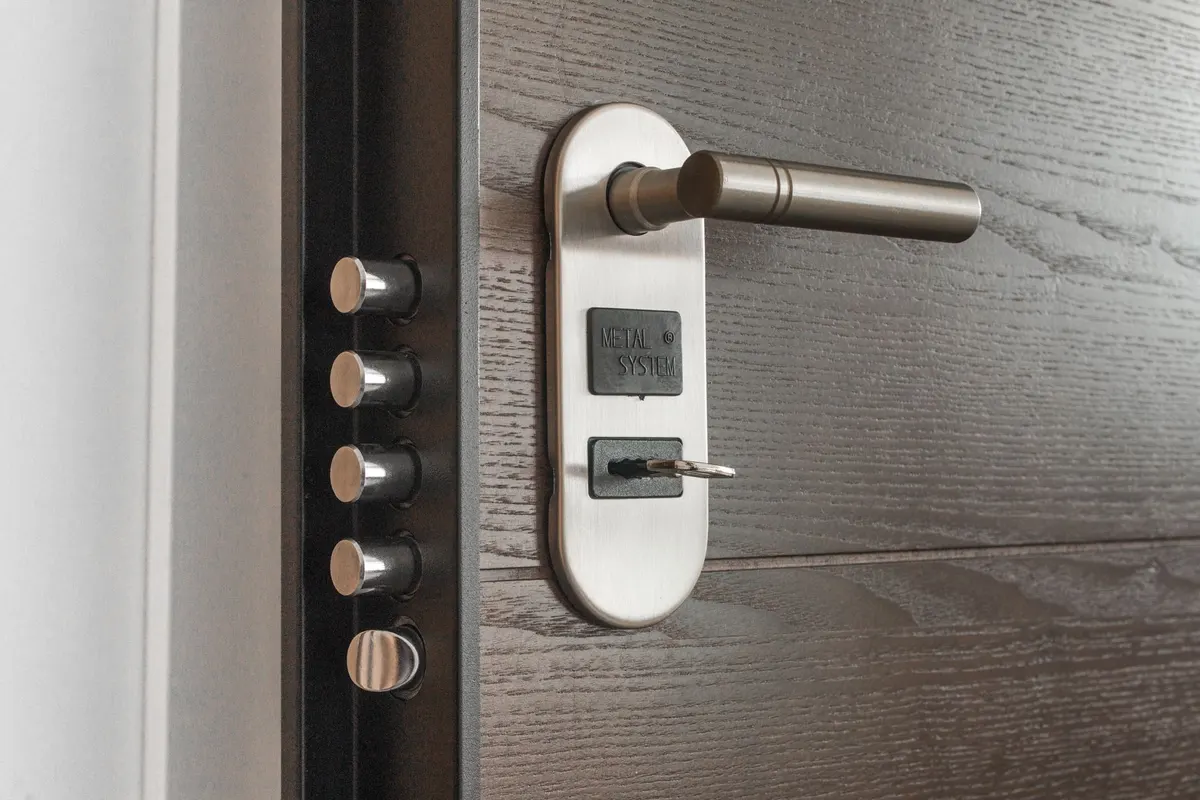
How to Replace a Deadbolt and Entry Lockset
Swap a front-door deadbolt and handle in about an hour with common tools, including proper latch alignment, strike plate sizing, and security tips.
Difficulty
beginnerTime
45 minutes to 1 hour
Est. cost
$40–$80
Tools you'll need
- Cordless drill driver — our review
- Tape measure
- Pencil
- Chisel (1/2 inch or 3/4 inch)
- Hammer
- Phillips #2 screwdriver bit
- Spade bit or hole saw (2-1/8 inch for deadbolt, 1 inch for latch)
Materials
- New deadbolt and entry lockset (keyed alike recommended)
- Strike plate (included with lockset)
- Latch assembly (included)
- Wood shims
- Painter’s tape (optional for marking)
Step-by-step
- 1
Remove the old deadbolt and lockset
Unscrew the interior trim plate of both the deadbolt and the entry handle using a Phillips bit. On the deadbolt, remove the two screws on the edge of the door that hold the latch assembly. Pull the interior and exterior halves apart. For the handle, unscrew the mounting plate screws (often two on the interior side), then slide the handle assembly out. Set the old hardware aside.
- 2
Measure and prepare the door for the new deadbolt
New deadbolts require a 2-1/8 inch hole for the cylinder and a 1 inch hole for the latch. If the door already has these, skip drilling. If not, measure 48 inches from the floor to center the deadbolt (standard height), mark the center of the door edge, and drill the 1 inch latch hole. Then drill the 2-1/8 inch hole through the door face, centered on the latch hole. Use a spade bit or hole saw; clamp a backing board to prevent blowout.
- 3
Install the new deadbolt latch assembly
Insert the latch assembly into the edge hole with the beveled side of the latch facing inward (toward the door interior). Use the two screws provided to fasten the latch plate flush against the door edge. The latch should slide smoothly. If the plate is recessed too deep, use a chisel to remove wood from the mortise; if it protrudes, deepen the mortise. Test the latch action before proceeding.
- 4
Mount the deadbolt cylinder and thumb turn
Feed the exterior cylinder through the large hole, aligning its tailpiece into the latch mechanism. Attach the interior thumb turn over the tailpiece and secure it with the two machine screws provided. Tighten evenly but do not overtighten; the assembly should be snug but not binding. Install the strike plate on the door jamb, aligning it with the latch. Use a chisel to mortise the strike plate flush if the jamb is not already recessed.
- 5
Install the entry lockset (handle)
Insert the latch assembly into the door edge, bevel facing inward, and fasten with screws. Place the exterior handle through the hole, aligning its spindle into the latch. Slide the interior handle over the spindle, and secure with the mounting screws. Typically two screws through the interior plate anchor the assembly. Check that the handle operates smoothly and the latch retracts fully when the handle is turned.
- 6
Align the strike plates and test operation
Close the door and mark where the deadbolt latch and the handle latch contact the jamb. Install the strike plates, mortising them flush if needed (the deadbolt strike plate is usually larger and may require a deeper mortise). Test the deadbolt: it should extend fully into the strike plate without binding. Test the handle: it should latch easily without forcing. If the door drags, adjust the strike plate position slightly using a file or a shim.
- 7
Final adjustments and security check
Once both locks operate smoothly, tighten all screws securely. Ensure the deadbolt throws at least 1 inch into the strike plate. Check that the handle’s privacy lock or key lock works (if applicable). Verify there is no excessive play in the handles. Wipe down the hardware and remove any paint or debris. Install any trim rings or covers provided. Test the door from the outside with the key to confirm smooth operation.
Planning Your Lock Replacement
Replacing a deadbolt and entry lockset is one of the most straightforward upgrades a homeowner can tackle. The job takes about an hour, requires only basic tools, and dramatically improves both security and appearance. Before buying hardware, measure your door’s thickness (standard is 1-3/4 inches) and the backset — the distance from the door edge to the center of the hole: typically 2-3/8 or 2-3/4 inches. Choose a lockset that matches these dimensions; adjustable latches make future replacements easier.
Standard placement puts the deadbolt cylinder center 48 inches above the floor, and the handle center at 36 inches. Check that the new deadbolt’s latch hole is 1 inch in diameter and the cylinder hole is 2-1/8 inches — these are universal sizes for residential locks. If your existing holes match, you can skip all drilling. If they are slightly off, you may need an adapter plate or a hole saw.
Choosing a Lockset
Look for a Grade 1 or Grade 2 deadbolt (ANSI/BHMA rating). Grade 1 is commercial grade, best for high-traffic doors; Grade 2 is suitable for most entry doors. The latch should have a hardened steel bolt that extends at least 1 inch into the strike plate. “Keyed alike” sets let both locks open with the same key, saving you from carrying multiple keys. Smart locks add convenience but require batteries and pairing; the installation steps are similar.
Step-by-Step Installation
1. Remove the Old Hardware
Start on the interior side. Unscrew the two or three screws holding the deadbolt’s interior trim. Lift the interior plate off, then pull the exterior cylinder out. The latch assembly on the door edge is held by two small screws; remove those and slide the latch out. Repeat for the entry handle — usually two screws behind the interior handle plate. Keep all old screws in a bag in case you need spares.
2. Prepare the Door for the New Deadbolt
If your door lacks a deadbolt, you must drill two holes. Mark the center height on the door face 2-1/8 inches from the edge. Drill a pilot hole through both faces. Using a 2-1/8 inch hole saw, drill from one side until the pilot bit breaks through, then finish from the opposite side to avoid tear-out. For the latch hole, drill a 1 inch hole in the door edge centered on the cylinder hole. A spade bit works; clamp a scrap block on the opposite side to prevent splintering.
3. Install the Deadbolt Latch Assembly
Slide the latch into the edge hole with the beveled side facing inward (the flat side faces the door interior). Fasten with two screws, checking that the latch moves freely. The faceplate must be flush with the door edge — not protruding. If it is too deep, chisel the mortise deeper; if it sticks out, chisel a few extra passes. A flush fit is critical for the deadbolt to slide smoothly.
4. Mount the Deadbolt Cylinder and Thumb Turn
Feed the exterior cylinder through the face hole, aligning its tailpiece with the latch’s drive mechanism. From inside, attach the thumb turn over the tailpiece and tighten the two machine screws. Tighten evenly until snug — overtightening can warp the trim or bind the bolt. Install the strike plate on the jamb. Mark its position by closing the door and extending the deadbolt. Mortise the strike plate flush using a chisel so it sits flat. The deadbolt should fully extend into the strike plate without scraping.
5. Install the Entry Lockset
The entry handle uses a similar procedure: insert its latch assembly into the edge hole (bevel inward). Fasten it. Place the exterior handle through its hole, passing the spindle through the latch. Attach the interior handle, aligning the spindle and any anti-rotation tabs. Secure with the mounting screws. The handle should retract the latch smoothly when turned.
6. Align Strikes and Test
Close the door and check each latch’s alignment with its strike. If the deadbolt binds against the strike plate, file the strike’s opening slightly larger in the direction of the bind. For the handle, if it doesn’t close easily, the strike may need repositioning — remove the strike, fill old holes with wood plugs, and redrill. Once aligned, test both locks from inside (use the thumb turn) and outside (use the key). The operation should be effortless.
7. Final Security Check
Tighten all screws. Ensure the deadbolt extends at least 1 inch. Confirm the thumb turn and key turn smoothly. If the deadbolt sticks, check that the door is properly closed and the latch fully retracted; a sticking bolt often indicates a misaligned strike or a gap between the door and jamb. Install any cosmetic trim rings. Wipe the hardware clean.
Common Mistakes to Avoid
- Skipping the mortise: A strike plate or latch plate that isn’t flush will keep the door from closing fully or cause the latch to drag. Always chisel a shallow mortise.
- Overtightening screws: Machine screws on the cylinder can strip or bind the latch if overtorqued. Snug is good; gorilla is not.
- Wrong backset: A 2-3/4 inch backset latch won’t fit in a 2-3/8 inch hole, and vice versa. Measure twice.
- Not checking for square: If the door is not square to the frame, a new lockset won’t align. Check the gap between door and jamb. If uneven, you may need to adjust hinges first.
Safety
Safety is important during any home project. When drilling into a door, secure the door with a doorstop or have an assistant hold it steady to prevent it from swinging. Wear safety glasses when drilling or chiseling — wood chips and metal filings can fly. If you use a hole saw, ensure the pilot bit is centered; a wandering hole saw can ruin the door. Keep all sharp tools, chisels, and screwdrivers in good condition to prevent slips. When testing the locks, always have a key on the outside before closing the door completely to avoid locking yourself out accidentally. For fire safety, do not install a deadbolt that requires a key from the inside on egress doors; use a thumb-turn instead.
Advertisement
Frequently asked questions
- Do I need to drill new holes if my door already has a deadbolt?
- Most standard doors have 2-1/8 inch cylinder holes and 1 inch latch holes. If your new deadbolt matches these dimensions, you can reuse the existing holes. Measure before buying. If the holes are a different size, you may need to enlarge them with a hole saw or use an adapter plate.
- What is the standard height for a deadbolt?
- The typical height from the floor to the center of the deadbolt cylinder is 48 inches. Entry handles are usually centered at 36 to 38 inches. These heights are common but can vary; install at whatever height is comfortable and consistent with other doors in your home.
- How do I make sure the deadbolt aligns with the strike plate?
- First, install the strike plate temporarily with one screw. Close the door and turn the deadbolt. If it doesn't slide into the hole smoothly, mark the binding area and file the strike plate hole slightly larger. For larger misalignment, you may need to reposition the strike plate by filling old screw holes with wood plugs and redrilling.
- Can I use the same key for the deadbolt and handle?
- Yes. Many locksets are sold as keyed-alike pairs, meaning both locks use the same key. If you buy separate units, you can take them to a locksmith to be rekeyed identically. This is recommended for convenience.
- What if the door thickness is not standard?
- Most residential doors are 1-3/8 to 1-3/4 inches thick. Deadbolts and handles come with adjustable backset (usually 2-3/8 or 2-3/4 inches). Measure your door thickness and backset before purchasing. If the door is thicker or thinner than standard, look for an adjustable latch assembly.