
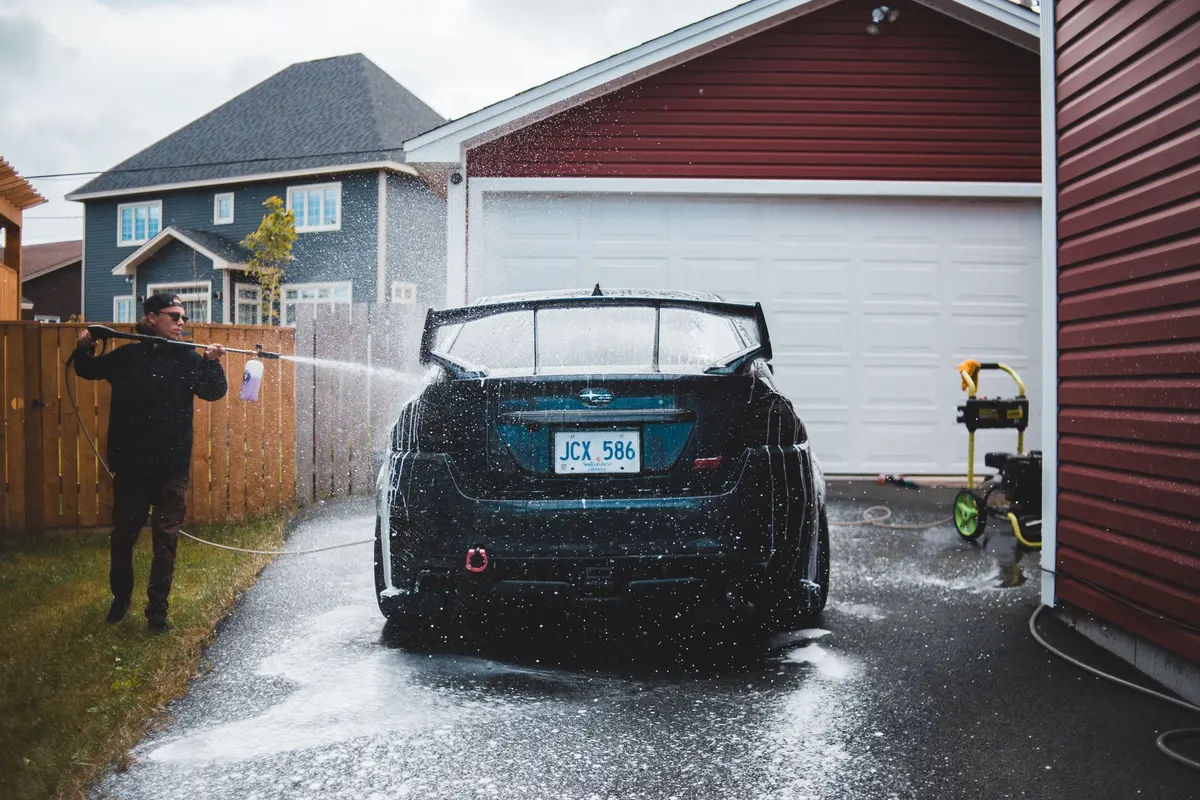
How to Pressure Wash a Driveway Safely and Streak-Free
Restore your concrete driveway or walkway in a day using proper technique, the right tips, and a cleaner to avoid etching and zebra striping.
Difficulty
beginnerTime
2–4 hours
Est. cost
$40–$80
Tools you'll need
- Pressure washer (gas or electric, 2000–3000 PSI) — our review
- Turbo or rotary surface cleaner attachment
- Pressure washer extension wand (for reach)
- Garden hose with spray nozzle
- Stiff-bristle broom or scrub brush
- 5-gallon bucket and driveway concrete cleaner (sodium hydroxide-based)
- Safety glasses and gloves
Materials
- Concrete driveway cleaner (sodium hydroxide or bleach-based, follow label dilution)
- Concrete degreaser (for oil spots, if needed)
- Drop cloths or plastic sheeting (to protect adjacent surfaces)
- Spray bottle (for pre-treating stains)
Step-by-step
- 1
Clear and prep the work area
Remove all vehicles, yard tools, trash cans, toys, and movable objects from the driveway. Sweep away loose dirt, leaves, and debris with a stiff-bristle broom. For heavy sediment, use the leaf blower first. Cover any nearby plants, grass, or delicate surfaces with drop cloths or plastic sheeting to protect them from overspray and chemical runoff. Taping down the edges of the sheeting with painter’s tape helps keep the plastic in place.
- 2
Pre‑treat stains and apply cleaner
Spray stubborn oil or grease stains with a dedicated concrete degreaser and let it sit for 15 to 20 minutes. Meanwhile, mix a concrete driveway cleaner in a 5-gallon bucket per the manufacturer's directions (typically 1 part cleaner to 1–4 parts water). Pour or spray the cleaner over the entire concrete surface, working in sections of about 100 square feet at a time. Use a stiff brush or push broom to scrub the cleaner into the concrete, focusing on dark traffic lines and engine-drip zones. Let the solution dwell for 5 to 10 minutes without drying; if it dries, lightly mist with water from the hose.
- 3
Rinse the driveway with water first
Before running the pressure washer, give the entire area a thorough rinse with a garden hose spray nozzle on a jet setting. This removes loosened dirt, cleaner residue, and prevents the pressure washer from pushing gritty mud around. Rinsing also pre-wets the concrete, which helps the pressure washer work more effectively and reduces the chance of etching.
- 4
Pressure wash in overlapping passes
Attach a turbo or rotary surface cleaner to your pressure washer for even, streak-free results (this is the single best tool for avoiding zebra stripes). Start at the back corner of the driveway farthest from the street, work toward the exit, and overlap each pass by about 50 percent. Keep the nozzle perpendicular to the concrete at a consistent distance of 6 to 12 inches, and avoid lingering in one spot. If using a wand, hold a 25-degree or 40-degree nozzle and spray in a sweeping motion, keeping the tip moving. For edges and tight corners where the surface cleaner cannot reach, switch to the wand. Do not let the spray hit the same area twice without moving on.
- 5
Work in manageable sections
Divide large driveways into 10x10-foot sections. Clean one section completely, including the edge and perimeter, before moving to the next. This keeps the cleaning agent from drying on the concrete and ensures uniform removal. If you see a section that requires extra attention (e.g., stubborn embedded dirt), pre-wet it, scrub with a stiff broom, and then re-wash before it dries.
- 6
Final rinse from a clean water supply
After completing the entire driveway, switch the pressure washer's chemical injector off (or disconnect the soap tank) and rinse the concrete with clean, high-pressure water. Work in long, overlapping sweeps from back to front, following the slope of the driveway to let water run off naturally. Pay extra attention to edges and along the garage door where residue tends to collect. A final rinse with the garden hose on a fan setting can help flush out any remaining cleaner from low spots.
- 7
Let the driveway dry completely
Allow the concrete to dry thoroughly before walking on it, parking vehicles, or replacing any items—drying time depends on weather, but plan for at least 2 to 4 hours in direct sun, or overnight in humid conditions. A fully dry driveway will have a uniform lighter color; any dark patches indicate trapped moisture or missed cleaner. Do not seal the concrete for at least 24 to 48 hours, and check the weather to avoid rain.
Planning Your Driveway Pressure Wash
A clean driveway instantly improves your home’s curb appeal, but doing it wrong can leave permanent etch marks, zebra-like streaks, or even damage the concrete surface. Proper planning—choosing the right equipment, using a concrete cleaner, and following a systematic process—is the key to a safe, streak-free result.
Before you start, check the weather forecast: avoid washing if rain is expected within 24 hours (it will wash away your cleaner and waste effort) or if temperatures will drop below 50°F (cleaners work poorly in cold). A dry, overcast day with temperatures between 60°F and 80°F is ideal, as direct sun can cause the cleaner to dry too quickly and leave residue.
Assess your driveway’s condition. Light dirt and pollen may need only water pressure. Mold, mildew, and oil stains require a concrete cleaner or degreaser. If you have cracks or damaged concrete, consider sealing them after cleaning (let the concrete dry fully first). For heavily stained or neglected driveways, you may need a second pass or a stronger cleaner.
Choosing a Pressure Washer
For a standard two-car driveway (about 400–500 square feet), a gas pressure washer in the 2800–3000 PSI range is ideal. Electric models with 2000–2500 PSI work well for smaller walkways and lighter staining but may need more passes. No matter the type, use a wide fan nozzle (25° or 40°) and never use a zero-degree jet—it can gouge concrete. A rotary surface cleaner attachment is highly recommended; it spins a high-pressure spray under a hood, delivering even cleaning and reducing streaking.
Common Mistakes to Avoid
- Using too much pressure: High PSI up close can etch the concrete surface, leaving a rough, porous texture that attracts dirt even faster. Keep the nozzle 6–12 inches away and move constantly.
- Letting the cleaner dry: Concrete cleaner must be rinsed off before it dries; otherwise, it leaves a white, chalky residue. Work in small sections, and if you see the cleaner starting to dry, mist it with water immediately.
- Skipping the pre-rinse: Sweeping and hosing off loose dirt before pressure washing prevents the water from pushing mud around, which can cause scratches.
- Not protecting plants and grass: Concrete cleaners, especially bleach-based ones, can kill vegetation. Cover plants with plastic sheeting and rinse any overspray immediately.
- Overlapping inconsistently: Varying your speed or spacing creates light and dark bands. Use the rule of 50% overlap and a steady pace.
- Washing on a hot, sunny day: Direct sunlight accelerates drying, making streaking more likely. Work in the shade if possible, or wash early morning or late afternoon.
Safety
Pressure washers are powerful tools that can cause serious injury if misused. Read the owner’s manual and understand the controls before starting. Always wear safety glasses or goggles to protect your eyes from flying debris and chemical splash. Wear waterproof gloves, long pants, and closed-toe shoes with good grip (wet concrete is slippery).
Never point the spray gun at yourself, other people, or pets. The high-pressure stream can inject water into skin, causing a serious medical emergency that may not look severe at first. Keep children and bystanders at least 20 feet away. Use caution on ladders or elevated surfaces—the recoil of the trigger can throw you off balance. Always disconnect the spray gun from the pressure washer when not in use, and never leave the machine running unattended.
When using chemicals, work in a well-ventilated area and avoid mixing different cleaners (toxic fumes may result). Store all cleaning agents out of reach of children. Rinse any chemical spills on skin immediately with plenty of water. After washing, clean and dry the pressure washer according to the manufacturer’s instructions to prevent damage from residual chemicals.
Final Checks
Before declaring the job done, inspect the driveway from different angles to spot any missed areas or streaks. A uniform color indicates a clean surface. Allow the concrete to dry fully before parking vehicles or applying sealer. If you plan to seal the driveway, wait a full 24–48 hours to ensure trapped moisture does not cause peeling or blistering. With the right technique and a little preparation, your driveway will look refreshed and stay cleaner longer.
Advertisement
Frequently asked questions
- How often should I pressure wash my driveway?
- Most driveways need one thorough pressure washing per year, typically in spring after winter grime. Heavily shaded or tree-lined driveways may need a second wash in fall to remove leaf stains and mildew. Avoid washing more than twice a year, as excessive water pressure can slowly erode the concrete's surface if done too often.
- What PSI do I need for driveway cleaning?
- A pressure washer with 2000 to 3000 PSI is ideal for concrete driveways. Too little pressure (under 2000 PSI) may not remove stains effectively, while too much (over 3500 PSI) can etch or chip the surface, especially on older concrete. A 2800 to 3000 PSI electric or gas model with a surface cleaner attachment gives the best balance of power and safety.
- Can I use bleach on my driveway?
- Yes, but with caution. A diluted bleach solution (1 part household bleach to 3–4 parts water) can kill mold and mildew, but it should never be used undiluted, as it can damage nearby vegetation and discolor concrete. Always rinse thoroughly with water after application. Many concrete-specific cleaners are bleach-based but formulated to be safer; follow their label instructions exactly.
- Why do I get streaks or zebra lines after pressure washing?
- Streaking is usually caused by inconsistent spray overlap, using a nozzle angle that is too narrow, or moving the wand at uneven speeds. A turbo nozzle or rotary surface cleaner is the best solution because it maintains a consistent distance and angle. Also, avoid letting the cleaner dry on the concrete—rinse promptly after application and work in sections.
- How do I remove old oil stains from concrete?
- For fresh oil stains, absorb with kitty litter or cornstarch, sweep up, then scrub with a degreasing cleaner. For old, set-in stains, use a concrete degreaser or a commercial oil stain remover (available at home centers). Apply it, let it dwell for 15–30 minutes, scrub with a stiff brush, then pressure wash. Stubborn stains may require a second treatment.