
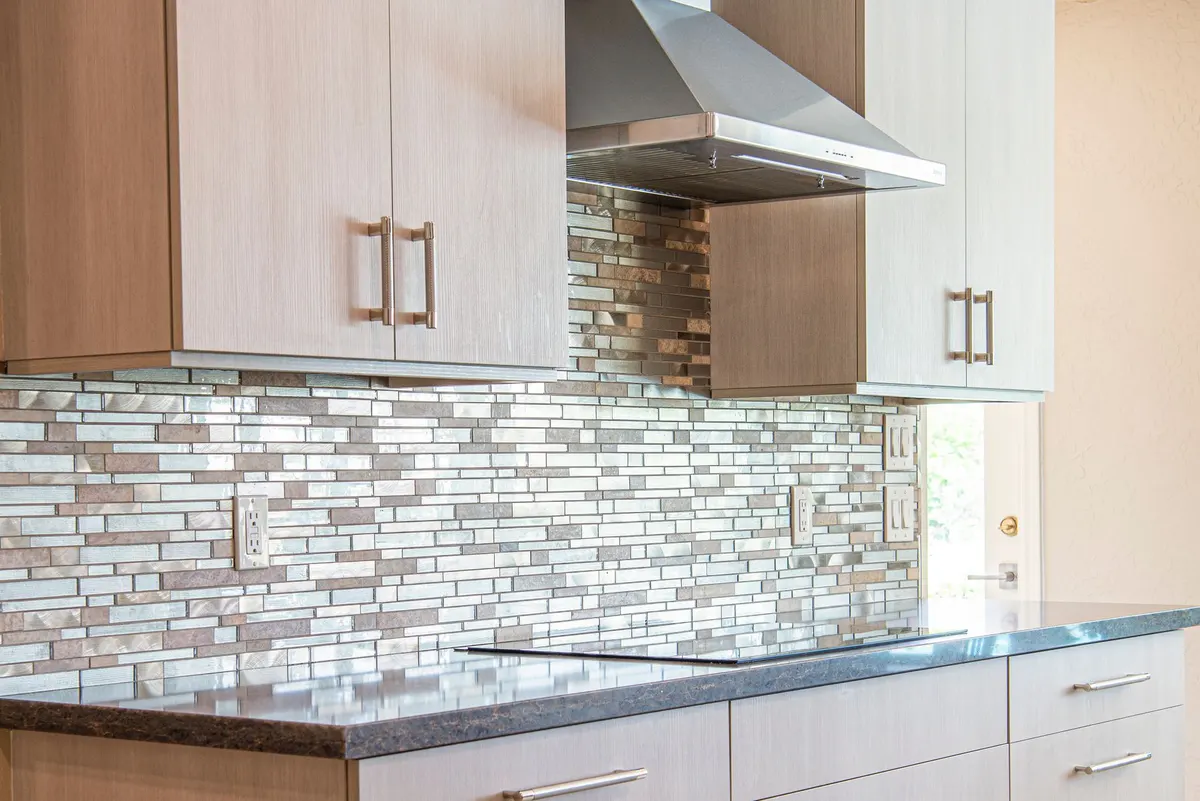
How to Install a Renter-Friendly Peel-and-Stick Tile Backsplash
Transform your kitchen or bathroom with a no-commitment peel-and-stick tile backsplash. Step-by-step instructions with planning tips, adhesive tricks, and removal advice.
Difficulty
beginnerTime
3–5 hours
Est. cost
$40–$80
Tools you'll need
- Tape measure
- Utility knife with fresh blades
- Straightedge or metal ruler
- Level
- Pencil and eraser
- Burnishing tool (or plastic putty knife / smooth block)
Materials
- Peel-and-stick tile sheets (enough to cover your backsplash area plus 10% waste)
- Painter's tape (for layout grids)
- Denatured alcohol or isopropyl alcohol (for degreasing)
- Clean lint-free rags
- Optional: caulk (sanded silicone for kitchens, white for baths)
Step-by-step
- 1
Measure and plan the layout
Measure the height and width of the backsplash area. Multiply height by width to get the square footage and add 10% for waste. Mark the centerline of the main wall as a reference. Dry-lay a few tiles from the center outward to ensure you don't end up with thin slivers at corners or edges. Better to shift the layout half a tile than to force a bad cut.
- 2
Clean and prep the wall surface
Wipe down the wall with a damp rag to remove dust, then degrease with denatured alcohol or isopropyl alcohol. Let it dry completely. Peel-and-stick tiles need a smooth, clean, dry surface. Fill any dents or holes with spackle and sand smooth. Do not apply over old wallpaper, peeling paint, or textured finishes. If your wall is glossy, lightly sand it to give the adhesive something to grip.
- 3
Snap a level starting line
Use a level to draw a horizontal line at the desired starting height (usually the countertop or sink rim). Also draw a vertical line at the center point. This ensures the first row is level and centered. Even if the countertop is not perfectly level, the tile grid will look straight. Tip: if the countertop is out of level, start the first row at the lowest point and cut the top row to fit, hiding the unevenness under the upper cabinet trim.
- 4
Install the first row of tiles
Peel the backing from the first tile sheet and carefully align it with the reference lines. Press it onto the wall starting from the center and working outward to push out air bubbles. Use a burnishing tool to firmly adhere the entire surface. Butt each tile sheet tightly against the next; light pressure is enough—do not stretch the adhesive. Continue placing full sheets across the first row.
- 5
Cut tiles for outlets, edges, and corners
Measure the space around outlets and cut tiles using a straightedge and sharp utility knife. Score the tile face multiple times, then snap along the score line. For holes, cut a cross pattern and fold back the flaps. Always cut slightly oversized and trim to fit for a snug look. At edges and corner gaps, measure twice and cut once. Leave about a 1/16-inch gap at the countertop and side walls for caulk, which accommodates slight movement.
- 6
Stack rows and stagger seams
Install subsequent rows, staggering the seams like brickwork for a professional appearance. Check level every few rows—if the wall is uneven, adjust the tile placement slightly rather than forcing. For tall backsplashes (like behind a range), use a level to mark rows in advance. Burnish each tile sheet thoroughly; trapped air can later lead to peeling. If you hit a bubble, puncture it with a pin and press it flat.
- 7
Trim and finish edges (and caulk if needed)
Use a sharp utility knife to trim any overhanging tile at the top or sides for a clean fit. If your backsplash meets a window sill or countertop, run a bead of caulk in the gap to seal against moisture. Smooth the caulk with a wet finger or tool. Allow caulk to cure per manufacturer directions (typically 24 hours). Finally, check for any loose edges and press them down firmly.
Why choose peel-and-stick tile
Peel-and-stick tile is the perfect backsplash solution for renters, first-time DIYers, or anyone wanting a quick kitchen refresh without a permanent commitment. No mortar, no grout, no power tools—just clean walls and sharp blades. The tiles are self-adhesive, lightweight, and easily removable, making them ideal for apartments where you need to restore the original wall before moving out. Despite the temporary method, the visual impact can transform a plain kitchen or bathroom into a finished, personalized space. Common materials include vinyl, aluminum, and genuine stone veneer; the most renter-friendly options are thin vinyl or metal tiles that lay nearly flat. Expect to complete this project in three to five hours depending on the area size and complexity.
Planning your backsplash
Measure the length and height of the backsplash area: behind the sink or cooktop, between countertop and upper cabinets. Multiply to get total square feet, then add 10% for waste, mistakes, and odd angles. Standard peel-and-stick sheets cover about 2.5 square feet per sheet, so calculate the number needed and buy a few extra sheets from the same dye lot to ensure color consistency. Order or purchase several days ahead of time and let the tiles acclimate to room temperature—cold tiles can be less flexible and may not adhere as well.
Decide on a pattern before cutting anything. Brick bond (staggered) is the most forgiving and covers imperfections. A straight stack bond (grid) looks clean but highlights any warping in the wall. If your wall is unlevel, choose a staggered pattern to hide small gaps.
Surface preparation is everything
The success of a peel-and-stick installation depends almost entirely on surface prep. The adhesive needs a smooth, clean, dry, and oil-free surface. Wash the wall with a degreaser—kitchen backsplashes accumulate cooking grease that can ruin adhesion. Then wipe with denatured alcohol or isopropyl alcohol to strip any residue. Fill nail holes and dents with spackle and sand smooth. If the wall has a glossy paint or tile texture, sand it lightly with 120-grit paper to create a tooth for the adhesive. Do not apply over wallpaper, loose paint, or heavily textured surfaces (like orange peel or knockdown)—the tiles will not stick well and will look bumpy. In some cases, applying a coat of high-quality primer can improve adhesion on questionable surfaces.
Tools and setup
Gather a tape measure, a sharp utility knife with extra blades (dull blades tear vinyl), a metal straightedge or ruler, a level, a pencil, and a burnishing tool. A burnisher can be a plastic putty knife wrapped in a cloth or a dedicated tile smoothing block—you want something that presses the tile firmly against the wall without scratching. Painter's tape is useful for holding reference lines, especially when working alone.
Mistakes to avoid
- Skipping the level check: Even a half-degree tilt will be obvious once the entire backsplash is done. Always draw a level starting line and check every few rows.
- Rushing the wall prep: Grease, dust, or moisture are guaranteed to cause tiles to peel within weeks. Take time to clean thoroughly.
- Starting unevenly: If your countertop is not level, do not follow it—start tile rows level and cut the bottom row to fit the countertop contour. The overhang will be hidden by caulk.
- Leaving air bubbles: Press out all air during installation. A bubble left overnight will harden and become a permanent lump. Puncture and flatten if discovered later.
- Forgetting to stagger seams: A vertical seam running straight up will look amateurish. Offset each row by half a tile width for a professional appearance.
- Cutting too small: When cutting around outlets or edges, cut slightly oversized; you can always trim more, but you cannot add material back.
Square footage and waste estimation
If your backsplash area is 10 square feet, buy enough tiles for 11–12 square feet. For example, if each sheet covers 2.5 square feet, you need 5 sheets (10 / 2.5 = 4, plus 10% = 4.4, round up to 5). Always buy from the same batch to avoid color variation.
Installation workflow
Once the wall is prepped and reference lines are snapped, start from the center or a prominent edge. Peel the backing paper and press the tile onto the wall, starting at the top edge and working downward to remove air. Burnish firmly—repeat burnishing after 10 minutes to ensure a strong bond. Cut tiles as needed using a straightedge; for vinyl tiles, score multiple times and snap; for aluminum tiles, use heavy-duty scissors or tin snips. For outlets, cut a cross or an "H" shape and fold back, then trim to fit perfectly.
Finishing and caulking
After all tiles are installed and trimmed, run a bead of caulk along the gap between the backsplash and countertop, and at side walls where the tile meets a different surface. Use sanded silicone caulk for a matte finish that blends with grout lines, or plain white silicone for a clean look. Smooth with a wet fingertip or a caulk smoothing tool. Allow 24 hours to cure before exposing to moisture.
Safety
Wear safety glasses when cutting tiles, especially metal or aluminum sheets. Use a sharp utility knife and retract it immediately after each cut. Keep fingers clear of the blade path when scoring and snapping. Work in a well-ventilated area if using adhesive removers or denatured alcohol. When using a hairdryer for removal, keep it away from water sources. Follow manufacturer instructions for the specific tile brand—some vinyl products may emit VOCs briefly; a well-ventilated kitchen is recommended.
Final thoughts
Peel-and-stick tile offers a low-risk, high-reward way to update a rental kitchen or bath. The key is patience: prepare the wall meticulously, plan the layout with a level, and burnish every inch. Done right, the result is a clean, professional-looking backsplash that you can remove cleanly when it is time to move out. Even homeowners appreciate this approach for a fast weekend refresh. With the proper tools and technique, you can achieve a backsplash that looks like a permanent installation—without the permanence.
Advertisement
Frequently asked questions
- Will peel-and-stick tiles damage the wall when removed?
- When installed correctly on a well-prepped surface, peel-and-stick tiles can be removed without damaging the wall. Gently heat the tile with a hairdryer to soften the adhesive, then peel it off slowly. Any residue can be cleaned with adhesive remover. Avoid pulling tiles off cold—this can tear the drywall paper. For truly renter-friendly removal, test a small area before committing.
- Can I apply peel-and-stick tiles over existing tile?
- It is not recommended because the old tile's grout lines and texture will telegraph through the new tiles, and adhesion may be poor. If you must, thoroughly clean and degrease the existing tile, then prime with a bonding primer designed for tile. Even with primer, the new tiles may not stick as well as on smooth drywall, and removal could damage the old tile.
- How do I cut peel-and-stick tile around outlets?
- First, turn off power to the outlet. Remove the cover plate, then measure the outlet's position on your tile. Score the tile's backing paper along your marks, cut the tile face with a utility knife, and snap it. You can also cut a cross in the tile over the outlet hole and fold the flaps back. After placing the tile, trim any excess with a knife, then replace the cover plate. Always oversize slightly and trim for a snug fit.
- What do I do if air bubbles appear?
- Small air bubbles often show up hours after installation as the adhesive cures. Puncture the bubble with a pin or utility knife tip and press the air out toward the hole. Use a burnisher to smooth it flat. For persistent bubbles, lift the edge of the tile slightly, re-press, and burnish again. Avoid large bubbles during installation by pressing firmly from the center outward.
- How long will peel-and-stick tile last?
- With proper surface prep and care, peel-and-stick tiles can last 3–5 years or longer in low-moisture areas. In high-humidity zones (behind a stove or near a sink), they may need replacement sooner. Avoid harsh scrubbing—clean with a damp cloth and mild soap. Direct heat from a cooktop or oven can cause tiles to soften or peel, so maintain a safe distance.