
Milwaukee M18 FUEL 2836-20 Review: Top Cordless Multi-Tool
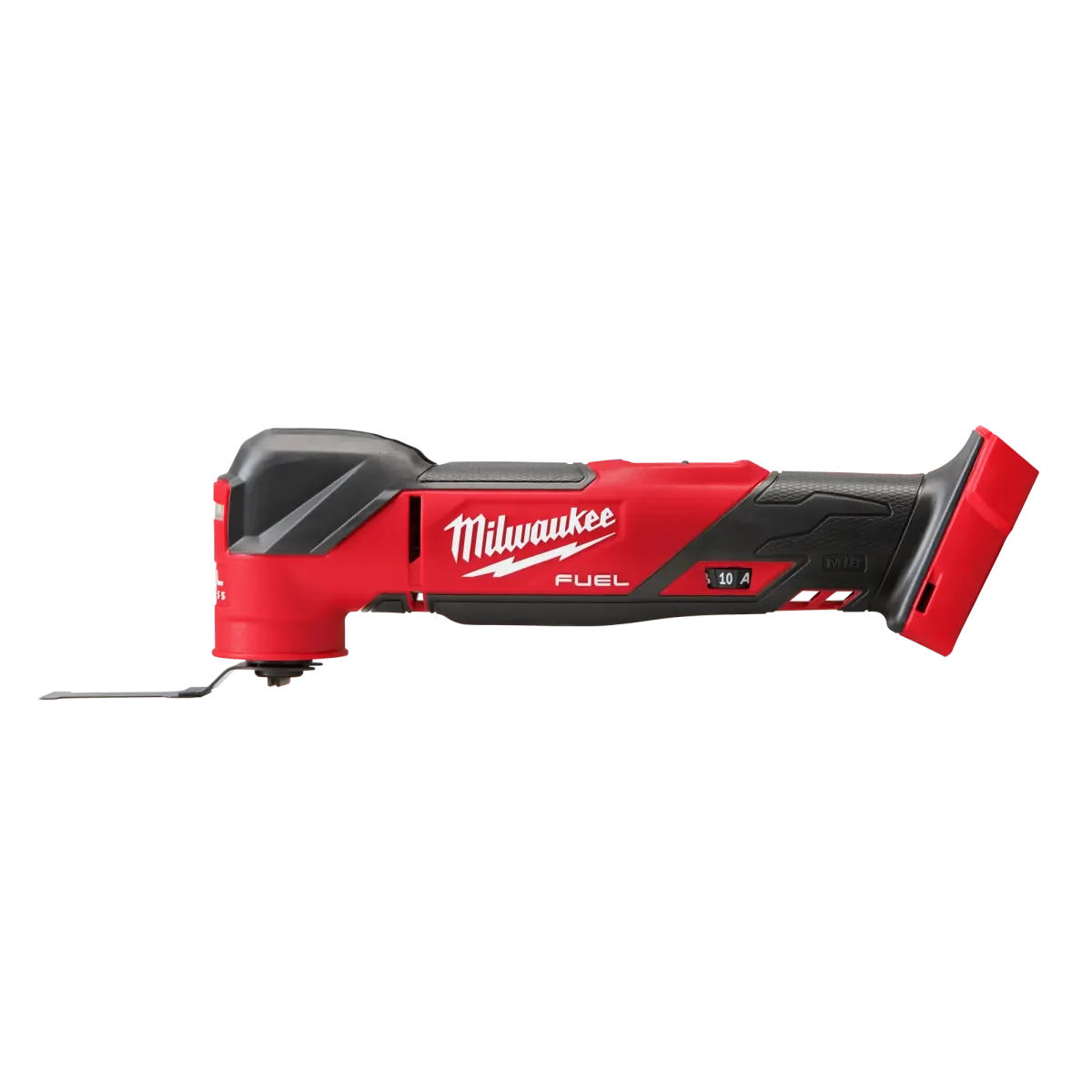
| voltage | 18V (M18 lithium-ion) |
|---|---|
| motor | POWERSTATE Brushless |
| opm | 10,000–20,000 OPM (variable) |
| oscillation Angle | 4.2 degrees |
| blade System | Tool-free threaded collar with adapter compatibility |
| variable Speed | 10-setting dial with Auto-Load ramp feature |
| weight | 2.56 lbs (bare tool) |
| battery | Compatible with all Milwaukee M18 REDLITHIUM batteries (sold separately) |
| led | 180-degree LED arc illumination |
Pros
- 4.2-degree oscillation angle is the widest in its class, removing grout and adhesive faster than 3.2-degree competitors
- 10-setting variable speed dial plus Auto-Load ramp gives unusually fine control from detail sanding through full-power cutting
- POWERSTATE brushless motor holds speed under heavy load without the bog that plagues corded budget tools
- At 2.56 lbs bare tool, it is the lightest among top-tier cordless oscillating tools, reducing overhead fatigue noticeably
- 180-degree LED arc around the blade collar eliminates the shadow that single-LED tools cast directly beneath the cut line
- Plugs into the entire M18 ecosystem — over 300 tools share the same battery, so you likely already have compatible packs
Cons
- Tool-free blade swap uses a threaded bolt collar rather than a true one-click clamp — releasing the blade takes three or four turns compared to the single lever on Bosch Starlock tools
- Street price of $229–$249 bare tool is the highest among the four oscillating tools in this category — buyers without M18 batteries face a steep entry cost
- No included accessories at the bare-tool price point — you need blades before you can cut anything
- Auto-Load feature can occasionally surprise users who want manual ramp control on very delicate work
Why the 2836-20 leads the cordless oscillating category
Milwaukee built the 2836-20 around a single differentiating number: 4.2 degrees. That oscillation angle is wider than any competing cordless oscillating tool at similar weight, and in grout removal, subfloor scraping, and flush cutting that extra arc width translates directly into faster material removal per stroke. The result is a tool that covers the same linear foot of grout in noticeably fewer passes than the 3.2-degree DeWalt DCS356B or Makita XMT03Z.
The POWERSTATE brushless motor maintains that speed under load. Where a budget brushed oscillating tool bogs when a carbide blade catches hard grout, the 2836-20 holds near-set OPM and lets you feel the cut rather than fight the tool. Professionals who spend hours on grout or adhesive removal will notice this most clearly.
Speed control: more than a dial
The 10-position variable speed dial runs from 10,000 OPM at position one to 20,000 OPM at position ten with meaningful increments between stops. That granularity matters when you transition between tasks: position two or three for precision sanding on crown molding, position seven for cutting through drywall, full ten for carbide grout removal. Most oscillating tools offer three or five speed positions; Milwaukee's ten gives you a calibrated instrument rather than a blunt switch.
The Auto-Load feature adds another layer of control. Starting slowly when the trigger first engages allows clean plunge entry into tile without the blade skating, then the tool ramps automatically once it detects load. Some users find it counterintuitive and prefer fully manual ramp control; switching the mode off is simple, but it is worth knowing the feature exists before blaming the tool for unexpected startup behavior.
Blade access in the real world
The tool-free blade system deserves an honest assessment. Milwaukee calls it tool-free because no hex key is needed, but the collar threads mean you are still rotating the clamp three or four turns to release a blade — a step slower than the Bosch Starlock single-lever mechanism or a true push-button release. On a jobsite where you swap between a wood-cutting blade, a scraper, and a carbide grout blade multiple times per session, those extra turns add up. The blade accepts Milwaukee's own Starlock accessories plus universal-fit blades through the included adapter, which covers the full accessory market.
Weight and balance
At 2.56 lbs bare, the 2836-20 is among the lightest professional cordless oscillating tools available. Add a 5.0Ah M18 battery and the working weight reaches roughly 4.2 lbs — manageable for overhead work but not featherweight. If you primarily flush-cut door jambs or do detail sanding, the lighter 2.4-lb DeWalt DCS356B may actually feel more neutral in extended use. For floor-level grout removal, where you press down rather than hold up, the weight difference is irrelevant.
The barrel grip is ergonomically shaped with an aggressive rubber texture that resists slipping even in a sweaty hand. The LED arc at 180 degrees is genuinely useful — it fills the entire cutting zone with light, unlike the single-LED designs that leave a shadow where the blade meets the surface.
Platform economics
The 2836-20 is a bare tool at $229–$249 street. For M18 platform owners, this is a reasonable buy: the battery ecosystem already provides the power source. For buyers with no Milwaukee batteries, the real entry cost is $229 plus $50–$150 for an M18 battery, putting total spend at $280–$400 before blades. At that price, the Makita XMT03Z with a starter battery kit or the DeWalt DCS356B on DeWalt's 20V MAX platform represent better value unless the wider oscillation angle is specifically what you need.
Where it fits in the oscillating tool lineup
Against the DeWalt DCS356B, Milwaukee wins on oscillation angle (4.2 vs 3.2 degrees) and speed granularity (10 settings vs 3-position). DeWalt wins on price and has a cleaner blade-swap mechanism. Against the Makita XMT03Z, Milwaukee is lighter, faster, and more powerful, though Makita's softer 6,000 OPM lower bound is genuinely useful for the slowest-speed detail work. Against the Ryobi PCL430B, there is no direct performance comparison — the Milwaukee is a professional-grade tool and the Ryobi is an excellent homeowner value.
Accessories and blade market
Milwaukee sells a deep accessory line for the 2836-20: bi-metal wood and nail-cutting blades in various widths, carbide-grit grout blades in 1/4-inch and 3/8-inch profiles, sanding pads with hook-and-loop backing, and flexible scraper blades for adhesive and caulk. The included universal adapter means third-party blades also seat securely. Blade kits from Milwaukee typically run $20–$50 depending on piece count and material type, which is mid-market pricing for the segment.
Final verdict
The Milwaukee M18 FUEL 2836-20 is the performance benchmark among cordless oscillating multi-tools. Its 4.2-degree oscillation angle, 10-step speed dial, and Auto-Load feature represent genuine engineering rather than specification padding. For M18 users who flush-cut, grout-remove, or scrape adhesive regularly, it justifies its premium. The one limitation to plan around: blade swaps require more rotations than the competition, and the bare-tool-only availability means you must budget for batteries separately.
Advertisement
Frequently asked questions
- What oscillation angle does the Milwaukee 2836-20 have?
- The 2836-20 oscillates through a 4.2-degree arc, which is wider than the 3.2-degree angle on the DeWalt DCS356B and Makita XMT03Z. A wider angle removes material faster but makes the cut slightly more aggressive — reduce speed when working near finished surfaces to keep control.
- Does the Milwaukee 2836-20 accept universal blades?
- Yes, the 2836-20 comes with a universal accessory adapter in the box that makes it compatible with most major oscillating tool blade brands including DeWalt, Makita, and Bosch. Milwaukee's own Starlock blades seat directly without the adapter for the most secure grip.
- What is the Auto-Load feature on the 2836-20?
- Auto-Load starts the tool slowly when you squeeze the trigger, giving you precision at the beginning of a cut, then automatically ramps up to your set speed once it detects load. This is useful for starting plunge cuts in tile or drywall without skating the blade across the surface.
- How does the 2836-20 compare to the DeWalt DCS356B?
- The Milwaukee offers a wider 4.2-degree oscillation angle versus the DeWalt's 3.2 degrees, which translates to faster material removal. The DeWalt has a simpler three-speed discrete selector; the Milwaukee gives ten speed steps plus Auto-Load. The DeWalt costs roughly $100 less as a bare tool, making it more attractive for buyers who value straightforward speed selection over fine-tuned control.
- Is the Milwaukee 2836-20 worth the price premium?
- For M18 platform owners who do regular grout removal, tile work, or heavy flush cutting, yes — the wider oscillation angle and finer speed control deliver genuine performance advantages. For occasional home renovation use, the DeWalt DCS356B or Makita XMT03Z provide comparable results at a lower entry cost.
- Does the Milwaukee 2836-20 have vibration damping?
- Milwaukee's product page describes 'Vibration Dampening Technology for Lowest Full Tool Vibration' on the 2836-20. In practice this means extended grout-removal sessions are less fatiguing than older Milwaukee oscillating tools, though Fein's corded MultiMaster remains the benchmark for vibration suppression in professional extended use.
Ready to buy the 2836-20?
We may earn a commission if you buy through these links, at no extra cost to you.