
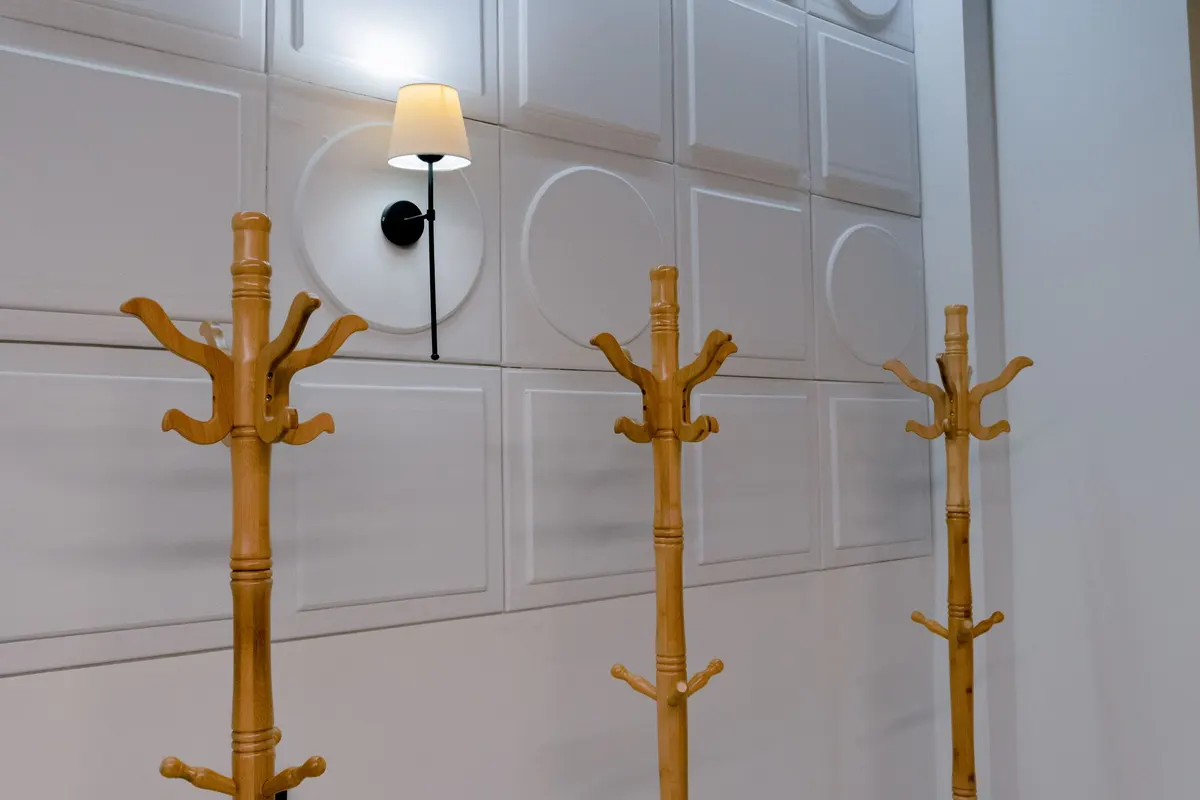
How to Build a Wall-Mounted Coat Rack with Shelf (Entryway Storage)
Build a stylish wall-mounted coat rack with a shelf from pine and maple dowels. Perfect for entryway organization, with step-by-step instructions and a cut list.
Difficulty
beginnerTime
3–4 hours
Est. cost
$40–$80
Tools you'll need
- Miter saw or hand saw and miter box
- Cordless drill driver — our review
- Sander (optional but recommended) — our review
- Tape measure
- Pencil
- Level (4-foot)
Materials
- 1 x 6 pine board, 6 feet long (for shelf and back plate)
- 1 x 4 pine board, 4 feet long (for shelf support and hooks mount)
- 1-inch diameter maple dowel, 3 feet long (for hooks)
- 1.25-inch wood screws
- 2-inch wood screws
- Wood glue
- 120- and 220-grit sandpaper
- Paint or wood finish (optional)
- Wall anchors (if not screwing into studs)
Step-by-step
- 1
Cut the shelf, back plate, and support parts
From the 1x6 board, cut one shelf piece 30 inches long and one back plate piece 30 inches long. From the 1x4 board, cut two shelf support brackets: each 4 inches long (these will be mitered in step 3). From the dowel, cut five 6-inch pieces for the hooks. Sand all pieces smooth with 120-grit, then finish with 220-grit.
- 2
Drill hook holes in the back plate
On the back plate (the 30-inch 1x6), mark five positions for the dowel hooks: one at the center, and two on each side spaced 4 inches apart (total 8 inches from center to outermost). Use a 1-inch spade or Forstner bit to drill holes about 1 inch deep into the face of the board, taking care to drill straight.
- 3
Prepare the shelf support brackets
On each 4-inch piece of 1x4, cut a 45-degree miter on one end. These brackets will later be attached to the wall and support the shelf. For now, set them aside.
- 4
Attach the shelf supports to the back plate
Position the back plate horizontally. Place the two support brackets 2 inches from each end of the back plate, with the mitered ends pointing inward. Clamp and attach each bracket to the back plate using two 1.25-inch screws per bracket, driving from the back of the plate into the bracket.
- 5
Glue the dowel hooks into the back plate
Apply wood glue to the end of each 6-inch dowel piece and tap it into the pre-drilled hole until snug. Wipe away any excess glue. Let the glue dry for at least 30 minutes before moving the assembly.
- 6
Attach the shelf to the supports
Center the 30-inch shelf piece on top of the support brackets. The mitered ends of the brackets should cup the shelf. Apply wood glue to the top edges of the brackets, then screw up through the brackets into the shelf using 1.25-inch screws, two per bracket. Keep the screws centered to avoid splitting.
- 7
Mount the coat rack on the wall
Use a level to mark a horizontal line at your desired height (typically around 60–65 inches for adults). Locate wall studs or use heavy-duty drywall anchors. Drive 2-inch screws through the back plate into the studs or anchors, one at each end and one in the center. Confirm everything is level and secure.
Why build a wall-mounted coat rack with shelf?
This project combines function and simplicity: a wooden back plate with five dowel hooks for coats and bags, plus a shallow shelf for hats, keys, or mail. It mounts flush against the wall, taking up no floor space, and organizes an entryway or mudroom without dominating the room. The design uses basic joinery (screws and glue) and common dimensional lumber, making it an ideal weekend project for a beginner woodworker. The total cost stays between $40 and $80 depending on wood choice and finish, and the result looks custom.
Planning and material choices
Select straight, knot-free boards for a cleaner look. A 1x6 pine board (actual 0.75 x 5.5 inches) is common and affordable. For the dowels, maple is harder and resists wear better than pine dowels. If you want a darker wood, stain the dowels before glue-up for easier finishing. The shelf depth is about 5.5 inches — plenty for small items but not so deep that it feels bulky.
Cut list
| Part | Quantity | Dimension |
|---|---|---|
| Back plate | 1 | 30 x 5.5 in (1x6 pine) |
| Shelf | 1 | 30 x 5.5 in (1x6 pine) |
| Support brackets | 2 | 4 x 3.5 in (1x4 pine, mitered) |
| Dowel hooks | 5 | 6 in long, 1 in diameter |
All dimensions are nominal; actual dimensions may vary slightly. Adjust the length of the rack (30 inches) to fit your space, but keep the proportions balanced.
Assembly tips for strength and alignment
Use wood glue on every joint, not just screws. Glue adds shear strength and prevents the rack from loosening over time. When drilling dowel holes, a depth stop on the drill bit prevents drilling through. For the shelf supports, miter the ends at 45 degrees for a decorative detail; the miter also provides a flush contact with the shelf underside.
When mounting, locate wall studs with a stud finder. If studs are not evenly spaced, use toggle bolts or heavy-duty wall anchors rated for at least 25 pounds per fastener. Pre-drill pilot holes in the back plate to avoid splitting.
Mistakes to avoid
One common error is drilling the dowel holes too deep or too shallow. Drill 1 inch deep so the hook is firmly seated without poking through the back. Another mistake is mounting the rack before the glue cures; allow at least an hour for the dowels to bond. Also, avoid over-tightening the wall mount screws — this can crack the back plate. Finally, do not skip sanding: sharp edges catch clothing and splinters are unpleasant.
Finishing
Sand all surfaces with 120-grit, then 220-grit for a smooth feel. Remove dust with a tack cloth. For a natural look, apply a clear polyurethane or Danish oil. For a painted look, prime with a high-adhesion primer and apply two coats of latex or enamel paint. Paint the back plate and shelf separately before assembly to reach tight corners, then touch up after assembly. Allow each coat to dry fully before sanding lightly between coats for a smooth finish. A final satin or matte topcoat helps hide minor imperfections.
Safety
Wear safety glasses when cutting, drilling, or sanding. Use a push stick or clamp when making cuts on a miter saw. Ensure your work area is well-ventilated when applying finishes or glue. When mounting the rack, always lift with your legs and avoid working overhead for long periods. Keep tools out of reach of children. If using power tools, remove the battery or unplug the tool before changing bits or blades. For the sander, wear a dust mask to avoid inhaling fine wood dust, which can be irritating to the lungs.
Customization ideas
This design is easy to customize. Increase the number of hooks to seven or nine for a larger family by lengthening the back plate and shelf proportionally. Add a second shelf below the hooks for shoe storage, or add a small drawer under the shelf for mail. You could also replace the dowel hooks with metal hooks or knobs for a different look. If you have a corner entryway, build a corner version by joining two units at 90 degrees. The basic construction remains the same, so once you master this build, the variations are endless.
This coat rack project builds confidence with basic woodworking tools and techniques, and the finished piece adds daily convenience to any home. Whether you choose a natural stain or a bold paint color, the result will be a functional, attractive addition to your entryway that you built yourself.
Advertisement
Frequently asked questions
- Can I use different wood species?
- Yes, any hardwood or softwood works. Oak, maple, or walnut add durability and a premium look, while pine is affordable and easy to work. Adjust the thickness if needed, but ensure the dowel size matches the hole diameter.
- How much weight can this rack hold?
- When mounted into studs with 2-inch screws, the rack can hold 20–30 pounds distributed across multiple hooks. The shelf can hold about 10–15 pounds of hats, keys, or mail. For heavier loads, use thicker materials or additional brackets.
- Can I stain instead of paint?
- Absolutely. Apply a wood conditioner first to prevent blotching on pine, then stain with your preferred color. Seal with polyurethane for moisture resistance. Paint works well too; prime the wood before painting for a smooth finish.
- What if I don't have a miter saw?
- Use a hand saw and miter box for the 45-degree cuts on the brackets. A sharp crosscut saw works fine. For the straight cuts on the shelf and back plate, a circular saw with a straightedge guide is an alternative, or have the lumber store cut them.
- How do I drill the dowel holes straight?
- Use a drill press if available, or a drill guide attachment for your hand drill. Alternatively, clamp a scrap block with a 1-inch hole as a guide to keep the drill perpendicular. Practice on a scrap piece first.