

Best Shop Vacuum for Woodworking: Dust & Debris
The best shop vacuum for woodworking filtration is the RIDGID HD1600, pairing a massive 16-gallon drum with a detachable blower and a lifetime warranty. For quieter operation near power tools, the DeWalt DXV10P's 2-stage motor is a strong alternative, while the Craftsman CMXEVBE17595 offers the lowest cost per gallon. The Ryobi PCL735B brings cord-free convenience for quick cleanup without hauling an extension cord.
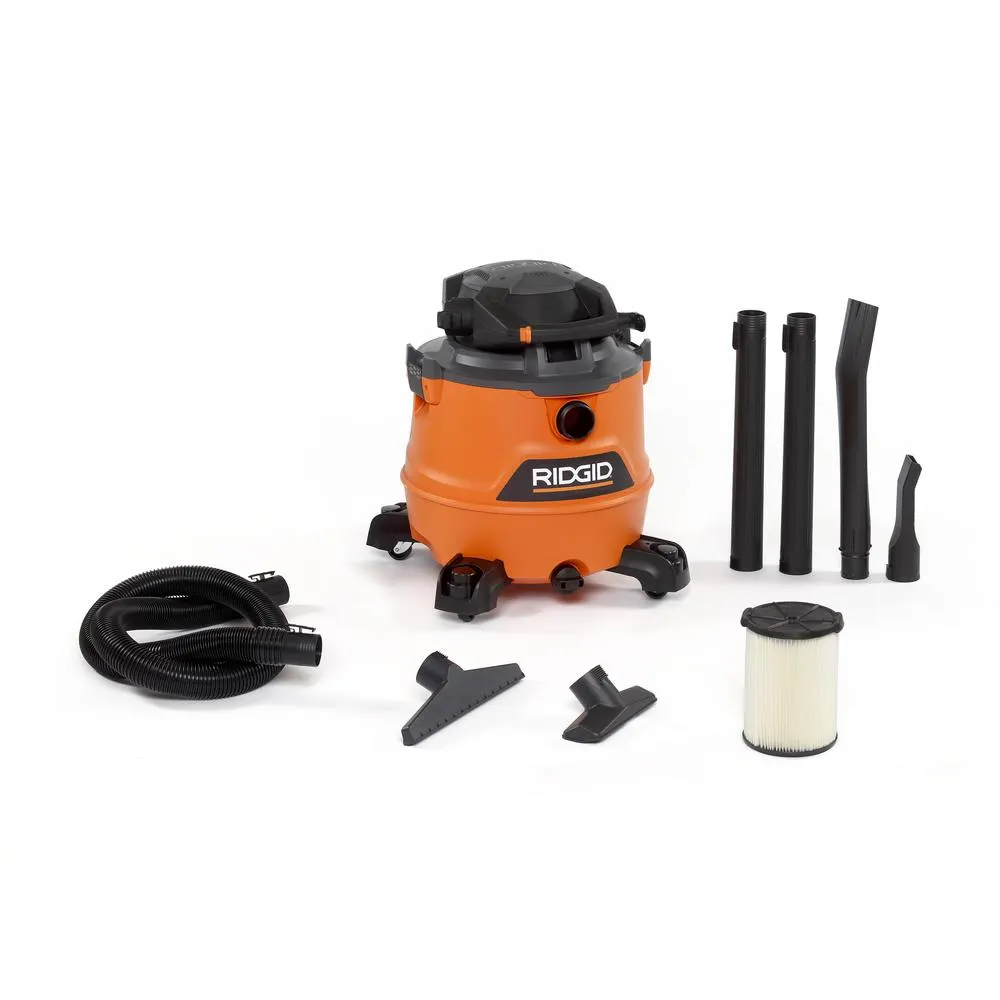
RIDGID HD1600 16-Gal Wet/Dry Vac
The RIDGID HD1600 combines a 16-gallon drum, 161 CFM suction, and a detachable blower that transforms into a handheld leaf blower — covering workshop cleanup, wet pickup, and outdoor debris in one machine. The locking Dual-Flex hose resists pull-off, and the lifetime warranty eliminates long-term cost anxiety. For woodworkers who need one vac that handles everything from coarse chips to seasonal water, this is the safest recommendation.
- ✓ Detachable blower module provides 2-in-1 versatility for shop and yard use
- ✓ Locking Dual-Flex hose stays connected during aggressive dragging
- ✓ 16-gallon capacity handles a full renovation day's debris without mid-session emptying
- ✓ Lifetime warranty — a standout differentiator at this price tier
- ✗ 161 CFM airflow measured at the drum; real-world suction at the nozzle drops with long hoses
- ✗ Standard filter is for general debris — HEPA upgrade needed for fine wood dust
- ✗ No auto-start outlet for tool-triggered operation
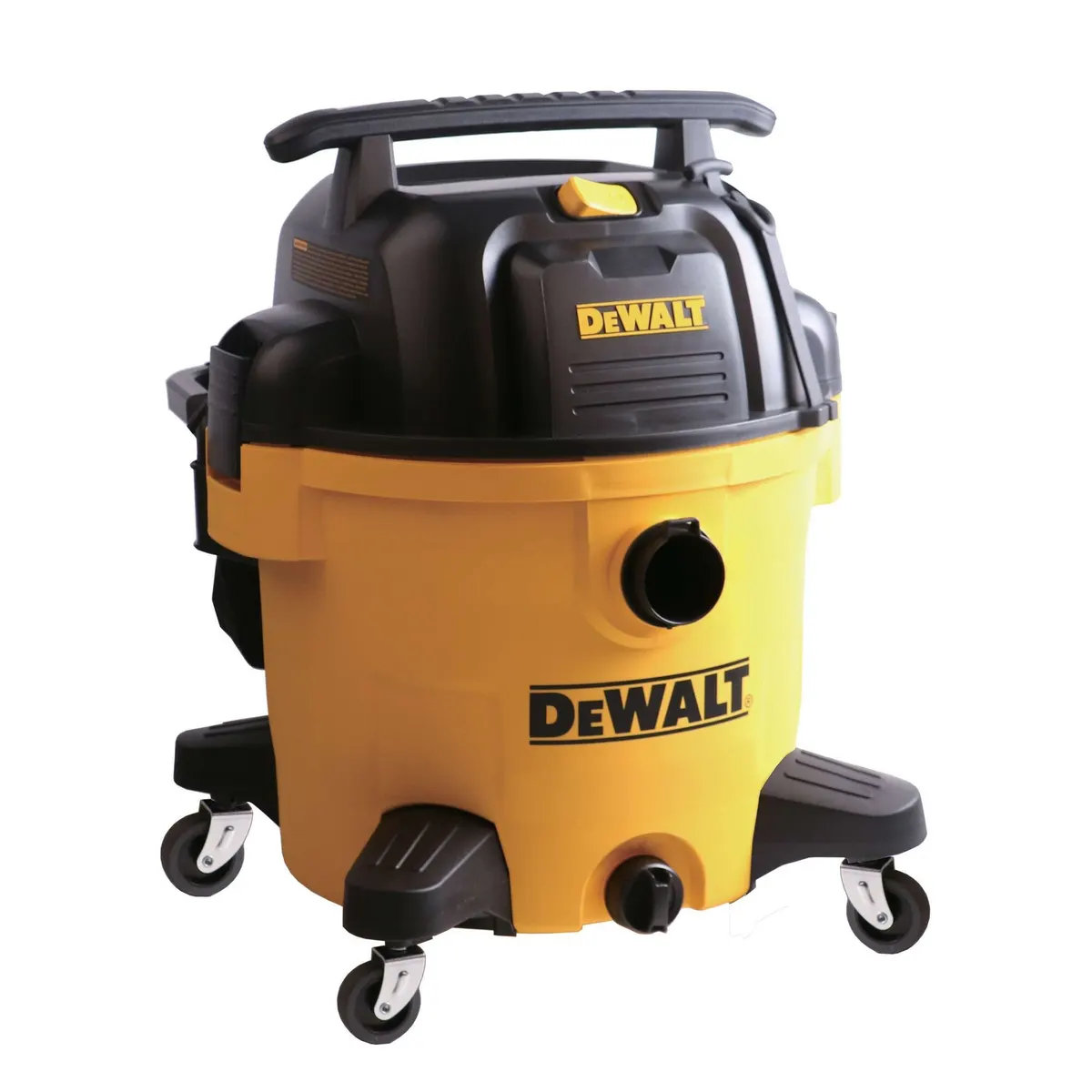
DeWalt DXV10P 10-Gal Wet/Dry Vac
The DeWalt DXV10P stands out for its 2-stage motor, which produces noticeably less high-frequency whine than single-stage shop vacs — a meaningful advantage for woodworkers in enclosed shops or near job sites. With 90 CFM at the hose tip (measured under load), it delivers strong tool-side dust collection, and its compact 10-gallon drum fits easily on crowded worksites. The large poly drum and integrated carry handle make it easy to move.
- ✓ 2-stage motor runs significantly quieter than single-stage alternatives
- ✓ 90 CFM at the hose tip — real-world usable suction through the full cord and hose run
- ✓ Compact 10-gallon drum takes up less floor space than 16-gallon models
- ✓ Swiveling casters on all four legs provide 360-degree mobility
- ✗ 10-gallon capacity requires more frequent emptying on big cleanup jobs
- ✗ Smaller 1-7/8 in. hose can clog on coarse wood chips more easily than 2-1/2 in. hoses
- ✗ No auto-start outlet; must use separate trigger switch for tool-triggered operation
We may earn a commission from this link.
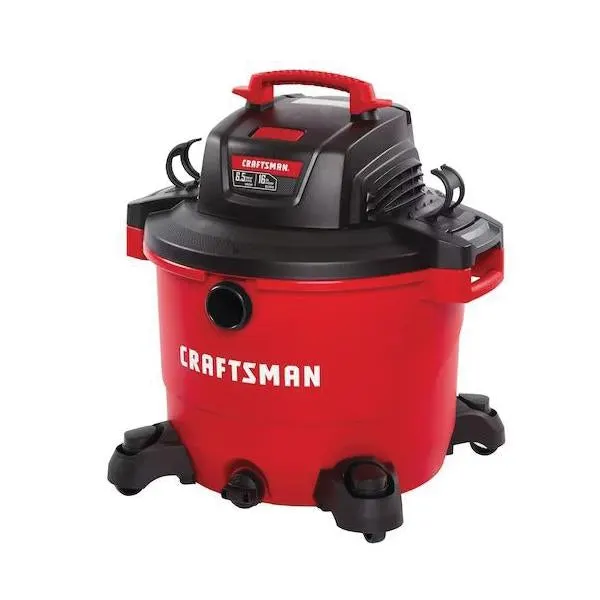
Craftsman CMXEVBE17595 16-Gal Wet/Dry Vac
The Craftsman CMXEVBE17595 delivers 16 gallons and 6.5 peak HP at a street price of $80–$100 — the lowest cost per gallon in this guide. For homeowners and DIYers who need a capable wet/dry machine for renovation projects, seasonal water, and garage cleanup without overspending, it's the obvious choice. The Dual-Flex hose resists kinking, and the extra-large bottom drain port makes wet emptying fast and clean.
- ✓ Consistent street price of $80–$100 — lowest cost for a 16-gal shop vac from a major brand
- ✓ Dual-Flex hose resists kinking and crushing better than straight hose alternatives
- ✓ Extra-large bottom drain port speeds liquid emptying significantly
- ✓ Qwik-Lock filter system allows quick swaps between dry and wet modes
- ✗ 3-year warranty is shorter than RIDGID's lifetime coverage
- ✗ No detachable blower module; rear blower port is functional but less convenient
- ✗ Motor is louder than the 2-stage DeWalt DXV10P
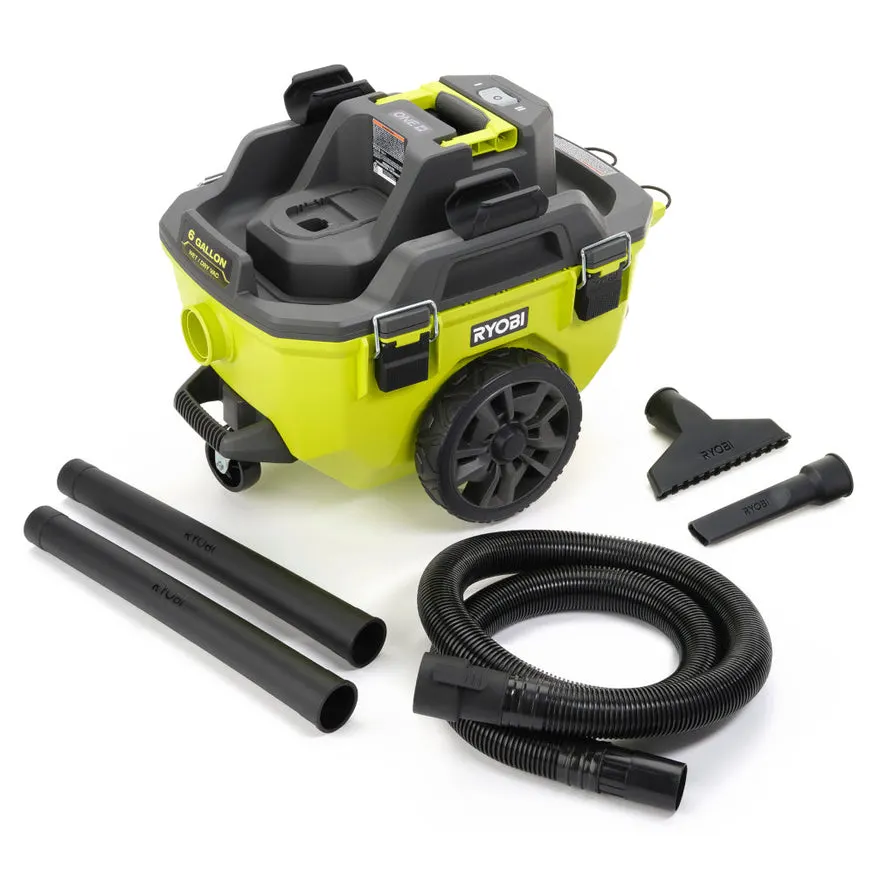
Ryobi PCL735B 6-Gal 18V Cordless Wet/Dry Vac
The Ryobi PCL735B brings cordless freedom to shop cleanup for existing 18V ONE+ owners. With 80 CFM suction and a two-speed switch, it handles light debris, vehicle interiors, and tool-side dust collection without an extension cord. The 6-gallon drum and all-terrain wheels make it portable, but the trade-off is smaller capacity and the need to budget for batteries if you're not already in the ecosystem.
- ✓ Cordless design eliminates cord-management hassle in outdoor or remote areas
- ✓ 80 CFM and 36-inch water lift deliver strong suction for its size
- ✓ Two-speed switch balances power and runtime
- ✓ Compatible with all Ryobi 18V ONE+ batteries — no new platform investment for existing users
- ✗ 6-gallon capacity requires frequent emptying on large projects
- ✗ Tool-only at $149; adding a 4Ah battery and charger brings cost to ~$199
- ✗ Runtime on a 4Ah battery is about 20–30 minutes on high
What matters when choosing a shop vacuum for woodworking
Woodworking generates a wide range of debris — from coarse chips and shavings to fine flour that can hang in the air for hours. A shop vacuum that works well in this environment needs more than just bare suction: it needs a filtration path that doesn't recirculate respirable dust, enough CFM to capture dust at the tool, a capacity that matches the scale of your projects, and sometimes cord freedom for quick cleanup without tripping over extension cords.
This guide focuses on four models that cover the main purchase profiles: large-capacity workhorses, quiet compact machines, budget-friendly value picks, and battery-powered portability. Every spec cited comes from the manufacturer or from published reviews; no lab testing was performed here.
Filtration: the most important spec for woodworkers
The standard cartridge filter on most shop vacs captures particles down to around 30 microns — enough for sawdust and chips, but it passes the fine dust that causes health concerns in enclosed shops. For woodworking, a filter capable of 99.97% capture at 0.3 microns (HEPA) is strongly recommended.
Among the picks here, none ship with a HEPA filter out of the box. The RIDGID HD1600 and Craftsman CMXEVBE17595 include general-debris cartridges; upgrading to a HEPA cartridge (RIDGID VF6000 or Craftsman HEPA-rated replacement) is straightforward using the Qwik-Lock collar. The DeWalt DXV10P offers a separate HEPA upgrade (model DXVA19-4112), and the Ryobi PCL735B has the A32RF07 HEPA filter available. Budget the upgrade cost into your purchase if you plan to do sanding, routing, or any fine-dust-generating work.
Tool-triggered operation: convenience vs. cost
If you frequently connect your shop vac to a miter saw or sander, having the vacuum automatically start and stop with the tool is a significant convenience. None of the models in this guide include an auto-start outlet. To add that functionality, you can use an aftermarket adapter like the iVac AutoSwitch (about $50–$70) or step up to a model such as the DeWalt DXV10S or Festool CT 26, which include auto-start natively. For occasional use, manually flipping the switch is fine; for regular production work, the upgrade is worth it.
CFM: understanding the numbers
CFM figures are often quoted at the drum inlet (before the hose), which overstates what reaches the nozzle. The DeWalt DXV10P is notable for listing 90 CFM at the hose tip — a real-world measurement. The RIDGID and Craftsman quote 161 CFM and 177 CFM at the drum, respectively, which will drop by 15–25% through a 7-foot hose. For tool-side dust collection, any of these provide enough airflow for single-tool use; for central systems, you want a dedicated dust collector with 400+ CFM.
Best overall for woodworking: RIDGID HD1600
The RIDGID HD1600 earns the top pick because it balances the most important attributes for woodworking: large capacity (16 gallons), a detachable blower that doubles for cleanup around the shop, a locking hose that stays put during active use, and a lifetime warranty that makes it a long-term investment. The included VF4000 filter handles coarse debris well, and upgrading to a HEPA cartridge is quick and affordable. For a woodworker who wants one machine that does everything — sawdust, chip cleanup, blower duty, and wet pickup — without needing a separate leaf blower, this is the most versatile option.
Best quiet operation: DeWalt DXV10P
Noise is a real concern in a home shop. The DeWalt DXV10P's 2-stage motor produces less high-pitched whine than single-stage models, making it more comfortable for extended use in an enclosed space. Its 90 CFM at the hose tip is solid for tool-side dust collection, and the compact 10-gallon drum fits easily under a miter saw stand. The trade-off is smaller capacity — you'll empty it more often during big jobs — and the 1-7/8 inch hose may clog on really coarse chips. For the finish carpenter or dedicated woodworker who values a quieter shop, the DXV10P is the right pick.
Best value: Craftsman CMXEVBE17595
The Craftsman CMXEVBE17595 delivers 16 gallons and solid suction at $80–$100, making it the most affordable large-capacity vac from a major brand. Its Dual-Flex hose resists kinking, the extra-large drain port speeds wet emptying, and the Qwik-Lock filter system makes dry-to-wet swaps fast. For homeowners who need a capable vac for occasional woodworking, renovation debris, and seasonal water without spending more than necessary, it's the straightforward choice. The downsides — no detachable blower, shorter warranty, louder noise — are real but acceptable at this price.
Best cordless: Ryobi PCL735B
The Ryobi PCL735B is the only cordless option here, and it fills a specific niche: quick cleanup when running an extension cord is a pain. For Ryobi 18V ONE+ owners who already have batteries, the tool-only $149 price is competitive. The 6-gallon capacity and 80 CFM suction handle light debris and tool dust collection, but plan on 20–30 minutes of runtime per 4Ah battery. It's not a replacement for a full-size corded vac on heavy-duty jobs, but for cleaning up a vehicle interior, doing a quick sweep after a router pass, or grabbing from an outdoor deck, the cord-free convenience is a real plus.
How to choose
Start with your scale of work. If you're doing serious production woodworking with fine dust concerns, invest in the RIDGID HD1600 and add a HEPA filter. If noise and a compact footprint matter more, the DeWalt DXV10P is the clear winner. On a tight budget, the Craftsman CMXEVBE17595 gives you 16 gallons for the lowest price. And if you need cordless freedom and already own Ryobi batteries, the PCL735B is the only game in town.
All four are solid machines. The right one depends on your workshop setup, your budget, and whether you value capacity, quiet operation, low cost, or portability above all else.
Advertisement
Frequently asked questions
- How important is CFM for woodworking dust collection?
- CFM (cubic feet per minute) measures the volume of air moved per minute, which is critical for capturing airborne dust at the source. For tool-side dust collection on saws, sanders, and routers, you want at least 80–100 CFM at the hose tip. The DeWalt DXV10P delivers 90 CFM at the hose, while the RIDGID HD1600 and Craftsman CMXEVBE17595 quote higher CFM at the drum but less at the tip due to hose losses. A finer filter also reduces CFM slightly, so prioritize HEPA-rated filters for respirable dust.
- What is tool-triggered operation and do I need it?
- Tool-triggered operation (also called auto-start) automatically turns the vacuum on when a connected power tool starts and off when it stops, via an AFCI outlet on the vacuum. This is convenient for dust extraction during woodworking, as you don't have to manually toggle the vac. None of the picks here include an auto-start outlet; you would need an aftermarket adapter (e.g., iVac AutoSwitch) or step up to models like the DeWalt DXV10S or Festool CT series. For fine woodworking, it's a worthwhile upgrade.
- Do I need a HEPA filter for woodworking?
- Yes, for capturing fine wood dust (below 10 microns) that is respirable and potentially hazardous, a HEPA filter rated to 0.3 microns is essential. The RIDGID HD1600 and Craftsman CMXEVBE17595 include general-debris filters; upgrading to a HEPA cartridge (e.g., RIDGID VF6000 or Craftsman HEPA) is strongly recommended for sanding, routing, or any fine dust generation. The DeWalt DXV10P offers a HEPA upgrade separately, while the Ryobi PCL735B has the A32RF07 HEPA option. Without HEPA, the vacuum will recirculate fine particles into the air.
- How does the RIDGID HD1600 compare to the Craftsman CMXEVBE17595?
- Both are 16-gallon, 6.5 peak HP vacs from major brands, often priced within $40 of each other. The RIDGID offers a detachable blower, a locking Dual-Flex hose, and a lifetime warranty — key advantages for versatility and long-term ownership. The Craftsman wins on price, has a larger bottom drain port for faster wet emptying, and includes a Qwik-Lock filter system for quick swaps. For most buyers, the RIDGID's warranty and blower tip the scale; budget-conscious users who prioritize low cost and quick wet draining will prefer the Craftsman.
- Can I use a shop vacuum for central dust collection?
- A shop vacuum can serve as a basic dust collector for single-tool use when connected directly to a power tool's dust port, but it lacks the high CFM (400+ CFM) needed for effective collection from large machines like planers or jointers. For a small shop with occasional use on sanders and routers, a shop vac with a HEPA filter is adequate. For serious central systems, a dedicated dust collector (e.g., from Jet or Laguna) is necessary. The pick here — RIDGID HD1600 — works fine for tool-side collection with a HEPA upgrade.
- What size shop vacuum do I need for a woodworking shop?
- For a small home shop with a single user, a 6–10 gallon vacuum is sufficient for daily cleanup and tool dust collection, especially if you have limited floor space. For larger shops or frequent renovation debris, a 16-gallon drum reduces emptying frequency and handles bigger messes. The DeWalt DXV10P (10 gal) is a good middle ground; the RIDGID HD1600 and Craftsman CMXEVBE17595 (16 gal) are better for high-volume debris. If you prioritize portability and cordless use, the Ryobi PCL735B (6 gal) is acceptable but will need more frequent emptying.