
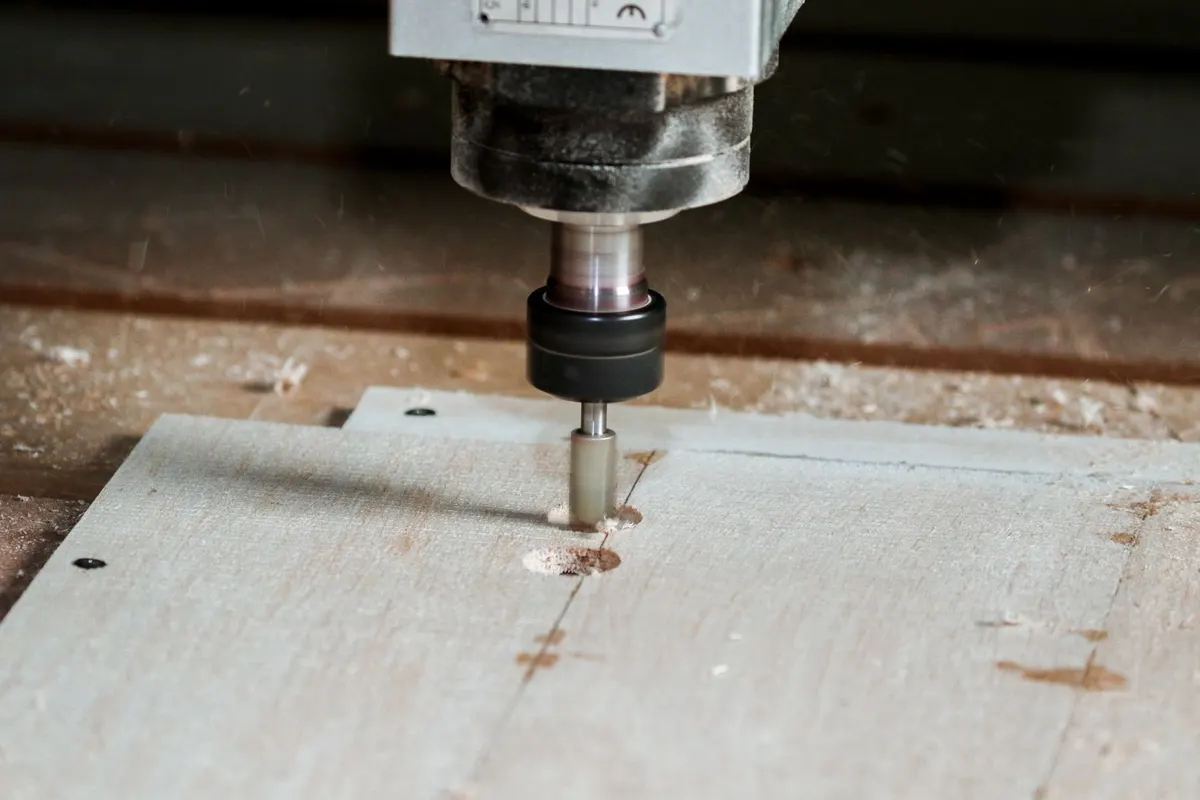
The Best Routers for Beginners in 2026
A beginner-friendly router emphasizes safety, easy setup, and a gentle learning curve. Our top pick is the Makita RT0701C, which offers the widest variable speed range (10,000–30,000 RPM) and smooth depth adjustment, making it ideal for learning edge profiling and laminate trimming. If you need both fixed and plunge bases from the start, the Bosch 1617EVSPK combo kit is the best value for expanding skills. Cordless options like the DeWalt DCW600B and budget Ryobi PCL424B also have their places.
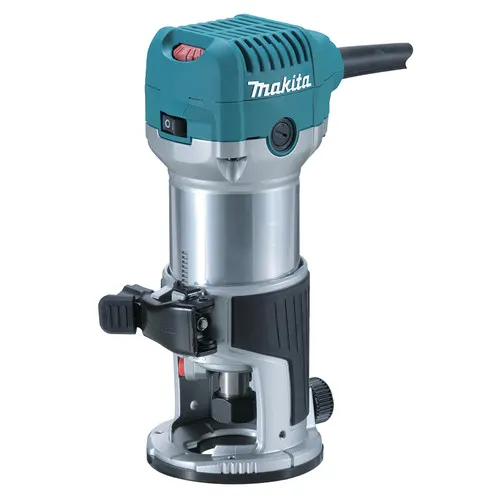
Makita RT0701C
The RT0701C's 10,000–30,000 RPM range covers the most common bit speeds for edge profiles and trim work, and its electronic speed control prevents bogging as you learn. The quick-release cam lock makes depth changes tool-free, and at 3.9 lbs it is light enough for one-handed control. It accepts only 1/4-inch shanks, which is fine for beginner projects, and it lacks a plunge base out of the box, but its forgiving speed range and low learning curve make it the best first router.
- ✓ Widest speed range (10,000–30,000 RPM) among compact routers, giving you low-speed control for larger bits
- ✓ Rack-and-pinion depth adjustment is smooth and holds setting precisely
- ✓ Quick-release cam lock lets you change bases or set depth without tools
- ✓ Light enough (3.9 lbs) for comfortable one-handed operation during long sessions
- ✗ 1/4-inch collet only, so you cannot use 1/2-inch shank bits for larger profiles
- ✗ Brushed motor, not as long-lasting as brushless alternatives
- ✗ No plunge base included; must buy separately for mortise work
- ✗ No built-in work light
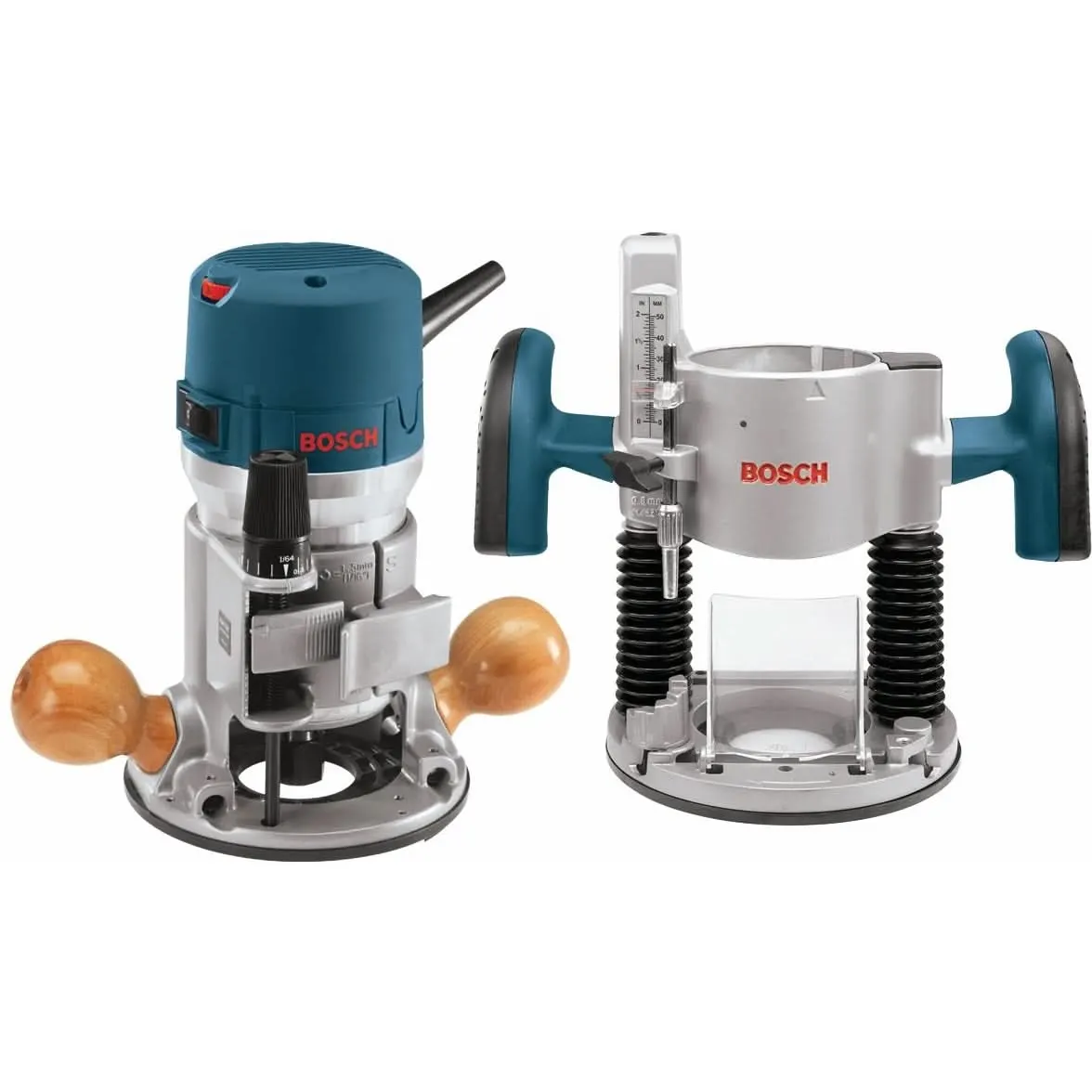
Bosch 1617EVSPK
The 1617EVSPK is the only pick here that includes both fixed and plunge bases, letting you try edge profiling and mortising with the same motor. Its Constant Response circuitry maintains speed under load, which is especially forgiving when you are learning to feed consistently. At 10 lbs it is heavier than compact routers, so it is a two-handed tool, but the included case keeps everything organized. It accepts both 1/4- and 1/2-inch shanks, opening up a wider range of bits as you advance.
- ✓ Includes both fixed and plunge bases, offering maximum versatility for learning different routing techniques
- ✓ Constant Response circuitry maintains RPM under load, forgiving of inconsistent feed rates
- ✓ Self-releasing 1/2-inch and 1/4-inch collets provide access to all bit sizes
- ✓ Microfine depth adjustment on fixed base allows precise, repeatable settings
- ✗ Heavy at 10 lbs, requiring two hands and good work support
- ✗ No dust collection included; needs a separate adapter
- ✗ 1-year warranty is shorter than some competitors
- ✗ Fixed base depth range of 1-5/8 in. limits very deep single-pass cuts
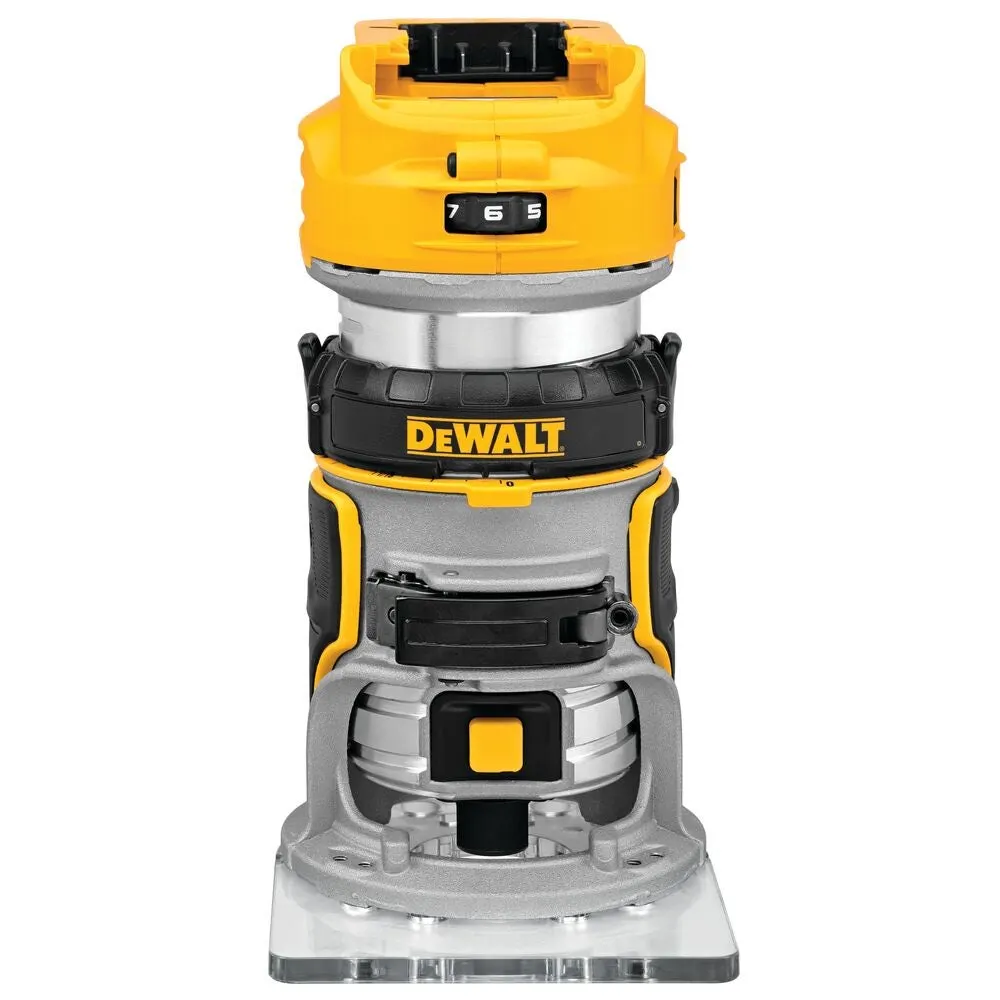
DeWalt DCW600B
For beginners who already own DeWalt 20V MAX batteries, the DCW600B eliminates the trip hazard of extension cords on job sites. Its brushless motor and electronic feedback maintain speed under load, and the 1/64-inch precise depth ring makes fine adjustments easy. At 2.6 lbs (bare), it is lighter than any corded compact, reducing fatigue. However, it only accepts 1/4-inch shanks and requires a battery purchase if you are not on the platform.
- ✓ Cordless convenience for job site work without the need for an outlet or extension cord
- ✓ Brushless motor is more efficient and durable than brushed competitors
- ✓ At 2.6 lbs (bare tool), it is the lightest compact router available, reducing fatigue
- ✓ 1/64-inch precision depth adjustment ring enables fine, repeatable depth changes
- ✗ Tool-only pricing means you need to already own or purchase a 20V MAX battery separately
- ✗ Speed range (16,000–25,500 RPM) is narrower than the Makita RT0701C
- ✗ Only 1/4-inch shank bits are accepted
- ✗ Battery weight (0.6–1.1 lbs) partially offsets the light tool body
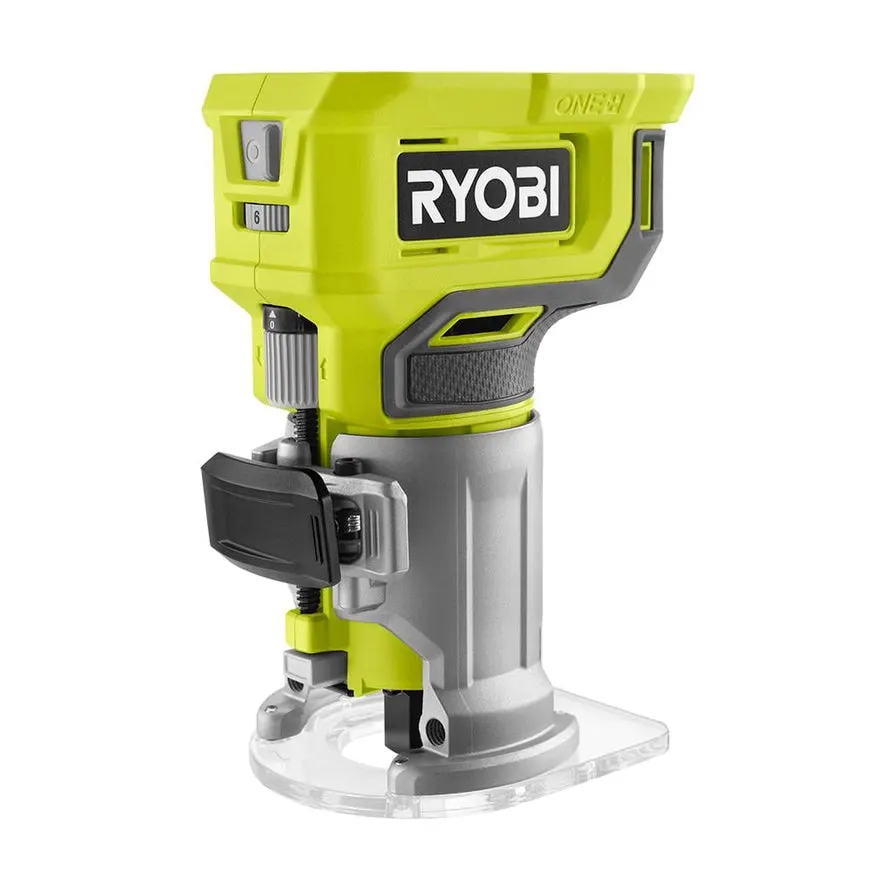
Ryobi PCL424B
The PCL424B is the cheapest way to enter cordless routing, especially for Ryobi ONE+ owners who already have batteries. Its 20,000–30,000 RPM range is actually faster at the top than the DeWalt DCW600B, but a brushed motor and lack of electronic speed feedback mean it bogs under load. It is fine for light, occasional tasks like laminate trimming, but its weight (3.2 lbs, heavier than DeWalt) and heat buildup make it less suitable for sustained work.
- ✓ Lowest price point for a cordless compact router on a major 18V platform
- ✓ Variable speed 20,000–30,000 RPM tops the DeWalt DCW600B's max speed
- ✓ Quick-release lever and micro dial depth adjustment for easy depth changes
- ✓ Works with the entire 300+ tool Ryobi ONE+ battery system
- ✗ Brushed motor is less efficient and generates more heat under load
- ✗ No electronic speed feedback leads to RPM drop when cutting harder materials
- ✗ Heavier than the DeWalt DCW600B at 3.2 lbs (bare tool)
- ✗ Not designed for sustained or heavy routing sessions
Safety first: what every beginner should know
A router is one of the most versatile tools in a woodshop, but it demands respect. The bit spins at tens of thousands of RPM, and a slipped cut can ruin a workpiece or cause injury. Before you make your first cut, understand these safety principles:
Always feed against the rotation of the bit. When the router is held above the workpiece, the bit rotates clockwise (as seen from above). Move the router from left to right along the work. If you feed the same direction as the bit rotation, the router can climb over the wood, which is called climb cutting and requires advanced skill.
Secure your workpiece. Never rout a piece that is not clamped down. The router's upward force can lift a small board, and the torque can spin a large one. Use clamps or a router fence.
Wear PPE. Hearing protection is essential because routers are loud; eye protection is non-negotiable against flying chips. A dust mask or vacuum is strongly recommended.
Take light passes. For deep cuts, make multiple passes at increasing depths. Beginners often try to remove too much material at once, which stresses the tool and increases the chance of kickback.
Keep both hands on the router. Only compact routers are designed for one-handed operation, and even then, use two hands on the bases for control. The Bosch 1617EVSPK is a two-handed tool.
Ease of setup: what to expect out of the box
Every router in this guide comes as a bare tool (or kit with bases) that requires some assembly. The Makita RT0701C is the most straightforward: slide the motor into the fixed base, tighten the cam lock, insert a collet and bit, and turn the depth adjustment ring. Total time under 5 minutes. The Bosch 1617EVSPK takes a few minutes longer because you have two bases and two collets to manage, but the case has labeled compartments that make it easy.
The DeWalt DCW600B and Ryobi PCL424B are both tool-only, so you need to have or purchase a battery and charger. Setup is otherwise simple: install a bit, adjust depth, and go. None of these routers require special tools beyond the supplied wrenches. A tip for beginners: practice adjusting depth and changing bits a few times before you make your first cut.
Learning curve: where you start and where you go
Routing is a skill that builds quickly if you start with the right tool and projects. The learning curve is gentlest with a compact router like the Makita RT0701C because its light weight and fine speed control let you focus on feeding technique. Start with edge profiles on scrap wood: roundovers and chamfers on softwood like pine. Once you are comfortable with feed rate and direction, try flush-trimming laminate or routing a simple groove with a straight bit.
From there, you can move to the Bosch 1617EVSPK to explore plunge routing for mortises, and eventually use both bases for complete joinery projects. The Bosch is more complex because switching bases and adjusting plunge depth adds steps, but the capability is rewarding.
For cordless users, the skill progression is the same, but you also need to manage battery runtime. A 2.0Ah pack may last 15–20 minutes of continuous routing, so plan your cuts accordingly.
Our picks explained
1. Makita RT0701C (Best compact for beginners)
The RT0701C is the consensus choice for a first router because its 10,000–30,000 RPM range gives you the most flexibility to match speed to bit diameter. Beginners often use larger bits like a 3/4-inch roundover, and the low end of 10,000 RPM is essential to avoid burning. The electronic speed control maintains the set RPM, which is forgiving when your feed pressure is inconsistent. The fixed base is stable and the depth adjustment is the best in class. Its only real drawbacks are the 1/4-inch collet limitation and lack of a plunge base, but both are non-issues for learning.
2. Bosch 1617EVSPK (Best combo kit for learning)
The Bosch combo includes both a fixed base and a plunge base, so you can progress from edge profiling to mortising without buying a second router. The Constant Response circuitry is the best electronic feedback in this price range, maintaining speed under load so you can focus on technique. It accepts both 1/4-inch and 1/2-inch shanks, opening the door to larger bits as your skills grow. The downsides are weight (10 lbs) and a relatively short warranty. For beginners who want to avoid buying multiple routers, this is the one that grows with you.
3. DeWalt DCW600B (Best cordless for job sites)
The DCW600B is the best cordless option for beginners who are already on the DeWalt 20V MAX platform or who prioritize cordless convenience. The brushless motor is more durable and efficient than brushed, and the electronic feedback maintains speed under load. Its 1/64-inch adjustable depth ring is fine for all typical compact router tasks. The narrower speed range (16,000–25,500 RPM) means less low-speed control for large bits, but for common profiles it is fine. The tool-only pricing means you must factor in battery cost.
4. Ryobi PCL424B (Best budget entry)
The PCL424B is the obvious choice for Ryobi ONE+ owners who want to try routing without a big investment. Its brushed motor and lack of speed feedback mean it bogs under load, but for light, occasional work — trimming a laminate countertop, rounding over a couple of table edges — it gets the job done. The top speed of 30,000 RPM is actually faster than the DeWalt DCW600B, which helps with fine bits. However, it is heavier and generates more heat during sustained use. If you plan to router frequently, save up for the Makita or DeWalt.
How to choose your first router
Consider three things: your existing battery platform (if any), the type of projects you want to start with, and your budget. If you already own Ryobi or DeWalt batteries, the smartest buy is the matching router because you avoid the cost of a new battery system. If you are starting from scratch, corded options from Makita or Bosch give you the best performance per dollar and no battery compatibility concerns.
For project type: if you plan to stick with edge profiles and laminate work, a compact router (Makita, DeWalt, or Ryobi) is sufficient. If you want to eventually make mortises, dovetails, or use larger bits, the Bosch 1617EVSPK combo is the better long-term investment.
Every router here is a capable tool for a beginner. The differences come down to platform, weight, and the specific features that match your learning path. Start with light passes, keep your bits sharp, and enjoy the journey into woodworking.
Advertisement
Frequently asked questions
- Which router is safest for a beginner?
- All the routers in this guide include variable speed and electric brakes that stop the bit quickly when you release the trigger. The Makita RT0701C and DeWalt DCW600B have the best speed feedback, which reduces the risk of kickback when learning. Always wear hearing and eye protection, secure your workpiece, and feed the router against the rotation of the bit.
- What is the easiest router to set up out of the box?
- The Makita RT0701C has the simplest setup: it comes with a fixed base, a collet wrench, and a straight guide. The quick-release cam lock lets you change bits and adjust depth without tools. The Bosch 1617EVSPK has more parts (two bases, two collets) but a well-organized carrying case, and the instructions are clear. The DeWalt and Ryobi both require a battery purchase if you are not already on their platforms.
- Do I need a plunge base as a beginner?
- Not necessarily. Most beginner projects — edge profiling, flush trimming, chamfers — use a fixed base. A plunge base is only needed for mortises or stopped cuts that start in the middle of a board. If you think you might do mortise work soon, the Bosch 1617EVSPK includes both bases; otherwise the Makita RT0701C with its optional plunge base is a good path.
- Can I use a cordless router like the DeWalt DCW600B for my first router?
- Yes, especially if you already own batteries on that platform. The cordless freedom is a real plus for job site work or routing away from an outlet. Just be aware that cordless routers typically have narrower speed ranges and higher overall cost (tool + battery) than corded options. The DeWalt DCW600B is a capable first router for light to moderate use.
- What size bits should I buy as a beginner?
- Start with 1/4-inch shank bits because they are cheaper and fit all compact routers. A 1/2-inch roundover, a 1/4-inch flush trim, and a 45-degree chamfer bit cover most entry-level projects. For 1/2-inch shank bits (required for large profiles like raised panels), you need a router like the Bosch 1617EVSPK that accepts them.
- How do I avoid burning the wood when routing?
- Burning typically happens when the router is fed too slowly or the speed is too high for the bit diameter. Use a slower RPM for large bits and feed at a steady pace so the bit cuts rather than rubs. Always use sharp bits and make multiple light passes for deep cuts. The Makita RT0701C and Bosch 1617EVSPK have better speed control that helps prevent burning.