
The Best Wood Routers of 2026
The best wood router for most people in 2026 is the Bosch 1617EVSPK — a 2.25 HP combo kit that pairs a fixed base and plunge base with Constant Response speed control and 1/2-inch collet capability in one case. If you need a compact trim router for edge work, the Makita RT0701C offers the widest speed range at a lower price; for job-site cordless routing, the DeWalt DCW600B saves the extension cord; and for budget-minded Ryobi ONE+ users, the PCL424B adds routing at minimal cost.
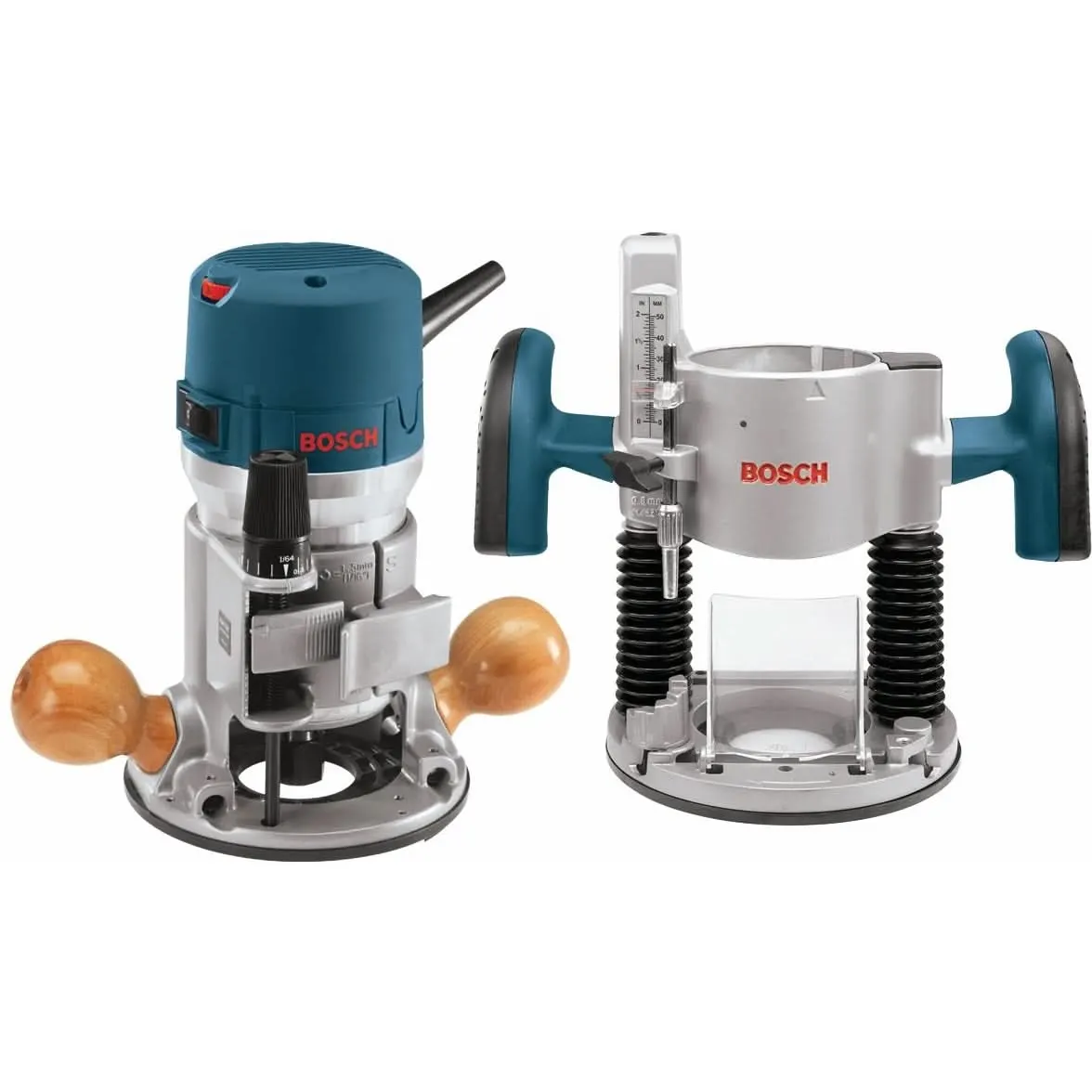
Bosch 1617EVSPK 2.25 HP Fixed/Plunge Combo
The Bosch 1617EVSPK is the most versatile single-router investment a woodworker can make: a 2.25 HP motor with Constant Response circuitry, both fixed and plunge bases, and 1/2-inch collet capability packed into a single carrying case. It handles edge profiling, mortises, raised-panel doors, and template routing equally well, and its electronic speed control maintains RPM through hardwood and MDF without audible bog. Furniture makers, cabinet builders, and serious DIYers who want one router that does everything should start here.
- ✓ Ships with both fixed and plunge bases in one kit, giving you full routing capability — edge profiling, mortises, stopped dadoes, and template routing — without a second purchase
- ✓ Self-releasing 1/2-inch and 1/4-inch collet chucks are included, opening the complete catalog of router bit profiles including raised panels, large cove cuts, and drawer-lock joints
- ✓ Constant Response circuitry is among the best electronic feedback implementations at this price — the motor holds its set speed through hardwood, MDF, and grain reversals without audible bog
- ✓ Microfine bit-depth adjustment on the fixed base enables depth changes at the precision required for fine furniture joinery, not just rough profiling
- ✓ 2-1/4-inch plunge depth on the plunge base is sufficient for most door-lock mortises and through-tenon work without repositioning
- ✓ Durable carrying case with dedicated compartments keeps both bases organized and the motor protected between jobs
- ✗ At 10 lbs for the kit, this is a two-handed tool — not a candidate for one-handed laminate trimming or overhead work where compact routers excel
- ✗ Fixed base depth range of 1-5/8 inches is shorter than some competitors at this power level, which matters for very deep single-pass profiling
- ✗ No dust extraction system is included; the 2-inch subbase opening is compatible with Bosch guide accessories but requires a separate dust port adapter for vacuum hookup
We may earn a commission from this link.
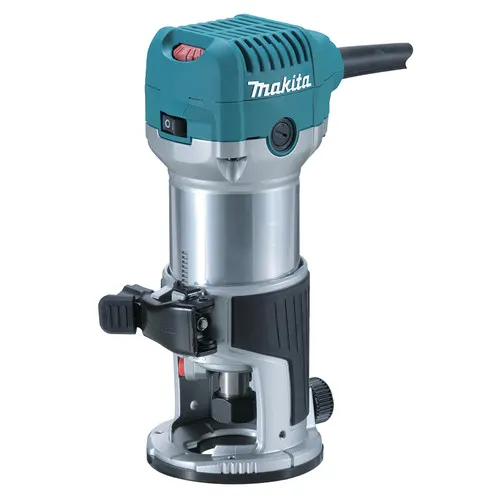
Makita RT0701C 1.25 HP Compact Router
The Makita RT0701C sets the benchmark for compact corded routers with the widest variable speed range in its class — 10,000 to 30,000 RPM — and a quick-release cam lock that makes base swaps effortless. At 3.9 lbs, it is comfortable for one-handed flush-trimming and edge profiling, and its rack-and-pinion depth adjustment locks positively without drift. For cabinet installers, countertop fabricators, and DIYers who prioritize speed control and precision in a trim router, the RT0701C is the reference standard.
- ✓ Variable speed from 10,000 to 30,000 RPM is the widest range in this class, giving you genuine low-speed control for larger bits and high-speed precision for fine work
- ✓ Electronic speed control maintains constant RPM under load — no bogging down mid-profile the way budget trim routers do
- ✓ Quick-release cam lock on the motor housing lets you set depth and swap between the fixed base and optional plunge or tilt bases in seconds
- ✓ At 3.9 lbs, it is notably light for its power output and runs comfortably one-handed for laminate flush-trim work
- ✓ Rack-and-pinion depth adjustment is smooth and repeatable, with clear markings that hold their setting reliably after locking
- ✗ Accepts only 1/4-inch shank bits — no 1/2-inch collet option on the base tool, which limits you to smaller-diameter profiles
- ✗ Brushed motor will wear faster than brushless competitors over heavy production use; plan on periodic brush replacement after several hundred hours
- ✗ No LED work light, which competitors at this price tier have started adding
- ✗ Dust collection port is a small-diameter stub — you need the optional dust extracting attachment (195559-1) for any real dust management
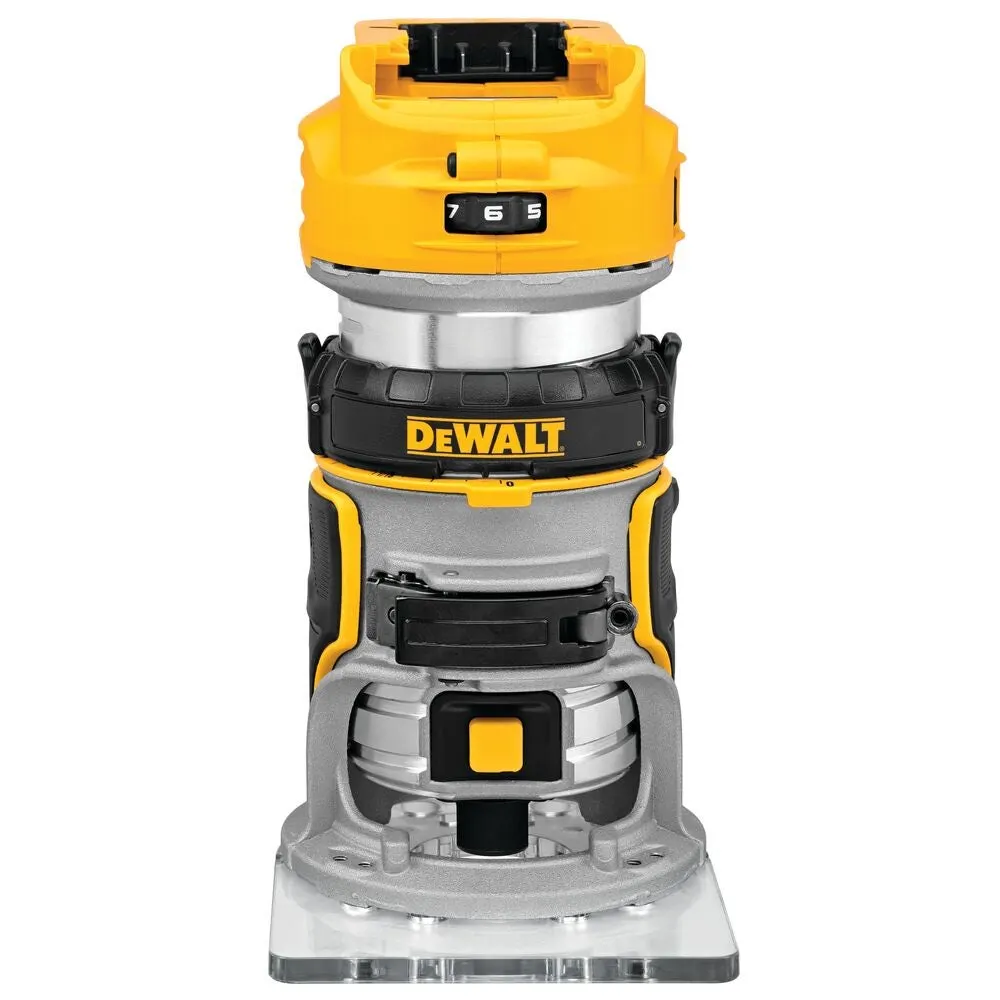
DeWalt DCW600B 20V MAX Cordless Compact Router
The DeWalt DCW600B brings genuine cordless freedom to compact routing without sacrificing the features that matter: a brushless motor with electronic feedback, 1/64-inch precision depth adjustment, and dual LED lights that eliminate hand shadows. At 2.6 lbs bare, it is lighter than any comparable corded trim router, making it ideal for job-site kitchen installations, countertop trimming, and any setting where dragging an extension cord is a hassle. For DeWalt 20V MAX platform users who route on the move, this is the obvious choice.
- ✓ Cordless freedom on 20V MAX XR is genuine — you can route cabinet edges, trim laminate on a job site countertop, or profile a tabletop outdoors without hunting for an outlet
- ✓ Brushless motor and electronic feedback maintain speed under load in a way that cheap corded trim routers cannot match
- ✓ At 2.6 lbs (bare tool), it is lighter than nearly every corded compact router including the Makita RT0701C, reducing fatigue during extended profiling sessions
- ✓ 1/64-inch precision depth adjustment ring gives fine, repeatable control that most cordless routers in this price range lack
- ✓ Dual LED lights bracket the bit, eliminating the shadow your hand casts on the cut line — a practical advantage in low-light job site conditions
- ✓ Pairs directly with the DeWalt 20V MAX battery platform, which spans hundreds of tools including the DCS334B jigsaw and DCS573B circular saw
- ✗ Tool-only pricing around $160–$220 means you need a 20V MAX battery separately; add $50–$80 for a 2.0Ah starter pack
- ✗ Speed tops at 25,500 RPM — the Makita RT0701C reaches 30,000 RPM, a meaningful difference for fine detail bits
- ✗ Accepts only 1/4-inch shank bits; no upgrade path to 1/2-inch shanks for larger profiles
- ✗ Battery weight (approximately 0.6–1.1 lbs for a 2.0–5.0Ah pack) partially offsets the light tool body — with a 4.0Ah battery you are near the RT0701C's overall weight
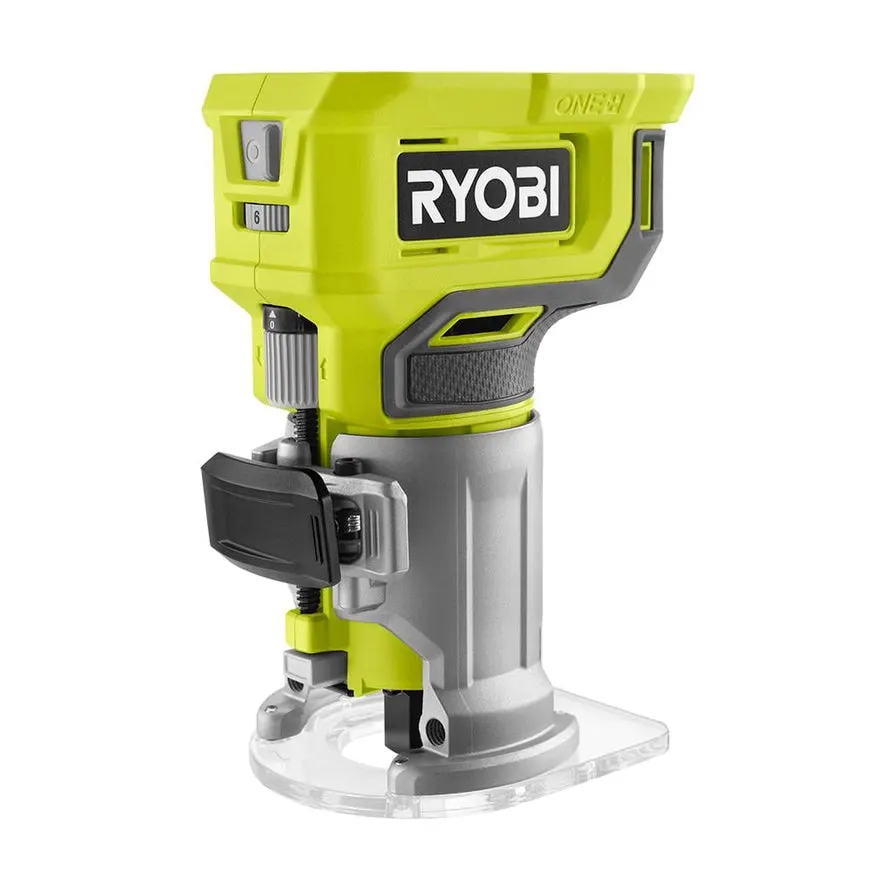
Ryobi PCL424B 18V ONE+ Compact Router
The Ryobi PCL424B is the most affordable way to add cordless routing capability to your shop — at $79–$99 tool-only, it costs roughly half what the DeWalt DCW600B commands. Its 20,000–30,000 RPM variable speed range actually exceeds the DeWalt's top speed, and the quick-release lever with micro dial depth adjustment rivals more expensive routers in convenience. While the brushed motor lacks the efficiency and sustained-load stamina of brushless alternatives, for homeowners already on the Ryobi ONE+ platform who need occasional laminate trimming or edge profiling, it is a sensible value.
- ✓ At $79–$99 tool-only, it is the least expensive entry point into cordless compact routing on any major 18V platform
- ✓ 20,000–30,000 RPM variable speed range is actually wider at the top than the DeWalt DCW600B (25,500 RPM), allowing faster spinning for fine detail bits
- ✓ Quick-release lever and micro dial depth adjustment give faster bit changes and finer depth control than the threading-ring mechanism common on budget corded trimmers
- ✓ Part of the 300+ tool Ryobi 18V ONE+ platform — buyers already invested in the system add routing capability at minimal incremental cost
- ✗ Brushed motor is the main performance gap versus the DeWalt DCW600B — less efficient, generates more heat under sustained load, and will require brush replacement eventually
- ✗ At 3.2 lbs bare, it is heavier than the DeWalt DCW600B (2.6 lbs) despite having less motor technology; the weight difference comes from the less efficient motor requiring more copper winding
- ✗ No electronic speed feedback — RPM drops under load in a way that better-specced routers compensate for automatically
- ✗ Platform limitation: Ryobi ONE+ 18V does not have a brushless router upgrade path; the brushless PBLRR01 is a separate, higher-cost product
How we picked
This guide ranks four wood routers based on published specifications, kit configurations, warranty terms, and consistent themes in owner reports. We did not run a controlled test lab, and we do not claim any direct product usage. Instead, every number and claim here is built from the manufacturer data sheets and the actual retail packages sold in the US. Where two tools are close, we lean on the specifications that change day-to-day use: speed range, collet size, weight, base system, battery platform, and included accessories. The shortlist deliberately spans different scales — from a full-size 2.25 HP combo to budget cordless — so that whatever routing style you need, there is a clear winner.
The four picks are the Bosch 1617EVSPK (full-size combo), Makita RT0701C (compact corded), DeWalt DCW600B (cordless compact), and Ryobi PCL424B (budget cordless). These are the routers most people actually cross-shop, ranking them against each other is more useful than padding the list with models nobody compares side by side.
What matters when you choose a wood router
Five things decide which of these is right for you, and they rarely all point at the same tool.
Collet size determines what bits you can run. A 1/4-inch collet limits you to smaller-diameter bits — flush-trim bits, standard roundovers, chamfers. A 1/2-inch collet unlocks the full catalog of raised-panel cutters, large coves, drawer-lock bits, and heavy straight bits. The Bosch 1617EVSPK includes both collets; the three compact routers accept only 1/4-inch shanks. If you plan to make cabinet doors or rout large profiles, the Bosch is the only option here.
Speed range and control affect cut quality. Variable speed lets you match RPM to bit diameter and material. The Makita RT0701C spans 10,000–30,000 RPM — the widest range in its class — and uses electronic speed control to maintain RPM under load. The DeWalt DCW600B spans 16,000–25,500 RPM, and the Ryobi PCL424B spans 20,000–30,000 RPM but lacks feedback, so RPM drops when the bit bites. The Bosch 1617 uses Constant Response circuitry to hold speed across varying material density.
Base configuration defines what work the router can do. A fixed base is for edge work; a plunge base is for starting cuts in the middle of a board. The Bosch 1617EVSPK includes both bases in the kit, making it effectively two routers in one. The compact routers ship with fixed bases only, but the Makita and Ryobi offer optional plunge bases sold separately.
Weight and size determine handling. The Bosch 1617EVSPK, at 10 lbs with both bases, is a two-handed tool for bench or table use. The compact routers are all under 4 lbs (bare) and are designed for one-handed laminate trimming and detail work. The DeWalt DCW600B at 2.6 lbs bare is the lightest.
Cordless freedom versus corded power. The DeWalt and Ryobi run on batteries, making them portable on job sites and eliminating extension cords. The Bosch and Makita are corded, delivering unlimited runtime and consistent power. For shop work with outlets nearby, corded is simpler and often cheaper; for remote or outdoor routing, cordless is a genuine advantage.
Best overall: Bosch 1617EVSPK
The Bosch 1617EVSPK wins the top spot because it is the most versatile single-router purchase a woodworker can make. Its 2.25 HP motor with Constant Response circuitry maintains speed across grain reversals and material density changes, producing clean cuts in hardwood, MDF, and plywood. The kit includes both a fixed base and a plunge base, so you can do edge profiling one minute and mortise hardware the next without buying a second router. The included 1/2-inch collet means you can run raised-panel cutters, large roundovers, and drawer-lock bits — options that are simply unavailable on compact routers.
The fixed base uses a rack-and-pinion column adjustment with a microfine ring for precision depth changes; the plunge base has a three-position turret stop for repeated passes. Both bases feel solid and lock without drift. The carrying case with dedicated compartments keeps everything organized. At 10 lbs for the kit, it is not a tool for one-handed laminate trimming — that is the compact routers' job — but for anyone doing furniture making, cabinet building, or serious routing that demands both fixed and plunge capability with 1/2-inch bits, the Bosch 1617EVSPK is the benchmark.
Best compact trim router: Makita RT0701C
The Makita RT0701C has defined the compact router category for years, and for good reason. Its 10,000–30,000 RPM variable speed range is the widest in this class, giving you genuine low-speed control for larger 1/4-inch shank bits and high-speed precision for fine detail work. Electronic speed control maintains RPM under load — you do not get the bog-down that budget trim routers exhibit when the bit meets figure in hard maple. The quick-release cam lock on the motor housing makes depth changes and base swaps quick and tool-free. The rack-and-pinion depth adjustment locks positively and reads clearly.
At 3.9 lbs, it is comfortable for one-handed use during extended laminate sessions or edge profiling. The brushed motor is the main trade-off — it will eventually need brush replacement, and it lacks the efficiency of brushless competitors — but for the price (around $159), the build quality and speed control are hard to beat. The 1/4-inch collet limitation is the only real constraint; if your work stays in edge profiling, laminate trimming, and light template routing with standard-diameter bits, this is the compact router to buy.
Best cordless compact router: DeWalt DCW600B
The DeWalt DCW600B brings cordless freedom to compact routing without sacrificing the features that matter. Its brushless motor with electronic feedback maintains speed under load — a real improvement over budget cordless routers that bog dramatically. The 1/64-inch precision depth adjustment ring gives fine, repeatable control, and the dual LED lights bracket the bit to eliminate hand shadows on the cut line. At 2.6 lbs bare, it is lighter than any comparable corded trim router, reducing fatigue during job-site use.
The tool-only pricing ($160–$220) requires a 20V MAX battery, adding $50–$80 for a starter pack. The speed range tops at 25,500 RPM, which is narrower than the Makita's 30,000 RPM ceiling, so fine detail bits may not spin at their optimal speed in the DeWalt. For DeWalt 20V MAX platform users who route on job sites — kitchen installations, countertop trimming, outdoor deck work — the cordless freedom more than compensates for the speed limitation. It is the obvious pick for cord-free routing.
Best budget cordless router: Ryobi PCL424B
The Ryobi PCL424B is the most affordable way into cordless compact routing on a major platform. At $79–$99 tool-only, it costs roughly half the DeWalt DCW600B. Its 20,000–30,000 RPM variable speed range actually exceeds the DeWalt's top speed, and the quick-release lever with micro dial depth adjustment is a genuine convenience — better than the threaded-ring mechanism on many budget corded trimmers.
The brushed motor is the main limitation: it is less efficient, generates more heat under sustained load, and lacks electronic feedback, so RPM drops when the bit encounters resistance. At 3.2 lbs bare, it is heavier than the DeWalt. For occasional light use — trimming laminate after a countertop installation, a few feet of roundover on a bookshelf — these drawbacks are manageable. For homeowners already on the Ryobi ONE+ platform, the PCL424B adds routing capability at minimal incremental cost. It is the right choice for light duty.
How to read these rankings
The ranks are not a strict best-to-worst order — they are a map based on different routing needs. The Bosch 1617EVSPK is first because it is the safest single recommendation for woodworkers who need both fixed and plunge routing with 1/2-inch bits. If you only need compact edge work, the Makita RT0701C is the better pick at a lower price. If you need cordless mobility on a job site, the DeWalt DCW600B wins for 20V MAX users. If you are on Ryobi and budget is tight, the PCL424B is a sensible value. Start from what you already own and what you actually rout, match it to the award label, and the right pick falls out.
A note on testing and honesty
We want to be clear about what this guide is. It is an analytical buying guide that synthesizes verified specifications, real US kit configurations, warranty terms, and the weight of owner experience into a ranked recommendation. It is not a controlled lab shootout, and we have not invented test results to make it look like one. Where a figure is missing or ambiguous, we say so rather than guess. The aim is to get you to the right router for your shop, your budget, and your work, with the reasoning laid out so you can disagree where your priorities differ from ours.
Advertisement
Frequently asked questions
- What is the best wood router in 2026?
- The best wood router for most people in 2026 is the Bosch 1617EVSPK 2.25 HP combo kit, which includes both fixed and plunge bases, Constant Response speed control, and 1/2-inch collet capability. It covers edge profiling, mortises, raised-panel doors, and template routing — essentially any task a handheld router can do. If your work is limited to edge profiling and laminate trimming, the Makita RT0701C compact router offers better speed range and a lower price.
- Should I buy a fixed-base or plunge-base router?
- Choose a fixed-base router if you mainly do edge profiling, roundovers, and flush-trimming along the edge of a workpiece. Choose a plunge-base router if you need to start cuts in the middle of a board — mortises, stopped dadoes, and hinge recesses. The Bosch 1617EVSPK includes both bases for the same motor, making it the most flexible single purchase.
- Do I need a 1/2-inch collet router?
- A 1/2-inch collet is necessary if you want to use raised-panel cutters, large roundovers (over 1/2-inch radius), large cove bits, or drawer-lock bits. These bits have 1/2-inch shanks for stability under heavy cuts. Compact routers like the Makita RT0701C and DeWalt DCW600B accept only 1/4-inch shanks, limiting you to smaller profiles. The Bosch 1617EVSPK and other mid-size routers include both collet sizes.
- What router horsepower do I need?
- For light edge work and laminate trimming, 1–1.25 HP (like the Makita RT0701C) is sufficient. For general woodworking including raised-panel doors and template routing, 2.25 HP (like the Bosch 1617EVSPK) is the standard. For heavy production work with large bits in hardwoods, 3+ HP routers are available but are heavier and more expensive.
- Is a cordless router powerful enough?
- Cordless routers like the DeWalt DCW600B and Ryobi PCL424B are powerful enough for edge profiling, laminate trimming, and light template routing. They cannot match the sustained power of a corded router for heavy, continuous cuts. For job-site work where mobility matters more than raw power, a cordless compact router is a practical choice.
- Can I use a trim router in a router table?
- Yes, compact routers like the Makita RT0701C and DeWalt DCW600B can be mounted in a router table using compatible inserts. However, their 1/4-inch shank limitation and lower horsepower make them better suited for light profiling than heavy production work. For a dedicated router table, a mid-size router with 1/2-inch collet capability is generally preferred.