
Best Oscillating Multi-Tools for DIY Homeowners 2026
The best oscillating multi-tool for DIY homeowners is the DeWalt DCS356B — a brushless, 3-speed cordless tool with the fastest blade-swap mechanism in its class and a competitive street price. If you already own a battery platform, buy the tool that matches it; if you are starting fresh, the Ryobi PCL430B is the cheapest sound entry point and the Milwaukee 2836-20 is the pick when you need the widest oscillation angle for heavy grout or adhesive removal.
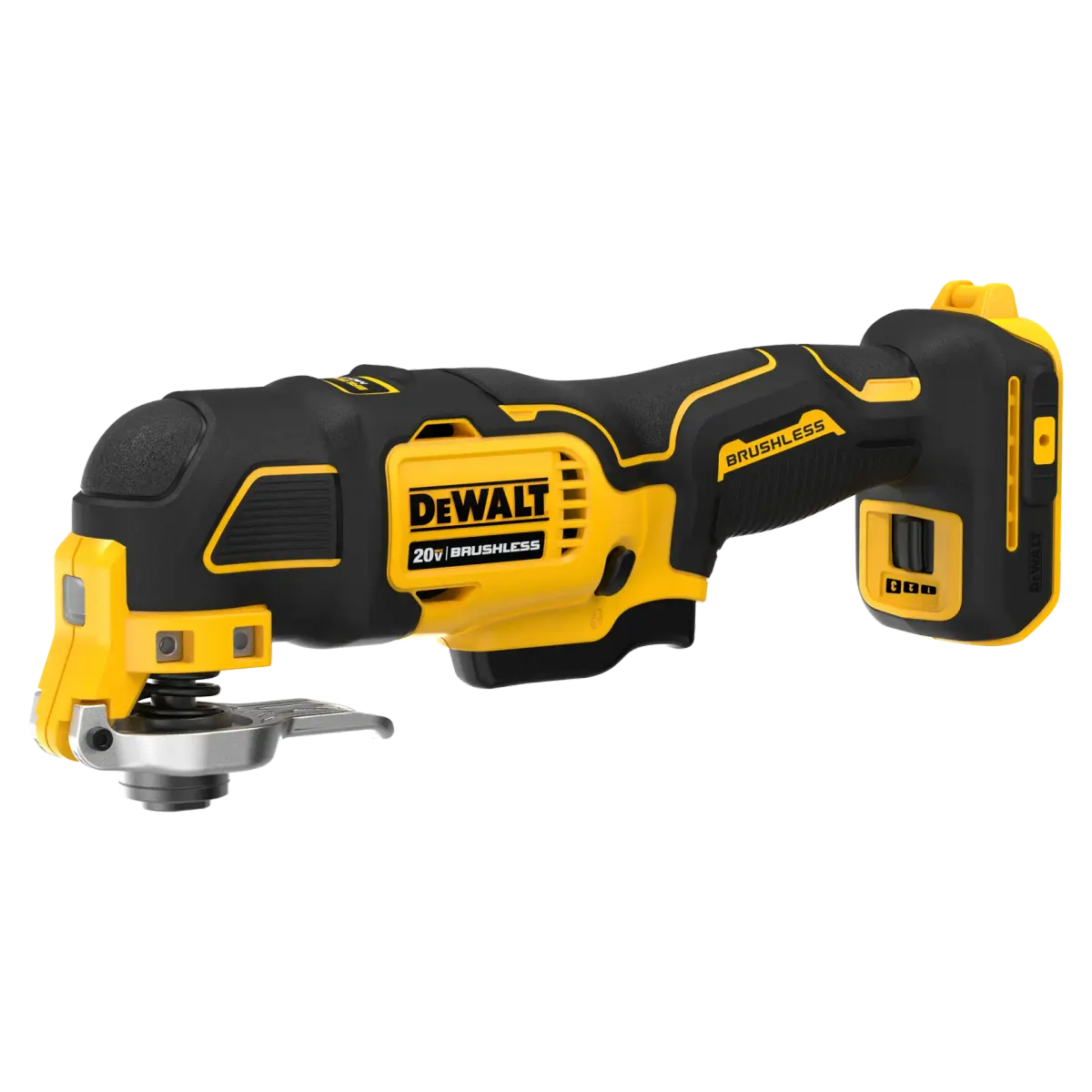
DeWalt DCS356B 20V MAX XR Oscillating Multi-Tool
The DCS356B pairs a genuine 3-speed selector (13,000/17,000/20,000 OPM) with a variable trigger and the fastest tool-free blade swap in the category — a lever mechanism that releases and locks blades in under ten seconds. The XR brushless motor delivers consistent runtime, and the universal accessory adapter accepts blades from all major brands. At $140–$160 bare tool, it is the most accessible pro-grade cordless oscillating tool and the easiest recommendation for a DIY homeowner on DeWalt 20V MAX.
- ✓ Three discrete speed positions plus variable trigger make matching speed to material intuitive
- ✓ Quick-Change blade system is the fastest in its class — no wrench, no collar rotation
- ✓ XR brushless motor provides up to 57% more runtime vs. brushed competitors
- ✓ Universal adapter in the box fits blades from all major brands
- ✓ Competitive bare-tool price undercuts the Milwaukee 2836-20 by roughly $100
- ✗ 3.2-degree oscillation angle trails the Milwaukee 2836-20's 4.2 degrees for sustained grout removal
- ✗ Three fixed speed tiers offer less granularity than the 10-position dial on Milwaukee and Makita
- ✗ Bare tool only — budget for a 20V MAX battery if not already on DeWalt's platform
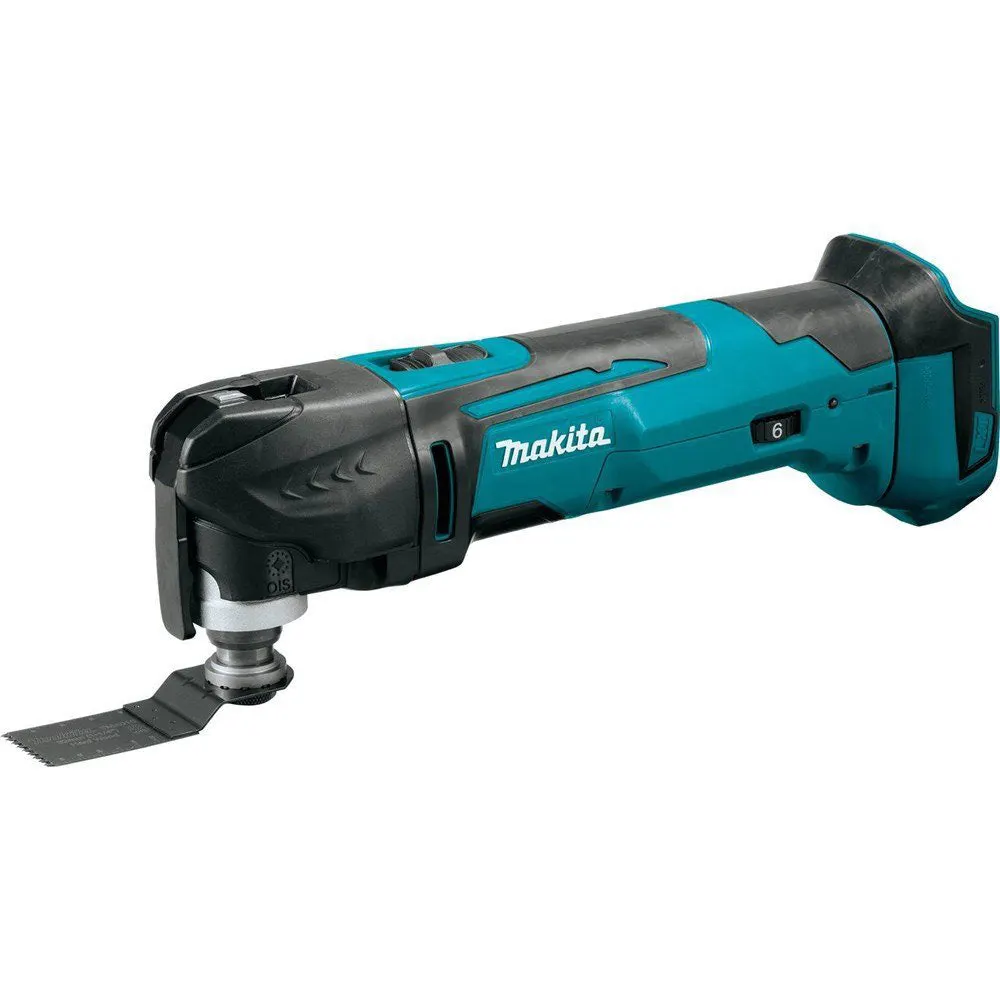
Makita XMT03Z 18V LXT Oscillating Multi-Tool
The XMT03Z distinguishes itself with a 6,000 OPM minimum speed — the slowest in the category — making it the best pick for detail sanding, lacquer work, and veneer trimming where other tools' 10,000 OPM floor is too aggressive. The tool-less clamp system releases blades without tools, and the slim barrel reduces grip fatigue. For Makita LXT platform owners, this is the natural oscillating tool addition; for those starting fresh, the higher working weight and similar price to the DeWalt DCS356B narrow its value.
- ✓ 6,000 OPM minimum speed is the lowest among cordless oscillating tools — ideal for fine finish sanding
- ✓ Tool-less clamp system releases and seats blades without multi-turn threading
- ✓ Includes adapters for most competitive blade profiles out of the box
- ✓ Sits on the broadest cordless platform (Makita 18V LXT, 300+ tools)
- ✓ Slim barrel diameter reduces grip fatigue compared to bulkier housings
- ✗ 4.9 lbs with battery is heavier than the Milwaukee 2836-20 and DeWalt DCS356B
- ✗ 3.2-degree oscillation angle matches DeWalt rather than exceeding it
- ✗ Variable speed dial lacks indexed detents — less repeatable than indexed systems
- ✗ MSRP of $169 is higher than DeWalt for similar oscillation specs
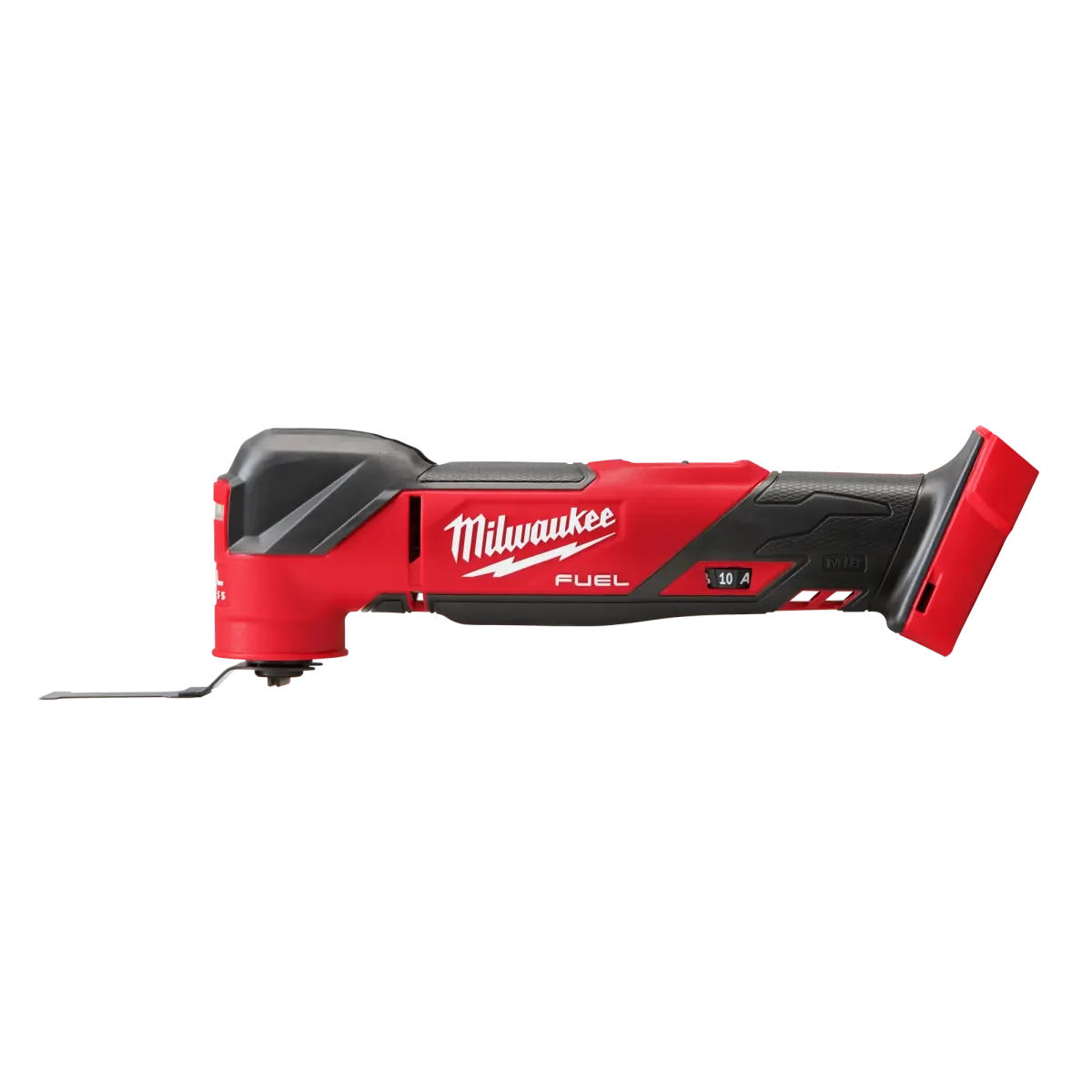
Milwaukee 2836-20 M18 FUEL Oscillating Multi-Tool
The 2836-20 is the performance benchmark with a 4.2-degree oscillation angle — the widest among cordless oscillating tools — that removes grout and adhesive faster than any 3.2-degree competitor. Its 10-setting speed dial plus Auto-Load ramp gives fine control from detail sanding through full-power cutting, and the 180-degree LED arc eliminates shadow. At 2.56 lbs bare, it is the lightest pro-tier tool, but the $229–$249 bare-tool price and threaded collar blade swap mean it is best suited for DIYers already on M18 who tackle heavy jobs.
- ✓ 4.2-degree oscillation angle is the widest in its class — faster grout and adhesive removal
- ✓ 10-setting variable speed dial plus Auto-Load ramp for detailed control
- ✓ POWERSTATE brushless motor holds speed under heavy load without bogging
- ✓ Lightest pro-tier tool at 2.56 lbs bare, reducing overhead fatigue
- ✓ 180-degree LED arc eliminates shadow under the cut line
- ✓ Plugs into the M18 ecosystem of over 300 tools
- ✗ Highest bare-tool price at $229–$249 — steep entry for those without M18 batteries
- ✗ Tool-free blade swap requires multiple turns of a threaded collar (slower than lever systems)
- ✗ No accessories included in the bare-tool package
- ✗ Auto-Load feature may surprise users wanting manual ramp control
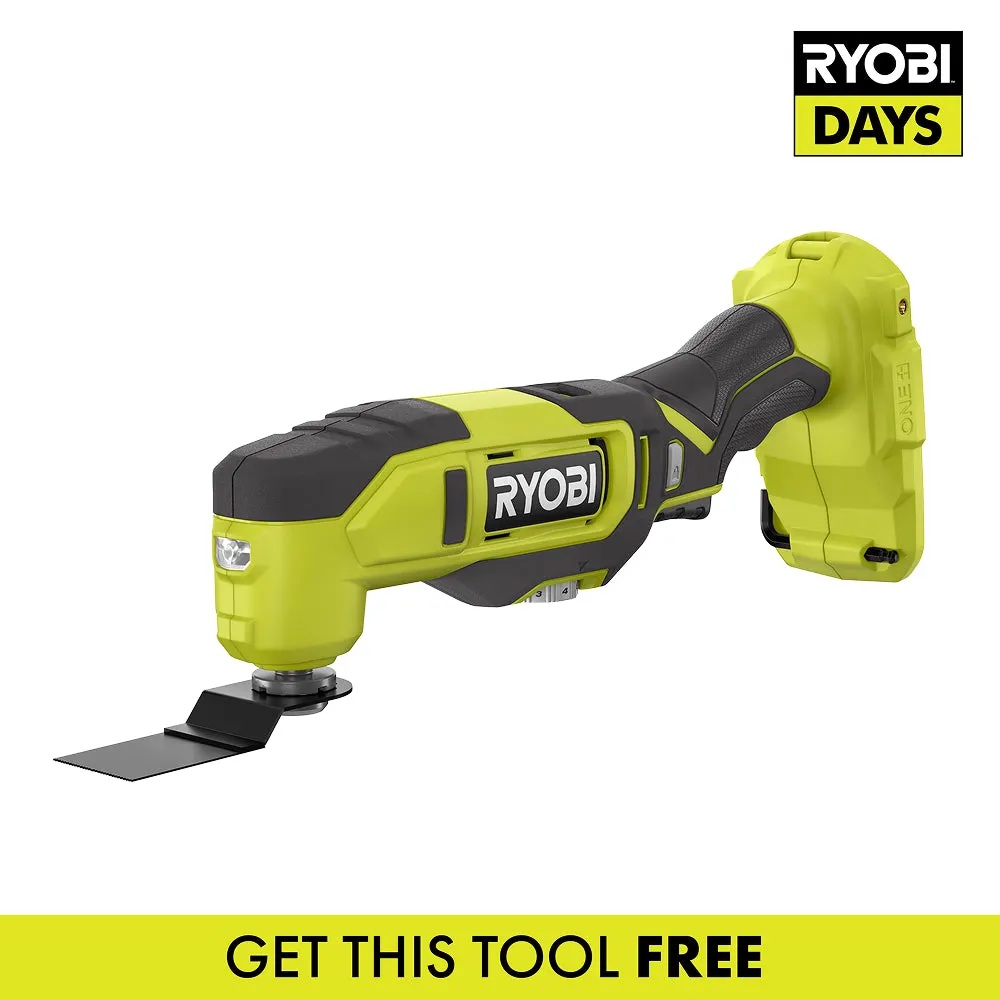
Ryobi PCL430B 18V ONE+ Oscillating Multi-Tool
At $49–$69 bare tool, the PCL430B is an affordable entry into oscillating multi-tools for homeowners who already own Ryobi ONE+ batteries. It weighs just 1.7 lbs bare — the lightest in this guide — and its variable speed dial (10,000–20,000 OPM) covers common tasks like caulk removal, drywall patching, and door jamb undercutting. The brushed motor and hex-key blade swap are appropriate trade-offs at the price, making it a smart low-cost addition for light, infrequent use.
- ✓ Street price of $49–$69 bare tool is less than a third of the Milwaukee 2836-20
- ✓ Lightest tool in the category at 1.7 lbs bare — minimal arm fatigue
- ✓ Plugs into the 280+ tool Ryobi ONE+ ecosystem
- ✓ Variable speed dial from 10,000–20,000 OPM covers common homeowner tasks
- ✗ Blade retention uses hex-key bolt instead of tool-free clamp — slower swaps
- ✗ 10,000 OPM minimum speed is too fast for delicate finish sanding on veneer
- ✗ Brushed motor loses speed under heavy load faster than brushless alternatives
- ✗ 3-degree oscillation angle is narrower than the 3.2-degree DeWalt and Makita
How we picked
This guide ranks four cordless oscillating multi-tools that cover the range from budget entry to professional-grade performance, each selected for the DIY homeowner who values ease of use, straightforward blade changes, and real-world value. We did not run a controlled lab test. Every claim here is built from published manufacturer specifications, real US kit configurations, warranty terms, and consistent themes in owner reports. Where two tools are close, we lean on the factors that matter most for at-home projects: blade-swap speed, weight, speed range, what comes in the box, and how deep the battery platform runs.
The shortlist is deliberate: the DeWalt DCS356B, Makita XMT03Z, Milwaukee 2836-20, and Ryobi PCL430B are the tools most DIY homeowners actually cross-shop. The DeWalt is the best overall for the widest range of users. The Makita is the specialty pick for fine finish work. The Milwaukee is the heavy-duty performer for demanding tasks like grout removal. The Ryobi is the budget option for light, occasional use.
What matters when you choose an oscillating multi-tool for DIY
Four things decide which of these is right for you, and they all depend on your existing battery platform and the tasks you actually do.
The battery platform comes first. An oscillating tool is a doorway into an ecosystem of batteries, chargers, and dozens of other tools that share the same pack. If you already own DeWalt 20V MAX, Makita LXT, Milwaukee M18, or Ryobi ONE+ batteries, that ownership outweighs almost every spec difference — buy the tool that fits your packs. If you are starting from nothing, the DeWalt platform offers the broadest selection of home tools at a competitive price, while Ryobi provides the most affordable entry.
Blade-change speed decides how convenient the tool is. Swapping between a wood-cutting blade, a scraper, and a grout blade is a common workflow in any remodeling project. The DeWalt DCS356B's Quick-Change lever is the fastest — under ten seconds. The Makita's tool-less clamp is also quick, requiring no collar rotation. The Milwaukee's threaded collar takes a few turns more. The Ryobi's hex-key bolt takes the longest, though the on-board wrench storage helps.
Weight and speed range determine comfort and capability. For overhead work like flush-cutting door casings, lighter tools reduce fatigue. The Ryobi (1.7 lbs bare) and DeWalt (2.4 lbs bare) are the lightest. The Makita (4.9 lbs with battery) is the heaviest. Speed range matters: the Makita's 6,000 OPM minimum is unique for fine sanding, while the others start at 10,000 OPM — fine for cutting but too fast for delicate finishes.
Oscillation angle sets the material-removal rate. The Milwaukee 2836-20's 4.2-degree angle removes grout and adhesive fastest. The DeWalt and Makita share a 3.2-degree angle, and the Ryobi is at 3 degrees. For most DIY tasks, the difference between 3.2 and 4.2 degrees is small; it only matters if you have large-scale grout or adhesive removal.
Best overall for DIY: DeWalt DCS356B
The DCS356B wins the top spot because it gets the most important things right for a DIY homeowner. The three-speed selector (13,000 / 17,000 / 20,000 OPM) with variable trigger covers every common task — sanding, wood cutting, grout removal — without requiring a mental conversion on a multi-step dial. The Quick-Change blade system is the fastest in the category, which matters when you cycle between a flush-cut blade and a scraper multiple times in a session. The XR brushless motor delivers consistent runtime and holds speed under moderate load. At $140–$160 bare tool, it is the most accessible pro-grade oscillating tool and an easy recommendation for anyone on DeWalt's 20V MAX platform.
The one specification where the DCS356B trails is oscillation angle: at 3.2 degrees, it is narrower than the Milwaukee 2836-20's 4.2-degree arc. For sustained grout removal over many linear feet, the Milwaukee genuinely removes material faster. But for the typical DIY project — undercutting door jambs, cutting drywall, scraping caulk, sanding corners — 3.2 degrees is perfectly sufficient, and the DeWalt's faster blade swap and lower price make it the better all-around choice.
Best for fine finish work: Makita XMT03Z
The XMT03Z is the specialty pick for DIYers who do detail sanding on finished surfaces. Its 6,000 OPM minimum speed is roughly half that of the other tools in this guide, making it safe for lacquered trim, veneer, and hardwood overlays where removing too much material in one pass causes damage. The tool-less clamp system releases blades without tools, and the slim barrel diameter reduces hand fatigue in long sessions. For Makita LXT platform owners, adding this tool requires no additional battery investment.
The trade-offs are real. At 4.9 lbs with a 3.0Ah battery, the XMT03Z is the heaviest tool here — overhead cutting is more fatiguing than with the DeWalt or Ryobi. Its 3.2-degree oscillation angle matches the DeWalt rather than exceeding it, so aggressive material removal requires the same number of passes. And the variable speed dial lacks indexed detents, making it harder to repeat a specific setting compared to the Milwaukee's numbered positions or the DeWalt's three discrete tiers. For buyers who do not need the slow-speed capability and do not already own LXT batteries, the DeWalt DCS356B offers a better blade-swap system and lower weight at a similar price.
Best heavy-duty: Milwaukee 2836-20
The 2836-20 is the answer to a specific DIY question: what if I need to remove grout across an entire backsplash or scrape adhesive from a subfloor? Its 4.2-degree oscillation angle is the widest in the category, removing material faster per stroke than any 3.2-degree tool. The 10-setting speed dial with Auto-Load ramp gives fine control from gentle start to full power, and the 180-degree LED arc illuminates the entire cut zone — a genuine convenience when working in dark spaces or under cabinets.
At 2.56 lbs bare, it is the lightest pro-tier tool here, though with an M18 battery the working weight is comparable to the DeWalt. The biggest catch is price: $229–$249 bare tool is roughly $100 more than the DeWalt, and the threaded collar blade swap — while tool-free — requires multiple turns of the collar, making it slower than the DeWalt's lever mechanism. This tool makes sense only if you already own M18 batteries and regularly perform heavy oscillating tasks. For light DIY, the DeWalt or Ryobi offers better value.
Best budget: Ryobi PCL430B
The PCL430B is the honest budget answer for DIY homeowners who need an oscillating tool for occasional use. At $49–$69 bare tool, it costs less than a set of premium blades. Its brushed motor, hex-key blade swap, and 3-degree oscillation angle are appropriate compromises for the price. The tool weighs just 1.7 lbs — the lightest in the guide — making it comfortable for overhead cuts and detail sanding.
The limitations: the 10,000 OPM minimum speed is too high for fine finish sanding on veneer or lacquered surfaces, the brushed motor bogs under sustained heavy load, and blade swaps take longer without a tool-free system. For a homeowner who already owns Ryobi ONE+ batteries and faces infrequent tasks like cutting baseboard, removing caulk, or patching drywall, the PCL430B is a near-zero marginal cost addition that performs adequately. If you expect to do regular grout removal or heavy scraping, step up to the brushless DeWalt or Milwaukee.
How to read these rankings
The ranks are not a strict best-to-worst order — they are a map. The DeWalt is first because it is the safest single recommendation for the most DIY homeowners. If you own Makita LXT batteries and do fine finish work, the XMT03Z is your number one. If you own M18 batteries and remove grout regularly, the Milwaukee is. If your budget is tight and you own Ryobi batteries, the PCL430B is. Start from what you already own and what you actually do with the tool, match it to the award label, and the right pick follows.
A note on testing and honesty
This guide is an analytical buying guide that synthesizes verified specifications, real US kit configurations, warranty terms, and the weight of owner experience into a ranked recommendation. It is not a controlled lab shootout. Where a specification is unavailable or a trade-off is subjective, we say so rather than invent claims. The aim is to get you to the right oscillating tool for your platform, your budget, and your projects, with the reasoning laid out so you can disagree where your priorities differ from ours.
Advertisement
Frequently asked questions
- What is the best oscillating multi-tool for a DIY homeowner in 2026?
- For most DIY homeowners, the DeWalt DCS356B is the best balance of performance and value. Its three-speed selector with variable trigger covers all common tasks, the Quick-Change blade system is the fastest to use, and the brushless XR motor delivers reliable runtime. If you already own a battery platform, buy the tool that matches your pack; if you are starting fresh, the DeWalt is the easiest recommendation.
- Do I need a brushless motor in an oscillating multi-tool?
- A brushless motor is not essential for infrequent use, but it provides longer runtime, better speed consistency under load, and a longer tool life. The DeWalt, Makita, and Milwaukee picks here are all brushless. The Ryobi PCL430B uses a brushed motor — perfectly adequate for occasional caulk removal and drywall cuts, but it will bog under sustained heavy grout removal.
- How important is oscillation angle for DIY tasks?
- Oscillation angle determines how much material the blade removes per stroke. Most DIY tasks — undercutting door jambs, cutting drywall, removing caulk — are well-served by a 3.2-degree angle. The 4.2-degree angle on the Milwaukee 2836-20 only matters if you regularly remove grout or adhesive across large areas. For occasional use, the difference is minor.
- Is a tool-free blade swap worth paying extra for?
- Yes, if you change blades often. The DeWalt DCS356B's lever mechanism and the Makita XMT03Z's clamp system allow blade swaps in under 10 seconds without tools. The Ryobi PCL430B uses a hex-key bolt that takes about 45 seconds. If your projects involve multiple blade changes per session, a tool-free system saves significant hassle.
- Can I use the same blades on different oscillating tool brands?
- Yes, with the included universal adapters, all four tools accept blades from most major brands. DeWalt ships a universal adapter, Makita includes multiple adapters, Milwaukee includes a universal adapter, and Ryobi's hex-bolt collar accepts standard multi-fit blades. You are not locked into a proprietary blade system.
- What should I look for when buying an oscillating multi-tool as a DIYer?
- Prioritize: battery platform compatibility (buy what matches your existing packs), motor type (brushless for regular use, brushed is fine for occasional), blade-change convenience (tool-free is better), and speed control (variable trigger or dial). For most DIY tasks, a 3.2-degree oscillation angle and 10,000–20,000 OPM range are sufficient.