

The Best Oscillating Multi-Tools of 2026
The best oscillating multi-tool for most people in 2026 is the Milwaukee 2836-20 M18 FUEL — its 4.2-degree oscillation angle leads this guide, its POWERSTATE brushless motor delivers consistent cutting and sanding from 10,000 to 20,000 OPM, and the 180-degree LED arc illuminates the full cutting zone. DeWalt 20V MAX users get the most from the DCS356B and its three-speed selector; the Makita XMT03Z is the pick for anyone who already owns 18V LXT batteries and values a wide variable-speed dial; and the Ryobi PCL430B is the lightest tool in the group at 1.7 lbs with a price that matches its budget positioning.
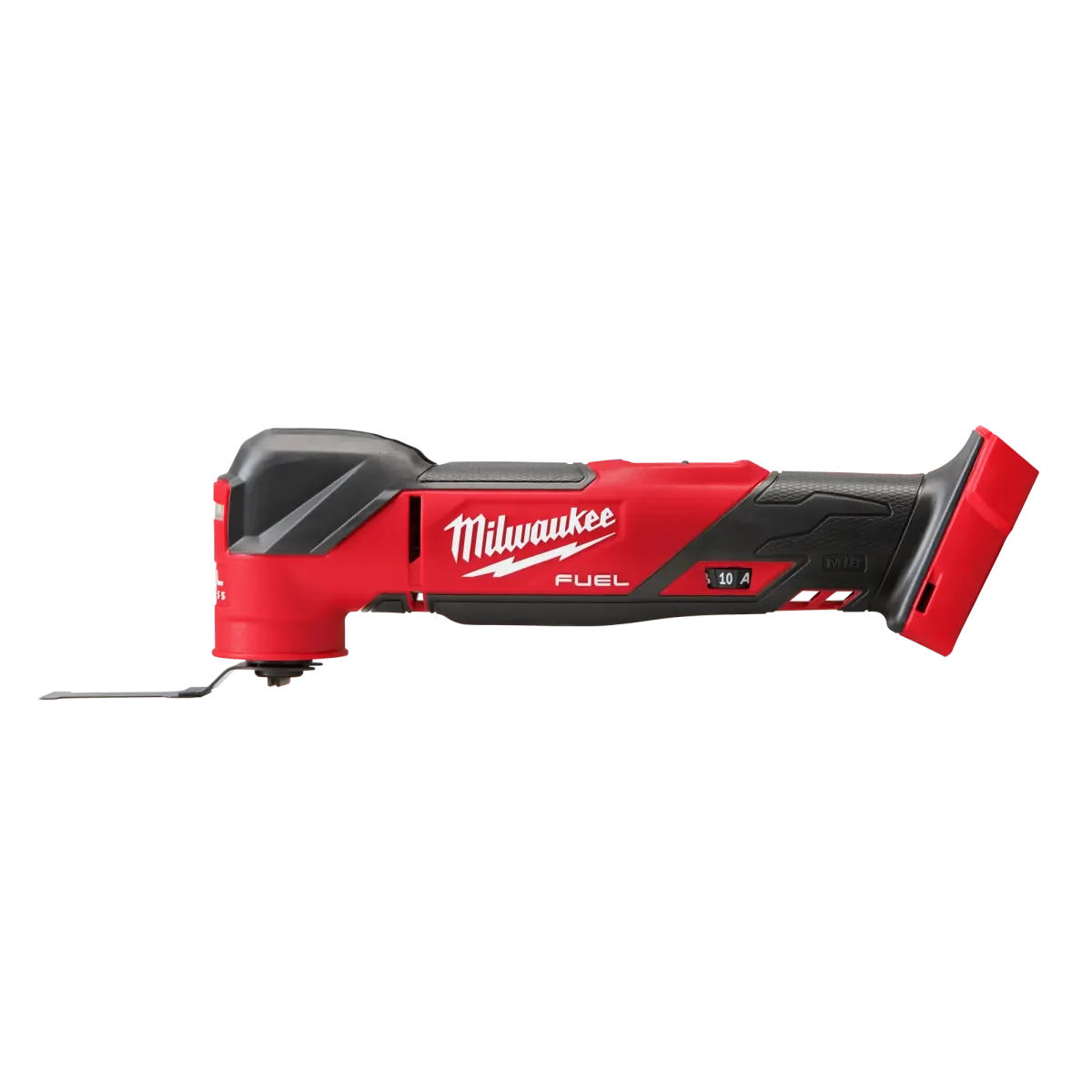
Milwaukee 2836-20 M18 FUEL Oscillating Multi-Tool
The 2836-20 leads on the three specs that most determine oscillating tool capability: oscillation angle (4.2 degrees vs. 3.2 degrees for the DeWalt and Makita), speed range (10,000–20,000 OPM with an Auto-Load ramp), and the 180-degree LED arc that lights the cut from multiple angles. The POWERSTATE brushless motor maintains speed under load without the slowdown that afflicts lower-cost tools. The threaded collar blade system releases and locks accessories quickly, and universal adapter compatibility means the DeWalt and Makita accessory libraries are available. At 2.56 lbs bare it is the second-lightest full-size tool here.
- ✓ 4.2-degree oscillation angle is the widest in this guide — removes material faster
- ✓ 10-setting dial with Auto-Load ramp adjusts speed to cutting resistance automatically
- ✓ 180-degree LED arc illuminates the full cut without casting shadows
- ✓ 5-year limited tool warranty covers professional use
- ✗ Bare tool only — M18 battery and charger required
- ✗ Premium M18 FUEL pricing reflects the capability advantage
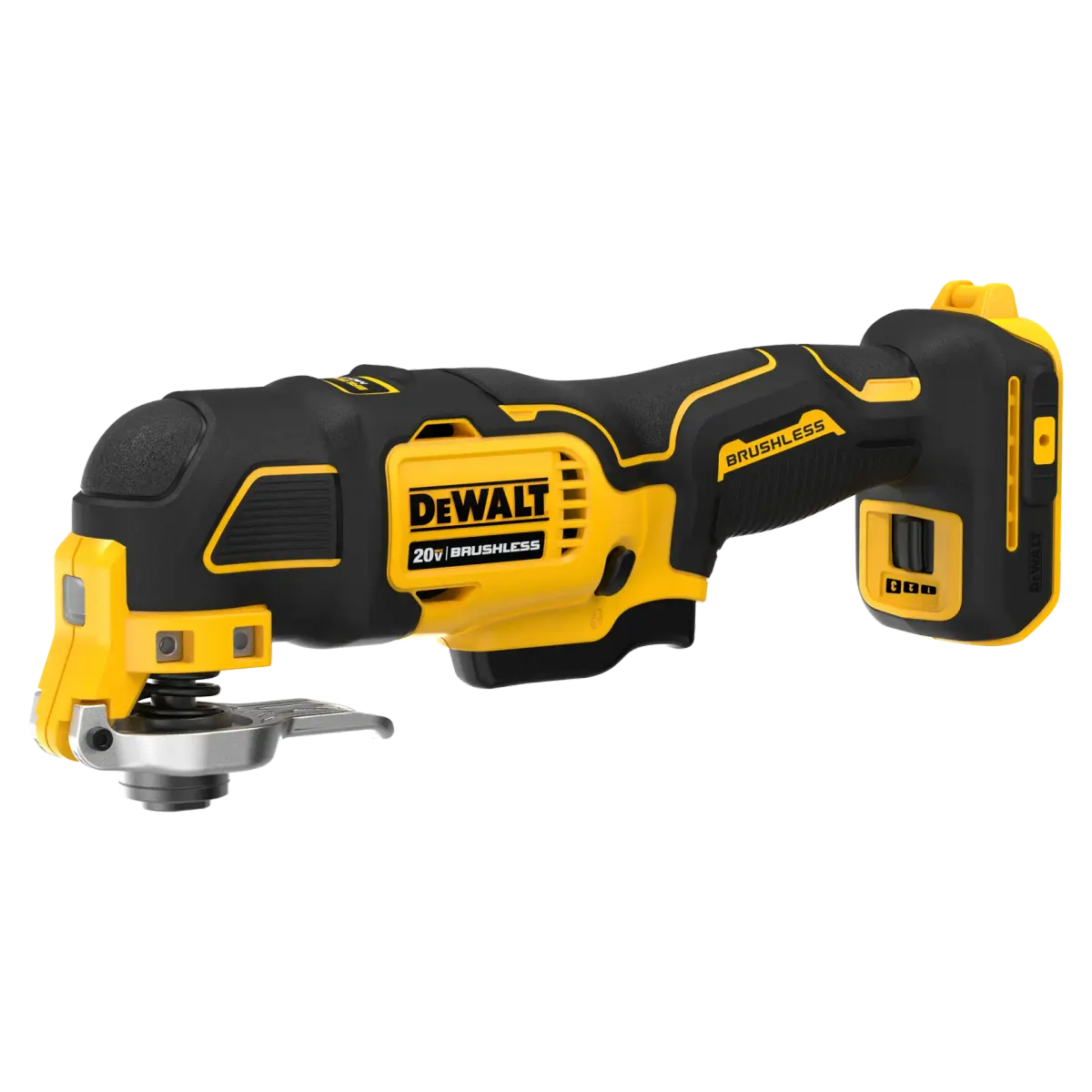
DeWalt DCS356B 20V MAX XR 3-Speed Oscillating Tool
The DCS356B earns its place by giving DeWalt 20V MAX owners a brushless oscillating tool with three distinct speed presets and a variable-speed trigger — the cleanest implementation of speed selection in the guide. The three-speed selector (up to 13,000, 17,000, or 20,000 OPM) simplifies moving between delicate sanding, general cutting, and aggressive material removal without fiddling with a dial while the tool is running. At 2.4 lbs bare it is the lightest full-size tool in the guide. Quick-Change accessory release takes seconds, and universal adapter compatibility extends the accessory range.
- ✓ Three distinct speed presets plus variable trigger — the clearest speed control here
- ✓ 2.4 lbs bare — the lightest full-size oscillating tool in this guide
- ✓ Quick-Change tool-free accessory system with universal adapter included
- ✓ Up to 57% more runtime than a comparable brushed tool per DeWalt's figures
- ✗ 3.2-degree oscillation angle is narrower than the Milwaukee's 4.2 degrees
- ✗ Bare tool only — 20V MAX battery and charger sold separately
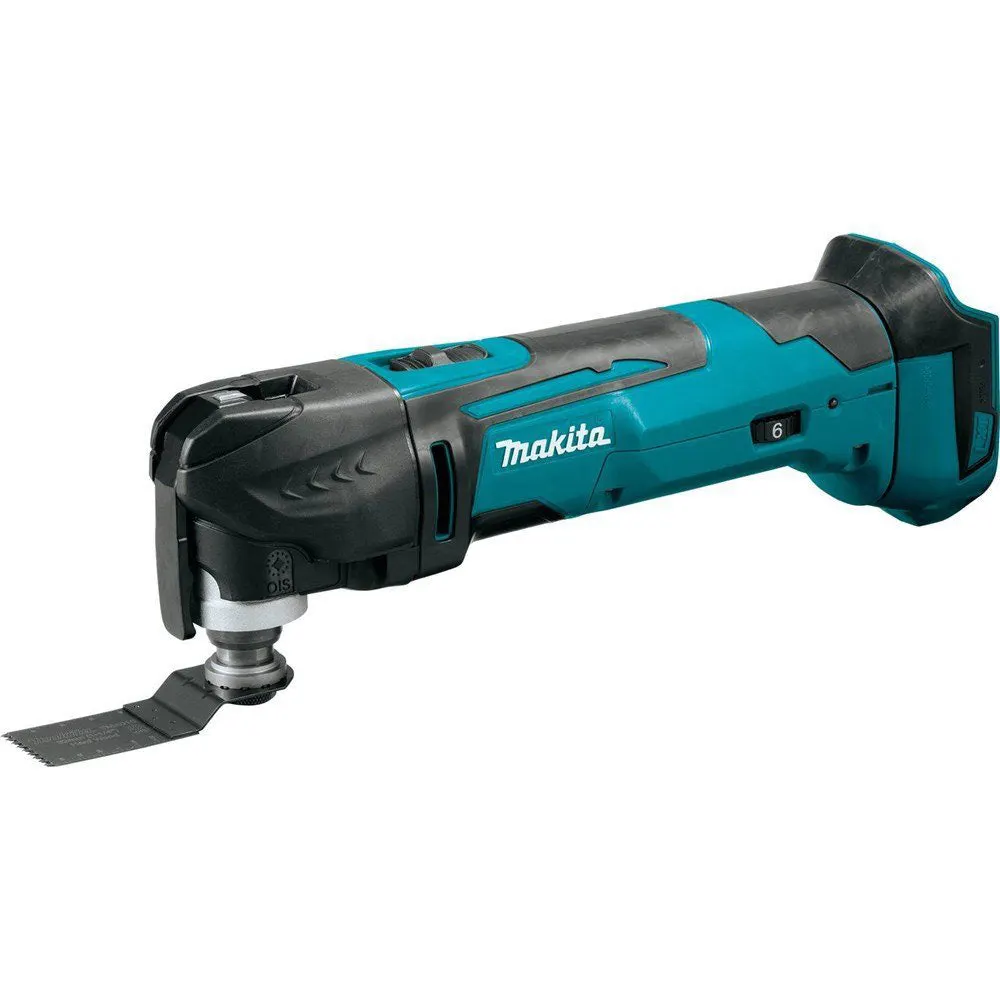
Makita XMT03Z 18V LXT Oscillating Multi-Tool
The XMT03Z gives LXT battery owners a brushless oscillating tool with a 6,000–20,000 OPM range controlled by a smooth variable-speed dial — the widest range of any tool here at the low end. Starting at 6,000 OPM enables precise work in delicate trim, door jambs, and flush cuts next to finished surfaces where overshooting the target is costly. Both Makita-profile and universal adapters are included in the box. At 4.9 lbs with a battery it is the heaviest when loaded, but the LXT platform's depth and the tool's quiet variable start are meaningful advantages for precision work.
- ✓ 6,000–20,000 OPM — the widest speed range in this guide, starting from the gentlest setting
- ✓ Soft-start and variable speed dial enable precise control on delicate trim and veneer
- ✓ Both Makita and universal accessory adapters included out of the box
- ✓ Runs on the extensive Makita 18V LXT battery platform
- ✗ 4.9 lbs with battery is the heaviest loaded tool in this guide
- ✗ Bare tool only — 18V LXT battery and charger required
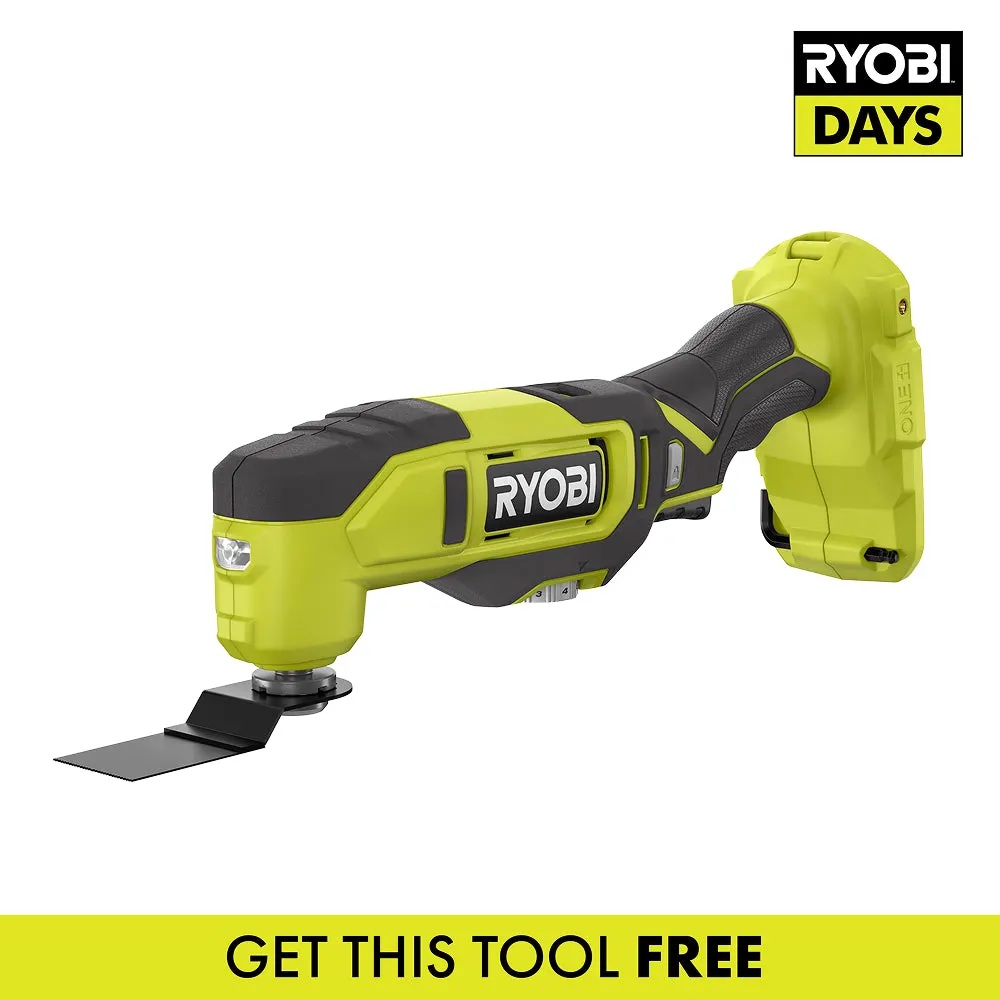
Ryobi PCL430B 18V ONE+ Oscillating Multi-Tool
The PCL430B is the lightest oscillating tool in the guide at 1.7 lbs bare — noticeably lighter than the brushless tools — and it covers the common oscillating tasks at the lowest price. Its 10,000–20,000 OPM range matches the Milwaukee and Makita on the top end, and the 3-degree oscillation angle handles tile grout removal, plunge cuts in drywall, flush-cut trim, and sanding in tight spaces. The on-board Allen wrench storage for the hex-key blade clamp is a practical touch that keeps the blade-change tool available when you need it. For a homeowner or occasional user on the ONE+ platform, it covers the bases without the premium.
- ✓ 1.7 lbs bare — the lightest oscillating tool in this guide
- ✓ 10,000–20,000 OPM covers the full range of common oscillating tasks
- ✓ On-board hex wrench storage keeps the blade-change tool always available
- ✓ Compatible with all Ryobi 18V ONE+ batteries
- ✗ Brushed motor is less efficient and generates more heat under sustained load
- ✗ 3-degree oscillation angle is narrower than the Milwaukee's 4.2 degrees
- ✗ Hex-key blade clamp is slower to change accessories than tool-free systems
What makes an oscillating tool good or bad
An oscillating multi-tool is the answer to three problems that other tools create: plunge cuts where you cannot start from an edge, flush cuts that need to stop exactly at a surface, and sanding in spaces too tight for a random orbital. The same tool handles all three with blade swaps, which is why it has become a standard item on job sites and in home workshops.
Four factors separate the tools in this guide: oscillation angle, speed range, accessory change speed, and motor efficiency. The ranks follow from those differences.
Oscillation angle is the widest indicator of cutting speed. The Milwaukee 2836-20's 4.2-degree arc moves the blade farther with each cycle, removing more material per pass in grout removal, wood plunge cuts, and caulk removal. The DeWalt and Makita run at 3.2 degrees. The Ryobi at 3 degrees. The Milwaukee's advantage is meaningful on jobs that require sustained material removal; it matters less on precision flush cuts where control is more important than speed.
Speed range affects versatility. The Makita XMT03Z's 6,000 OPM minimum is gentler than any other tool here — it can ease onto a delicate surface without immediately scoring it. The DeWalt's three discrete presets plus variable trigger give the clearest speed selection in a working scenario. The Milwaukee and Ryobi both top out at 20,000 OPM but differ substantially in motor efficiency at that ceiling.
Accessory change speed matters on any job where you switch between blades and pads frequently. The Milwaukee's threaded collar and the DeWalt's Quick-Change system both change accessories without tools. The Makita's clamp is also tool-free. The Ryobi's hex-key bolt system requires the Allen wrench that stows on the tool body — a practical compromise but slower than the lever systems.
Motor efficiency separates the brushless Milwaukee, DeWalt, and Makita from the brushed Ryobi. Under sustained load — long grout removal sessions, extended sanding — brushed motors run hot and lose speed. The brushless tools maintain their set speed under load, which delivers consistent results without the user compensating by varying pressure.
Best overall: Milwaukee 2836-20
The 2836-20 combines the widest oscillation angle, the best accessory lighting, and the most refined speed control in one tool. The 4.2-degree arc translates directly to faster grout removal, faster wood plunge cuts, and faster caulk scraping compared to the 3.2-degree alternatives. The 180-degree LED arc — not a point LED but a full arc around the blade zone — illuminates the cut from multiple angles simultaneously, which eliminates the blind spots that make precise oscillating work difficult.
The Auto-Load ramp feature automatically increases power as cutting resistance increases, so the tool does not require varying hand pressure to maintain cut quality through varying material density. The 10-setting speed dial gives a granular selection that the three-preset DeWalt trades away for simplicity. For users who run an oscillating tool daily or who tackle the most demanding material types — tile, hardwood, dense LVL — the Milwaukee's capability is worth its price.
Best for DeWalt users: DCS356B
For someone already invested in 20V MAX batteries, the DCS356B delivers the clearest operating interface of any tool in this guide. Three speed presets plus a variable trigger mean you select a ceiling speed with the rotary selector and modulate within that range with the trigger — the most intuitive way to manage speed across different tasks. At 2.4 lbs bare, it is the lightest full-size tool in the guide, which helps during long sessions and overhead cuts.
The Quick-Change accessory system is genuinely fast — accessories release and lock without any wrench or lever. The 3.2-degree oscillation angle is narrower than the Milwaukee's, which reduces cutting speed on aggressive tasks. The up-to-57% runtime advantage over brushed alternatives is a relevant spec when you are relying on battery capacity on a long job.
Best for Makita LXT users: XMT03Z
The XMT03Z's distinguishing feature is its 6,000 OPM minimum speed. No other tool here starts that gently, which matters when the application is thin veneer, delicate trim, or a flush cut next to a finished baseboard where any deviation mars the final result. The variable speed dial gives a smooth, continuous adjustment from the lowest setting to 20,000 OPM. Both Makita-profile and universal adapters in the box mean the LXT owner has full accessory flexibility from day one.
The 4.9 lbs loaded weight is the limitation. The tool is heavier than the Milwaukee and DeWalt, which shows up during extended overhead work or precision cuts that require a steady hand. For a Makita LXT owner who is not doing high-volume oscillating work, that is a minor trade-off.
Best budget: Ryobi PCL430B
The PCL430B's 1.7 lbs is the lightest tool in this guide, which is the spec that justifies its place on the list. For a homeowner who cuts the occasional grout joint, makes a plunge cut in drywall for an outlet box, or trims a door jamb during flooring installation, the weight and the price are the first things that matter. The on-board Allen wrench means you never search for the right hex key during a blade change. The 10,000–20,000 OPM variable range covers the common tasks.
The brushed motor and 3-degree angle are limitations that appear during sustained heavy use — tile demolition, long grout removal runs. For a homeowner whose oscillating tool lives in the drawer and comes out a few times per year, neither limitation is encountered often enough to change the value equation.
Advertisement
Frequently asked questions
- What is the best oscillating multi-tool in 2026?
- The Milwaukee 2836-20 M18 FUEL is the best oscillating multi-tool in 2026 for most users — its 4.2-degree oscillation angle, wide OPM range, and 180-degree LED make it the most capable tool here. DeWalt 20V MAX owners get the most from the DCS356B; Makita LXT users should pick the XMT03Z for its wide low-speed range; and budget buyers on Ryobi ONE+ will find the PCL430B covers the common tasks.
- What does an oscillating multi-tool actually cut?
- An oscillating tool cuts anything you put the right blade against: wood, nails, PVC, drywall, grout, tile adhesive, thin metal, and caulk. It plunge-cuts into surfaces without a starter hole, undercuts door jambs for flooring installation, removes grout between tiles, and sands in spaces a random orbital cannot reach. The blade oscillates left and right rather than spinning, which is why it can cut flush against a surface without damaging what is next to it.
- Does oscillation angle actually matter?
- Yes — a wider oscillation angle moves the blade farther with each stroke, which removes material faster. The Milwaukee 2836-20's 4.2-degree angle is meaningfully wider than the 3.2-degree angles on the DeWalt and Makita, and the 3-degree Ryobi. In grout removal and wood cutting, the Milwaukee covers more ground per pass. For precision flush cuts and thin-material work, a narrower angle gives more control. Most users prefer the wider angle for general use.
- Are oscillating tool accessories cross-compatible?
- Most modern oscillating tools include a universal adapter that allows accessories from other brands to fit. The Milwaukee 2836-20 and DeWalt DCS356B include universal adapters, and the Makita XMT03Z includes both Makita and universal adapters. The Ryobi PCL430B uses a hex-key bolt system that accepts standard accessories with a shim. For the best fit and minimum vibration, use accessories designed for the specific tool's native mount, but cross-brand use is practical and common.
- Is a brushless oscillating tool worth the upgrade?
- For regular use, yes. A brushless motor maintains consistent OPM under load — where a brushed motor slows down when the blade meets resistance, a brushless motor compensates and maintains speed. Over an extended session, brushless tools also run cooler and put more energy into the cutting action rather than heat. The Milwaukee, DeWalt, and Makita picks here are all brushless. The Ryobi PCL430B uses a brushed motor, which is adequate for light and occasional use but less efficient under sustained load.