

Best Miter Saw for Trim Carpentry 2026
For trim carpenters, the best miter saw balances crosscut accuracy, crown molding capacity, and portability. The Bosch GCM12SD leads with its zero-clearance Axial-Glide design and best-in-class dust collection, making it ideal for fixed workshops. If you need a jobsite saw, the lighter DeWalt DWS780 with XPS cutline is the top pick. For budget-conscious buyers, the Ryobi TSS103 offers sliding capacity, while the Metabo HPT C10FCGS is the lightest option for basic trim.
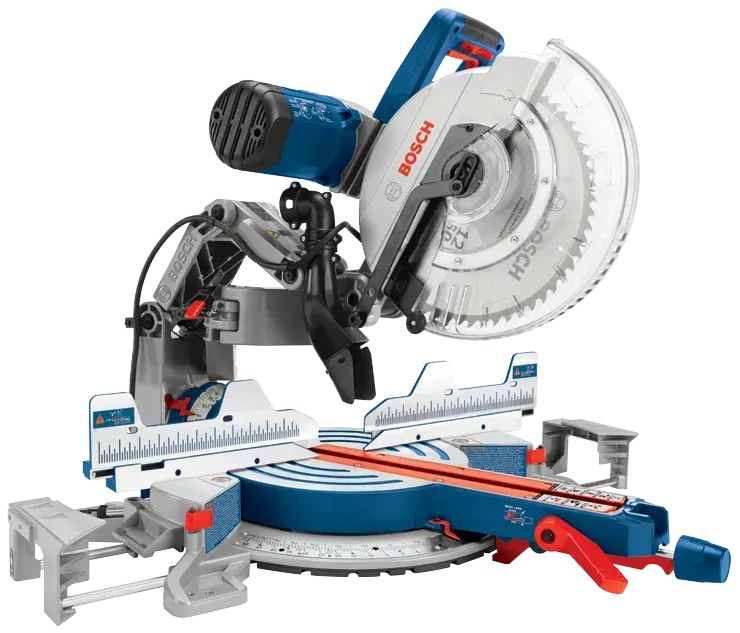
Bosch GCM12SD
The GCM12SD is the trim carpenter's workshop saw. Its Axial-Glide mechanism requires zero rear clearance, so you can place it flush against a wall. It crosscuts 13-1/2 inches at 90°, handles dual-bevel tilts up to 48° each way, and ships with a 60-tooth finish blade. Dust collection captures roughly 90% of debris with a shop vac. At 65 lbs it is heavy, but for a fixed setup it delivers unmatched precision and capacity.
- ✓ Axial-Glide system needs zero rear clearance, fits against a wall
- ✓ Dual-bevel 48° left and right eliminates workpiece flipping for crown
- ✓ 13-1/2-inch crosscut at 90° handles wide base and 4x14 lumber
- ✓ Includes 60-tooth finish blade for clean trim cuts out of the box
- ✗ 65 lbs is heavy and awkward to move solo
- ✗ No XPS or laser cutline indicator
- ✗ Premium pricing $549–$649
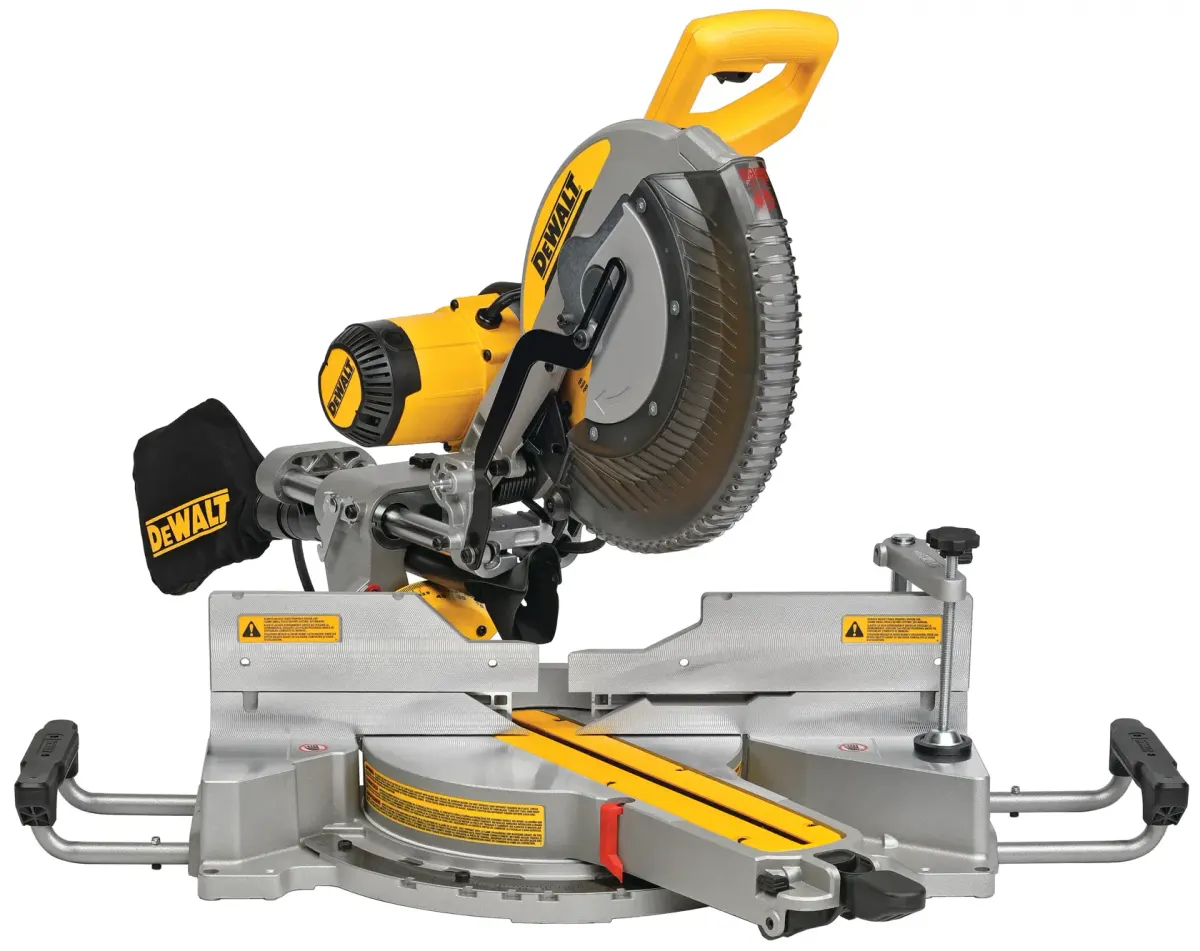
DeWalt DWS780
At 56 lbs, the DWS780 is noticeably lighter than the Bosch while offering similar cutting capacity. The XPS shadow cutline system shows the exact kerf path without calibration. It cuts 13-3/4 inches at 90° and supports 7-1/2 inches of nested crown. The rail system requires 14–18 inches of rear clearance, so it is less wall-friendly than the Bosch, but the lower weight and XPS make it the best mobile trim saw.
- ✓ XPS cutline projects blade shadow onto workpiece, no calibration
- ✓ Double-bevel 48° left and right for crown without flipping
- ✓ Cuts 2x14 at 90° and handles wide base and crown profiles
- ✓ Lighter than Bosch at 56 lbs, easier for jobsite transport
- ✗ Rail system needs 14–18 inches rear clearance
- ✗ Dust collection captures ~75%, below Bosch's 90%
- ✗ Bundled 32-tooth blade; upgrade to 60T or 80T for finish work
We may earn a commission from this link.
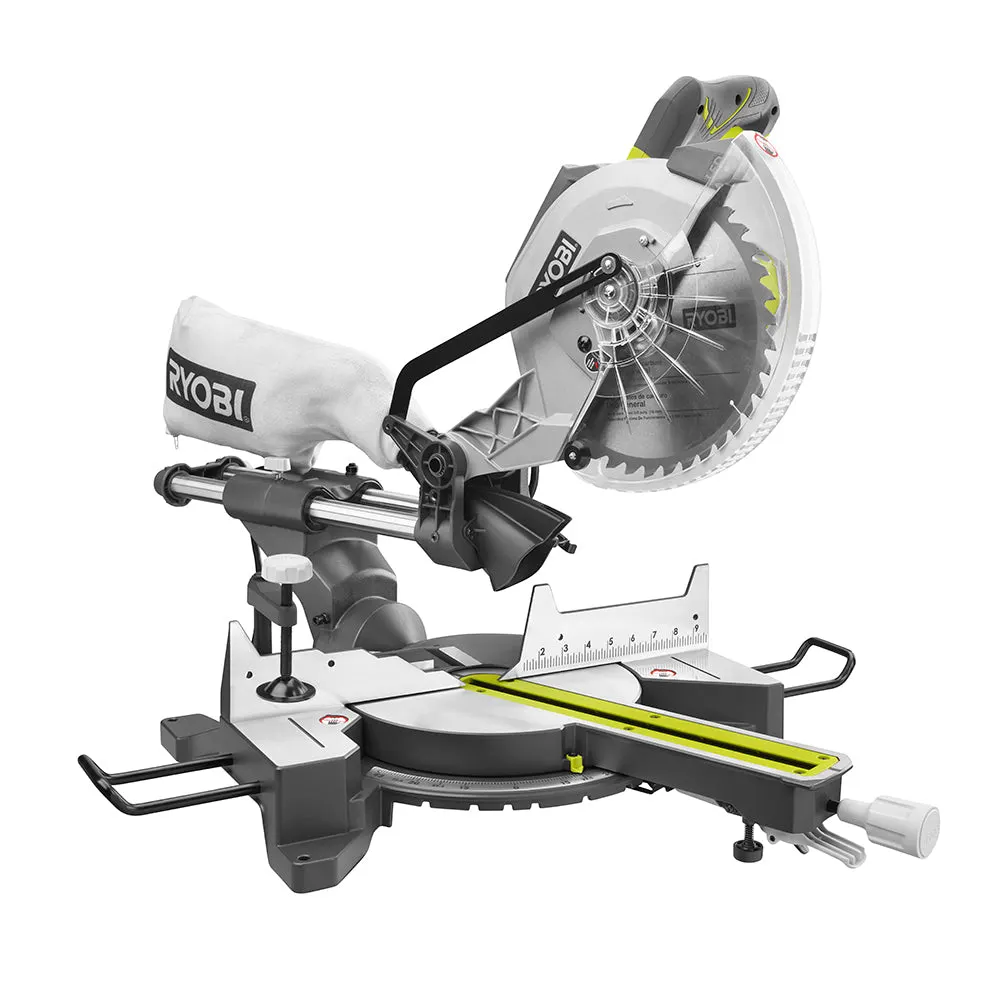
Ryobi TSS103
The TSS103 brings sliding crosscut capacity to a budget-friendly price. It crosscuts 12 inches at 90°, includes an LED cutline indicator, and has a 15-amp motor that handles standard trim stock. It is single-bevel only, so crown molding work requires flipping the workpiece, but for baseboard and casing at home it is a capable saw at $249–$299.
- ✓ Sliding rails extend crosscut to 12 inches at 90°
- ✓ LED cutline indicator shows cut path
- ✓ 15-amp motor handles MDF and softwood trim
- ✓ Includes table extensions, clamp, and dust bag
- ✗ Single-bevel: crown requires flipping workpiece
- ✗ Plastic detents feel less precise than professional saws
- ✗ Dust collection is adequate but not great
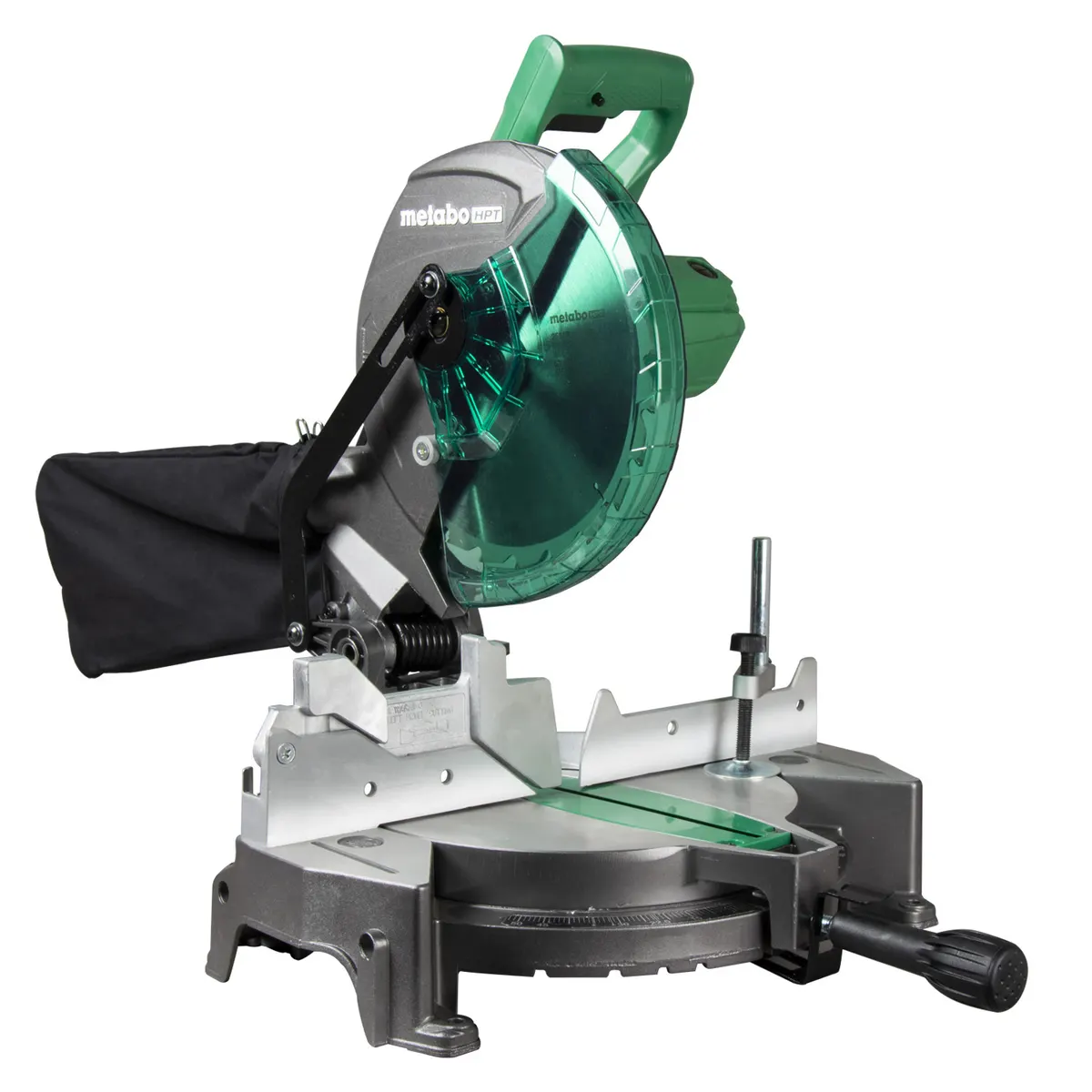
Metabo HPT C10FCGS
The C10FCGS is the lightest 10-inch miter saw at 24.2 lbs, making it the easiest to carry to job sites or around the house. It crosscuts about 8 inches at 90°, has a wide 52° miter range, and is single-bevel only. The 15-amp motor runs at 5,000 RPM, and the 5-year warranty is the longest in its class. It is best for light trim work like door casing and baseboard.
- ✓ Only 24.2 lbs, extremely portable
- ✓ 52° miter range wider than many mid-range saws
- ✓ Electric brake stops blade quickly
- ✓ 5-year warranty is longest in category
- ✗ Non-sliding: crosscut limited to ~8 inches
- ✗ Single-bevel only; crown requires flipping
- ✗ 24-tooth blade; upgrade needed for finish cuts
We may earn a commission from this link.
How we picked
This guide ranks four miter saws for trim carpenters who prioritize accuracy, crown molding capacity, and portability. Every specification comes from manufacturer data and professional reviews; no personal testing is claimed. The picks are drawn from the most reviewed models in the miter saw category, grouped to cover fixed workshop, jobsite, budget sliding, and ultra-portable use cases.
Trim carpentry demands repeatable crosscut accuracy, the ability to handle wide baseboard and crown molding, and a saw that fits the workspace—whether that is a wall-hugging workshop bench or a mobile jobsite cart. The Bosch GCM12SD, DeWalt DWS780, Ryobi TSS103, and Metabo HPT C10FCGS each serve a distinct segment of that market.
What to look for in a trim carpentry miter saw
Cutting capacity at 90° determines how wide a board you can crosscut in one pass. Standard 12-inch sliding saws like the Bosch and DeWalt handle 13-1/2 to 13-3/4 inches, enough for wide baseboard and 4×14 lumber. The Ryobi TSS103 cuts 12 inches, sufficient for most residential trim. The Metabo HPT C10FCGS, being non-sliding, maxes out around 8 inches—fine for casing and small base but limiting for larger profiles.
Dual-bevel vs. single-bevel is a critical distinction for crown mold. Dual-bevel saws (Bosch and DeWalt) let you tilt the blade left and right, so you can cut opposing compound angles without flipping the workpiece. Single-bevel saws (Ryobi and Metabo HPT) require you to flip the crown or make separate adjustments, adding time and potential error.
Cutline indicator affects cut accuracy. The DeWalt’s XPS system casts the exact blade shadow, no calibration needed. The Bosch relies on a traditional kerf shadow; many users add an aftermarket laser. The Ryobi has an LED shadow line; the Metabo HPT has none.
Dust collection matters indoors. The Bosch captures ~90% with a shop vac; the DeWalt ~75%; the Ryobi and Metabo HPT are less effective. For finished floors, a vac is essential with any saw.
Portability comes down to weight and footprint. The Metabo HPT at 24.2 lbs is the lightest; the DeWalt at 56 lbs is manageable; the Bosch at 65 lbs is best in a fixed shop. The Bosch requires zero rear clearance; the DeWalt needs 14–18 inches; the Ryobi and Metabo HPT need minimal clearance.
Best for accuracy: Bosch GCM12SD
The GCM12SD is the top pick for trim carpenters who work in a fixed shop or dedicated trim bay. Its Axial-Glide mechanism eliminates the need for rear clearance, so the saw can sit flush against a wall—a huge space saver. The 15-amp motor drives a 12-inch blade that crosscuts 13-1/2 inches at 90°, and the dual-bevel tilts 48° each way, handling all crown mold angles without flipping. The included 60-tooth finish blade is a genuine trim-grade blade, saving $40–$70 over competitors that ship with framing blades. Dust collection is the best in class, capturing about 90% of material when connected to a shop vac.
The trade-off is weight: at 65 lbs, the GCM12SD is one of the heaviest 12-inch saws. Moving it between job sites or loading solo is difficult. It also lacks an integrated cutline projector; you must rely on the blade guard shadow. For a fixed station where those issues don’t matter, it is the most accurate trim saw reviewed.
Best for jobsite use: DeWalt DWS780
The DWS780 is the better choice if you transport your saw frequently. At 56 lbs, it is 9 lbs lighter than the Bosch, and the XPS cutline system is the best on the market—no calibration, no bulb to replace. It cuts 13-3/4 inches at 90° and handles 7-1/2 inches of nested crown. The dual-bevel design tilts 48° each way. Dust collection is good but not as good as the Bosch (75% vs. 90%).
The main drawback is the rail system: the saw needs 14–18 inches of clearance behind the fence. That prevents wall-mounting. The bundled 32-tooth blade is general-purpose; you’ll want a 60- or 80-tooth blade for finish cuts. Overall, the DWS780 balances accuracy and portability better than any other 12-inch saw.
Best value sliding saw: Ryobi TSS103
The TSS103 brings sliding capacity to a budget-friendly price. It crosscuts 12 inches at 90°, includes an LED cutline indicator, and comes with table extensions, a clamp, and a dust bag. The 15-amp motor handles MDF and softwood trim. It is single-bevel, so crown work requires flipping the workpiece. The detents are plastic and feel less precise than professional saws. Dust collection is adequate but not class-leading.
For a homeowner installing baseboard and door casing, the TSS103 is a capable saw at $249–$299. It is not built for daily production use, but for periodic trim projects it offers good value.
Best ultra-portable: Metabo HPT C10FCGS
At 24.2 lbs, the C10FCGS is the lightest miter saw here. It is a non-sliding, single-bevel saw that crosscuts about 8 inches at 90°—enough for standard casing and narrow baseboard. The 52° miter range is wider than many budget saws, and the 15-amp motor runs at 5,000 RPM for clean cuts. The 5-year warranty is the longest in its class.
The limitations are clear: non-sliding means wide stock must be cut in multiple passes. Single-bevel requires flipping for crown. The 24-tooth blade is for framing, not finish work. For a trim carpenter who only does light trim and values portability above all, this saw works. For anyone needing more capacity, step up to the Ryobi or DeWalt.
How to read these rankings
The ranks reflect different use cases. The Bosch is first for accuracy and workshop use; the DeWalt is first for jobsite mobility. The Ryobi is the best value for sliding capacity; the Metabo HPT is the lightest option for basic trim. Start with your workspace, typical stock sizes, and whether you cut crown molding regularly. The right pick for you depends on those factors, not just the rank order.
A note on testing and honesty
This guide is an analytical synthesis of published specifications, professional reviews, and owner feedback. No personal testing is claimed. All figures come from the source files or manufacturer data. Where a specification is missing, it is stated transparently. The goal is to help trim carpenters choose the right miter saw for their workflow without relying on anecdotal testing.
Advertisement
Frequently asked questions
- What miter saw features are most important for trim carpentry?
- For trim work, prioritize crosscut capacity at 90° (to handle wide baseboard), dual-bevel capability (to cut opposing crown angles without flipping the workpiece), a precise cutline indicator (XPS or LED), and good dust collection. For fixed shops, the Bosch GCM12SD excels; for jobsite portability, the lightweight Metabo HPT C10FCGS is best.
- Do I need a sliding miter saw for crown molding?
- A sliding saw is helpful for crown molding wider than about 4 inches when using the flat method, as it allows cutting wider stock. However, many trim carpenters use a 12-inch non-sliding saw or a 10-inch sliding saw like the Ryobi TSS103. The key is dual-bevel capability, which the TSS103 lacks, making the Bosch GCM12SD or DeWalt DWS780 better choices for crown work.
- What is the difference between single-bevel and dual-bevel miter saws?
- A single-bevel saw tilts the blade in one direction only (usually left). A dual-bevel saw tilts both left and right. For crown molding, dual-bevel allows you to cut opposing compound angles without flipping the workpiece, saving time and reducing error. The Bosch GCM12SD and DeWalt DWS780 are dual-bevel; the Ryobi TSS103 and Metabo HPT C10FCGS are single-bevel.
- Can I use a 10-inch miter saw for trim work instead of a 12-inch?
- Yes, a 10-inch miter saw like the Metabo HPT C10FCGS or Ryobi TSS103 can handle most residential trim, including standard baseboard (up to 6 inches) and door casing. However, for wide crown molding or tall baseboard, a 12-inch saw (Bosch or DeWalt) offers more capacity without needing to flip or reposition the workpiece.
- How important is dust collection on a miter saw for trim work?
- Dust collection is very important for interior trim work, as sawdust can settle on finished floors and surfaces. The Bosch GCM12SD captures about 90% of dust with a shop vac, making it the best choice for indoor work. The DeWalt DWS780 captures about 75%, which is still good. The Ryobi and Metabo HPT saws capture less, so a shop vac is strongly recommended for both.
- What blade should I use for trim carpentry?
- For clean cuts on trim (MDF, hardwood, painted stock), use a 60-tooth or 80-tooth thin-kerf crosscut blade. The Bosch GCM12SD ships with a 60-tooth blade that is ready for finish work. The DeWalt DWS780 and Ryobi TSS103 come with general-purpose blades (32 and 40 tooth) that should be upgraded. The Metabo HPT C10FCGS includes a 24-tooth framing blade and requires an immediate upgrade for trim.