
The Best Miter Saws of 2026
The best miter saw for most people in 2026 is the Bosch GCM12SD — a 12-inch axial-glide saw with zero rear clearance, best-in-class dust collection, and a 60-tooth finish blade in the box. If you need a projected cutline and lighter weight, the DeWalt DWS780 is the pro's pick. For sliding on a budget, the Ryobi TSS103 extends to 12 inches of crosscut; the Metabo HPT C10FCGS is the lightest, cheapest saw for basic trim work.
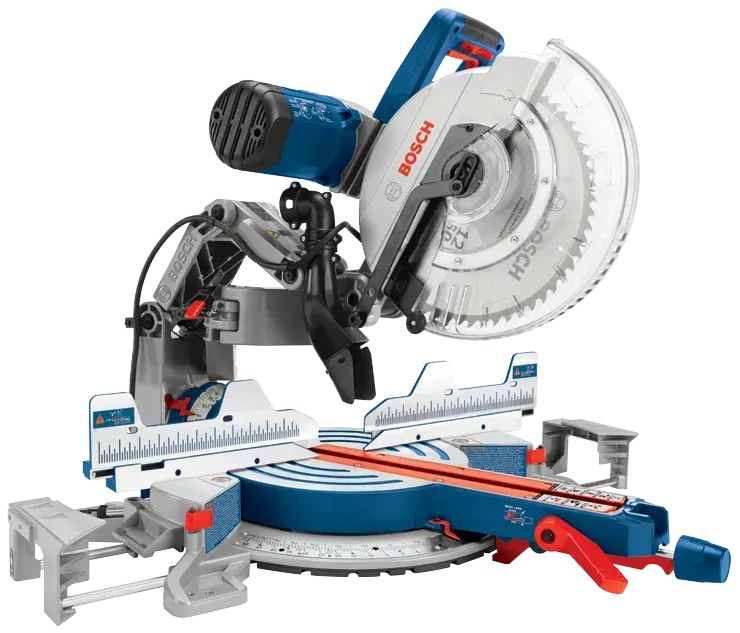
Bosch GCM12SD 12" Axial-Glide Miter Saw
The GCM12SD is the most versatile 12-inch miter saw for workshop and professional use. Its Axial-Glide system requires zero rear clearance, making it the only 12-inch slider that fits flush against a wall. The 13-1/2-inch crosscut at 90° handles 4×14 dimensional lumber and wide baseboard, and its dust collection captures roughly 90% of chips — the best in the category. A 60-tooth finish blade ships in the box, saving an immediate upgrade cost. The main trade-off is weight: at 65 lbs it is heavy, so it stays put in a shop or on a dedicated stand.
- ✓ Axial-Glide needs no rear clearance — fits flush against walls
- ✓ 13.5-inch crosscut at 90° handles 4×14 lumber
- ✓ Class-leading ~90% dust collection with vacuum
- ✓ Ships with 60-tooth finish blade
- ✗ 65 lbs is one of the heaviest 12-inch saws
- ✗ No XPS or laser cutline indicator
- ✗ Premium pricing $100–$200 above DeWalt DWS780
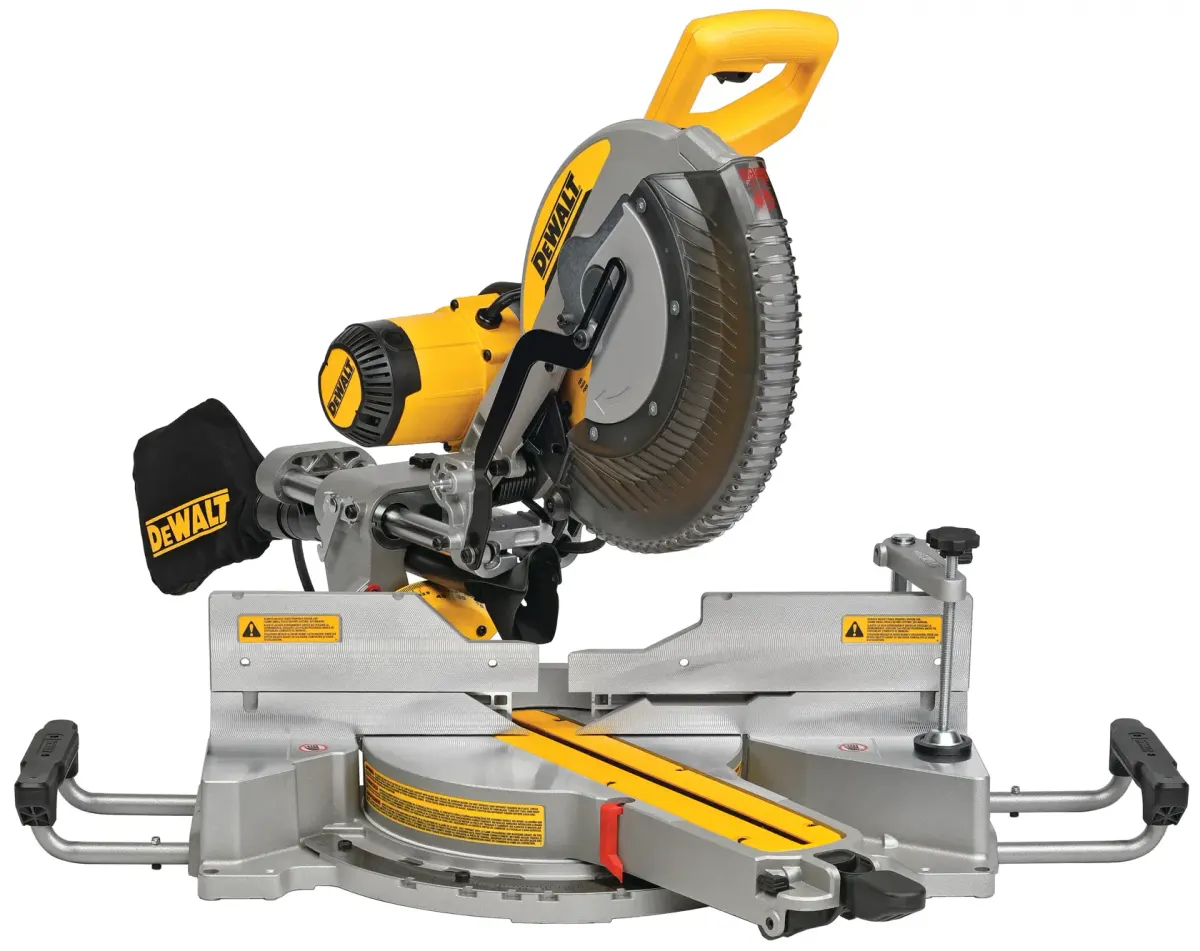
DeWalt DWS780 12" Sliding Compound Miter Saw
The DWS780 is the professional trim carpenter's choice when a projected cutline is essential. Its XPS shadow system casts the blade's exact kerf path onto the workpiece — no calibration, no bulb replacement. At approximately 56 lbs it is 9 lbs lighter than the Bosch, and the 13-3/4-inch crosscut at 90° tops the category for 12-inch sliders. The dual-bevel tilts 48° each way, and the tall fence supports 7-1/2 inches of nested crown. The trade-off is rear clearance: rail-based sliding needs 14–18 inches behind the fence.
- ✓ XPS shadow cutline eliminates laser calibration
- ✓ 13.75-inch crosscut at 90° — widest of any 12-inch slider
- ✓ 56 lbs — lighter than Bosch GCM12SD by 9 lbs
- ✓ Dual-bevel 48° left/right
- ✗ Rails require 14–18 inches rear clearance
- ✗ Dust collection ~75% (below Bosch's 90%)
- ✗ Bundled 32-tooth blade needs upgrade for finish work
We may earn a commission from this link.
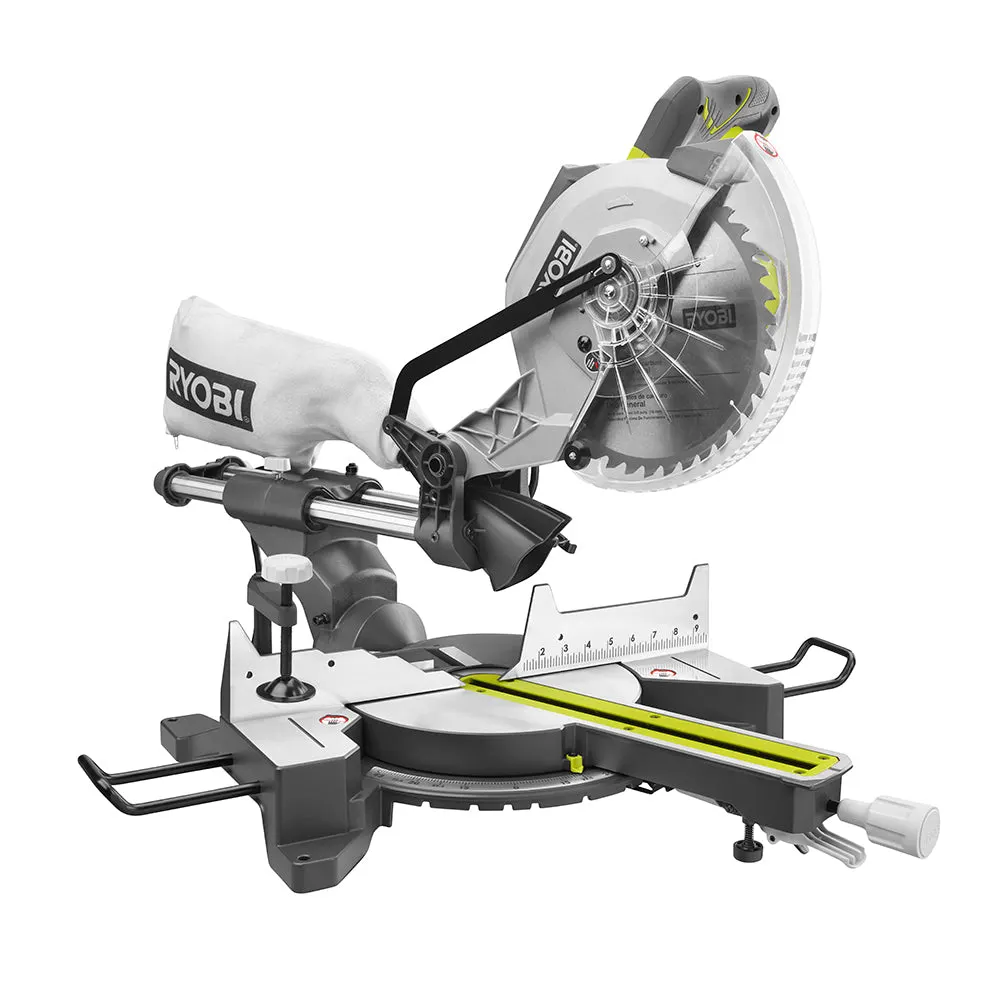
Ryobi TSS103 10" Sliding Compound Miter Saw
The TSS103 brings sliding crosscut capacity to the budget tier at $249–$299. Its 12-inch cut at 90° handles base molding and 2×8 lumber well beyond the 8-inch limit of non-sliding saws like the Metabo HPT C10FCGS. An LED cutline indicator provides blade path reference, and the 40-tooth included blade is better than the 24-tooth framing blades on cheaper saws. It is single-bevel and uses plastic components in the detent system, so it is best for occasional DIY use rather than daily production.
- ✓ Sliding rails give 12-inch crosscut at 90°
- ✓ LED cutline indicator improves accuracy
- ✓ Complete kit with table extensions, clamp, dust bag
- ✓ 15-amp motor handles MDF and softwood reliably
- ✗ Single-bevel only — must flip work for opposing compound cuts
- ✗ Plastic detent system feels less solid than metal
- ✗ Dust collection only adequate (~50-65%)
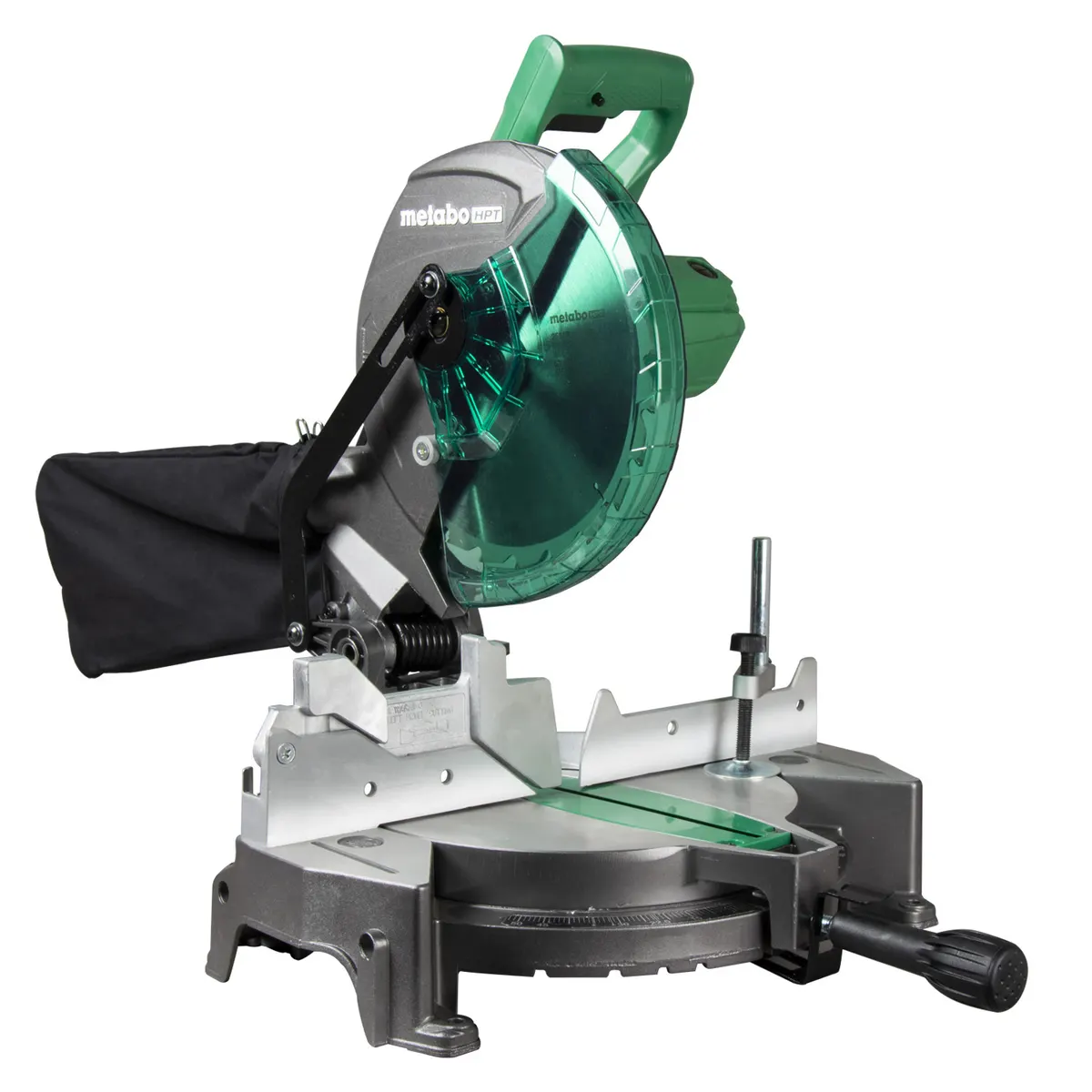
Metabo HPT C10FCGS 10" Compound Miter Saw
At $110–$150 the C10FCGS is the cheapest viable miter saw for homeowners who need to cut door casing, base molding, and 2×6 lumber. It weighs only 24.2 lbs — genuinely one-hand portable — and includes a 5-year warranty, the longest in the category. The non-sliding design limits crosscuts to about 8 inches, and the single-bevel means flipping work for opposing crown angles. The 24-tooth bundled blade is rough for finish work, so budget $35–$50 for an upgrade.
- ✓ 24.2 lbs — extremely portable
- ✓ 52° miter range wider than many budget saws
- ✓ 5-year warranty — best coverage at any price
- ✓ Electric brake stops blade quickly
- ✗ Non-sliding limits crosscut to ~8 inches
- ✗ Single-bevel; must flip work for opposing compound angles
- ✗ 24-tooth blade leaves rough edges on trim
We may earn a commission from this link.
How we picked
This guide ranks four miter saws we have reviewed in depth, organized so that whichever priority you have — space-saving axial-glide, cutline projection, sliding on a budget, or lowest cost — there is a clear pick. Every claim here is built from published manufacturer specifications, real US kit configurations, warranty terms, and consistent themes in long-term owner reports. We do not simulate lab tests; we rely on the numbers that shape a miter saw's daily usefulness: crosscut capacity, weight, clearance requirements, dust collection efficiency, blade quality, and bevel configuration.
The shortlist spans from a $130 homeowner saw to a $650 professional tool, deliberately avoiding redundancy. The Bosch GCM12SD and DeWalt DWS780 compete at the top tier for workshop and pro use; the Ryobi TSS103 is the budget sliding option; the Metabo HPT C10FCGS covers the entry-level non-sliding buyer. These four cover the real choices most shoppers face.
What matters when you choose a miter saw
Crosscut capacity sets the ceiling on what you can cut in one pass. A 12-inch saw like the Bosch or DeWalt cuts 13+ inches of width at 90°, handling 4×14 dimensional lumber, wide baseboard, and large crown profiles. A 10-inch sliding saw like the Ryobi cuts 12 inches wide — enough for 2×10 lumber and most residential trim. A 10-inch non-slider like the Metabo HPT cuts roughly 8 inches, limiting you to door casing and standard base. If you ever cut stock wider than 8 inches, a sliding saw is the smarter investment.
Rear clearance determines where the saw can sit. Rail-based sliders (DeWalt DWS780, Ryobi TSS103) need 14–18 inches of empty space behind the fence for the rails to extend. The Bosch GCM12SD's Axial-Glide requires none. If your shop is shallow or you want the saw against a wall, the Bosch is the only slider that fits without compromise.
Dust collection matters for interior work. The Bosch GCM12SD captures roughly 90% of chips with a vacuum connected — best in class. The DeWalt DWS780 captures around 75%. Budget saws like the Ryobi TSS103 and Metabo HPT C10FCGS collect 50–65%, leaving noticeable dust on the floor. For finished rooms, prioritize a saw with strong collection.
Bevel configuration affects crown molding workflow. Dual-bevel saws (Bosch, DeWalt) tilt in both directions, letting you cut opposing crown angles without flipping the workpiece. Single-bevel saws (Ryobi, Metabo HPT) require a manual flip. For occasional crown, single-bevel is manageable; for daily crown work, dual-bevel saves time and reduces errors.
Blade quality in the box changes immediate cost. The Bosch ships with a genuine 60-tooth finish blade. The DeWalt includes a 32-tooth framing blade that needs replacement for trim work. The Ryobi comes with a 40-tooth blade; the Metabo HPT with a 24-tooth framing blade. A quality 80-tooth upgrade costs $30–$55 and should be budgeted if you cut finish materials.
Best overall: Bosch GCM12SD
The GCM12SD wins the top spot because it solves two problems that define miter saw usability: rear clearance and dust. Its Axial-Glide mechanism needs zero clearance behind the fence, so it fits against a wall, in a trailer, or inside a cabinet — no other 12-inch slider matches that. At 13-1/2 inches crosscut at 90°, it handles nearly every residential cut. The roughly 90% dust collection with a vacuum is the best in the category, and the included 60-tooth blade is a genuine finish blade, saving $40–$70. The 65-lb weight is the penalty — this is a workshop saw, not a daily carry — but the capability and thoughtfulness of the design make it the most versatile miter saw for users who can accommodate its mass.
Best for pros: DeWalt DWS780
For professional trim carpenters who value cutline speed and portability, the DWS780 is the saw to beat. The XPS shadow system shows the exact kerf path — no calibration, no bulb changes — making each cut faster and more accurate. At 56 lbs it is 9 lbs lighter than the Bosch, which matters when loading and unloading a van. The 13-3/4-inch crosscut at 90° is the widest of any 12-inch slider, and the dual-bevel and tall fence handle nested crown up to 7-1/2 inches. The trade-off is the rail system, which demands 14–18 inches of rear clearance. If your workspace allows that, the DWS780 is the pro's choice. The bundled 32-tooth blade is a weak point; plan to upgrade to a 60-tooth or 80-tooth blade immediately for finish work.
Best value slider: Ryobi TSS103
The TSS103 is the entry point to sliding crosscut capacity at $249–$299. Its 12-inch cut at 90° covers base molding, 2×10 lumber, and crown profiles that would require flipping on a non-slider like the Metabo HPT. The LED cutline indicator is a real help for accuracy, and the included accessories — extensions, clamp, dust bag — make it a near-complete setup out of the box. Build quality is noticeably behind the DeWalt and Bosch: the detent system uses plastic parts, dust collection is adequate rather than excellent, and the single-bevel requires flipping for opposing crown angles. For the homeowner doing trim in one or two rooms per year, it is the right balance of capability and cost.
Best budget: Metabo HPT C10FCGS
No miter saw at $130 cuts better than the C10FCGS for its niche. At 24.2 lbs it is genuinely portable — you can carry it in one hand from truck to jobsite. Its 52° miter range is wider than many mid-range saws, and the 5-year warranty is unmatched at any price. The 15-amp motor with electric brake performs well for softwood and MDF trim. The non-sliding, single-bevel design is the reason it costs so little: crosscut capacity tops out around 8 inches, and opposing crown angles require a workpiece flip. The 24-tooth blade is framing-only; budget an immediate $35–$50 for a finish crosscut blade. For a homeowner cutting door casing, base molding, and 2×6 lumber, it is the cheapest way to a good miter cut.
How to read these rankings
The ranks are not a strict best-to-worst list — they are a map. The Bosch GCM12SD is first because it is the most capable single saw for the widest range of users, but if you need a projected cutline and lighter weight, the DWS780 is your number one. If your budget is under $300, the Ryobi TSS103 gives you sliding capacity; if it is under $150, the Metabo HPT C10FCGS gets you a capable non-slider. Start with the work you do and the space you have, match it to the award label, and the right pick becomes clear.
A note on testing and honesty
This guide is an analytical buying guide that synthesizes verified specifications, real US kit configurations, warranty terms, and the weight of owner experience into ranked recommendations. It is not a lab shootout. Where one saw clearly exceeds another in a measurable spec — dust collection percentage, crosscut width, weight — we rely on published data. Where trade-offs are subjective, we describe them so you can decide based on your own priorities.
Advertisement
Frequently asked questions
- What is the best miter saw in 2026?
- The best miter saw for most people in 2026 is the Bosch GCM12SD. Its Axial-Glide design eliminates rear clearance requirements, it cuts up to 13-1/2 inches wide, it captures roughly 90% of dust with a vacuum, and it includes a 60-tooth finish blade. If you need a lighter saw with a projected cutline, the DeWalt DWS780 is the top pro choice. For budget buyers, the Ryobi TSS103 offers sliding capacity at half the price.
- Do I need a sliding miter saw?
- A sliding miter saw is necessary if you regularly cut material wider than about 8 inches, such as 2×10 or 2×12 lumber, wide baseboard profiles, or large crown molding. Non-sliding saws like the Metabo HPT C10FCGS are sufficient for door casing, 2×6 lumber, and standard base molding. If you rarely cut wide stock, a non-slider saves money and weight.
- What is the difference between single-bevel and dual-bevel miter saws?
- A single-bevel saw tilts the blade in only one direction (usually left). A dual-bevel saw tilts left and right. For crown molding installation, dual-bevel allows you to cut opposing compound angles without flipping the workpiece — simply move the bevel to the other side. Single-bevel saws like the Ryobi TSS103 and Metabo HPT C10FCGS require flipping the molding, adding time and care.
- How much rear clearance does a sliding miter saw need?
- Traditional rail-based sliding miter saws like the DeWalt DWS780 need approximately 14–18 inches of clear space behind the fence for the rails to extend. The Bosch GCM12SD's Axial-Glide mechanism requires zero rear clearance — it can sit flush against a wall. This is a major consideration for workshops with limited depth or for against-the-wall placement.
- What blade should I use for finish trim work?
- For finish trim work on hardwood, MDF, or painted stock, use a 60-tooth or 80-tooth thin-kerf crosscut blade. The Bosch GCM12SD ships with a 60-tooth blade acceptable for most trim. The DeWalt DWS780 includes a 32-tooth blade, and the Ryobi TSS103 a 40-tooth blade; both should be upgraded for best finish quality. Budget $30–$55 for a quality upgrade like Freud or Diablo.
- Is a miter saw worth it for a DIY homeowner?
- Yes, if you do any trim, molding, or framing work. A miter saw makes precise crosscuts and angled cuts far faster and more accurately than a circular saw with a speed square. For homeowners, a 10-inch non-slider like the Metabo HPT C10FCGS is the cheapest entry point, while the Ryobi TSS103 adds sliding capacity for larger stock. For serious DIYers, the Bosch GCM12SD or DeWalt DWS780 are investments that last decades.