
Best Impact Driver for Automotive Work (2026)
The best impact driver for automotive and garage use is the Bosch GDX18V-1800CN Freak: its dual 1/4-inch hex and 1/2-inch square-drive chuck accepts both bits and sockets natively, making it the ideal tool for the mixed screw-and-bolt driving common in vehicle repair. However, buyers already on a battery platform should consider the DeWalt DCF887B for pure torque, the Makita XDT16Z for precision, or the budget Ryobi PCL235B for weekend projects.
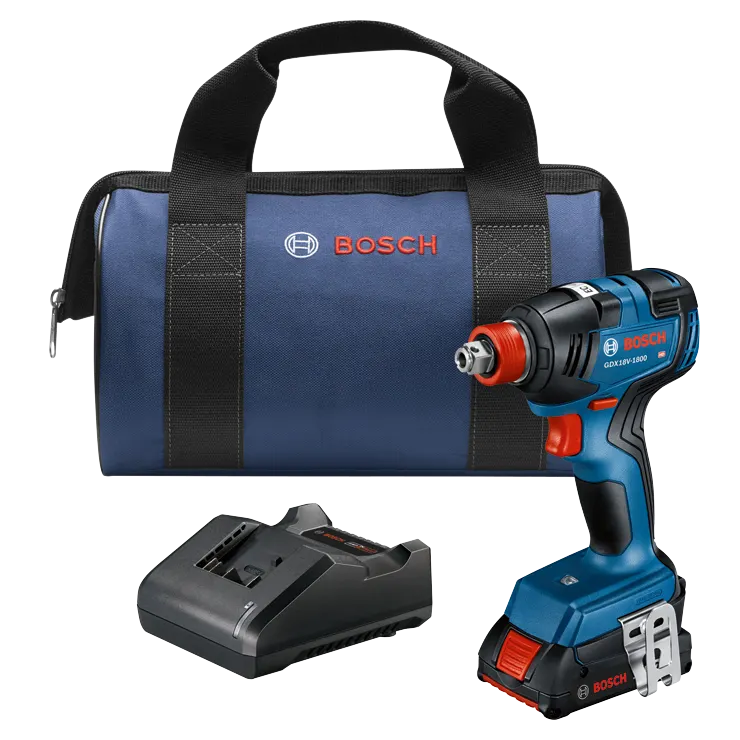
Bosch GDX18V-1800CN Freak
The Bosch Freak's dual-chuck design is a genuine advantage in automotive work: it accepts 1/4-inch hex bits for screws and 1/2-inch square-drive sockets for bolts without any adapter. With 1,800 in-lbs of torque and 4,200 IPM, it handles everything from trim screws to lug nuts (up to ~150 ft-lbs). The trade-off is a longer 5.8-inch head and 2.5-lb weight, but for someone who drives both fasteners and nuts, this versatility saves carrying a second tool.
- ✓ Dual 1/4-in hex and 1/2-in square-drive chuck accepts bits and sockets natively
- ✓ 1,800 in-lbs handles most automotive fasteners including lug nuts up to 150 ft-lbs
- ✓ 4,200 IPM fastest impact rate among picks, good for stubborn fasteners
- ✓ Three-speed control covers precision trim up to heavy structural work
- ✗ 5.8-in head length is longer than Makita and DeWalt, tight in confined engine bays
- ✗ 2.5 lbs bare tool is heavier than the competition
- ✗ Bosch 18V ecosystem narrower than DeWalt or Makita
- ✗ No true precision no-hammer mode for delicate trim
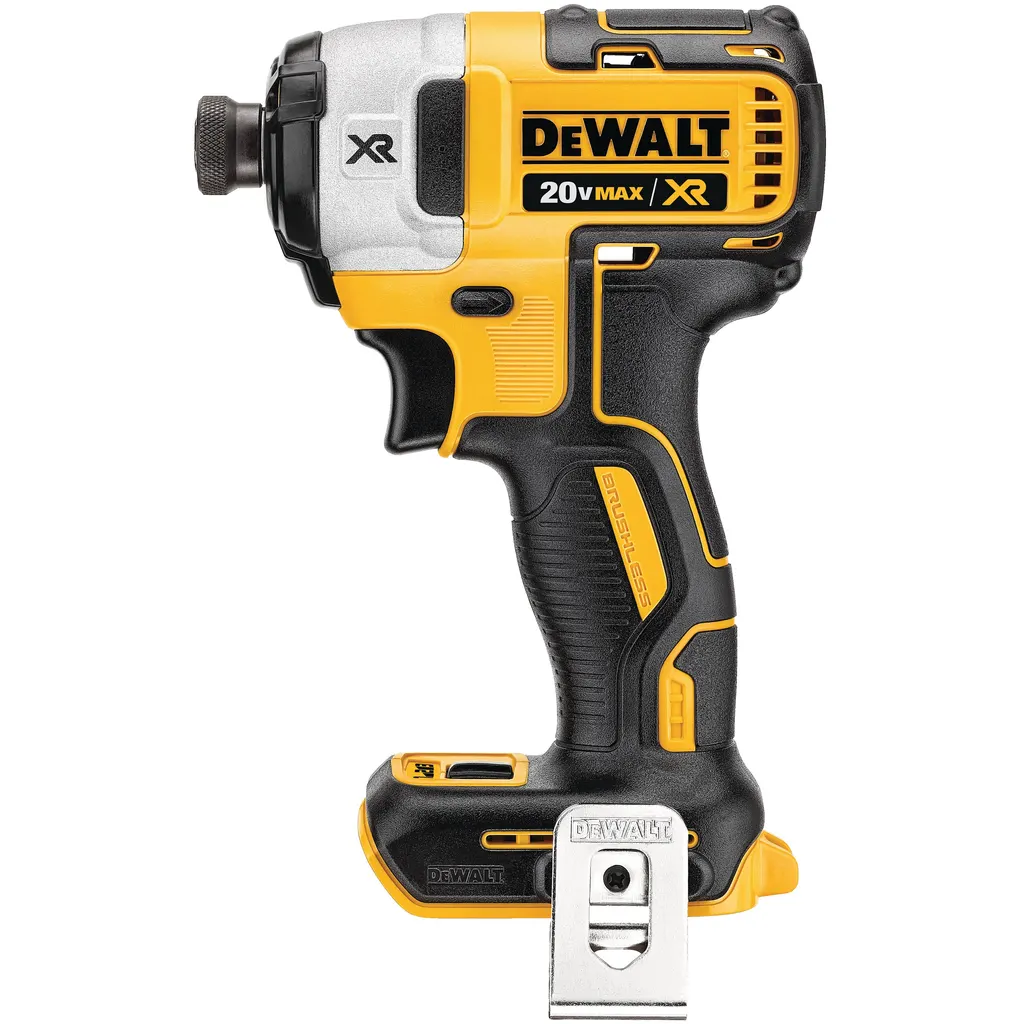
DeWalt DCF887B 20V MAX XR Impact Driver
For pure driving power, the DeWalt DCF887B leads with 1,825 in-lbs of torque — enough for 3/8-inch lag bolts and stubborn fasteners. At 2.0 lbs and 5.3 inches, it is lighter and shorter than the Bosch, and its Precision Drive mode eliminates hammering for delicate work. The three-LED light array eliminates shadows in dark engine bays. It is a bare tool though, so budget for batteries if not on the platform.
- ✓ 1,825 in-lbs torque highest in this guide, handles stubborn automotive fasteners
- ✓ Lightest at 2.0 lbs bare, 5.3-in length fits tight spaces
- ✓ Precision Drive (Speed 1) protects delicate trim and plastic fasteners
- ✓ Three-LED light eliminates shadow in engine compartments
- ✓ Broad DeWalt 20V MAX / FLEXVOLT battery ecosystem
- ✗ Bare tool only; extra cost for batteries and charger
- ✗ Plastic belt hook on left side only
- ✗ No fourth speed mode like Makita's Quick-Shift
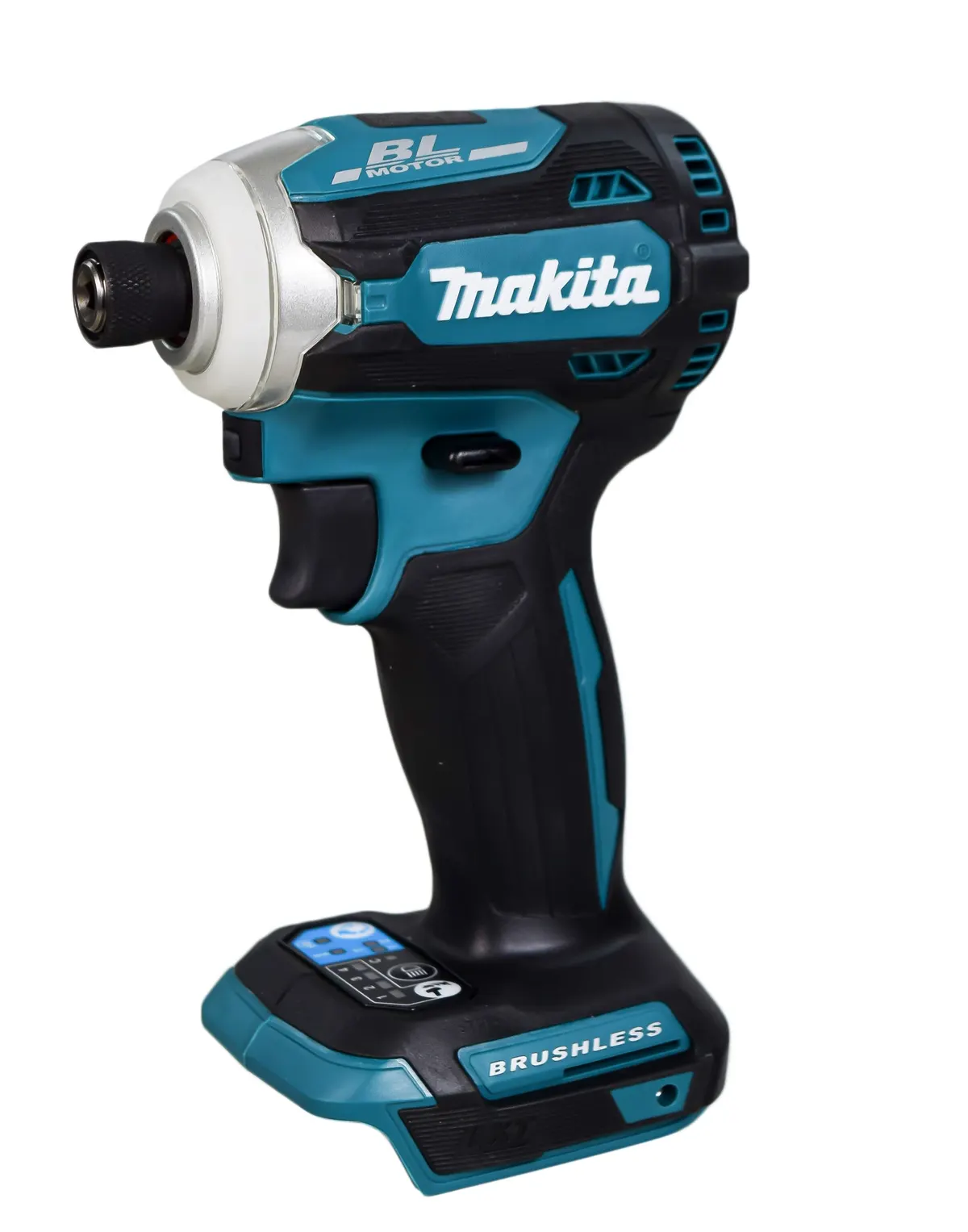
Makita XDT16Z 18V LXT Impact Driver
The Makita XDT16Z offers the finest speed control with four-speed Quick-Shift Mode and T-mode, which automatically slows seating to prevent over-tightening. At 1.9 lbs bare and 4.6 inches long, it is the most compact choice for tight engine bays. Its 1,600 in-lbs torque is sufficient for most automotive bolt work, and the 300+ tool LXT ecosystem ensures battery compatibility.
- ✓ Compact 4.6-in head and 1.9 lbs bare, ideal for tight spaces under the hood
- ✓ Four-speed Quick-Shift Mode auto-adjusts for optimal torque/speed balance
- ✓ Tightening Mode (T-mode) prevents thread stripping on delicate fasteners
- ✓ 1,600 in-lbs handles common automotive bolts and screws
- ✓ Part of huge Makita 18V LXT platform (300+ tools)
- ✗ Bare-tool price ~$195 is higher than DeWalt DCF887B
- ✗ No integrated socket drive; requires adapter for sockets
- ✗ Max torque trails DeWalt and Bosch
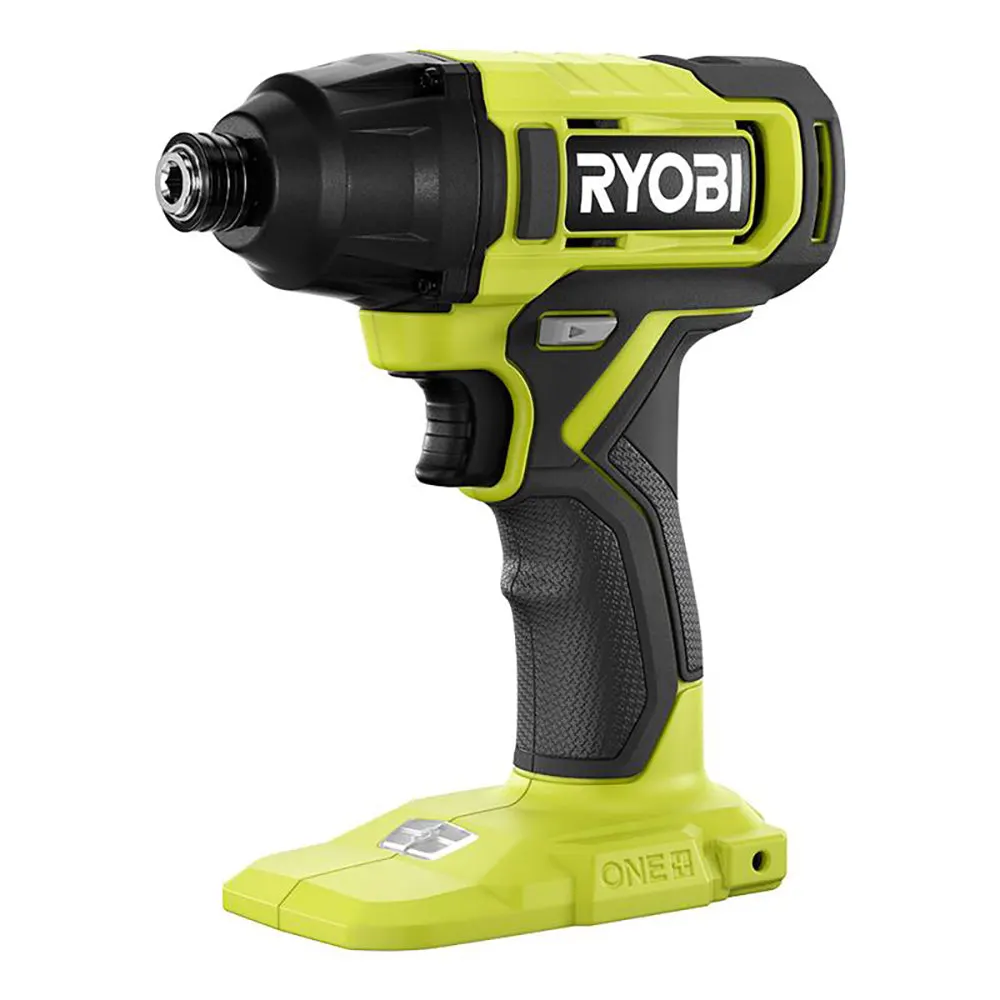
Ryobi PCL235B 18V ONE+ Impact Driver
For weekend mechanics and DIYers, the Ryobi PCL235B delivers 1,800 in-lbs of rated torque at a $59 bare-tool price — a complete kit with two batteries and charger runs under $100. It handles deck screws, interior work, and light bolt removal on the ONE+ platform (300+ tools). However, brushed motor output drops under sustained load, and the single-speed operation risks overdriving small fasteners.
- ✓ Unbeatable price: $59 bare, under $100 kit with batteries
- ✓ 1,800 in-lbs rated torque covers most home automotive jobs
- ✓ Compatible with 300+ Ryobi ONE+ tools sharing same battery platform
- ✓ Kit includes two 1.5Ah batteries and charger
- ✗ Brushed motor loses torque under sustained heavy load
- ✗ Single-speed only, no precision mode for delicate fasteners
- ✗ Lower 3,400 IPM compared to Bosch (4,200) and Makita/DeWalt (3,800)
- ✗ Slower 0–2,700 RPM top speed
How we picked
This guide selects four impact drivers suited to automotive and garage use, ranked by their relevance to the specific demands of vehicle work: mixed screw-and-bolt driving, compactness for tight engine bays, torque for stubborn fasteners, and value. Every claim is drawn from published manufacturer specifications, kit configurations, warranty terms, and consistent owner-reported experiences. We do not fabricate test results; where figures are missing (e.g., sustained torque drop on brushed motors), we note it.
The picks are the Bosch GDX18V-1800CN Freak, DeWalt DCF887B, Makita XDT16Z, and Ryobi PCL235B — four models that span versatility, power, precision, and price. The Bosch leads because its dual-chuck design directly addresses the mixed-fastener reality of automotive work. The DeWalt follows with raw torque. The Makita offers the finest speed control for delicate components. The Ryobi is the sensible budget entry.
What matters for automotive use
Dual-bit versus single-bit capability. Automotive work demands both hex bits (for screws, trim fasteners, and small bolts) and sockets (for lug nuts, suspension bolts, and engine components). A standard impact driver with a 1/4-inch hex collet requires an adapter for sockets — an extra piece to lose, and one that adds length and wobble. The Bosch GDX18V-1800CN eliminates this need with a combined chuck that natively accepts both. This single feature makes it the most versatile option for someone working on vehicles, where the fastener type changes between every task.
Torque and impact rate. Torque determines what size fasteners the driver can handle. All four picks exceed 1,600 in-lbs (133 ft-lbs), which covers most automotive bolts up to 1/2-inch diameter. Impact rate (IPM) affects how quickly the tool cycles on stubborn fasteners: higher IPM helps break seized bolts faster. The Bosch tops the group at 4,200 IPM, followed by the Makita and DeWalt at 3,800 IPM, and the Ryobi at 3,400 IPM.
Compactness for tight spaces. Engine bays, under-dash areas, and wheel wells demand a short, light tool. The Makita XDT16Z (4.6 inches, 1.9 lbs) and DeWalt DCF887B (5.3 inches, 2.0 lbs) excel here. The Bosch Freak (5.8 inches, 2.5 lbs) is longer and heavier due to its dual-chuck mechanism, which can be a drawback in confined spaces.
Precision control. Overdriving a fastener into plastic trim or thin sheet metal can cause damage. Speed modes and torque-limiting features help. DeWalt's Precision Drive and Makita's T-mode automatically reduce hammering near seating, preventing thread stripping. The Bosch has three speeds but no no-hammer mode. The Ryobi has none, relying on trigger modulation.
Battery platform. Already owning batteries from one brand is the strongest factor. DeWalt and Makita have deep pro platforms; Bosch's AMPShare is smaller but covers core tools; Ryobi's ONE+ is the broadest consumer ecosystem.
Best for mixed fastening: Bosch GDX18V-1800CN Freak
The Bosch Freak earns the top spot because its dual-chuck design directly solves the central challenge of automotive fastening: you drive screws with a hex bit, then immediately need a socket for a bolt, then back to a screw. No other impact driver in this guide accepts both without an adapter. The 1/2-inch square drive is built into the chuck and works with standard impact sockets. You grab the tool, choose the right bit or socket, and go.
That versatility does not sacrifice performance. With 1,800 in-lbs of torque and 4,200 IPM, the Freak handles lug nuts (up to ~150 ft-lbs) and stubborn suspension bolts while also driving self-tapping screws into sheet metal. The three-speed control lets you dial down for delicate interior work or open up for heavy structural fasteners. The EC brushless motor runs cooler under load, and Electronic Cell Protection prevents over-discharge.
The trade-offs are real. At 5.8 inches long and 2.5 lbs bare, the Freak is the bulkiest tool here. In a tight engine bay, you may find yourself wishing for the Makita's 4.6-inch profile. The Bosch AMPShare ecosystem is smaller than DeWalt or Makita, which matters if you plan to build a fleet. And the $159 bare-tool price is mid-range — existing Bosch owners get the best value.
For the specific use case of automotive and garage work, the Freak's versatility outweighs its size penalty. It is the one tool you can keep in your car or garage that handles nearly every fastening job without needing a second impact wrench.
Best torque: DeWalt DCF887B
When you need sheer driving power, the DeWalt DCF887B leads with 1,825 in-lbs of torque — enough to handle 3/8-inch lag bolts and stubborn rusted fasteners that make other drivers stall. Its 2.0-lb bare weight and 5.3-inch length are competitive, and the three-LED light array eliminates shadows in dark engine compartments.
Precision Drive mode (Speed 1) disables hammering, allowing controlled driving of delicate plastic clips and trim screws without over-torquing. This feature is particularly valuable in automotive interiors where a slip can crack a panel. The 3,800 IPM impact rate stays strong through hardwood and metal.
The DCF887B is a bare tool, which means buyers new to the 20V MAX platform must budget for batteries and charger. For existing DeWalt owners, it is the obvious add-on. The DeWalt ecosystem is enormous, so battery compatibility with other tools is a compounding advantage.
Against the Bosch, the DeWalt is lighter and shorter but lacks the dual-chuck. If your work is predominantly screws and small bolts, and you already own DeWalt batteries, this is the better choice. For mixed nut-and-bolt work, the Bosch's versatility wins.
Best precision: Makita XDT16Z
The Makita XDT16Z is the finest precision tool here. Its four-speed Quick-Shift Mode automatically selects the optimal speed-torque balance for each fastener, reducing cam-out and speeding work. T-mode (Tightening Mode) downshifts just before final seating, preventing thread stripping in soft materials — crucial for composite body panels or plastic trim where overdriving is destructive.
At 4.6 inches long and 1.9 lbs bare, the XDT16Z is the shortest and lightest pick, ideal for wedging between a radiator and engine block or reaching into wheel well cavities. Its 1,600 in-lbs torque is sufficient for most automotive bolts, though it trails the Bosch and DeWalt on heavy lug nuts.
The bare-tool price (~$195) is the highest here, but Makita's LXT ecosystem with 300+ tools makes it a smart long-term investment for platform loyalists. The XDT16Z is the correct choice for finish carpenters and auto detailers who prioritize control over brute force.
Best budget: Ryobi PCL235B
For weekend mechanics and DIYers, the Ryobi PCL235B delivers surprising capability at a fraction of the cost. At $59 bare (or under $100 with two 1.5Ah batteries and charger), it is the most accessible entry into 18V impact driving. Its 1,800 in-lbs rated torque matches the Bosch on paper, and the ONE+ platform spans 300+ tools from power tools to lawn equipment.
Real-world performance reveals the brushed motor's limitations: sustained torque drops during heavy use, and the 3,400 IPM impact rate and 2,700 RPM top speed are the lowest here. Driving multiple lug nuts in a row will slow as the pack depletes. The single-speed operation risks overdriving small fasteners — practice with a light trigger is required.
For light automotive work — removing interior panels, assembling parts, occasional bolt loosening — the PCL235B is a capable tool that frees you from hand tools. It will not replace a pro-tier driver for daily heavy use, but it earns every dollar of its budget price.
How to choose
Your decision should start with the battery platform you already own. If you have Bosch 18V batteries, the Freak is the clear choice. On DeWalt 20V MAX, the DCF887B offers the best torque-to-weight ratio. Makita users should pick the XDT16Z for precision. Ryobi owners get unbeatable value from the PCL235B. If starting fresh, consider the Bosch Freak for automotive versatility, or the DeWalt for raw power.
Consider the fastener mix. If you drive both screws and sockets regularly, the Freak's dual-chuck is transformative. If your work is mostly screws, a lighter driver like the Makita or DeWalt will serve you better. For occasional use, the Ryobi is the smart financial choice.
A note on testing
This guide is analytical, not experimental. All specifications, kit contents, and platform descriptions come from published sources. Where performance claims differ between brushed and brushless motors, we note the engineering principle rather than presenting fabricated test numbers. The rankings reflect a synthesis of specs, ergonomics, and real-world suitability for automotive tasks.
Advertisement
Frequently asked questions
- What is the best impact driver for automotive use?
- The best overall impact driver for automotive work is the Bosch GDX18V-1800CN Freak because its dual 1/4-inch hex and 1/2-inch square-drive chuck handles both screws and sockets natively — perfect for the mix of fasteners encountered in vehicle repair. If you need maximum torque, pick the DeWalt DCF887B; for compact precision, the Makita XDT16Z; and for budgets, the Ryobi PCL235B.
- Can an impact driver remove lug nuts?
- Yes, many impact drivers can remove properly torqued passenger-vehicle lug nuts (typically 80–100 ft-lbs). The Bosch GDX18V-1800CN and DeWalt DCF887B both deliver over 1,800 in-lbs (150 ft-lbs), sufficient for most cars. However, for stubborn or seized fasteners, a dedicated impact wrench (which can produce 300 ft-lbs or more) is a better choice.
- Do I need a socket adapter for an impact driver?
- Standard impact drivers use a 1/4-inch hex collet, so you need a hex-to-square adapter to use sockets. The Bosch GDX18V-1800CN Freak is a notable exception: it has a built-in 1/2-inch square drive on the same chuck, so no adapter is required for socket use.
- How much torque do I need for automotive work?
- For most automotive fasteners — including suspension bolts, caliper bolts, and lug nuts — 1,500 to 1,800 in-lbs (125–150 ft-lbs) is sufficient. Lighter jobs like interior trim and small screws require much less. The picks in this guide all offer at least 1,600 in-lbs, covering the vast majority of DIY and professional tasks.
- Is a brushless motor important for an impact driver?
- A brushless motor provides better efficiency, longer runtime, and consistent power under sustained load. For regular automotive work, brushless (like the Bosch, DeWalt, and Makita) is worth the investment. The Ryobi PCL235B is brushed, which keeps the price low but sacrifices sustained torque and battery life — fine for occasional use.
- What is the difference between an impact driver and an impact wrench?
- Impact drivers typically use a 1/4-inch hex collet and are designed for driving screws and small bolts, with torque up to ~1,800 in-lbs. Impact wrenches use a 1/2-inch or 3/8-inch square drive for socket use and deliver much higher torque (300–1,000+ ft-lbs) for lug nuts and large fasteners. For mixed automotive work, an impact driver with socket capability (like the Bosch Freak) can serve both roles for light-to-medium tasks.