
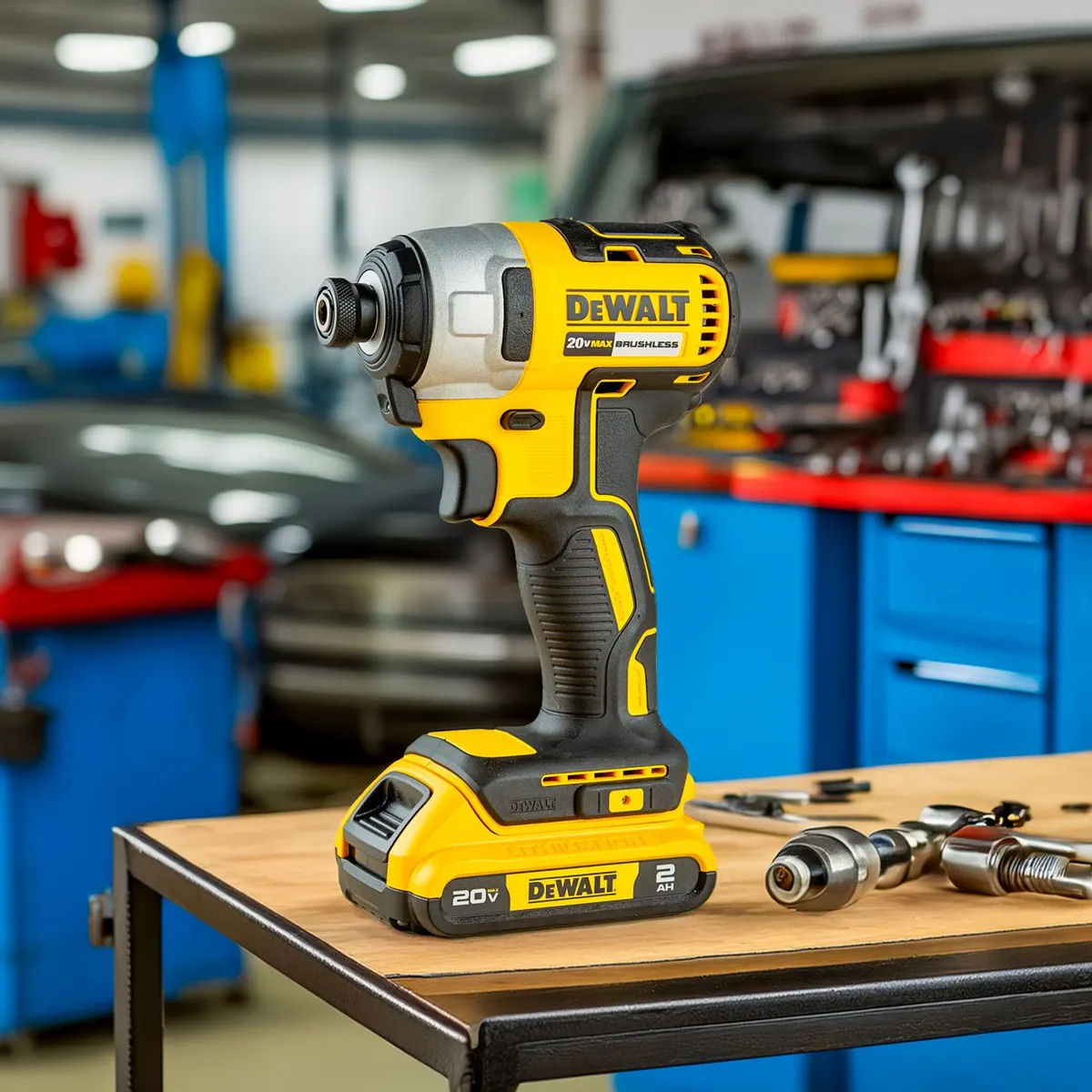
The Best Impact Drivers of 2026
The best impact driver for most people in 2026 is the DeWalt DCF887B — a sub-2-pound 20V MAX XR tool that delivers 1,825 in-lbs of torque across three speed modes and fits into tighter spots than any full-size driver here. If you are already deep in a battery ecosystem, match the tool to your packs; if you are starting from scratch and want the most versatile single driver, the Bosch GDX18V-1800CN Freak is the pick that also accepts 1/2-inch drive sockets without an adapter.
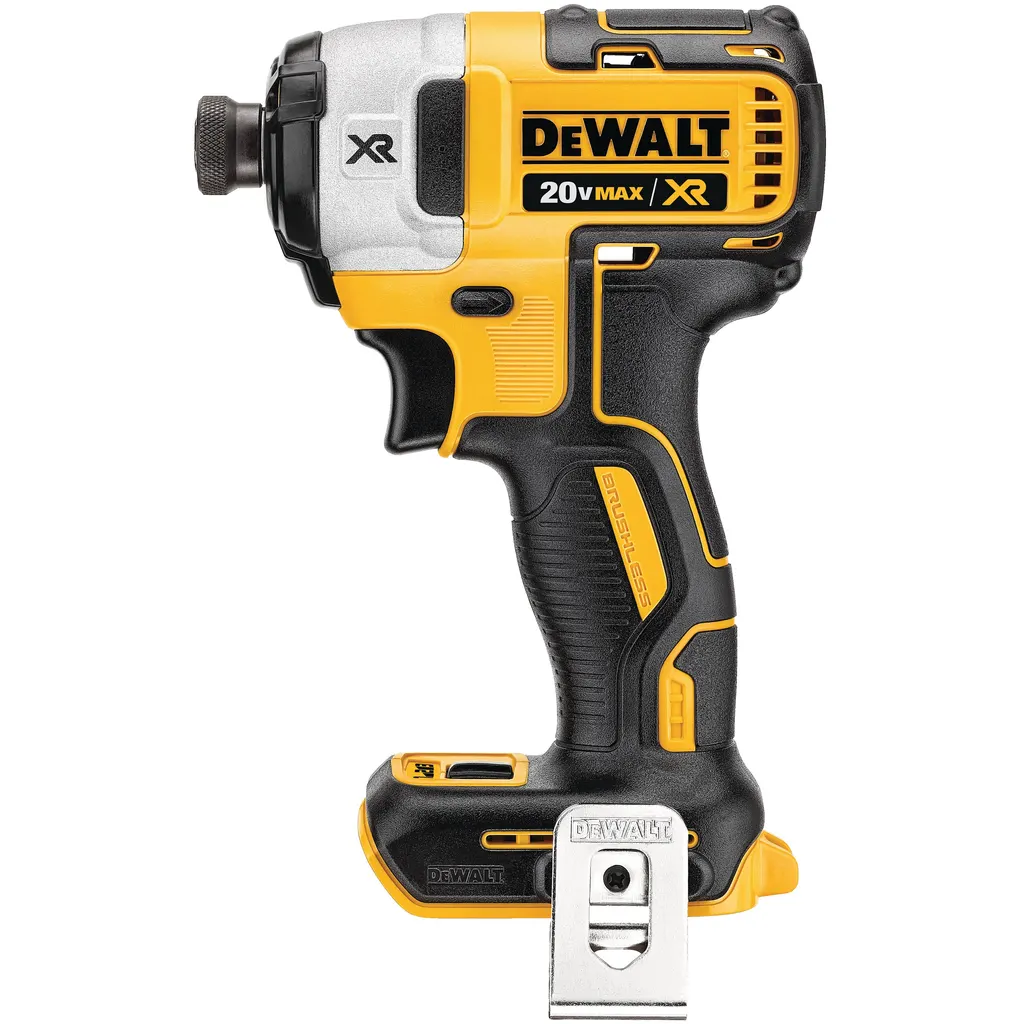
DeWalt DCF887B 20V MAX XR Impact Driver
The DCF887B earns the top spot by combining the highest torque rating in this guide (1,825 in-lbs) with a bare weight of just 2.0 lbs and a compact 5.3-inch length. Three speed settings — capped at 1,000, 2,800, and 3,250 RPM — give you precise control over drywall and fine finish work in mode one and full fastening power in mode three. The 20V MAX ecosystem is one of the deepest in the US, which means the battery you charge for this driver can also power a jobsite table saw, a circular saw, or a jobsite radio. For anyone who does not already own a competing platform, the DCF887B is the clearest recommendation in this category.
- ✓ 1,825 in-lbs — the highest torque rating in this guide
- ✓ Weighs just 2.0 lbs bare at a compact 5.3 inches
- ✓ Three-speed selector tailors RPM to delicate or heavy-duty applications
- ✓ Backed by the deep DeWalt 20V MAX tool and battery ecosystem
- ✗ Sold bare — battery and charger add significantly to the real cost
- ✗ Belt clip is sold separately rather than included
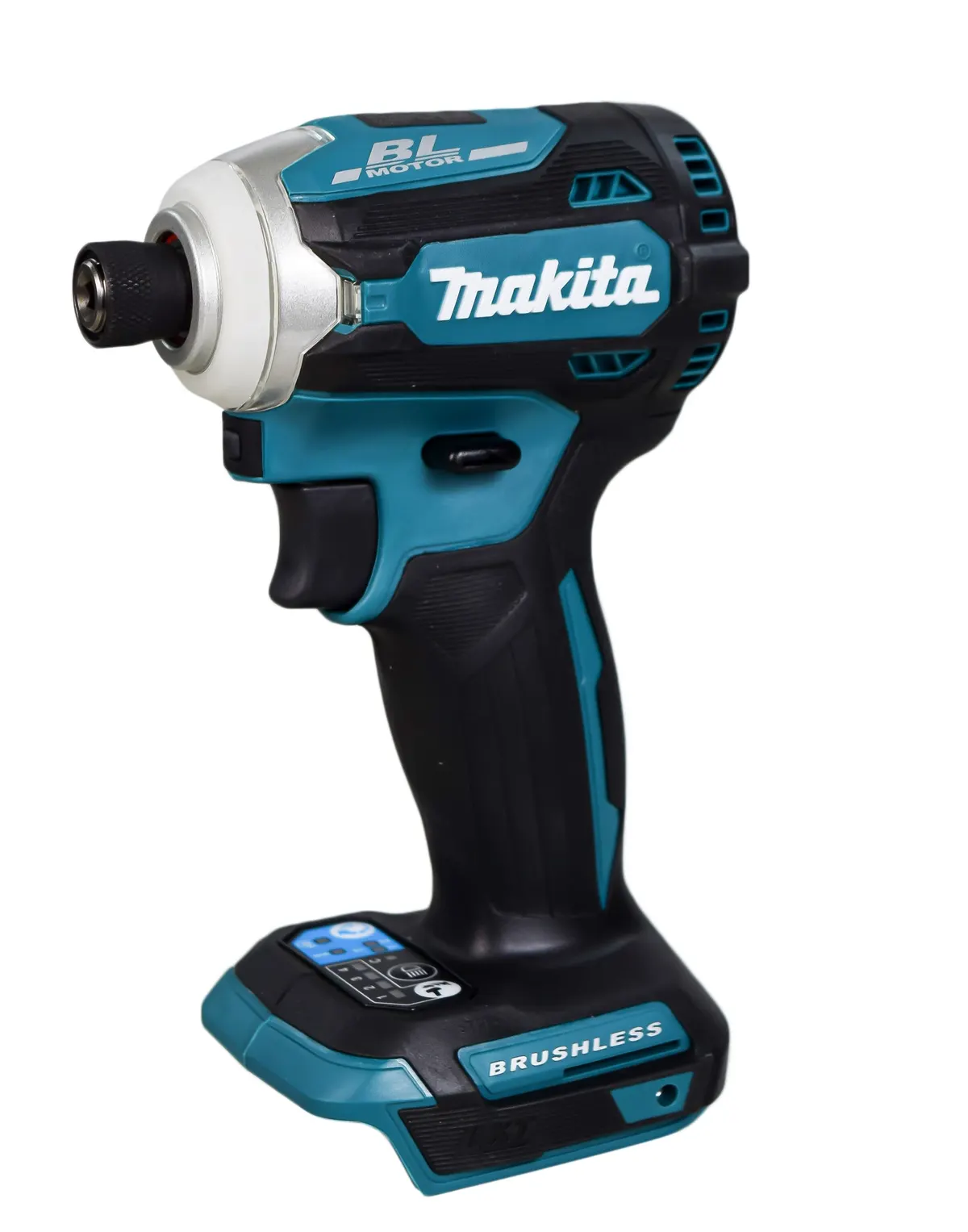
Makita XDT16Z 18V LXT Impact Driver
Makita's Quick-Shift Mode technology is the reason to choose the XDT16Z over equally capable competitors — it automatically modulates torque output in the final rotation of a fastener to reduce cam-out and overdriving, which is a genuine advantage when you are setting finish screws or composite decking. At 1.9 lbs bare and 4.6 inches long, it is the lightest and shortest driver in this guide, and its four-speed range tops out at 3,600 RPM. At $189–199 for the bare tool it costs more than the DeWalt, but for LXT owners who already have the batteries it is the most refined impact driver in the lineup.
- ✓ Lightest and most compact driver in this guide at 1.9 lbs and 4.6 inches
- ✓ Quick-Shift Mode automatically reduces torque at the end of each fastener
- ✓ Four-speed range with a top end of 3,600 RPM
- ✓ Fits the 300-plus-tool Makita 18V LXT battery platform
- ✗ Higher bare-tool price than the DeWalt DCF887B
- ✗ 1,600 in-lbs of max torque trails the DeWalt and Bosch picks
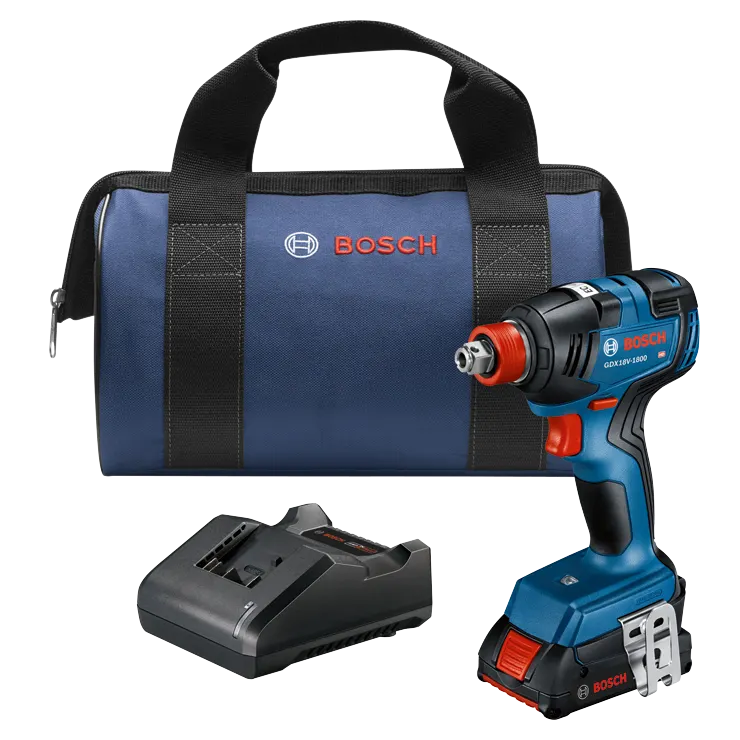
Bosch GDX18V-1800CN Freak 18V Impact Driver/Wrench
No other driver in this guide does what the Freak does: its dual-chuck design accepts both 1/4-inch hex bits and 1/2-inch square-drive sockets without an adapter, so one tool covers finish fastening, lag bolts, and lug nuts. At 1,800 in-lbs it matches the DeWalt on torque, and its three-speed selector runs from 0 to 2,800 RPM. The trade-offs are weight — at 2.5 lbs and 5.8 inches it is the heaviest and longest driver here — and a $149–169 price that assumes you already own 18V Bosch batteries. For a tradesperson or remodeler who constantly swaps between driving and socket work, the Freak eliminates a tool bag swap that adds up over a long day.
- ✓ Dual 1/4-inch hex and 1/2-inch square-drive chuck — no adapter needed for sockets
- ✓ 1,800 in-lbs matches the DeWalt at the top of the torque chart
- ✓ Three-speed range gives useful control across fastening applications
- ✓ One tool replaces both a standard impact driver and a compact impact wrench
- ✗ Heaviest and longest driver in the guide at 2.5 lbs and 5.8 inches
- ✗ Bosch's US 18V battery platform is narrower than DeWalt's or Makita's
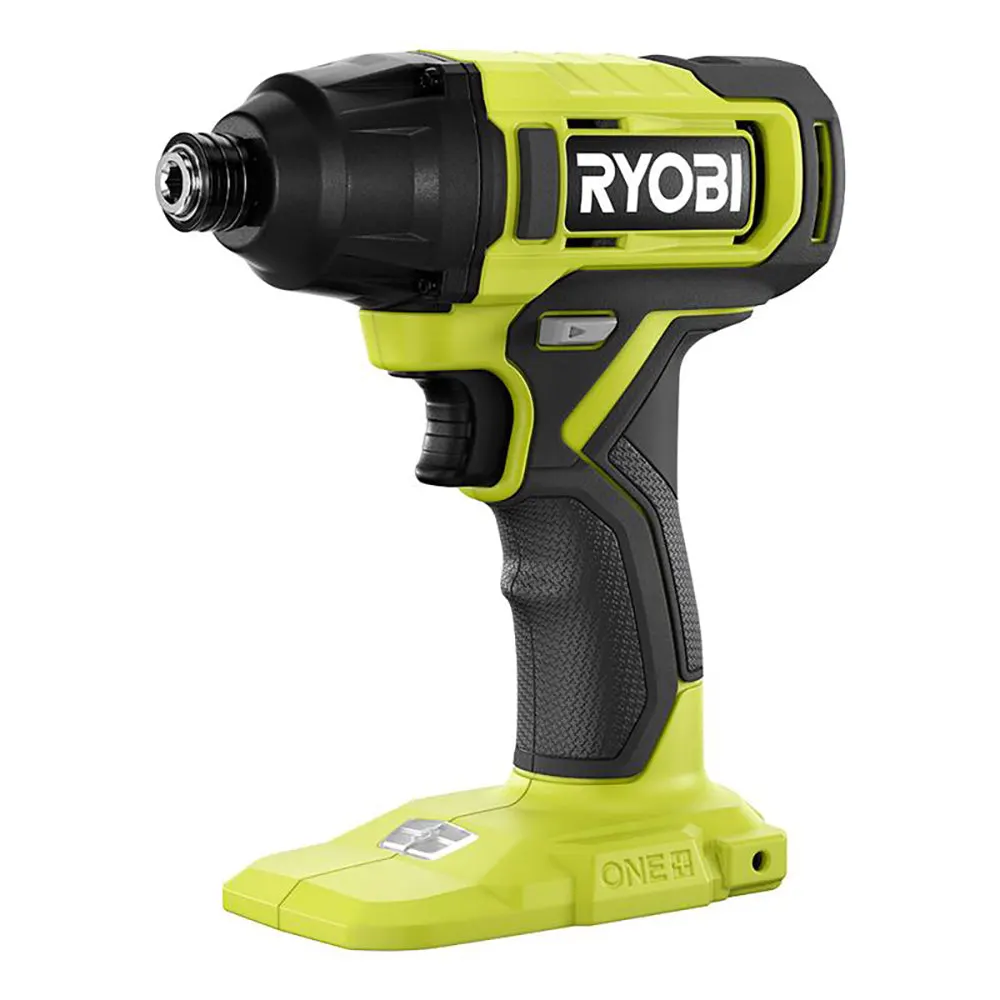
Ryobi PCL235B 18V ONE+ Impact Driver
At around $59 bare, the PCL235B is the entry point for anyone who wants cordless impact capability without committing to a premium platform. Its brushed motor delivers 1,800 in-lbs — equal to the Bosch on paper — at a top speed of 2,700 RPM. It is heavier than the brushless picks at 2.91 lbs and will drain batteries faster on long runs, but for the homeowner who drives the occasional lag bolt, assembles furniture, or turns a few bolts in the garage, neither limitation is a daily problem. The ONE+ platform spans hundreds of affordable tools, so the battery you charge here can power a string trimmer, a shop vac, and a random-orbit sander from the same charger.
- ✓ Around $59 bare — by far the lowest price in this guide
- ✓ 1,800 in-lbs of rated torque handles the vast majority of fastening tasks
- ✓ Backed by the Ryobi ONE+ platform, one of the broadest budget ecosystems available
- ✓ Compact enough for most overhead and cabinet work
- ✗ Brushed motor is less efficient than the brushless picks and runs packs down faster
- ✗ 2.91 lbs bare is the heaviest tool in the guide
- ✗ Lower top RPM (2,700) than the brushless competition
Picking the right impact driver: what the numbers actually mean
Impact drivers are, on the surface, simple tools — a 1/4-inch hex chuck, a brushless motor, and an impact mechanism that delivers rotational blows rather than continuous torque. In practice, the differences between four competitive drivers come down to how those blows are controlled, how much the tool weighs when you hold it overhead for six hours, and what ecosystem of batteries you are already tied into.
This guide ranks four impact drivers — the DeWalt DCF887B, Makita XDT16Z, Bosch GDX18V-1800CN Freak, and Ryobi PCL235B — against each other using verified specifications, published torque ratings, real US pricing, and the practical realities of daily fastening work. The goal is a clear recommendation for each type of buyer rather than a padded list of everything available.
Torque ratings and what they tell you
All four drivers in this guide carry high torque ratings: 1,825 in-lbs (DeWalt), 1,800 in-lbs (Bosch and Ryobi), and 1,600 in-lbs (Makita). The gap between 1,600 and 1,825 is real, but not the most important number for most buyers — any of the four will drive a 3-inch structural screw through dimensional lumber without hesitation.
What matters more is how the torque is delivered. The DeWalt's three-speed mode caps RPM at 1,000 in mode one, which is genuinely useful for setting fasteners in soft or finished material where a full-power impact would split wood or strip a head. The Makita's Quick-Shift Mode goes further: it detects the increase in resistance as a fastener seats and automatically reduces torque output in the final rotation, reducing overdriving without requiring the operator to do anything. For finish carpenters and decking contractors, that automated modulation is the single most useful feature in this guide.
The Bosch's strength is torque type, not just torque volume. Its dual-chuck design means those 1,800 in-lbs can be applied through a 1/2-inch socket to a nut or bolt head, turning the driver into a compact impact wrench. No other tool in this guide does that without an adapter.
Weight and balance: the numbers you feel
At the end of a day of overhead fastening — installing cabinets, running deck ledger boards, wiring junction boxes — the difference between 1.9 lbs (Makita) and 2.91 lbs (Ryobi) is not a marketing bullet point. It is shoulder fatigue and accuracy drift.
The Makita XDT16Z is the standout on this dimension: 1.9 lbs bare and just 4.6 inches from chuck to heel make it the most comfortable driver in this guide for sustained overhead work. The DeWalt DCF887B is close at 2.0 lbs and 5.3 inches, and the two are interchangeable for most users on comfort. The Bosch Freak's dual-chuck mechanism adds bulk — 2.5 lbs and 5.8 inches — and you feel that difference. The Ryobi, at 2.91 lbs, is the heaviest by a meaningful margin, which is a real consideration for extended use even though the price justifies it for occasional fastening.
Head length matters as much as weight in tight spaces. Cabinet interiors, stud bays, and engine compartments often limit how much length you can put behind a fastener. The Makita's 4.6-inch profile is the clear winner; the DeWalt's 5.3-inch profile is still manageable; the Bosch at 5.8 inches starts to create clearance problems in the tightest spots.
The battery platform question
An impact driver is not just a tool — it is an entry point into a battery system. The battery you buy for this driver will also power your circular saw, your reciprocating saw, your shop vac, and eventually your outdoor equipment if you go deep enough into a platform.
DeWalt 20V MAX and Makita 18V LXT are the two deepest platforms in the US market, spanning well over 200 tools each. Milwaukee M18 is equally deep and worth consideration for buyers who want the M18 FUEL impact driver (not reviewed here). Bosch's US 18V platform is smaller but solid, and the Freak is compatible with Bosch's ProCore high-capacity batteries. Ryobi ONE+ is the broadest and most affordable budget ecosystem, covering everything from drills to pressure washers.
The practical implication: if you already own two DeWalt 20V MAX batteries and a charger, the DCF887B is your best impact driver regardless of how the other three rank in this guide — the platform value you already own tips the scales. The same logic applies to Makita LXT owners and the XDT16Z. Only start fresh if you are genuinely starting from zero tools.
Best overall: DeWalt DCF887B
The DCF887B wins the top spot because it combines the strongest torque rating in this guide (1,825 in-lbs), a class-competitive weight (2.0 lbs bare), and three precisely defined speed modes into a tool that performs well at every fastening task from delicate finish screws to structural lags. Its 5.3-inch length is not the most compact here, but it is short enough for most confined-space work. DeWalt's 20V MAX ecosystem is one of the strongest reasons to consider this driver: the same battery platform powers circular saws, reciprocating saws, compact routers, and dozens of other tools.
The main caveat is cost transparency: the DCF887B is priced at $139–159 as a bare tool, and adding a starter battery and charger brings the real investment to $200 or more. If you are buying into the platform fresh, budget accordingly.
Best for Makita platform: Makita XDT16Z
For the Makita LXT owner, the XDT16Z is the best-fit impact driver without qualification. It is lighter and shorter than any other driver in this guide, and its Quick-Shift Mode is a genuinely useful feature that the competition does not match — for trim, decking, and cabinetry work where overdriving is a real concern, that automated torque reduction protects the material and reduces fastener head damage without slowing you down.
At 1,600 in-lbs it is the lowest-torque driver in the guide, but that gap only shows up on the heaviest structural fastening. For the vast majority of fastening applications, 1,600 in-lbs is more than adequate, and the lighter weight and finer torque control more than compensate for the modest shortfall at the high end.
Best for versatility: Bosch GDX18V-1800CN Freak
The Freak exists for the tradesperson who refuses to carry two tools when one will do. Its dual-chuck mechanism is its entire argument: the same driver that sets deck screws and lag bolts can torque down hardware, tighten suspension components, and remove lug nuts without swapping to an impact wrench. That is a real workflow advantage on jobsites where the cost of tool changes — hunting for the wrench, finding the right socket adapter — adds up over days and weeks.
The weight penalty (2.5 lbs, 5.8 inches) is the honest trade-off. If the socket capability is relevant to your work, it is worth it. If your fastening is hex-bit-only, you are paying in weight for a feature you will never use.
Best budget: Ryobi PCL235B
The PCL235B's case is simple: $59 for a 1,800 in-lbs impact driver backed by a platform with hundreds of affordable tools. For the homeowner who drives lag screws into a ledger board twice a year, builds furniture from flat packs, and occasionally helps a friend with a deck project, the brushed motor's efficiency shortfall is invisible and the price difference versus a premium brushless driver is the number that matters.
The Ryobi is not a tool for sustained professional use — the brushed motor will not last as many cycles as the brushless picks, and the 2.91-lb weight becomes noticeable on a long day. But for its intended audience, it does the job at a price that is hard to argue against.
Reading the rankings
These rankings are a map, not a strict hierarchy. The DeWalt leads because it is the safest single choice across the widest range of users and applications. But if you own Makita batteries, start with the XDT16Z. If you need socket capability, start with the Freak. If price is the primary constraint, start with the Ryobi. The award labels are designed to help you identify where your situation fits rather than insist that one model is objectively superior for everyone.
Advertisement
Frequently asked questions
- What is the best impact driver in 2026?
- The best impact driver for most people in 2026 is the DeWalt DCF887B. Its 1,825 in-lbs of torque, sub-2-pound weight, and three-speed selector make it the most capable and controllable driver in this guide for everyday fastening. If you already own Makita LXT batteries, the XDT16Z is the better match thanks to its Quick-Shift Mode; if you need a single tool that also drives sockets, the Bosch Freak GDX18V-1800CN is unique.
- What is the difference between an impact driver and a drill?
- An impact driver delivers concussive rotational force in addition to turning torque, which allows it to drive large fasteners — lag bolts, long deck screws, structural hex bolts — without the bit cam-out or wrist torque that a drill produces. The trade-off is control: the impact mechanism is too aggressive for precision work like drilling holes in tile or setting small screws in soft wood. Most tradespeople carry both, using the drill for boring and delicate fastening and the impact driver for heavy driving.
- Do I need brushless in an impact driver?
- Brushless is worth the premium for anyone who uses an impact driver more than occasionally. A brushless motor runs cooler under sustained load, extends battery runtime meaningfully on a full day's fastening, and typically outlasts a comparable brushed motor over the tool's service life. The only case for a brushed driver is price — the Ryobi PCL235B's $59 entry point is hard to argue against if you drive a handful of bolts per month.
- How much torque does an impact driver need?
- For standard fastening — decking, framing hardware, cabinet installation, general assembly — 1,400 to 1,600 in-lbs is more than sufficient. The 1,825 in-lbs on the DeWalt and the 1,800 in-lbs on the Bosch and Ryobi push into lag-bolt and structural-fastener territory. More torque is rarely a disadvantage in an impact driver the way it can be in a drill, because the impact mechanism absorbs the rotational force rather than passing it to your wrist.
- Can an impact driver replace a drill?
- For pure fastening — driving screws and hex bolts — an impact driver does the job better than a drill in most situations. However, it cannot replace a drill for boring clean holes with twist or spade bits, setting screws at precise torque (no clutch), or working in materials like tile where the impact mechanism would cause cracking. For a homeowner who mostly drives fasteners, one good impact driver often handles 80 percent of tasks, with a cordless drill for the rest.
- Is the Bosch Freak worth the extra weight?
- The Bosch GDX18V-1800CN is worth the extra 0.5 to 0.6 lbs over the DeWalt and Makita specifically if you regularly use both 1/4-inch hex bits and 1/2-inch drive sockets. If your work involves driving lag screws and then tightening nuts or removing lug nuts, the Freak eliminates a tool swap that adds up over time. If your fastening is hex-bit-only, the lighter DeWalt or Makita is the better choice for a long day.