
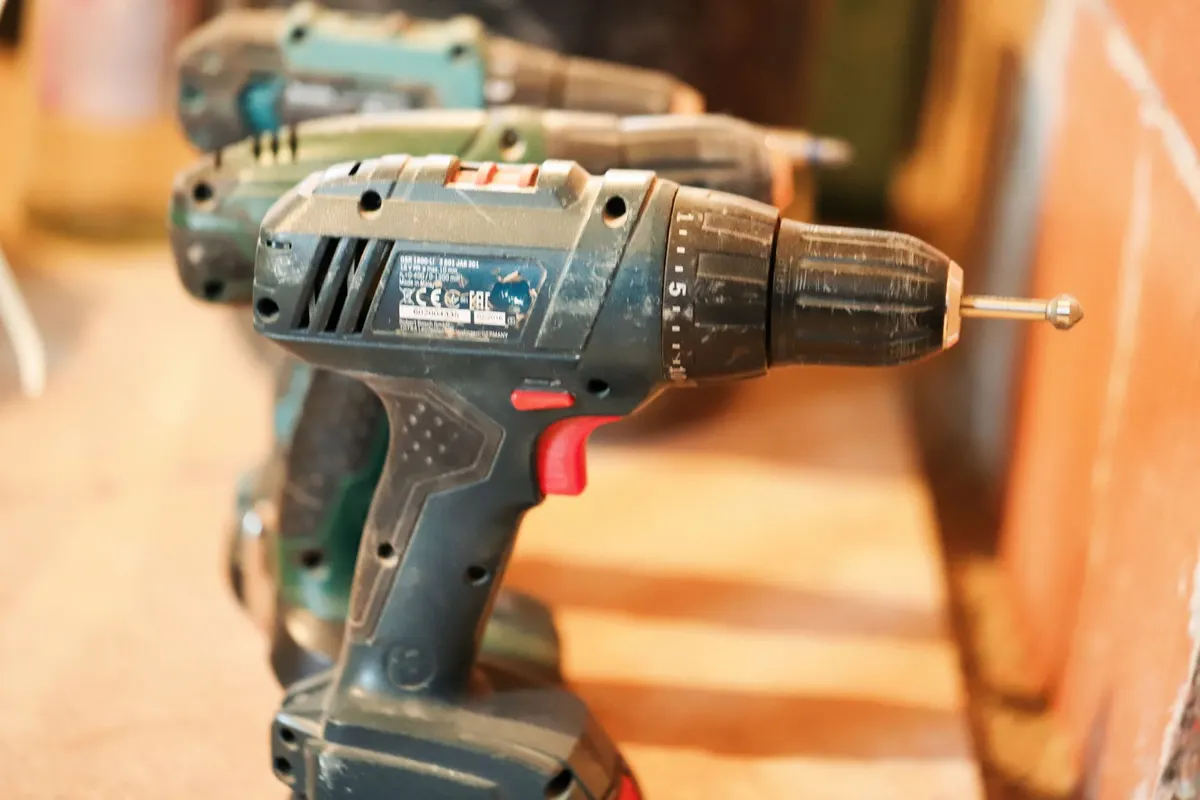
The Best Budget Cordless Drills of 2026
The best budget cordless drill in 2026 is the Ryobi ONE+ PCL206 — a complete 18V kit with a 515 in-lbs rated motor, a fine 24-position clutch, and access to the largest affordable battery platform in the US, all at a price that undercuts every brushless drill. If you want to stretch a little further for a brushless tool, the Bosch GSR18V-400 is the cheapest sound step up; if you want the rock-bottom price, the Craftsman CMCD700 and Black+Decker LDX120C are simpler tools for the lightest use.
Ryobi ONE+ PCL206 18V Drill/Driver Kit
The PCL206 is the budget drill to beat. Its brushed motor is rated at 515 in-lbs of torque, the 1/2-inch ratcheting chuck takes full-size bits, and the 24-position clutch gives fine control over fastening — specs that embarrass its price. At 2.65 lbs it is light, and the kit ships complete with a 1.5Ah battery and charger. The real edge, though, is the ONE+ platform: hundreds of affordable tools share the same pack, so a cheap first drill becomes a doorway into a large, low-cost ecosystem.
- ✓ 515 in-lbs rated torque is high for a budget brushed drill
- ✓ Full 1/2-inch ratcheting chuck and a fine 24-position clutch
- ✓ Light at 2.65 lbs, complete kit with battery and charger
- ✓ Largest affordable battery platform in the US — Ryobi ONE+
- ✗ Brushed motor is less efficient than brushless and drains packs faster
- ✗ Kit ships with a small 1.5Ah battery, limiting runtime
- ✗ 0–1,750 RPM top speed is slower than brushless drills
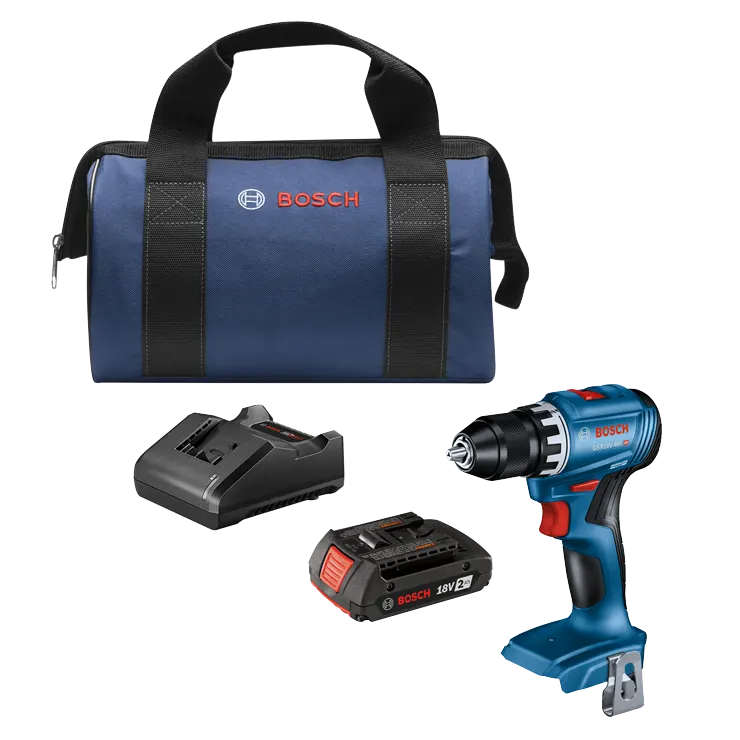
Bosch GSR18V-400 18V Compact Drill
If you can stretch past the rock-bottom tier, the Bosch is the cheapest brushless drill worth owning. It is the lightest tool here at 2 lbs 12.8 oz bare, the 20-position clutch makes for clean fastening, and the 5-year tool warranty is unusually long for the money. Its 400 in-lbs sits below the Ryobi's rating on paper, but the brushless motor runs cooler and gets more work per charge, which matters if you use the drill more than occasionally. The thinner US battery platform is the main reason to weigh it against the Ryobi.
- ✓ Cheapest genuinely good brushless drill of this group
- ✓ Lightest tool here at 2 lbs 12.8 oz bare
- ✓ Long 5-year tool warranty for a budget-priced kit
- ✓ Brushless motor is more efficient — more work per charge than the brushed picks
- ✗ Costs more than the Ryobi, Craftsman, or Black+Decker kits
- ✗ 400 in-lbs bogs sooner on big bits and lag screws
- ✗ B12 kit includes just one small 2.0Ah battery
Craftsman V20 CMCD700C1 Drill/Driver Kit
The Craftsman CMCD700 is the wallet-first pick. Its brushed motor is modest — rated at 280 unit watts out with a 0–350 / 0–1,500 RPM two-speed gearbox — and the kit ships with a small 1.3Ah battery, so this is a tool for light, occasional jobs rather than sustained work. But it is light in the hand, has a 1/2-inch keyless chuck, comes complete with a charger, and routinely sells for well under most brushless kits. For furniture assembly and the odd shelf, it does the job for less.
- ✓ One of the lowest-priced complete kits available
- ✓ Lightweight with a 1/2-inch keyless chuck
- ✓ Two-speed 0–350 / 0–1,500 RPM gearbox covers basic drilling and driving
- ✓ Backs onto the Craftsman V20 platform
- ✗ Modest 280-unit-watts-out brushed motor for light use only
- ✗ Small 1.3Ah kit battery means short runtime
- ✗ Slower 0–1,500 RPM top speed than the Ryobi or brushless drills
Black+Decker LDX120C 20V MAX Drill/Driver
The Black+Decker LDX120C is the bare-minimum option — and honest about it. It uses a 3/8-inch chuck rather than a full 1/2-inch, makes 115 in-lbs of torque at 650 RPM single-speed, and has an 11-position clutch, so it is squarely a light-duty homeowner tool for screws and small holes. It is very light, comes complete with a 1.5Ah battery and charger, and is usually the cheapest drill in this guide. If your needs stop at hanging pictures and assembling flat-pack furniture, it is enough — but the Ryobi gives you far more drill for not much more money.
- ✓ Typically the lowest sticker price in this guide
- ✓ Very light and simple — easy for casual, occasional use
- ✓ Complete kit with a 1.5Ah battery and charger included
- ✓ 11-position clutch helps avoid stripped screws on light tasks
- ✗ Smaller 3/8-inch chuck and just 115 in-lbs of torque
- ✗ Single-speed 650 RPM — no high gear for faster drilling
- ✗ Light-duty only; outgrown quickly by anyone doing real projects
How we picked the budget winners
Budget drills get judged on a different scale. Nobody buying the cheapest tool in the aisle expects a 1,400 in-lb hammer drill — they want the most usable, complete drill they can get for the least money, with no nasty surprises. So this guide ranks four genuinely affordable cordless drills on the things that actually matter at this price: how much real work the tool can do, whether the kit is complete, how forgiving it is for light fastening, and how good a platform it buys into for the future. We have not run a controlled lab test and we are not going to pretend otherwise; the rankings draw on verified manufacturer specifications, the US kit configurations actually sold, and the consistent picture from owner reports.
Three of the four are budget specialists — the Ryobi PCL206, Craftsman CMCD700, and Black+Decker LDX120C — and the fourth, the Bosch GSR18V-400, is included as the cheapest of the established brushless drills, the natural step up for anyone willing to spend a little more. Lining the budget tools up against that brushless benchmark makes the trade-offs concrete rather than abstract.
What matters when you buy a budget drill
Four considerations separate a smart budget buy from a frustrating one.
Real usable power, not just the headline number. Torque ratings across brushed and brushless motors are not directly comparable, so a budget drill's spec sheet can mislead. The Ryobi's 515 in-lbs brushed rating, the Craftsman's 280 unit-watts-out, and the Black+Decker's 115 in-lbs are all measured differently, but they sketch a clear hierarchy of capability: the Ryobi has ample power for budget tasks, the Craftsman is modest, and the Black+Decker is light-duty only. What you care about is whether the tool bogs on the work you actually do.
Chuck size sets your bit options. A 1/2-inch chuck takes larger bits and grips them more securely; a 3/8-inch chuck limits you to smaller work. The Ryobi and Craftsman both use 1/2-inch chucks, while the Black+Decker's 3/8-inch chuck is part of what marks it as the lightest-duty pick here.
Kit completeness is the whole point at this price. A budget buyer almost never already owns batteries, so a complete kit — battery, charger, and case in the box — is essential. All four picks ship complete, but the battery sizes vary: the Craftsman's 1.3Ah and the Ryobi's and Black+Decker's 1.5Ah packs are all small, so runtime is limited and a spare pack is a worthwhile early add-on.
The platform you join outlives the drill. A cheap drill is often someone's first tool, and the battery system it uses determines what they can add later. Ryobi ONE+ is the deepest affordable platform in the US by a wide margin; Craftsman V20 and Black+Decker 20V MAX are smaller; Bosch's 18V line is thinner still. That depth is a real reason the Ryobi tops this list.
Best budget overall: Ryobi ONE+ PCL206
The PCL206 wins because it offers the most real drill for the least money without feeling like a toy. Its brushed motor is rated at 515 in-lbs — a healthy figure for the price — and it pairs that with a full 1/2-inch ratcheting chuck and a 24-position clutch that gives fine, forgiving control over fastening. At 2.65 lbs it is light and easy to handle, and the kit ships complete with a battery and charger. The decisive advantage is the ONE+ platform: hundreds of affordable tools share the same 18V pack, so the cheap drill you buy today is the entry point to a large, low-cost ecosystem. Its limits are honest ones — the brushed motor is less efficient than a brushless drill and drains the small 1.5Ah kit battery faster, and the 0–1,750 RPM top speed is slower than the brushless options — but none of that undercuts its value at the price.
Best brushless on a budget: Bosch GSR18V-400
For the buyer willing to spend a bit more, the Bosch is the cheapest brushless drill genuinely worth owning. It is the lightest tool in this guide at 2 lbs 12.8 oz bare, its 20-position clutch makes for clean, repeatable fastening, and the 5-year tool warranty is remarkably long for the money. The brushless motor is the reason to step up: it runs cooler, lasts longer, and squeezes more work out of each charge than any brushed budget drill, which matters once you use the tool more than occasionally. Its 400 in-lbs sits below the Ryobi's brushed rating on paper, but that comparison is apples-to-oranges, and in practice the Bosch fastens cleanly and drills small-to-medium holes without complaint. The reasons it sits second here rather than first are simply price — it costs more than the three budget specialists — and Bosch's thinner US platform.
Best rock-bottom value: Craftsman V20 CMCD700C1
The Craftsman CMCD700 is for the buyer whose first question is the price. Its brushed motor is modest — rated at 280 unit watts out, with a two-speed 0–350 / 0–1,500 RPM gearbox — and the kit includes a small 1.3Ah battery, so this is a light, occasional-use tool rather than something for sustained work. What it gets right is the basics: it is light in the hand, uses a useful 1/2-inch keyless chuck, ships complete with a charger, and routinely costs well under the brushless kits. For assembling furniture, hanging the odd shelf, and general household fastening, it does the job and saves real money. Push it toward big bits or long sessions and the modest motor and tiny battery show their limits, which is exactly why it ranks below the more capable Ryobi.
Best ultra-cheap pick: Black+Decker LDX120C
The Black+Decker LDX120C is the bare-minimum drill, and we rank it honestly as such. It uses a 3/8-inch chuck rather than a 1/2-inch, makes 115 in-lbs of torque at a single 650 RPM speed, and has an 11-position clutch — a specification that places it squarely in light-duty homeowner territory for screws and small holes. Its virtues are simplicity, low weight, a complete kit with a 1.5Ah battery and charger, and usually the lowest sticker price in this guide. If your needs genuinely stop at hanging pictures and assembling flat-pack furniture, it is enough drill. But the gap to the Ryobi is large for not much more money — a 1/2-inch chuck, a two-speed gearbox, far more rated torque, and a deeper platform — so we would steer most buyers up one rung unless price is the only consideration.
Where it makes sense to spend a little more
The honest budget advice is that the very cheapest tool is not always the best value. The jump from the Black+Decker to the Ryobi buys a bigger chuck, a second gear, more power, and a far deeper platform for a modest difference — money well spent for anyone doing more than the lightest tasks. The jump from the Ryobi to the brushless Bosch buys efficiency, longevity, and a long warranty, which pays back for regular users but is optional for occasional ones. Identify how much you will actually use the drill, and the right rung on this ladder becomes obvious: rock-bottom for rare use, the Ryobi for the best all-round budget value, and the Bosch when efficiency starts to matter.
A note on testing and honesty
This is an analytical budget buying guide, not a controlled lab shootout, and we will not dress it up as one. The rankings come from verified manufacturer specifications, the kit configurations actually sold in the US, and the weight of owner experience, reframed around getting the most usable drill for the least money. Torque numbers measured on different scales are flagged as such rather than compared as if they were equivalent, and where a figure is unavailable we say so. The goal is to steer a budget buyer to the drill that does their real work, comes complete in the box, and joins a platform worth growing into.
Advertisement
Frequently asked questions
- What is the best budget cordless drill in 2026?
- The best budget cordless drill in 2026 is the Ryobi ONE+ PCL206 — a complete kit with a 515 in-lbs rated motor, a full 1/2-inch chuck, a fine 24-position clutch, and access to the huge, affordable Ryobi ONE+ platform, all at a price below every brushless drill. If you want a brushless tool, the Bosch GSR18V-400 is the cheapest sound upgrade; for the rock-bottom price the Craftsman CMCD700 and Black+Decker LDX120C are simpler light-duty options.
- Is it worth paying more for a brushless drill on a budget?
- It is worth it if you will use the drill regularly — a brushless motor like the Bosch GSR18V-400's runs cooler, lasts longer, and gets noticeably more work out of each battery charge, which adds up over time. If you only reach for a drill occasionally, a well-made brushed budget tool like the Ryobi PCL206 or Craftsman CMCD700 will save you money and still handle the work, so the brushed pick is the smarter spend for light use.
- How much should I spend on a cordless drill?
- For occasional homeowner use you do not need to spend much — a complete brushed kit like the Ryobi PCL206 or Craftsman CMCD700 covers furniture assembly, shelves, and general fastening for less than a premium tool. Stepping up to the cheapest good brushless drill, the Bosch GSR18V-400, costs more but pays back in efficiency and longevity if you use the drill regularly. Only frequent heavy users need to spend up to a high-torque drill.
- Why does the cheap Ryobi list more torque than the pricier Bosch?
- Because the Ryobi PCL206's 515 in-lbs is a brushed-motor rating and the Bosch GSR18V-400's 400 in-lbs is a brushless rating, and the two are not directly comparable. A higher peak torque number does not mean more usable work — the Bosch's brushless motor sustains its output more efficiently and runs longer per charge. Treat the Ryobi's figure as a sign it has ample power for budget tasks, not proof it outperforms the Bosch overall.
- Does a budget drill need a 1/2-inch chuck?
- A 1/2-inch chuck is better because it accepts larger bits and grips round-shank bits more securely, which is why we rank the 1/2-inch Ryobi and Craftsman above the 3/8-inch Black+Decker. A 3/8-inch chuck is fine for screws and small holes but limits you on big spade and self-feed bits. If you expect to do anything beyond the lightest tasks, choose a budget drill with a 1/2-inch chuck.
- Which budget drill platform should I buy into?
- If you want the widest selection of affordable tools to add later, the Ryobi ONE+ platform is the strongest budget ecosystem in the US, which is a major point in the PCL206's favor. Craftsman V20 and Black+Decker 20V MAX are smaller but serviceable, and Bosch's 18V line is thinner still. Since your first drill determines which batteries you share going forward, the platform's depth is worth weighing alongside the drill itself.