

Best Budget Angle Grinders of 2026
The best budget angle grinder for most people is the DeWalt DWE402, an 11-amp corded workhorse that delivers professional-level grinding and cutting for around $100. If you already own batteries on a cordless platform, the Milwaukee 2880-20 is the premium cordless pick with advanced safety features, while the Makita GA4534 offers the lightest corded option for overhead work. The Ryobi PCL445B is the cheapest cordless entry for Ryobi ONE+ owners.
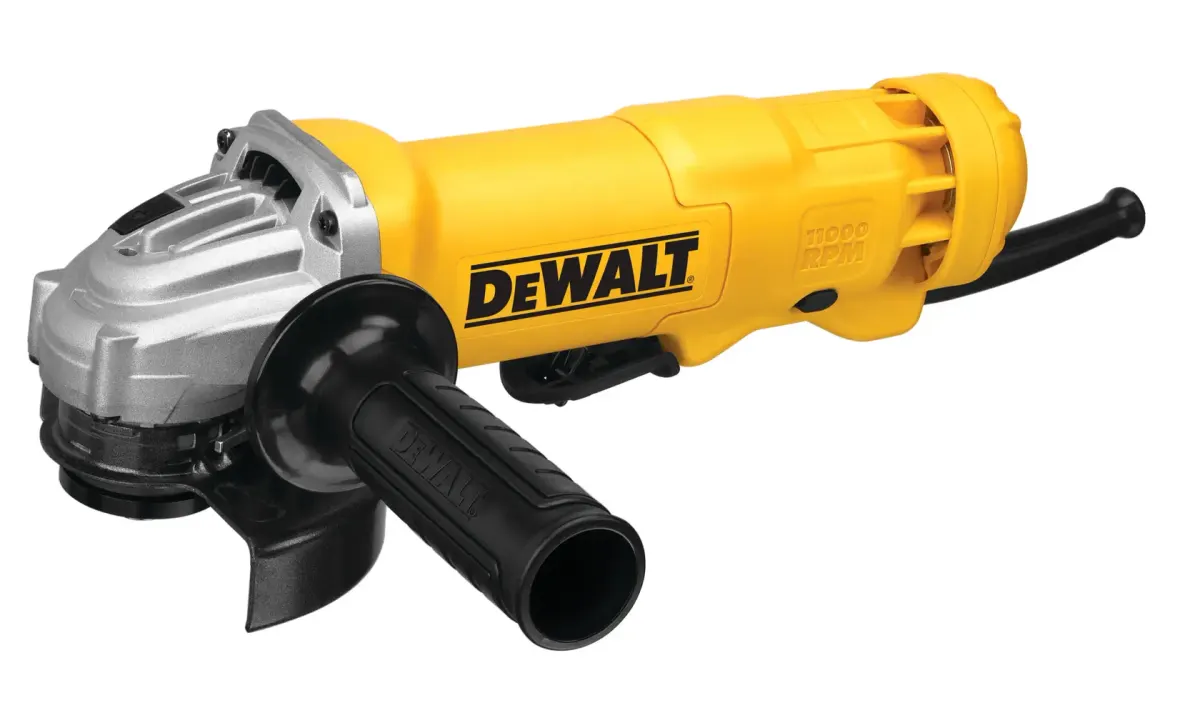
DeWalt DWE402 11-Amp Angle Grinder
The DWE402 delivers the most power per dollar in the corded category: 11 amps and 11,000 RPM in a tool that costs about $100. For buyers on a budget who primarily grind in a shop or garage, this is the no-compromise pick. It does not have variable speed or electronic kickback detection, but its paddle safety switch, tool-free wheel release, and Dust Ejection System make it a refined tool at a price that undercuts almost every cordless alternative once you account for battery cost.
- ✓ 11-amp motor sustained heavy grinding better than any cordless or 6-amp corded option
- ✓ Paddle switch with lock-off shuts off automatically when released
- ✓ Tool-free Quick-Change wheel release and one-touch guard adjustment
- ✓ Dust Ejection System extends brush life in masonry environments
- ✗ No variable speed, limiting use for polishing and finishing
- ✗ Heavier than the Makita GA4534 (4.6 vs 4.2 lbs)
- ✗ No electronic kickback detection
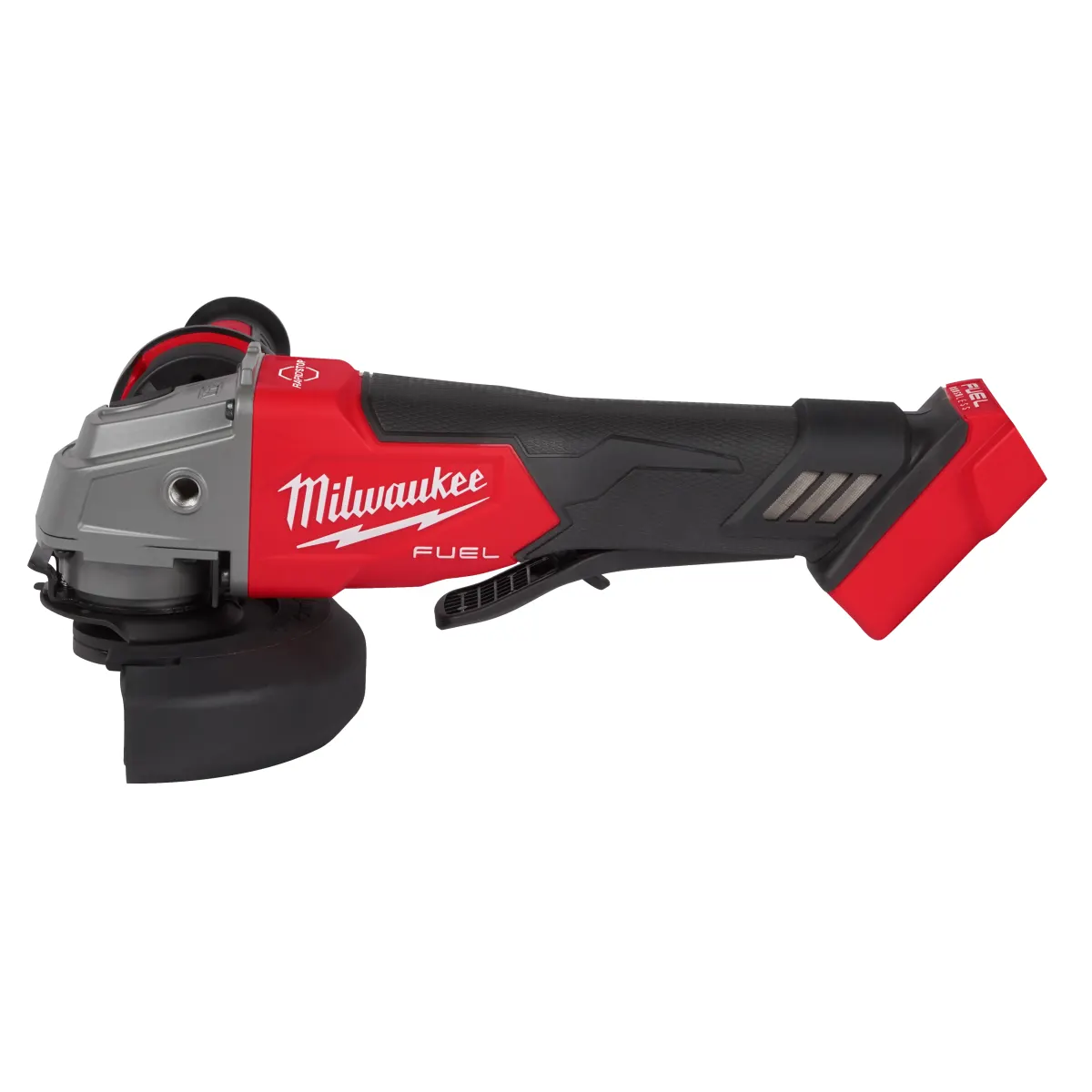
Milwaukee 2880-20 M18 FUEL Grinder
For buyers who already own M18 batteries and need a grinder that matches corded power without a cord, the 2880-20 is the top choice. Its POWERSTATE brushless motor delivers 11A-equivalent output, and the RAPIDSTOP brake and electronic kickback clutch are genuine safety upgrades over any corded grinder at any price. The 5-inch disc compatibility and 5-year warranty further justify the premium. Budget-conscious shoppers should note the bare-tool price of $230-plus requires an M18 battery, pushing total cost to $300 or more.
- ✓ BRUSHLESS motor matches corded 11A output
- ✓ RAPIDSTOP brake stops disc in 2 seconds
- ✓ Electronic kickback clutch mitigates bind accidents
- ✓ Accepts both 4-1/2 and 5-inch discs
- ✗ Bare tool only — requires M18 battery (add $80–$150)
- ✗ Heavier than corded alternatives (5.4 lbs bare)
- ✗ Lower no-load RPM (8,500) than corded grinders (11,000)
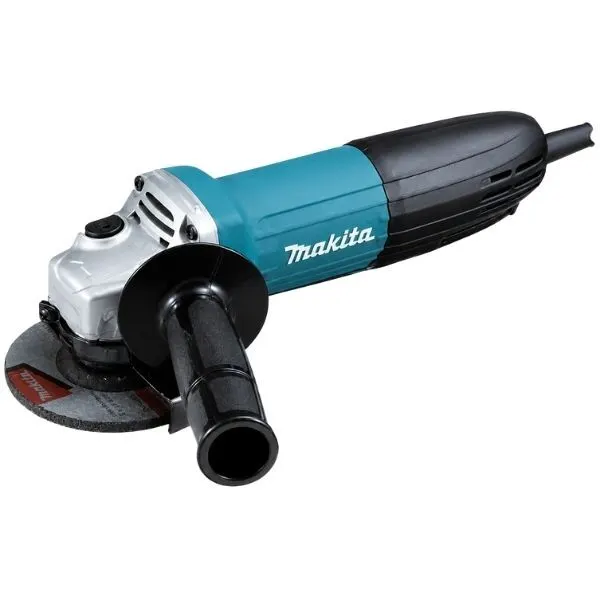
Makita GA4534 6-Amp Angle Grinder
The GA4534 is the lightest 4-1/2-inch corded grinder at 4.2 lbs with the slimmest barrel grip, making it the best value for users who prioritize ergonomics over raw power. Its 6-amp motor handles tile cutting, light grinding, and rust removal with ease, but it bogs under sustained heavy stock removal. For $65–$75, it is the cheapest paddle-switch grinder from a major brand. The shorter 1-year warranty is a trade-off compared to DeWalt's 3-year coverage.
- ✓ Lightest in class at 4.2 lbs with narrow grip for overhead work
- ✓ Paddle switch with lock-off for safety
- ✓ AC/DC switch runs on generator or welding DC power
- ✓ All-ball bearing construction and metal gear housing
- ✗ 6-amp motor struggles with sustained heavy grinding
- ✗ No dust ejection system
- ✗ 1-year warranty is shorter than competitors'
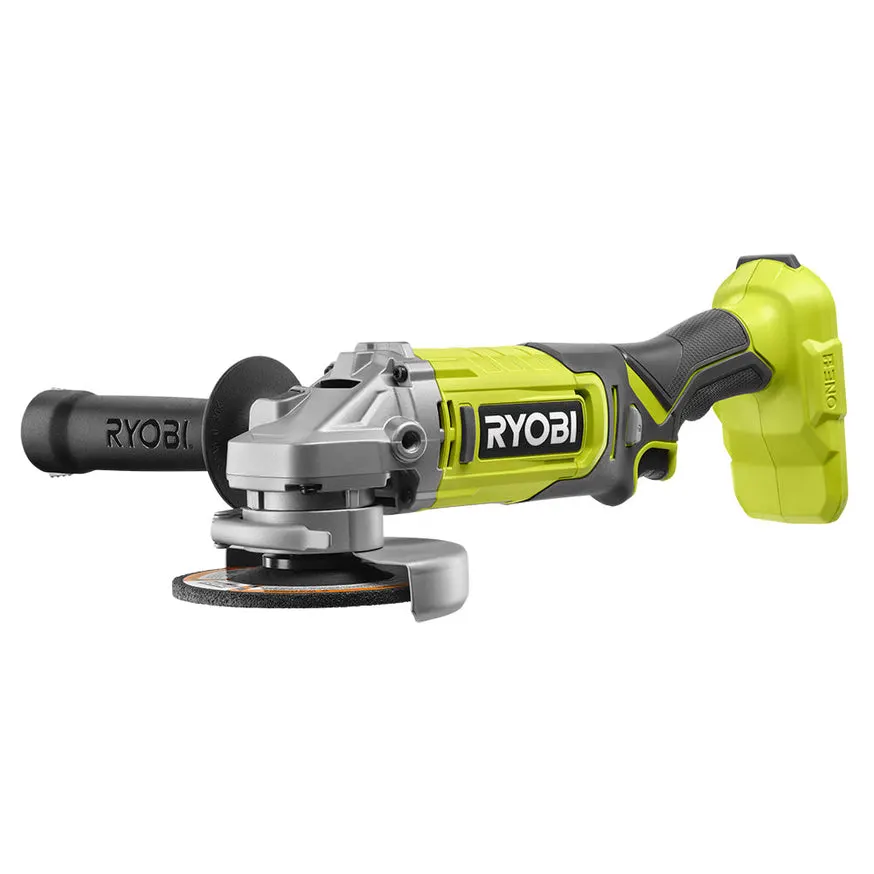
Ryobi PCL445B ONE+ Angle Grinder
The PCL445B is the cheapest name-brand cordless angle grinder at $55–$65 bare, and it offers real functionality for Ryobi ONE+ owners. Its brushed motor runs at 9,000 RPM — slower than corded options but sufficient for tile, rebar, and rust removal. The tool-free guard and on-board wrench storage show thoughtful design. However, the slide switch (not paddle) means it stays running if released, and the 6.18-lb weight plus battery makes it heavier than any corded grinder. Best for infrequent light tasks.
- ✓ Lowest priced major-brand cordless grinder
- ✓ Compatible with Ryobi ONE+ batteries (over 300 tools)
- ✓ Tool-free guard adjustment and 3-position side handle
- ✓ On-board disc wrench storage
- ✗ Slide switch does not shut off on release
- ✗ Brushed motor runs hot under sustained use
- ✗ Heaviest in comparison (6.18 lbs bare)
How we picked
This guide ranks four angle grinders for budget-conscious buyers who want the best value without overspending on features they may never use. We selected three corded models — the DeWalt DWE402, Makita GA4534, and the premium cordless Milwaukee 2880-20 and Ryobi PCL445B — because they represent the most common compromises buyers face: power vs. weight, corded vs. cordless, and price vs. safety features. Every claim is drawn from published specifications, kit configurations, warranty terms, and consistent themes in owner reports.
The ranking emphasizes value for money, but not by the lowest price alone. The DeWalt DWE402 ranks first because it offers near-professional power at a price that beats most cordless options once you include battery costs. The Milwaukee 2880-20 ranks second for buyers who already own M18 batteries and need cordless capability without sacrificing grinding performance. The Makita GA4534 balances a light weight and paddle safety switch with a lower motor output, making it ideal for lighter tasks where ergonomics matter. The Ryobi PCL445B offers the cheapest entry into cordless angle grinding but cuts corners on motor design and safety.
What to look for in a budget angle grinder
Four factors determine which grinder is right for you: power source, motor output, safety features, and ergonomics.
Corded vs. cordless: Corded grinders deliver more sustained power at a lower price, with no battery disposal or runtime concerns. Cordless models offer portability and are worth the premium if you have existing batteries. For most budget shoppers, a corded grinder provides the best performance per dollar.
Motor amps and RPM: Amperage is the most direct indicator of sustained power. 11-amp models like the DeWalt DWE402 handle heavy grinding without bogging. 6-amp models like the Makita GA4534 suffice for light tasks but run hot under continuous load. Brushless motors (Milwaukee 2880-20) offer better efficiency and longer life than brushed motors (Ryobi PCL445B). No-load RPM typically ranges from 8,500 to 11,000; higher RPM enables faster cutting with small-diameter discs.
Switch type: A paddle switch that shuts off when released is safer than a slide switch that stays locked on, especially for inexperienced users. The DWE402 and GA4534 both use paddle switches; the Ryobi PCL445B uses a slide switch, which requires the user to remember to disengage it.
Weight and grip: Lighter grinders (Makita GA4534 at 4.2 lbs) reduce fatigue during overhead or extended use. Heavier grinders provide more stability but tire you faster. The Ryobi PCL445B is the heaviest at 6.18 lbs bare.
Best corded value: DeWalt DWE402
The DWE402 is the safest recommendation for a budget buyer who needs real grinding power. Its 11-amp motor runs at 11,000 RPM and sustains heavy stock removal without the speed drop that plagues 6-amp corded and many cordless grinders. The paddle switch with lock-off stops the tool immediately when released, and the Quick-Change wheel release lets you swap discs without a wrench. The Dust Ejection System vents debris away from the motor, extending brush life. At around $100, it is the strongest corded grinder per dollar from a tier-one brand.
The DWE402 lacks variable speed — a limitation if you plan to polish or use wire wheels at lower speeds — and has no electronic kickback detection. But for the price, it is the most powerful and well-equipped grinder in this guide.
Best cordless for pros: Milwaukee 2880-20
The 2880-20 is the pick for budget buyers who already own M18 batteries and need cordless capability. Its brushless motor matches corded 11-amp performance, and safety features like RAPIDSTOP (braking disc in under 2 seconds) and electronic kickback detection are absent from every corded grinder at any price. Accepts both 4-1/2-inch and 5-inch discs, and carries a 5-year warranty.
For new buyers, the total cost of $300+ (bare tool plus battery) approaches the cost of several corded grinders; the DWE402 is a better value if you don't need cordless. For existing M18 users, the 2880-20 is a significant upgrade over the Ryobi.
Best lightweight corded: Makita GA4534
The GA4534 is the lightest 4-1/2-inch corded grinder at 4.2 lbs, with the slimmest barrel grip. Its 6-amp motor runs at 11,000 RPM and handles tile cutting, light grinding, and rust removal well, but it bogs under sustained heavy loads. The paddle switch and AC/DC capability add versatility. At $65–$75, it is the cheapest paddle-switch grinder from a major brand. The 1-year warranty is shorter than DeWalt's 3 years, but the weight savings make it ideal for overhead and vertical work.
Best budget cordless: Ryobi PCL445B
The PCL445B is the budget cordless entry for Ryobi ONE+ owners. Its brushed motor reaches 9,000 RPM — slower than corded options but adequate for light tasks. The tool-free guard and 3-position side handle are useful, and the on-board wrench storage is thoughtful. However, the slide switch does not shut off on release, and the 6.18-lb bare weight plus battery makes it the heaviest grinder here. Best for infrequent use where platform compatibility is key.
Final thoughts
Your best budget angle grinder depends on your existing tools and typical tasks. For heavy grinding near an outlet, the DeWalt DWE402 is the clear winner. For light work with cordless convenience, the Makita GA4534 is a lightweight, safe choice. Cordless users on M18 get premium safety and power with the Milwaukee 2880-20; Ryobi ONE+ owners can save the most with the PCL445B. None of these grinders is wrong for its intended user — match the award label to your budget and workload.
Advertisement
Frequently asked questions
- What is the best budget angle grinder for heavy use?
- The DeWalt DWE402 is the best budget angle grinder for heavy use. Its 11-amp motor delivers power comparable to cordless grinders costing three times more, and its paddle switch provides automatic shutoff. At around $100, it outperforms every cordless option in sustained grinding until you reach the Milwaukee 2880-20 at over $200.
- Should I buy a corded or cordless angle grinder on a budget?
- If you work near an outlet, a corded grinder like the DeWalt DWE402 or Makita GA4534 offers more power per dollar — no battery cost, higher RPM, and lower weight. Cordless makes sense if you already own batteries (e.g., Ryobi ONE+ or Milwaukee M18) or work where extension cords are impractical. For a first grinder on a tight budget, corded is the better value.
- How much power do I need from an angle grinder?
- For occasional light tasks like cutting tile, removing rust, or trimming rebar, 6 amps or a brushed 18V motor is adequate. For frequent metal fabrication, weld grinding, or prolonged concrete cutting, an 11-amp corded grinder or a brushless cordless model is necessary to maintain speed and avoid overheating.
- What safety features matter in a budget angle grinder?
- A paddle switch that shuts off when released is the most important safety feature — it reduces risk if the grinder kicks back or is dropped. Both the DeWalt DWE402 and Makita GA4534 have paddle switches. Electronic disc brakes and kickback detection are premium features found on the Milwaukee 2880-20. The Ryobi PCL445B uses a slide switch that stays on, which requires more discipline to use safely.
- Is the Makita GA4534 powerful enough for a homeowner?
- Yes — for a homeowner who needs to cut tile, grind a few welds, or remove rust occasionally, the GA4534's 6-amp motor is sufficient. Its light weight and ergonomic grip make it comfortable for shorter tasks. Skip it if you plan to spend hours grinding thick steel or cutting lots of rebar — the DeWalt DWE402 is better for heavy jobs.
- Can I use a 5-inch disc on a 4-1/2-inch grinder?
- Only the Milwaukee 2880-20 is designed to accept both 4-1/2-inch and 5-inch discs. Using a 5-inch disc on a grinder rated only for 4-1/2-inch, like the DeWalt DWE402 or Makita GA4534, is unsafe because the guard may not fully cover the disc and the motor may be strained. Always use discs within the manufacturer's stated size range.