
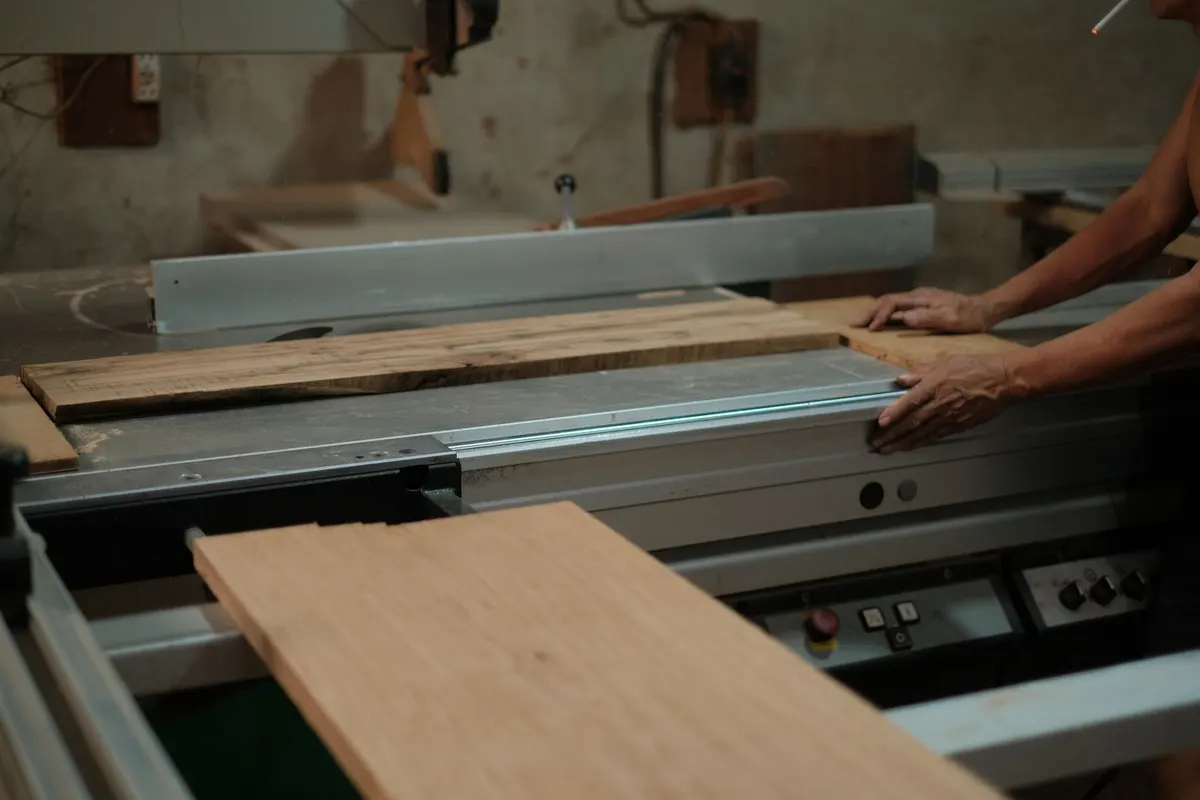
The Best Table Saws of 2026
The best table saw for most people in 2026 is the DeWalt DWE7485 — a compact 8-1/4" jobsite saw that hits the right balance of portability, cut capacity, and price at around $350. If you need a full 10" blade and a wider rip fence for sheet goods, the Metabo HPT C10RJS is the contractor saw that makes the most sense under $420. Budget shoppers who want a stand included get the best deal from the Skil TS6307-00, while the Bosch GTS18V-08N is the only credible cordless option for site crews that move constantly.
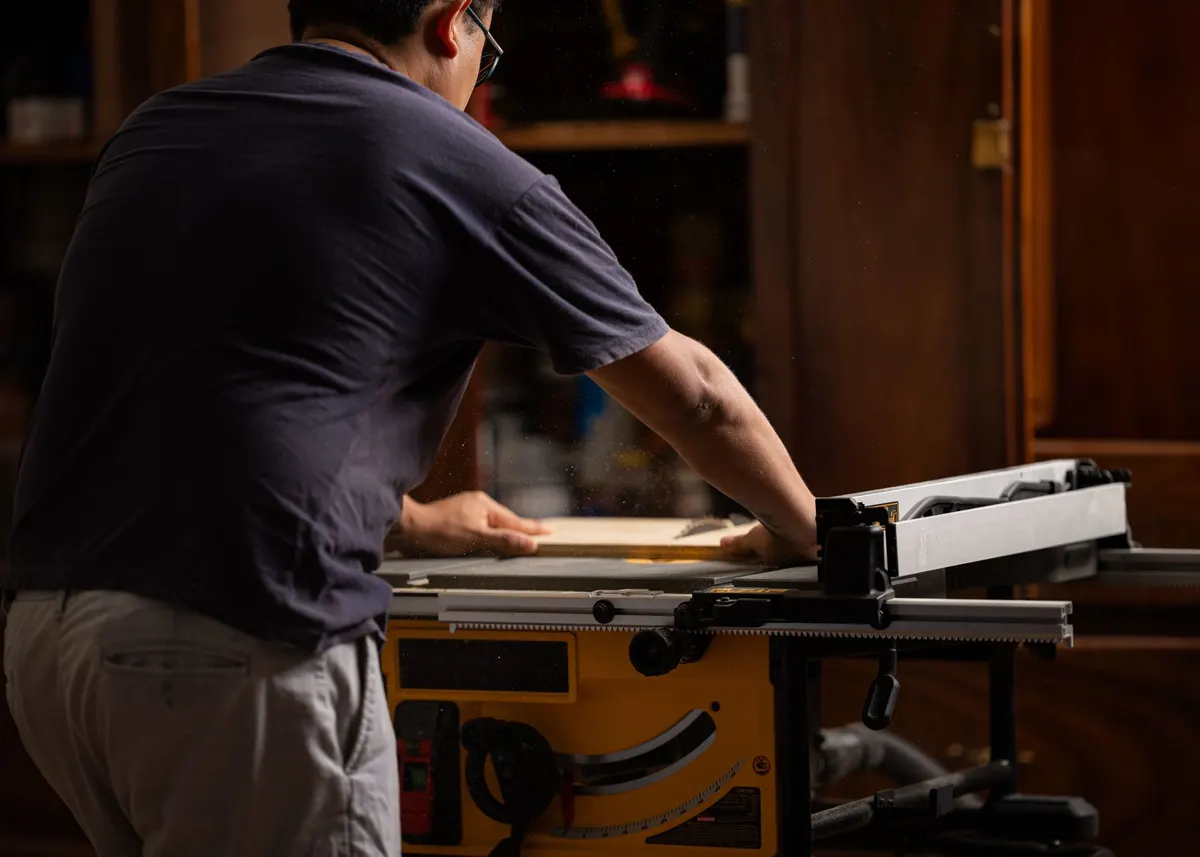
DeWalt DWE7485 8-1/4" Compact Jobsite Table Saw
The DWE7485 is the easiest table saw to justify for a remodeler, finish carpenter, or serious DIYer who needs real ripping capacity without a truck bed full of equipment. Its 15-amp motor spins the blade at 5,800 RPM — the highest no-load speed in this guide — and the rack-and-pinion fence adjusts smoothly enough that repeat cuts stay accurate without fighting the rail. At 46 lbs it loads and unloads alone, and a 24-1/2" right rip capacity handles face-frame stock and most solid lumber without a work-around. The compact 8-1/4" blade is the only genuine limitation: dado stacks are not compatible, and sheet-goods ripping requires a second pass on wider panels.
- ✓ 5,800 RPM no-load speed — highest in this guide — for clean cuts in hardwood
- ✓ Rack-and-pinion fence adjusts without play; repeat cuts are reliable
- ✓ 46 lbs loads and unloads without a helper
- ✓ 24-1/2" right rip capacity covers face-frame and solid lumber
- ✗ 8-1/4" blade is incompatible with standard dado stacks
- ✗ Stand sold separately, which adds cost compared to the Skil and Metabo HPT
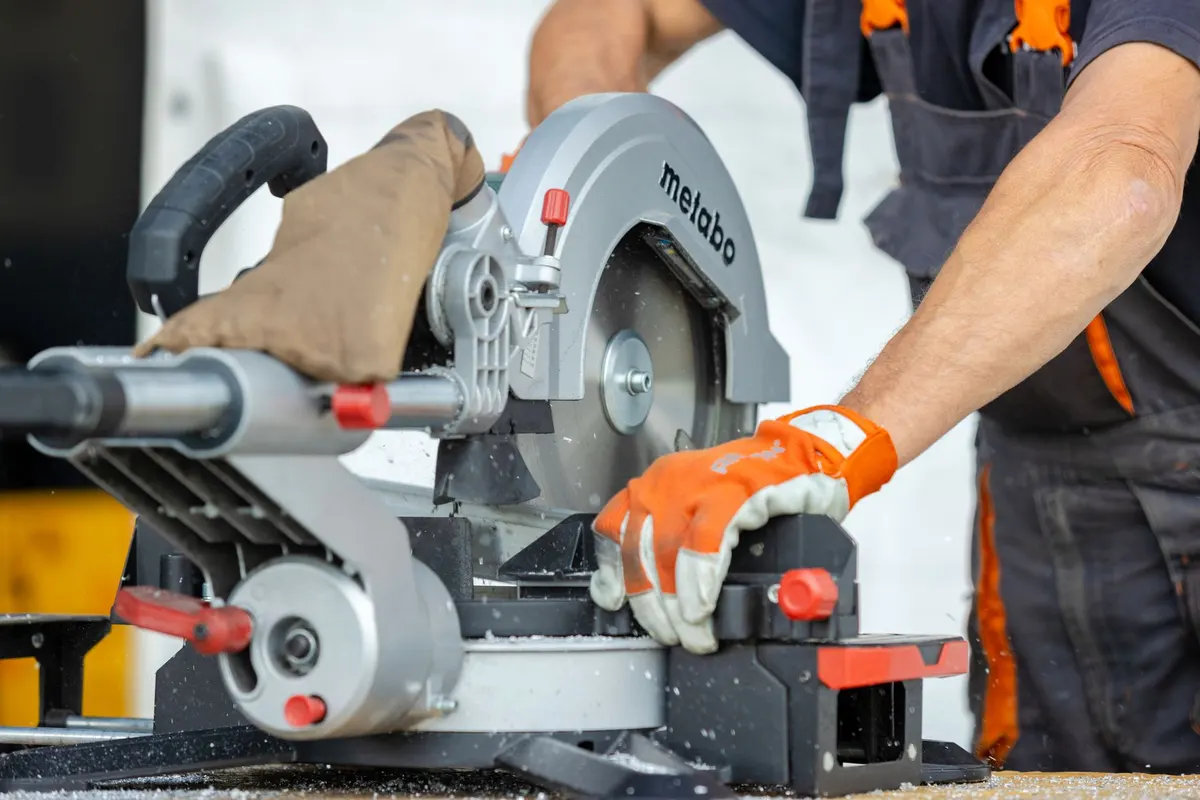
Metabo HPT C10RJS 10" Contractor Table Saw
When cut capacity matters more than portability, the C10RJS is the contractor saw to buy. A 35" right rip capacity is 10" wider than the DeWalt's, a 22" left rip covers panel ripping in both directions, and the 3-1/8" depth at 90° lets it clear 3" framing lumber in one pass. The fold-and-roll stand is included, so the price of $350–420 already bundles what the DeWalt charges extra for. At 100 lbs it stays put on a job site but takes two people to load — the trade-off for a larger table and a full-size blade that accepts standard dado inserts.
- ✓ 35" right / 22" left rip capacity handles full sheet goods and wide panel ripping
- ✓ Fold-and-roll stand included at no extra cost
- ✓ 3-1/8" depth at 90° clears standard framing lumber in one pass
- ✓ 10" blade accepts standard dado stacks
- ✗ 100 lbs requires two people to move and load onto a truck
- ✗ 4,500 RPM no-load speed is the lowest in this guide
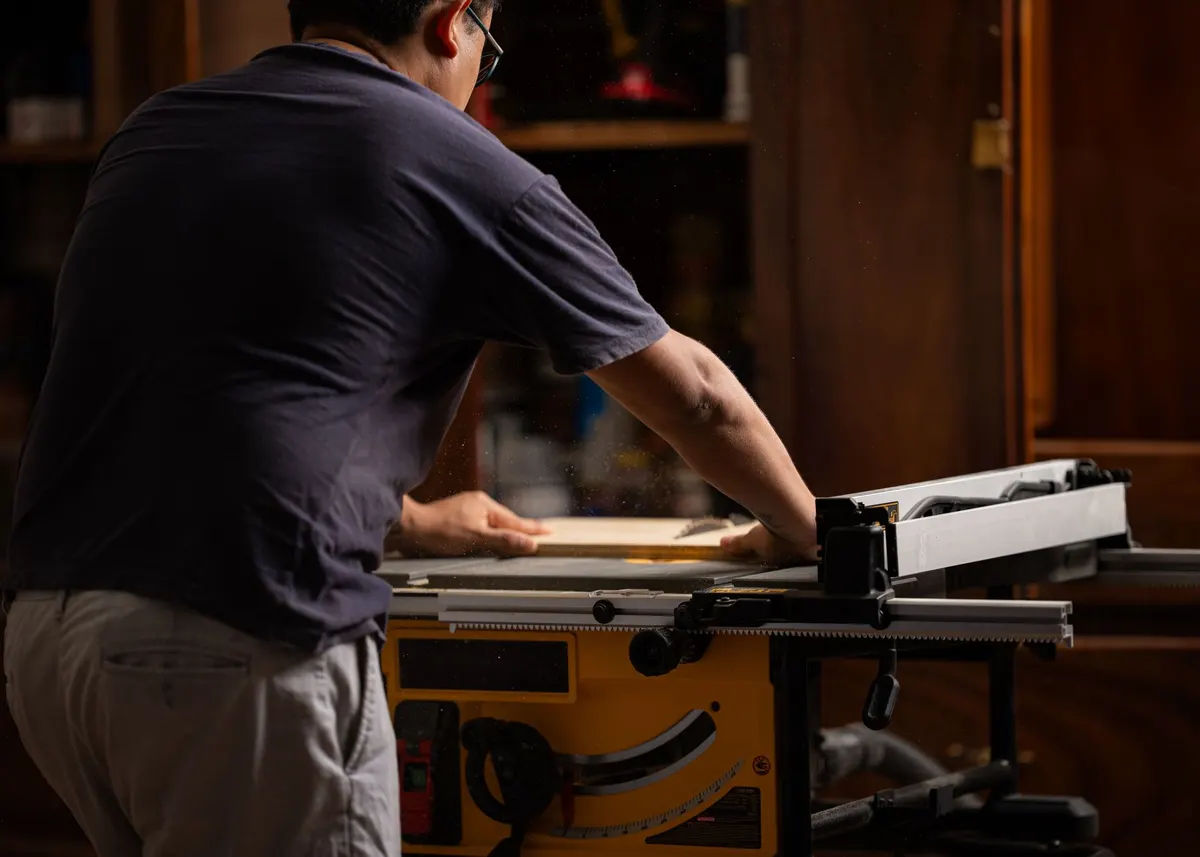
Skil TS6307-00 10" Table Saw with Folding Stand
The Skil TS6307-00 is the pick for the budget-conscious homeowner or weekend builder who wants a 10" saw and a stand without paying over $300. Its 3-1/2" depth at 90° is the deepest cut in this guide, and the 25-1/2" right rip capacity covers most lumber dimensions. The folding stand ships in the box, saving $50–80 over saws that charge separately for one. At 67 lbs it sits between the compact DeWalt and the heavy Metabo HPT — manageable with one person and a truck. The fence is functional rather than precise, and the 4,600 RPM speed puts it mid-pack, but at $270–299 there is no comparable complete package.
- ✓ 3-1/2" depth at 90° is the deepest in this guide — clears thick hardwood slabs
- ✓ Folding stand included; total package cost is the lowest of the four
- ✓ 67 lbs is a workable one-person move with a truck or van
- ✓ 25-1/2" right rip handles most standard lumber and panel widths
- ✗ Fence lacks the precision of the DeWalt's rack-and-pinion system
- ✗ Left rip capacity of 14" limits certain panel operations
Bosch GTS18V-08N 18V BITURBO 8-1/4" Table Saw
The GTS18V-08N is the only battery-powered saw in this guide and the one to buy if your site has no reliable power source or you move between locations multiple times a day. Its dual-motor BITURBO system delivers 5,500 RPM under load — close enough to the DeWalt's corded speed that cut quality in dimensional lumber is competitive. The dial micro-adjust fence is a genuine differentiator over most saws at this price, and a -2° to +47° bevel range is the widest in the guide. The bare-tool price of $449–499 is the highest here, and you will need a compatible 18V PROFACTOR battery that adds more cost, but the freedom from cords is the point.
- ✓ Cordless 18V BITURBO design — no power source or extension cord required
- ✓ Dial micro-adjust fence delivers fine, repeatable positioning
- ✓ -2° to +47° bevel range is the widest in this guide
- ✓ 44 lbs bare is lighter than the Metabo HPT and the Skil
- ✗ $449–499 bare-tool price is the highest in this guide before adding a battery
- ✗ 8-1/4" blade limits depth of cut and excludes standard dado stacks
Choosing the right table saw starts with where you use it
Table saws divide neatly by where they live and how often they move, and that distinction shapes every buying decision. A saw that stays in a garage shop can be 100 lbs with a full cast-iron table; one that rides in a contractor's truck every morning needs to load alone and weigh under 70 lbs. The four saws in this guide are all portable by design, but they cover a wide range of use cases — from an 8-1/4" compact that a solo remodeler carries up two flights of stairs to a 10" contractor saw that a framing crew sets up at a house for the duration of a job.
This guide ranks four table saws reviewed in depth against each other. The picks were chosen because they are the models most people actually cross-shop at each price point — not to pad the list with also-rans.
What the specs actually mean
Table saw specifications are a mix of genuinely useful numbers and marketing noise. Here is what to pay attention to.
Rip capacity is the most practical spec on the sheet. It tells you the widest cut you can make from the fence to the blade. A 24"–25" right rip covers solid lumber and face frames; 35" right is what you need to rip 4×8 plywood in one pass from the right side. Check both the right and left rip figures — the left rip capacity matters for cutting narrow strips safely.
No-load RPM affects cut quality in hardwoods. Higher RPM means the blade maintains speed better under load, which reduces burning and tearout in dense stock. The DeWalt's 5,800 RPM is the fastest in this guide; the Metabo HPT's 4,500 RPM is the slowest. The gap only shows in demanding cuts; for softwood framing and plywood, any of these saws is adequate.
Depth of cut at 90° determines what you can actually saw through. A 2-9/16" depth like the DeWalt clears standard 2× dimensional lumber with some margin. The Skil's 3-1/2" depth handles thick hardwood slabs and wide dados without a second pass. If you cut green timbers, thick hardwood, or large tenon cheeks, this number matters.
Fence quality decides whether you enjoy using the saw. A fence that deflects under clamping force, binds when sliding, or requires re-squaring every few cuts turns a quick rip into an exercise in frustration. The DeWalt's rack-and-pinion fence and the Bosch's dial micro-adjust system are the standouts here; the Skil's fence is functional at the price but not in the same class.
Weight is a real operating cost. Every pound you add to a portable saw is a pound you lift, carry, and load multiple times a day. There is a meaningful difference between 44 lbs (Bosch), 46 lbs (DeWalt), 67 lbs (Skil), and 100 lbs (Metabo HPT). If you move the saw solo, the lighter saws are simply easier to own.
Best compact jobsite saw: DeWalt DWE7485
The DWE7485 earns the top spot by delivering the right combination of performance, portability, and fence quality for the widest range of buyers. Its 5,800 RPM no-load speed is the fastest here, which translates to cleaner cuts in dense hardwoods and less blade drag on long rips. The rack-and-pinion fence is the most precise of the corded saws and adjusts without the lateral slop that makes budget fences infuriating on repeat cuts.
At 46 lbs the saw is a genuine one-person load — grab a handle and go. The 24-1/2" right rip covers solid lumber, face frames, door stiles, and shelf stock without a work-around. The 2-9/16" depth at 90° clears standard 2× lumber with room to spare.
The honest trade-off is the 8-1/4" blade format. Standard dado stacks do not fit, which rules the DWE7485 out for anyone who cuts box joints, dadoes, or rabbets routinely. For straight ripping and crosscutting, though, the 8-1/4" format costs nothing in practice — blades are widely available and comparably priced.
Stand sold separately is the other caveat. Add $60–80 for a compatible stand to compare total cost fairly against the Skil and Metabo HPT.
Best contractor saw: Metabo HPT C10RJS
The C10RJS is for the buyer whose primary concern is cut capacity and who accepts the weight trade-off that comes with it. At 35" right and 22" left rip capacity, it is the only saw here that rips a full 4×8 sheet in a single pass from either direction. The 10" blade accepts standard dado stacks. The 3-1/8" depth at 90° clears structural lumber, glued-up panels, and thick stock that trips up the compact saws.
The fold-and-roll stand is in the box, which matters when comparing sticker prices — the $350–420 price already includes what you pay extra for with the DeWalt. The stand folds flat for transport and rolls on the job site, which partially compensates for the 100-lb weight.
That weight is the real constraint. Two people load and unload the C10RJS safely; solo moves are awkward and risk back strain. If the saw stays on a job site for weeks at a time, the weight penalty is a one-time setup cost. If it rides in a van every morning, consider the DeWalt instead.
The 4,500 RPM no-load speed is the lowest in the guide. In hardwood ripping or long cuts in thick stock, more powerful saws will clear the same material with less burning and blade deflection.
Best value with stand: Skil TS6307-00
The Skil TS6307-00 is the answer when the budget ceiling is firm and you still want a complete 10" table saw setup. At $270–299 with a folding stand included, it undercuts the DeWalt by $80 or more once you price out a stand, and it undercuts the Metabo HPT on price while being 33 lbs lighter.
The 3-1/2" depth at 90° is the deepest in this guide — more than the Metabo HPT — which makes the Skil capable of cuts that smaller-blade saws cannot reach. The 25-1/2" right rip capacity covers most practical lumber widths. At 67 lbs it is heavy for solo loading but manageable with a pickup tailgate.
The fence is where the Skil shows its price point. It works, but it requires more micro-adjustment to hold a precise line than the rack-and-pinion systems on the premium saws. For the buyer who measures and marks each cut individually rather than relying on the fence stop for rapid repeats, the difference is minimal. For production ripping where the fence sets once and stays for 50 cuts, it matters more.
The 14" left rip capacity is the narrowest in the guide and can be a limiting factor for ripping narrow strips to the left of the blade.
Best cordless table saw: Bosch GTS18V-08N
The GTS18V-08N occupies a category by itself — the only battery-powered table saw in this guide, and arguably the only mature cordless table saw on the market at this writing. Its dual-motor BITURBO system delivers 5,500 RPM, which is close enough to the corded options that cut quality in typical framing and finish lumber is competitive.
The dial micro-adjust fence is a genuine premium feature that makes precise, repeatable rip settings straightforward. The -2° to +47° bevel range is the widest in the guide and covers compound cuts that other saws cannot reach cleanly. At 44 lbs bare, it is actually the lightest saw in this guide by tool body alone.
The cost of entry is the constraint. The $449–499 bare-tool price is already higher than every corded option here, and a compatible 18V PROFACTOR battery adds $100–150 or more. The total package cost for a complete cordless setup runs well above any of the corded alternatives. That cost only makes sense if freedom from cords and power access is a genuine operational need — roofing, remote decks, framing in unelectrified buildings. As a shop saw, the value equation does not work in the Bosch's favor.
How to match the saw to your situation
If you work alone and move the saw frequently: the DeWalt DWE7485 is the right answer — light, precise fence, fast blade, manageable price without a stand.
If you need to rip sheet goods and want dado capability: the Metabo HPT C10RJS gives you the capacity and a stand in the box, and its weight is a reasonable trade.
If your budget is the primary constraint: the Skil TS6307-00 delivers the most complete package at the lowest price, with the deepest cut in the guide.
If reliable power access is the problem, not the price: the Bosch GTS18V-08N is the saw that solves it, and its fence and bevel range are genuinely premium.
None of these saws is the wrong choice for its intended use. The differences are about fit — weight, blade format, rip capacity, and how much you need the fence to do automatically versus manually.
Advertisement
Frequently asked questions
- What size table saw blade do I need — 8-1/4" or 10"?
- A 10" blade gives you more depth of cut (typically 3" or more at 90°) and accepts standard dado stacks, which matters for cabinet joinery and cross-grain grooves. An 8-1/4" blade — found on the DeWalt DWE7485 and the Bosch GTS18V-08N — shaves weight and allows a more compact saw body, which is the right trade-off for a crew that moves the saw every day. If the saw mostly stays in one place and you cut sheet goods or thick lumber, go 10".
- Do I need a table saw with a stand?
- A stand makes an enormous practical difference for solo work — you can set up, cut, and break down without a helper or a makeshift outfeed table. The Skil TS6307-00 and the Metabo HPT C10RJS both include a stand, which is a real part of why their value per dollar is strong. The DeWalt DWE7485 and Bosch GTS18V-08N sell the stand separately, so factor that $60–90 into your comparison.
- Can a jobsite table saw replace a cabinet saw for furniture or cabinet work?
- For light furniture, face frames, and small boxes, yes — a quality jobsite saw with a tuned fence produces accurate cuts. For production cabinet work, wide panel glue-ups, or demanding hardwood milling, a cabinet saw's heavier cast-iron top, larger motor, and more rigid fence system become important. Think of the jobsite saws in this guide as capable general-purpose tools rather than substitutes for a 700-lb contractor or cabinet saw.
- How important is rip capacity, and how much do I actually need?
- Rip capacity determines the widest cut you can make from the fence to the blade. A 24"–25" right rip — what the DeWalt and Skil provide — covers face frames, shelving, and most solid lumber. You need 35" or more to rip a full sheet of plywood in one pass from the right; the Metabo HPT C10RJS is the only saw here that clears that threshold. If you rip plywood regularly, this spec matters more than almost anything else.
- Is a cordless table saw worth the extra cost?
- A cordless saw like the Bosch GTS18V-08N makes sense when reliable power access is the constraint — roofing, decking, or remote framing where a generator is inconvenient. If you always work near an outlet or have a generator on site, the corded saws here deliver equal or better performance for significantly less money. The cordless premium is for the cord-free convenience, not for superior cut quality.
- What safety features should I look for on a jobsite table saw?
- All four saws here include a riving knife (which keeps the kerf open and prevents kickback), a blade guard, and an anti-kickback pawl. Before buying any table saw, confirm the riving knife is easy to install and remove for dado cuts, that the guard system does not obstruct sightlines on narrow rips, and that the on/off paddle is easy to hit with a knee or hip in an emergency. These are minimum standards — none of the picks here skips them.