
Best Leaf Blowers for Large Yards (2026)
Clearing a half-acre or more is a different task than tidying a suburban lot — you need sustained airflow, enough battery runtime to finish without a mid-job swap, and a tool light enough that your arms still work by the end. CFM, not MPH, is what moves large volumes of leaves across long distances, and both the EGO LB6504 and the Ryobi RY404014BTL deliver 650 CFM at the top of this class. The Makita XBU02Z and Milwaukee 2724-20 are capable machines, but their 473 CFM and 450 CFM outputs are better matched to smaller properties.
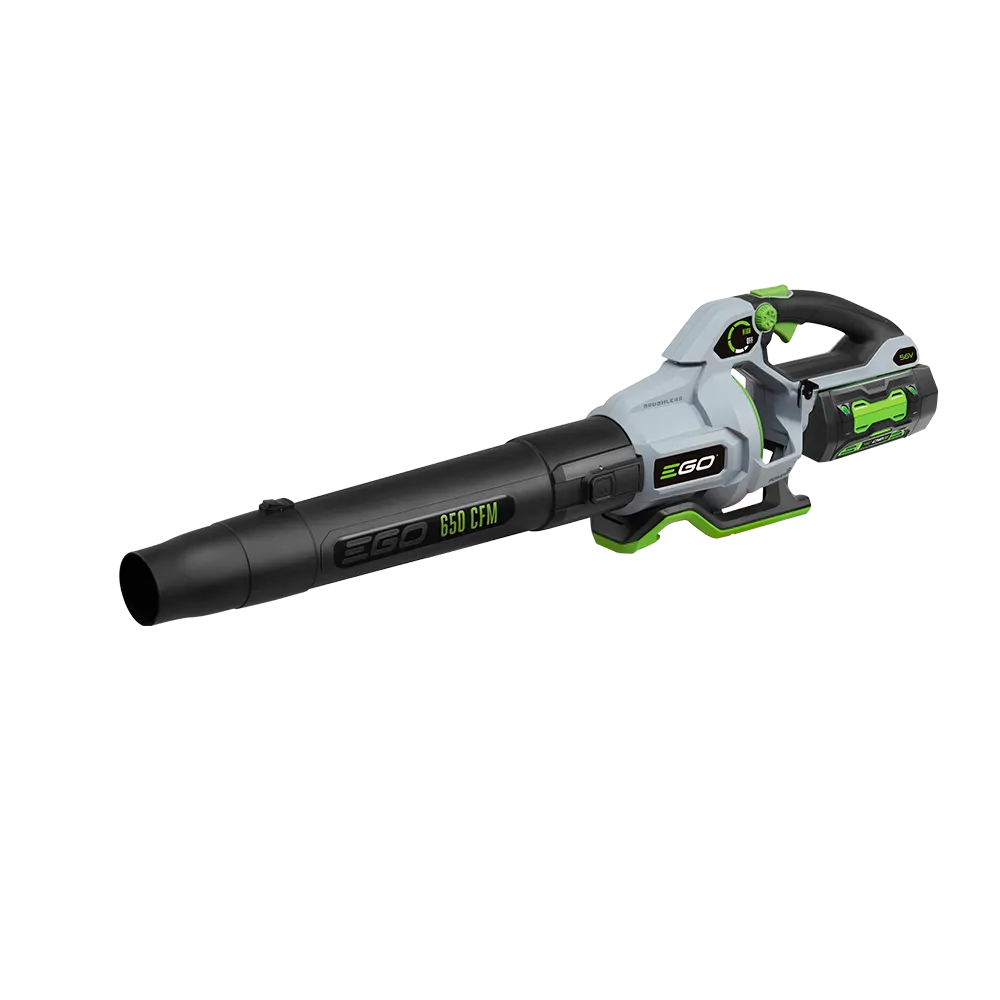
EGO LB6504
At 650 CFM and 180 MPH, the LB6504 produces the most usable airflow in this comparison for clearing large lots. It weighs just 4.77 lbs bare, so fatigue stays manageable even when the job runs 45 minutes or more. The included 5.0Ah battery gives strong runtime, IPX4 weather resistance lets you keep working through light rain, and the turbo trigger gives a quick burst for wet or matted debris. For anyone managing a large yard on the 56V EGO platform, this is the straightforward top pick.
- ✓ 650 CFM at 180 MPH moves large volumes of leaves without multiple passes
- ✓ 4.77 lbs bare — light enough to use for extended sessions without arm fatigue
- ✓ Kit includes a 5.0Ah battery and charger, delivering real large-yard runtime
- ✓ IPX4 weather resistance and a turbo trigger for wet or packed debris
- ✗ Higher kit price than the Milwaukee or Makita options
- ✗ 56V battery is EGO-platform only — no cross-compatibility with other brands
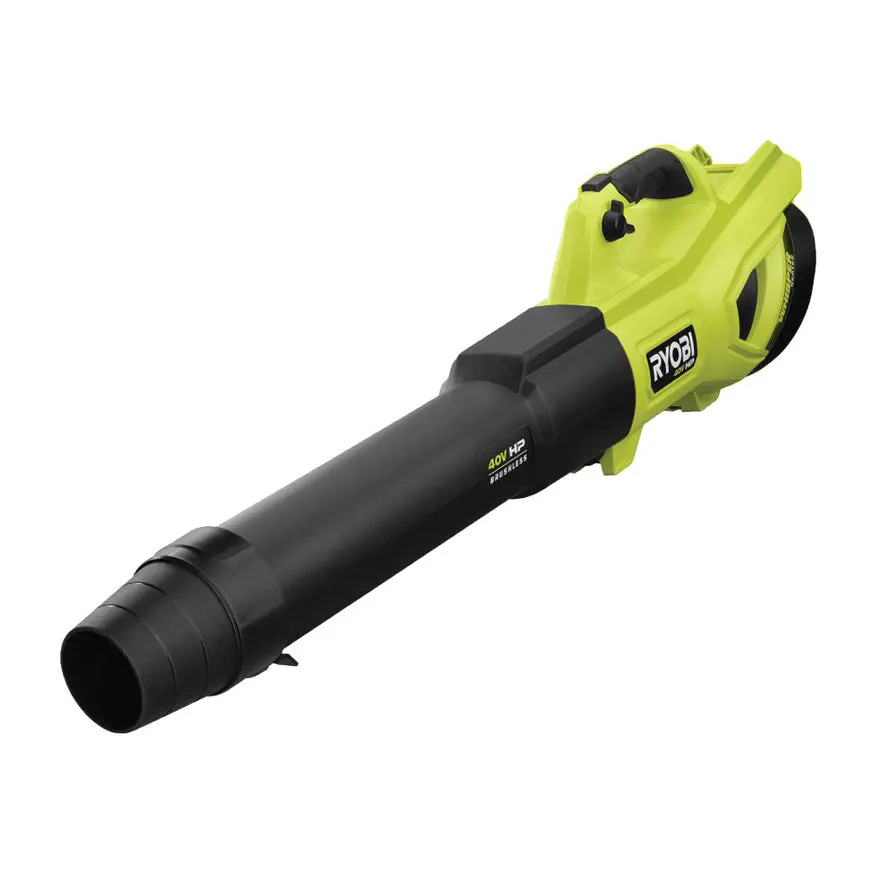
Ryobi RY404014BTL
The RY404014BTL matches the EGO exactly at 650 CFM and edges it on velocity at 160 MPH, making it a genuine large-yard rival. The Whisper Series design runs roughly 85 percent quieter than a comparable gas blower, which matters when you share a fence line with neighbors or need to work early in the morning. At 10.4 lbs bare it is the heaviest tool here, so an extended clearing session is more tiring than with the EGO — but the 40V HP platform trades economy and value in a way that suits budget-conscious large-yard owners.
- ✓ Matches the EGO at 650 CFM, clearing the same volume of leaves per pass
- ✓ Whisper Series design dramatically reduces noise versus gas alternatives
- ✓ 40V HP platform offers a broad range of compatible outdoor tools
- ✓ Strong mid-range price for this level of CFM output
- ✗ Heaviest bare tool in the group at 10.4 lbs — noticeable on long sessions
- ✗ Sold as bare tool only — add the cost of a 40V HP battery and charger
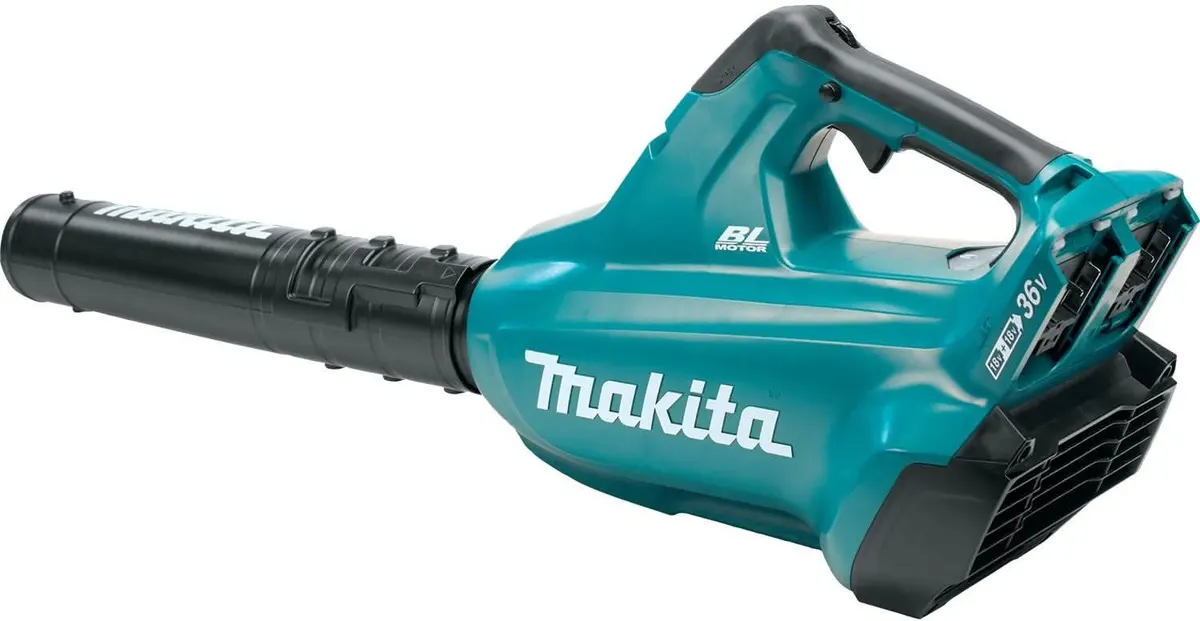
Makita XBU02Z
The XBU02Z draws on two 18V LXT batteries wired in series to produce 36V of power and 473 CFM at 120 MPH. Those numbers trail the 650 CFM leaders, but the dual-battery configuration means anyone already sitting on a stock of 18V LXT packs can build impressive runtime by rotating four or six batteries through the job. At 61 dB(A) it is the quietest tool here. It is a better fit for the upper end of a medium yard or for someone with deep LXT inventory who does not want to invest in a new battery platform.
- ✓ Uses two standard 18V LXT batteries — enormous runtime flexibility for LXT owners
- ✓ Quietest blower in this comparison at 61 dB(A)
- ✓ 473 CFM handles large lots if runtime is supplemented with spare packs
- ✓ Makita LXT is one of the broadest 18V platforms available
- ✗ 473 CFM trails both 650 CFM options, requiring more passes on very large lots
- ✗ 9.0 lbs with batteries — heavier than the EGO when loaded
- ✗ Sold as bare tool; a fresh buyer needs two 18V LXT packs and a charger
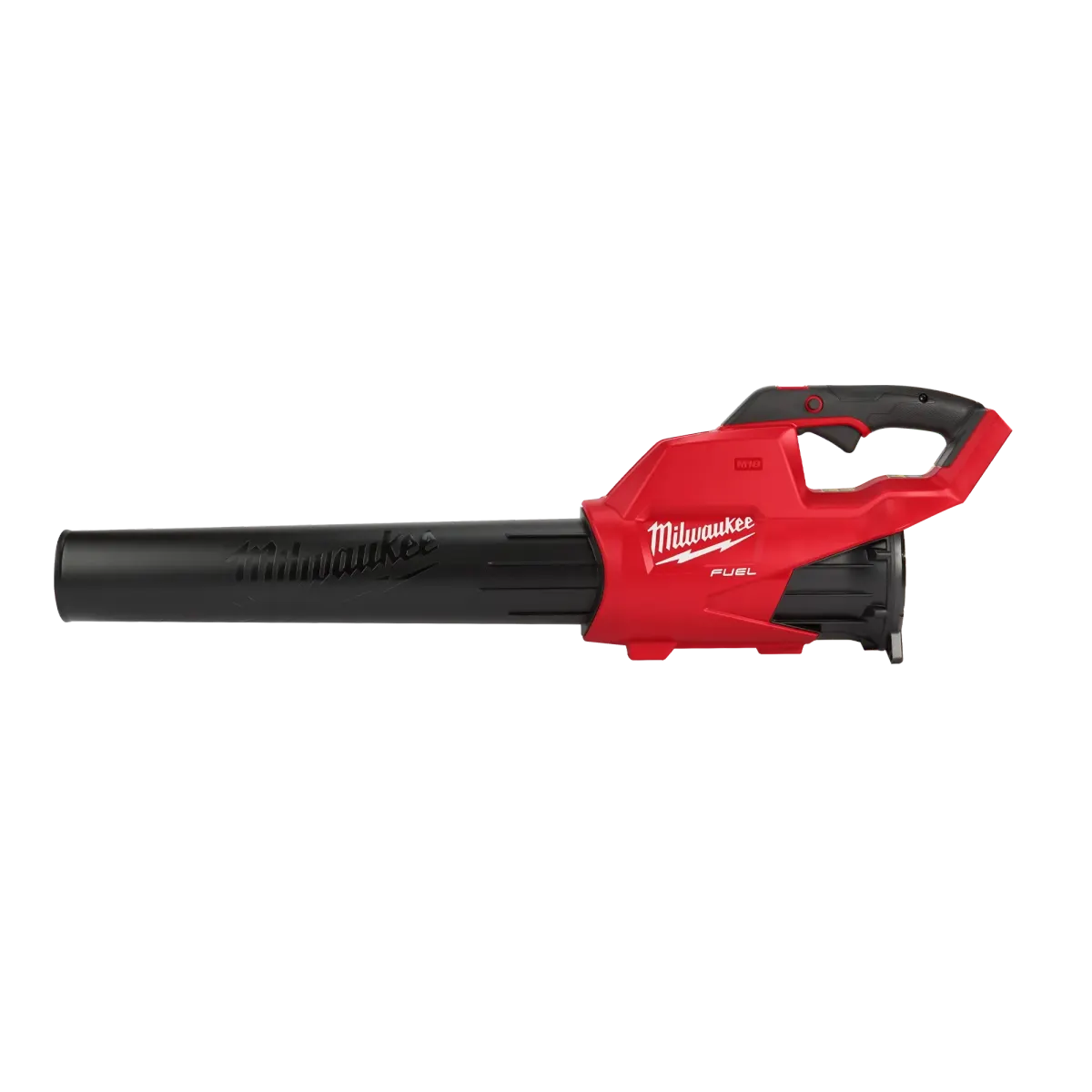
Milwaukee 2724-20 M18 FUEL
The 2724-20 is the most compact and lowest-weight option here at 5.2 lbs bare, and 450 CFM at 120 MPH is enough for tidying moderate to large lots — it just requires more time on properties over half an acre compared with the 650 CFM machines. At 62 dBA it runs quietly, and M18 FUEL brushless efficiency means strong runtime on a 5.0Ah or 8.0Ah pack. If you already own M18 batteries and your property sits in the 0.3–0.5 acre range, this is the blower to add without buying into a new platform.
- ✓ Lightest option at 5.2 lbs bare — comfortable for extended use
- ✓ M18 FUEL brushless efficiency maximizes runtime on existing packs
- ✓ 62 dBA noise level keeps neighbors and HOAs happy
- ✓ Compact form suits narrow passages and tight landscaping
- ✗ 450 CFM is the lowest airflow in this group — noticeably slower on very large lots
- ✗ Bare tool only; M18 batteries and charger add to the total cost
- ✗ Not the top choice once the yard exceeds half an acre
Why acreage changes the math
On a typical suburban lot, almost any cordless blower can move a pile of dry leaves off a driveway in a few minutes. On a half-acre or more, the equation flips: you are managing volume, distance, and endurance simultaneously. Leaves that are wet, matted, or spread across 200 feet of lawn require sustained, high-volume airflow — and that is where CFM output separates blowers that are adequate from blowers that actually finish the job in a reasonable amount of time.
All four tools reviewed here are capable machines. But only the EGO LB6504 and the Ryobi RY404014BTL deliver 650 CFM — the highest output in this class — and that difference becomes real when you are sweeping a damp lawn rather than a dry driveway.
CFM versus MPH: the large-yard distinction
Buying guides often cite MPH as the headline figure, but for large-area clearing, CFM is the number that changes how long a job takes. MPH measures air velocity, which dislodges stuck or embedded leaves. CFM measures the volume of air pushed per minute, which determines how wide a swath you can move per pass and how quickly you cover ground.
The EGO's 180 MPH and 650 CFM combination is the most effective in this group because it offers both velocity and volume. The Ryobi's 160 MPH and 650 CFM is close. The Makita (120 MPH, 473 CFM) and Milwaukee (120 MPH, 450 CFM) are quieter and lighter but require more time per acre.
Weight and fatigue: the long-session variable
A 30-minute blow-down of a large yard is twice the duration of a quick driveway cleanup, and every extra pound registers by the end. The EGO at 4.77 lbs bare is remarkably light for its output — it is the top choice when both power and endurance matter. The Milwaukee at 5.2 lbs bare is also easy to manage. The Makita at 9.0 lbs loaded and the Ryobi at 10.4 lbs bare are heavier; both are manageable for most adults, but neither is what you want overhead for 45 unbroken minutes.
If you are clearing property that routinely takes more than 30 minutes, pay attention to bare weight, balance, and grip ergonomics alongside CFM.
Battery runtime for large lots
A single 5.0Ah battery on the EGO LB6504 delivers roughly 40 to 60 minutes at moderate throttle, which covers most half-acre clearing sessions. Buyers with larger properties should budget for a spare battery or plan to charge mid-session.
The Makita XBU02Z has a structural advantage here: anyone who already owns multiple 18V LXT packs can rotate them through the job without buying additional batteries. Two 5.0Ah packs translate to well over an hour of run time, and the cost per unit of runtime is lower for LXT owners than for buyers entering the EGO or 40V HP ecosystems.
Platform investment and future tools
A leaf blower is typically not the only outdoor power tool on a property. Choosing a platform that also powers a string trimmer, hedge trimmer, chainsaw, or lawn mower concentrates your battery investment and reduces the total system cost.
The EGO 56V platform covers a full range of outdoor tools with strong performance at each tier. Ryobi's 40V HP line is broad and affordable. Makita LXT is the deepest platform in the US market. Milwaukee M18 is strong for users who already have M18 indoor tools and want to consolidate. None of these is a wrong choice — the question is which one you are already building, or which one you want to start.
What the CFM leaders cannot do
High-output cordless blowers still have meaningful limits on very large properties. A full acre of deep, wet, matted leaves in fall will tax even the best battery blower; for properties over an acre, or for commercial use, backpack gas units remain the practical choice. These four tools are optimized for residential properties where the combination of runtime, noise, and convenience tips the balance toward battery power over gas.
Matching the pick to your yard
For a half-acre or larger with normal leaf fall, the EGO LB6504 is the top choice — it combines the highest airflow, the lowest weight in the high-CFM tier, and a complete kit with the battery and charger included. If you want the same CFM output at a lower kit price and can tolerate more weight, the Ryobi RY404014BTL delivers and also has the quietest operation in the class. If you are deep in the LXT ecosystem and value runtime flexibility over peak CFM, the Makita XBU02Z is the intelligent platform play. And if your large yard is toward the smaller end of that range and you are an M18 user, the Milwaukee 2724-20 handles the job ably without forcing a platform switch.
Advertisement
Frequently asked questions
- How many CFM do I need to clear a large yard?
- For a yard of half an acre or more, 600 CFM or higher is the practical threshold that makes a real difference in how many passes you need and how long the job takes. Both the EGO LB6504 and the Ryobi RY404014BTL hit 650 CFM. Below that — Makita's 473 CFM and Milwaukee's 450 CFM — you can still clear a large lot, but expect to spend noticeably more time on it, especially with wet or matted leaves.
- Is CFM or MPH more important for large lots?
- CFM (cubic feet per minute) is the more important figure for large-yard work because it measures the volume of air moved, which determines how much debris you can push per sweep. MPH measures the speed of that air, which matters for dislodging stuck leaves but is secondary to volume when you are moving large piles across long distances. A blower with high CFM but moderate MPH will clear more ground per pass than a low-CFM, high-MPH machine.
- How do cordless blowers hold up on a long clearing session?
- Runtime depends entirely on battery capacity and how hard you run the throttle. The EGO LB6504 ships with a 5.0Ah battery and achieves roughly 40–60 minutes at moderate power on a large lot before needing a charge. The Makita XBU02Z's dual-battery design gives the most runtime flexibility because you can rotate multiple 18V LXT packs. If runtime is a primary concern, buy the highest-capacity pack your budget allows, or have a spare charged and ready.
- Are cordless leaf blowers powerful enough to replace gas for large properties?
- For most residential large-yard use — properties up to roughly an acre — the 650 CFM cordless machines in this guide match or come close to entry-level gas blowers without the fumes, maintenance, or noise. Very large properties of multiple acres, or commercial clearing work, still favor gas or backpack units for sustained runtime. For residential use, cordless at this output level is a practical replacement for most homeowners.
- Does the Ryobi Whisper Series really make a noticeable difference?
- Yes. The Whisper Series aerodynamic design measurably reduces operational noise compared with standard brushless blowers of similar output. While precise dBA figures for the RY404014BTL are not officially published, Ryobi's claim of roughly 85 percent quieter than gas is consistent with the design intent. For early-morning use or in neighborhoods with strict noise ordinances, this is a genuine advantage over the field.