
Ryobi RY142300 vs EGO HPW3200 Pressure Washer (2026)
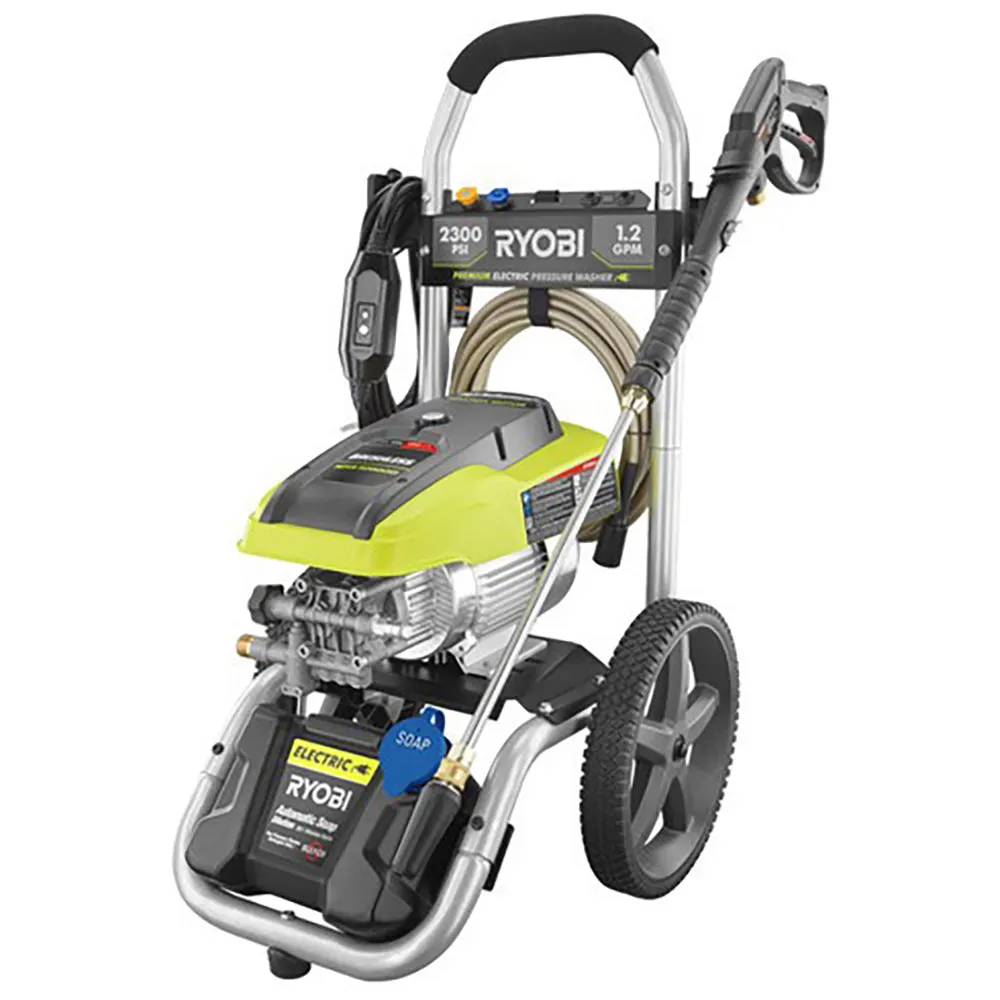
Ryobi RY142300
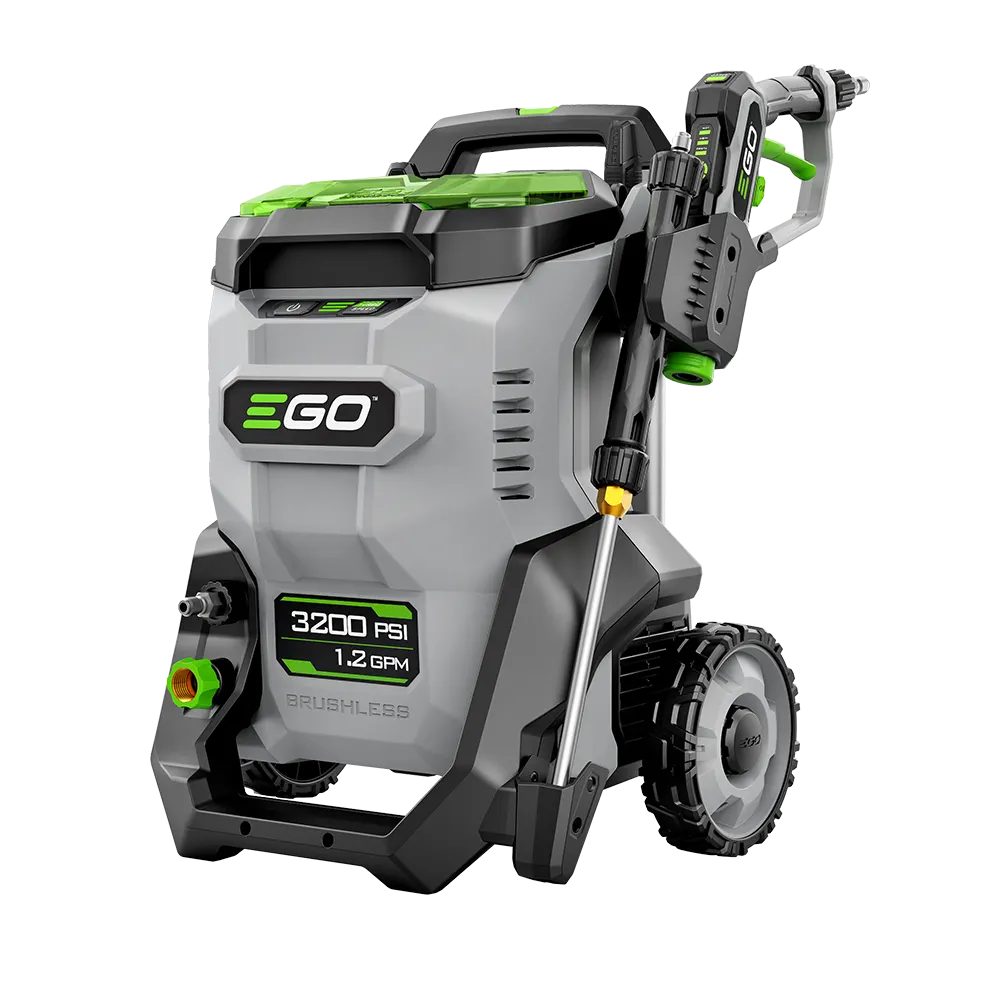
EGO HPW3200
| Spec | Ryobi RY142300 | EGO HPW3200 |
|---|---|---|
| Max pressure (PSI) | 2,300 PSI | 3,200 PSI (Turbo mode) |
| Flow rate (GPM) | 1.2 GPM | 1.2 GPM / 2.0 GPM max |
| Motor type | 13-amp brushless electric induction | Brushless motor (battery-powered) |
| Power source | Corded electric (requires outlet) | 56V battery (cordless) |
| Battery/runtime | Not applicable (corded) | Up to 60 min on dual 6.0Ah batteries |
| Hose length | 25 ft. non-marring | 25 ft. flexible |
| Nozzles included | 5 (0°, 15°, 25°, 40°, turbo) | 5 (15°, 25°, 40°, turbo, rinse) |
| Weight | 49.3 lbs | ~35 lbs (bare tool) |
| Warranty | 3-year limited | 5-year limited (tool), 3-year limited (battery) |
| Price range | $200–$250 | $350 (bare) – $700 (kit) |
Two approaches to residential cleaning
Choosing between the Ryobi RY142300 and the EGO HPW3200 is less about comparing two equivalent machines and more about deciding which power source fits your cleaning style. The Ryobi is a corded electric pressure washer that delivers consistent 2,300 PSI and unlimited runtime as long as you have an outdoor outlet within extension-cord reach. The EGO is a battery-powered machine that trades the cord for dual 56V batteries, offering up to 60 minutes of runtime and 3,200 PSI peak—but at a significantly higher entry price.
Both machines target the same homeowner: someone who needs a pressure washer for driveways, decks, siding, and vehicles. But they occupy different positions in the value spectrum. The Ryobi is the pragmatic choice for the buyer who wants strong cleaning performance without breaking the bank. The EGO is the premium cordless option for the buyer who demands the highest pressure output in its class and values the convenience of a cord-free experience, especially for remote or extended cleaning jobs.
Power and cleaning performance
At 2,300 PSI, the Ryobi RY142300 is no slouch. It handles residential concrete driveways, wood decks, and composite siding effectively, especially with the included turbo nozzle that spins a concentrated 0-degree stream for faster coverage. For a typical two-car driveway, the Ryobi gets the job done in a single session, though heavily oil-stained patches may require a degreaser pretreatment and a second pass.
The EGO HPW3200 ups the ante with a peak 3,200 PSI in Turbo mode, pushing it into the lower range of gas-powered washers. On stubborn grime and deep-set mold, the EGO cleans faster and more aggressively. The three selectable modes—ECO, High, and Turbo—give the operator precise control over pressure output, which is particularly useful for switching between tough concrete cleaning (Turbo) and delicate vehicle washing (ECO). However, Turbo mode drains batteries faster, so you trade runtime for peak power.
Both machines have identical standard flow rates of 1.2 GPM, meaning rinsing speed is comparable. The EGO lists a max flow of 2.0 GPM in some conditions, but that does not change the practical rinse time significantly. For large surfaces, the EGO's higher PSI compensates for the modest GPM; the Ryobi's lower PSI means you work slower on tough stains but never run out of power.
Runtime and power source
This is the decisive category for most buyers. The Ryobi runs on 120V AC power from any standard household outlet. With a 34.5-foot GFCI cord, it reaches most driveways without an extension cord, though many users will need a 50-foot 10-gauge extension for longer reaches. Runtime is unlimited: you can clean for hours without stopping to recharge.
The EGO HPW3200 runs on two 56V ARC Lithium batteries, which are sold separately (the bare tool is $350; the kit with two 6.0Ah batteries and charger is $550–$700). On dual 6.0Ah packs, runtime is up to 60 minutes in High mode; Turbo mode reduces that to about 30-40 minutes. That covers a typical driveway and deck, but for larger properties or heavy-duty jobs, you will need additional battery sets. In cold weather (below 40°F), battery performance drops, shortening usable runtime.
The Ryobi's corded motor is also a brushless induction design, which runs cooler, quieter, and lasts longer than the brushed universal motors found on many rival corded washers. The EGO's brushless motor is similarly durable but depends on battery health over time.
Weight, portability, and ease of use
The Ryobi RY142300 weighs 49.3 lbs, which is heavy for a corded electric. The hand-truck design with solid wheels makes it easy to roll across driveways and store upright, but lifting it into a truck bed or up stairs is a two-person job. The EGO HPW3200 weighs approximately 35 lbs bare, and with two batteries installed it is still noticeably lighter than the Ryobi. Its lower weight and compact footprint make it easier to transport and maneuver.
Both machines come with 25-foot high-pressure hoses, which is standard for this class. The Ryobi includes an on-board detergent tank—a convenient feature that lets you apply soap directly from the machine without a separate foam cannon. The EGO instead includes a dedicated foam cannon, which produces thicker foam for longer dwell time on vertical surfaces. Both systems work well; the choice is between integrated simplicity and foam quality.
The EGO's stainless steel wand includes an integrated pressure display that shows battery level and current mode, a nice touch that the Ryobi lacks. The Ryobi uses a straightforward quick-connect system with color-coded nozzles that are easy to swap.
Durability and warranty
The Ryobi RY142300 comes with a 3-year limited warranty, which is competitive for corded electrics. The brushless induction motor is designed to outlast brushed motors, reducing long-term maintenance. The EGO HPW3200 offers a 5-year limited warranty on the tool and a 3-year limited warranty on the battery, reflecting its premium positioning. However, battery replacement costs must be factored in over the long term; after 3–5 years, batteries may need replacement, adding significant expense.
Value and final recommendation
At $200–$250, the Ryobi RY142300 is the best value in its class for corded electric buyers. It delivers 2,300 PSI with a brushless motor, generous hose length, and an on-board detergent tank, all in a hand-truck design. For any cleaning task within reach of an outlet, it is powerful enough and far cheaper than the EGO.
The EGO HPW3200 justifies its higher price with cordless freedom, 3,200 PSI peak, mode control, and EGO platform compatibility. For buyers who regularly clean areas far from outlets—or who already own EGO batteries—it is the superior tool. For first-time buyers on a budget, the Ryobi is the smarter financial decision.
Winner: EGO HPW3200—for its higher pressure, cordless convenience, and mode flexibility. But the Ryobi RY142300 wins the value fight and remains the best corded electric pressure washer under $300.
Advertisement
Frequently asked questions
- Which pressure washer has more cleaning power, the Ryobi RY142300 or the EGO HPW3200?
- The EGO HPW3200 delivers more cleaning power on paper, with 3,200 PSI peak in Turbo mode compared to the Ryobi's 2,300 PSI. Both have a standard 1.2 GPM flow rate, so the EGO's higher PSI gives it an edge on stubborn stains and concrete cleaning. However, the Ryobi's corded motor delivers consistent, unlimited runtime, while the EGO's peak output is only available in Turbo mode, which drains batteries faster.
- Is the EGO HPW3200 worth the extra money over the Ryobi RY142300?
- For buyers who already own EGO 56V batteries, the bare tool HPW3200 at $350 is a strong value for cordless near-gas performance. For those starting fresh, the full kit at $550–$700 is a steep investment compared to the Ryobi at $200–$250. The Ryobi provides ample cleaning power for most residential jobs and costs significantly less. The EGO is worth it if you need cordless operation, higher PSI, or already invest in the EGO platform for other outdoor tools.
- Can the Ryobi RY142300 and EGO HPW3200 be used to wash a car?
- Yes, both can wash a car with the proper technique. Use the 40-degree nozzle and maintain at least 18 inches of standoff. The EGO has an ECO mode that reduces pressure for safer vehicle washing, while the Ryobi requires careful nozzle selection. Never use the turbo or 0-degree nozzle on vehicle paint on either machine.
- Which machine is better for large concrete driveways?
- The EGO HPW3200 is better for large driveways due to its 3,200 PSI peak and turbo nozzle that accelerates cleaning. However, its 1.2 GPM flow rate and limited battery runtime (up to 60 minutes on dual 6.0Ah batteries) mean you may need spare batteries for very large areas. The Ryobi RY142300 has unlimited runtime via a power cord but lower 2,300 PSI, so it takes longer on heavily soiled concrete. For typical two-car driveways, both are adequate; for larger surfaces, the EGO's higher pressure saves time, but the Ryobi's corded operation avoids battery swaps.
- Do both pressure washers include a foam cannon?
- The EGO HPW3200 kit includes a foam cannon, which is a common accessory for applying detergent. The Ryobi RY142300 does not include a foam cannon; it has an on-board detergent tank that mixes soap with water. Both methods work well for applying cleaning solutions, but the EGO's foam cannon provides thicker, clingier foam for better dwell time on vertical surfaces.
Ready to buy the HPW3200?
We may earn a commission if you buy through these links, at no extra cost to you.