
Milwaukee 2904 vs Bosch GSR18V-400: Power or Value? (2026)
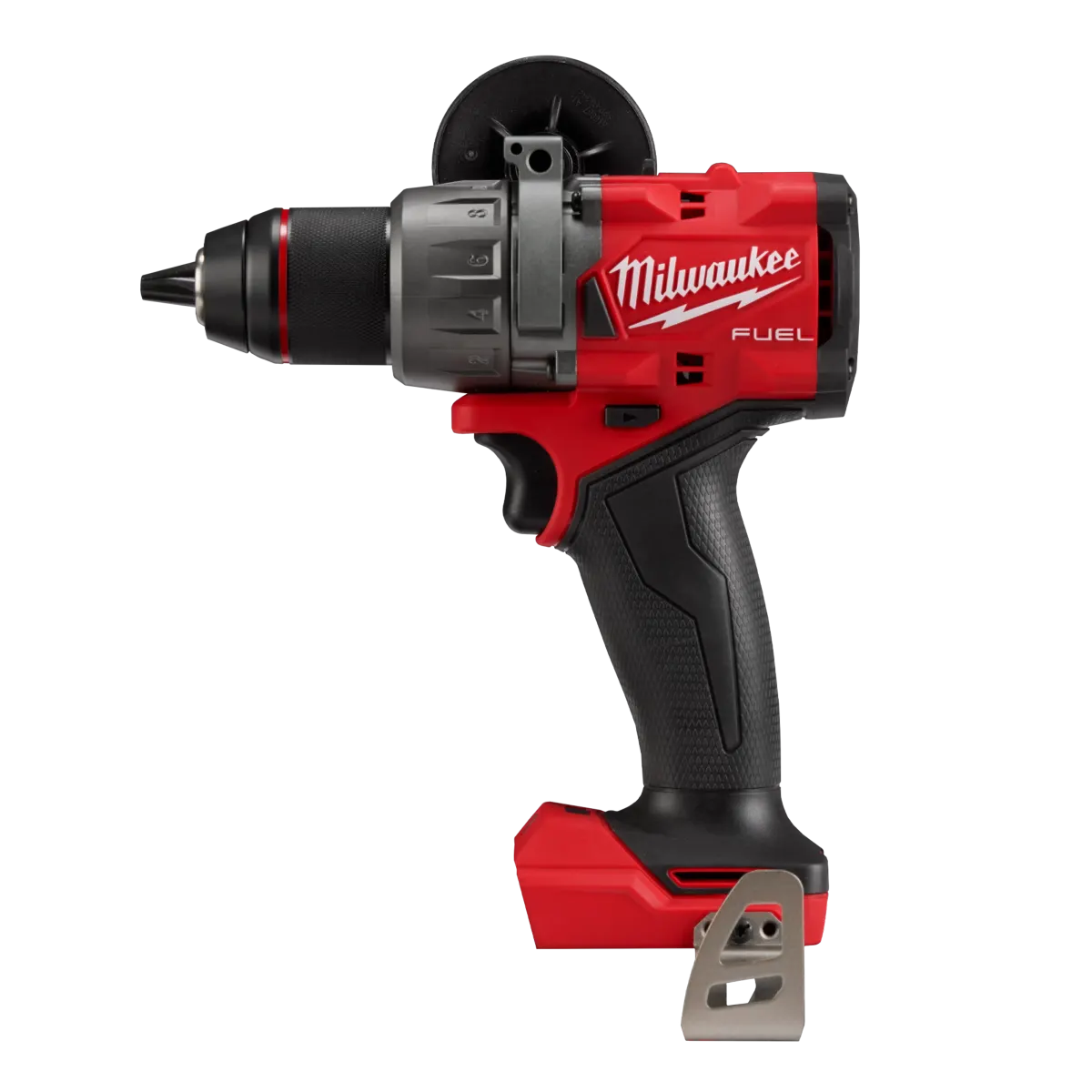
Milwaukee 2904-20
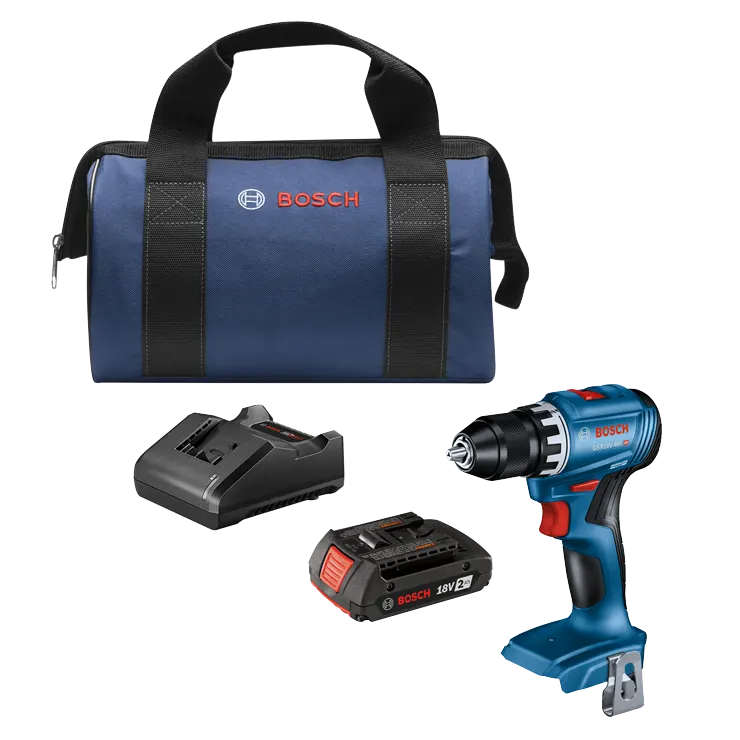
Bosch GSR18V-400
| Spec | Milwaukee 2904-20 | Bosch GSR18V-400 |
|---|---|---|
| Max torque | 1,400 in-lbs (peak) | 400 in-lbs |
| Hammer mode | Yes — 33,000 BPM | No (drill/driver only) |
| Top no-load speed | 0–2,100 RPM (2-speed) | 0–1,900 RPM (2-speed) |
| Weight | Approx. 4.9 lbs with XC5.0 battery | 2 lbs 12.8 oz (bare tool) |
| Length | 6.9 in. | 6.3 in. |
| Motor | POWERSTATE brushless | Brushless |
| Chuck | 1/2 in. all-metal, carbide teeth | 1/2 in. all-metal keyless |
| Clutch | 16-position | 20-position |
| Kit contents | Bare tool — no battery or charger | B12 kit: one 2.0Ah SlimPack + charger + bag |
| Warranty | 5-year limited tool | 5-year tool / 5-year charger / 3-year battery |
| Price range | $180–$220 (bare tool) | $120–$170 (kit) |
Power tool versus pocket tool
The Milwaukee 2904-20 and the Bosch GSR18V-400 are the two extremes of this cordless-drill set, and comparing them is less a head-to-head than a study in what you actually need. The Milwaukee is an M18 FUEL hammer drill/driver built around brute capability: 1,400 in-lbs of peak torque, a 33,000-BPM hammer mode, a 0–2,100 RPM top gear, and a carbide-toothed chuck. The Bosch is the lightest, cheapest, longest-warrantied compact in the group, built around the opposite priority — a tool that disappears in the hand for all-day fastening, with 400 in-lbs and no percussion. One is a powerhouse; the other is a featherweight. Declaring an outright winner means picking which philosophy matters more, and on pure capability the Milwaukee takes it — provided you genuinely need what it offers.
The crucial framing before any spec talk: the 2904 is a bare tool, and the Bosch is a complete kit. That single fact reshapes the price comparison and limits who the Milwaukee even makes sense for. Buyers already sitting on a pile of M18 packs see the Milwaukee very differently from buyers starting from zero.
Power and speed
There is no contest on raw output. The Milwaukee's 1,400 in-lbs is three and a half times the Bosch's 400, and that gap shows up the moment you push past everyday screws. Where the Bosch bogs on large spade and self-feed bits, the Milwaukee simply does not — big bits, hole saws, and lag bolts that stall the Bosch pull through framing in the 2904's low gear. The Milwaukee also wins on speed, with a 0–2,100 RPM high gear against the Bosch's 0–1,900, clearing large twist-drilled holes in steel noticeably quicker.
Then there is the capability the Bosch lacks entirely: hammer mode. At 33,000 BPM with a masonry bit, the 2904 sets anchors and drills pilot holes in brick and block — not a rotary-hammer replacement for concrete, but enough for the occasional masonry task that leaves the GSR18V-400 helpless. For anyone whose work strays into structural fastening or masonry, this section alone settles the matchup. For anyone who only drives cabinet and drywall screws, all that extra grunt sits unused.
Ergonomics and weight
Flip the comparison to comfort and the Bosch dominates as thoroughly as the Milwaukee does on power. At 2 lbs 12.8 oz bare, the GSR18V-400 is the lightest tool in the entire four-drill set, with a short 6.3-inch head that slips between studs and into cabinets. After hours of overhead screw-driving, that low mass leaves your wrist fresh. The Milwaukee, at roughly 4.9 lbs with an XC5.0 battery and 6.9 inches long, is the heaviest and longest of the group — a tool you feel after a day of overhead work, and one whose side handle is a genuine necessity rather than an accessory, because 1,400 in-lbs can twist the drill hard in your hand if a big bit binds.
Chuck and clutch split the difference. Milwaukee's all-metal chuck uses carbide teeth that bite round-shank bits and hold them under torque that would spin a bit loose in a lesser chuck — the better chuck for heavy work. Bosch counters with a finer 20-position clutch against Milwaukee's 16, giving more precise depth control for repeatable, damage-free fastening. Each reflects its tool's purpose: the Milwaukee built to grip under load, the Bosch built for delicate, consistent driving.
Batteries and platform
The kit divide is the practical heart of this comparison. The Bosch GSR18V-400 B12 arrives ready to work: a 2.0Ah SlimPack, a charger, and a bag, all in the box (the B22 doubles to two SlimPacks for a small bump). The Milwaukee 2904-20 arrives as a bare tool — no battery, no charger — so you supply your own M18 cell. The sensible match is a REDLITHIUM XC5.0, which most published working-weight figures assume; smaller CP2.0 or CP3.0 packs trim weight, while High Output and FORGE cells maximize sustained power under heavy load.
Both platforms are deep and reputable. Milwaukee's M18 spans hundreds of tools with a strong jobsite-durability reputation, while Bosch's 18V line, though respected, is thinner in the US than M18, LXT, or 20V MAX. For a buyer planning to grow a large fleet, M18's depth is a real long-term advantage; for a buyer who just needs one good drill, platform breadth matters far less than the Bosch's ready-to-run kit.
Price and value
Value is where the framing flips back hard toward Bosch. The GSR18V-400 kit lands in the $120–$170 range complete, while the 2904-20 runs $180–$220 as a bare tool — and that sticker is not the real cost unless M18 cells already sit on your shelf. Add a battery and charger to the Milwaukee and it becomes the most expensive option in the group by a wide margin. The Bosch, meanwhile, is usually the cheapest complete kit of all four drills and carries the longest tool warranty (5 years, matching Milwaukee's). For a first-time buyer, the value case is lopsided in Bosch's favor.
So the verdict carries an asterisk worth restating: the Milwaukee wins on capability, but it only wins on value for someone already invested in M18 who needs the power. For everyone else, the Bosch delivers more drill per dollar.
Who should buy which
Buy the Milwaukee 2904-20 if you already own M18 batteries and regularly drive large fasteners, bore big holes, or need occasional masonry capability. Its 1,400 in-lbs, hammer mode, and FUEL durability make it the most capable tool here, and the bare-tool format is a feature, not a flaw, when you have packs on hand.
Buy the Bosch GSR18V-400 if you want the lightest, most compact, longest-warrantied complete kit for everyday fastening and small holes, especially as a budget-conscious or first-time buyer. It cannot match the Milwaukee's power, but for the work most people actually do, it is the more comfortable, more affordable, and more sensible tool. Owners on a middle path who want more torque than the Bosch in a still-light kit should also weigh the Makita XFD131 or DeWalt DCD800.
Advertisement
Frequently asked questions
- Is the Milwaukee 2904 better than the Bosch GSR18V-400?
- The Milwaukee 2904-20 is the more capable drill by a wide margin, with 1,400 in-lbs of torque and a hammer mode against the Bosch's 400 in-lbs and no percussion. But better depends on the job: for heavy fastening, big holes, and occasional masonry the Milwaukee wins, while for light everyday driving the lighter, cheaper, longer-warrantied Bosch kit is the smarter choice. They sit at opposite ends of the cordless-drill spectrum.
- How much more powerful is the Milwaukee 2904 than the Bosch GSR18V-400?
- The Milwaukee 2904 produces 1,400 in-lbs of peak torque versus the Bosch GSR18V-400's 400 in-lbs — three and a half times as much. That gap is not a marketing rounding error; it is the difference between a heavy-duty hammer drill that pulls big self-feed bits through framing and a compact drill/driver tuned for screws and small holes. If you regularly bore large holes or drive lag bolts, the Milwaukee's advantage is decisive.
- Does the Milwaukee 2904 come with a battery?
- No, the Milwaukee 2904-20 is a bare tool — it ships with the drill, a side handle, and a belt clip, but no battery or charger. The Bosch GSR18V-400, by contrast, comes as a complete kit (the B12 with one 2.0Ah SlimPack and charger). That bare-tool sticker means the 2904 only makes sense if you already own M18 REDLITHIUM batteries, or you must factor a pack and charger into the real cost.
- Which drill is lighter, the Milwaukee 2904 or Bosch GSR18V-400?
- The Bosch GSR18V-400 is far lighter at 2 lbs 12.8 oz bare against the Milwaukee 2904's roughly 4.9 lbs with an XC5.0 battery. The Bosch is also shorter at 6.3 inches versus 6.9 inches, making it the easy winner for overhead work and tight cavities. The Milwaukee's weight is the price you pay for its 1,400 in-lbs of torque and hammer capability.
- Is the Bosch GSR18V-400 good enough, or do I need the Milwaukee 2904?
- For most DIY and light-trade fastening, the Bosch GSR18V-400 is more than enough — its 400 in-lbs handles drywall, cabinet, and deck screws plus small-to-medium holes with ease, and its low weight keeps your wrist fresh all day. You only need the Milwaukee 2904 if you routinely drive large lag bolts, bore big holes, or drill into masonry. Buying the heavier, pricier Milwaukee for light work wastes power and money.
- Can the Bosch GSR18V-400 drill into concrete or brick?
- No, the Bosch GSR18V-400 has no hammer mode, so it is not built for masonry — the 'GSR' designation marks it as a drill/driver. The Milwaukee 2904 adds a 33,000-BPM hammer mode that sets anchors and drills pilot holes in brick and block. If occasional masonry matters, that capability alone can justify choosing the Milwaukee, or a Bosch GSB-series hammer drill instead.