
Milwaukee 2880-20 vs DeWalt DWE402 Angle Grinder (2026)
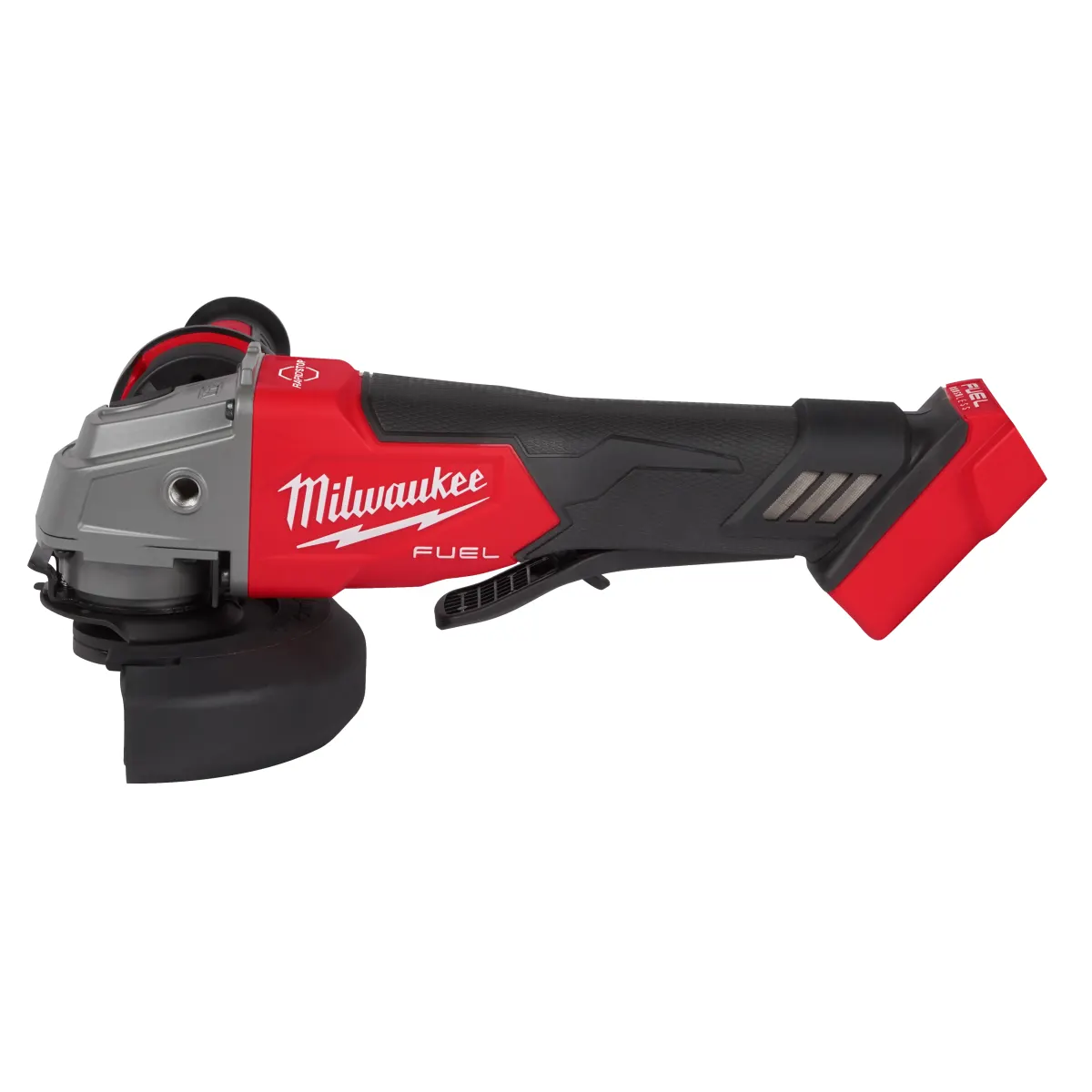
Milwaukee 2880-20 M18 FUEL
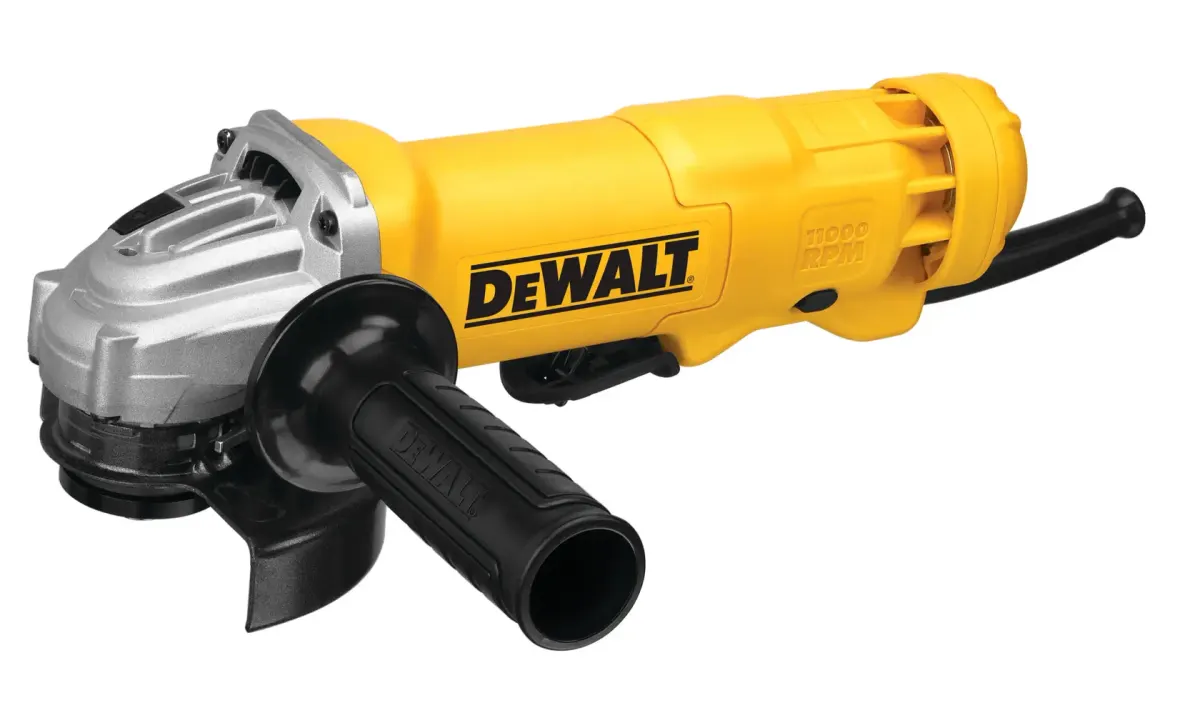
DeWalt DWE402 11-Amp Corded
| Spec | Milwaukee 2880-20 M18 FUEL | DeWalt DWE402 11-Amp Corded |
|---|---|---|
| Power source | M18 FUEL cordless (battery not included) | Corded 11.0 AMP, 120V |
| No-load speed | 8,500 RPM | 11,000 RPM |
| Disc size | 4-1/2 in. / 5 in. | 4-1/2 in. |
| Motor type | POWERSTATE Brushless | Brushed corded |
| Switch type | Paddle switch, no-lock | Paddle switch with safety lock-off |
| Electronic kickback clutch | Yes — KICKBACK BRAKE | No |
| Disc brake | RAPIDSTOP — stops in ≤2 seconds | None (free-spin after shutoff) |
| Weight (bare tool) | 5.4 lbs | 4.6 lbs |
| Warranty | 5-year limited | 3-year limited + 1-yr free service + 90-day satisfaction |
| Price range | $220–$250 (bare tool); $300–$400 with battery | $90–$110 |
Cordless safety tech versus corded value
Angle grinder comparisons often reduce to a single question: is cordless worth the premium? The Milwaukee 2880-20 and DeWalt DWE402 turn that question into a specific numbers problem — and the numbers are stark. The DWE402 costs roughly $95–$110. The Milwaukee 2880-20 is $220–$250 as a bare tool; add an M18 5.0Ah battery and the real entry cost for a new buyer is $300–$400. For users who work exclusively in a garage or shop with an outlet at every bench, that gap requires honest justification.
The justification exists — but only for specific users.
Safety features: what they actually do
The Milwaukee 2880-20 ships with two active safety systems: RAPIDSTOP disc braking and an electronic kickback clutch. These are not marketing additions.
RAPIDSTOP brings the disc to a full stop within 2 seconds of releasing the paddle switch. A free-spinning 5-inch grinding disc at 8,500 RPM takes 10 or more seconds to decelerate on its own. During those seconds, setting the tool on a bench, bumping a leg, or reaching across the tool with the other hand puts a moving disc in proximity to surfaces and limbs. The 2-second stop time closes that window. On a busy job site with tradespeople moving around, this is a genuine risk reduction.
The electronic kickback clutch monitors rotational load and cuts motor power within milliseconds if the disc suddenly binds. Sudden binding — a cutoff wheel catching a metal edge, a grinding disc snagging structural steel — generates rotational torque that can throw the tool sideways. Electronic detection reacts faster than any physical reflex. The DWE402 has neither of these systems; it relies on a paddle switch (cuts power when released) and the operator's grip and technique. The passive safety design is well-executed and adequate for controlled use; it simply provides no active response to a disc bind event.
Motor speed: 8,500 versus 11,000 RPM
The DeWalt DWE402's 11,000 RPM no-load speed is 29 percent higher than the Milwaukee's 8,500 RPM. At the disc surface, this matters most for small-diameter cutting work where peripheral speed is the limiting variable. For grinding with a 4-1/2-inch disc — the DWE402's maximum — the corded tool has a speed advantage at no load.
Under load, the picture shifts. The POWERSTATE brushless motor in the Milwaukee sustains its set speed when the disc engages material, where a single-speed corded motor drops as the load increases. For continuous weld grinding where the disc never leaves the surface, the sustained speed of the brushless motor partially offsets the lower no-load number. For intermittent cuts where the no-load speed is the operational speed, the DeWalt's advantage is real.
The Milwaukee also accepts 5-inch discs while the DeWalt is a 4-1/2-inch-only tool. A 5-inch grinding disc covers more surface per pass, which matters for large weld seams and surface prep jobs measured in square feet rather than linear inches.
Weight and handling
The DWE402 weighs 4.6 lbs. The Milwaukee is 5.4 lbs bare — and with a 5.0Ah battery installed, total working weight reaches approximately 6.3 lbs. For extended overhead grinding, the 1.7-lb difference with battery attached is physically felt across a shift. The DWE402 is the more manageable tool for prolonged overhead or vertical work. For horizontal surface grinding and weld work where the tool rests on or near the surface, the weight difference is less consequential.
Platform economics done plainly
For a new buyer starting with no tool inventory: the DWE402 at $100 with a cord is simply a better economic proposition for shop and garage use. No battery required, unlimited runtime, and 11,000 RPM right out of the box.
For an M18 platform owner who already carries a 5.0Ah battery for a drill, saw, or impact driver: the Milwaukee 2880-20 at $220–$250 adds a capable, feature-rich angle grinder to the ecosystem without the need for a new battery investment. The safety features and 5-inch disc capacity make it a meaningful upgrade over a basic corded grinder.
For any professional working away from outlets — rooftop flashing, outdoor structural work, vehicle repair, scaffolded facade work — the Milwaukee is not optional. The DeWalt's cord becomes an impossible constraint in those environments.
Choosing between them
Buy the DeWalt DWE402 when you work in a shop or garage, already have an outlet available at your work position, and want the most grinding output per dollar. The 11-amp motor, paddle safety switch, and tool-free disc changes deliver professional-grade performance at a consumer price point with no battery budget required.
Buy the Milwaukee 2880-20 when cordless freedom is a job site requirement, when you already own M18 batteries, or when the electronic kickback clutch and RAPIDSTOP braking justify the premium for your specific cutting environment. For fabricators, site contractors, and M18 platform users who cut disc frequently, the safety features and 5-inch capability make the premium defensible.
Advertisement
Frequently asked questions
- Is the Milwaukee 2880-20 worth the premium over the DeWalt DWE402?
- For users who work away from outlets regularly — on rooftops, scaffolding, outdoors, or in vehicles — and especially for those already on M18, the 2880-20 is worth its premium. The cordless format and the active safety features (RAPIDSTOP braking, electronic kickback clutch) provide genuine value for frequent disc-cutting work. For garage and shop use where an outlet is nearby, the DWE402 delivers similar grinding output for $100, making it the more rational economic choice.
- How much faster is the DeWalt DWE402 than the Milwaukee 2880-20?
- The DWE402 runs at 11,000 RPM no-load versus the Milwaukee's 8,500 RPM — a 29 percent speed advantage at no load. For small-diameter disc work where peripheral blade speed determines cutting rate, the corded DeWalt has an advantage. For most common 4-1/2 and 5-inch grinding tasks in sheet metal, mild steel, and tile, the POWERSTATE motor's ability to sustain speed under load compensates for the lower no-load RPM, making the real-world gap smaller than the numbers suggest.
- What is RAPIDSTOP on the Milwaukee 2880-20?
- RAPIDSTOP is Milwaukee's active disc braking system. When you release the paddle, RAPIDSTOP brings the disc to a full stop in 2 seconds or less. An unbraked grinder's disc can continue spinning for 10 seconds or longer after shutoff — a hazard when setting the tool down between cuts or when changing accessories. The 2-second stop time reduces the window during which an inadvertent contact with a spinning disc can cause injury.
- Does the Milwaukee 2880-20 cut 5-inch discs?
- Yes. The 2880-20's 5/8"-11 spindle accepts both 4-1/2-inch and 5-inch accessories. The 5-inch disc covers approximately 24 percent more surface area per pass, which speeds up weld grinding and large-area surface preparation. The DeWalt DWE402 accepts only 4-1/2-inch discs on the same 5/8"-11 arbor. For structural fabrication work involving large weld seams, the Milwaukee's 5-inch capability is a genuine productivity advantage.
- Is the DeWalt DWE402 safe for cutting metal?
- Yes. The DWE402's 11-amp motor handles metal cutting wheel loads on 4-1/2-inch cutoff discs. The paddle switch with safety lock-off shuts the tool off immediately when you release your grip — the safest passive switch design for a disc that can shatter at 11,000 RPM. The DWE402 does not have an electronic kickback clutch, so technique and two-handed grip are the primary safety measures. The Milwaukee 2880-20's electronic clutch detects disc binding within milliseconds and cuts power — an active protection layer the DWE402 cannot match.
- How long does the Milwaukee 2880-20 run on one battery?
- With an M18 5.0Ah battery, the 2880-20 supports roughly 15–20 minutes of sustained aggressive cutting — continuous rebar, weld grinding, or heavy surface prep — before requiring a recharge. For intermittent cutting and grinding with rest periods between cuts, runtime extends considerably. A two-battery rotation with one pack charging while the other is in use gives most tradespeople an uninterrupted workday on typical demolition and prep tasks.
Ready to buy the DWE402?
We may earn a commission if you buy through these links, at no extra cost to you.