
Milwaukee 2836-20 vs DeWalt DCS356B Cordless Oscillating Multi-Tool (2026)
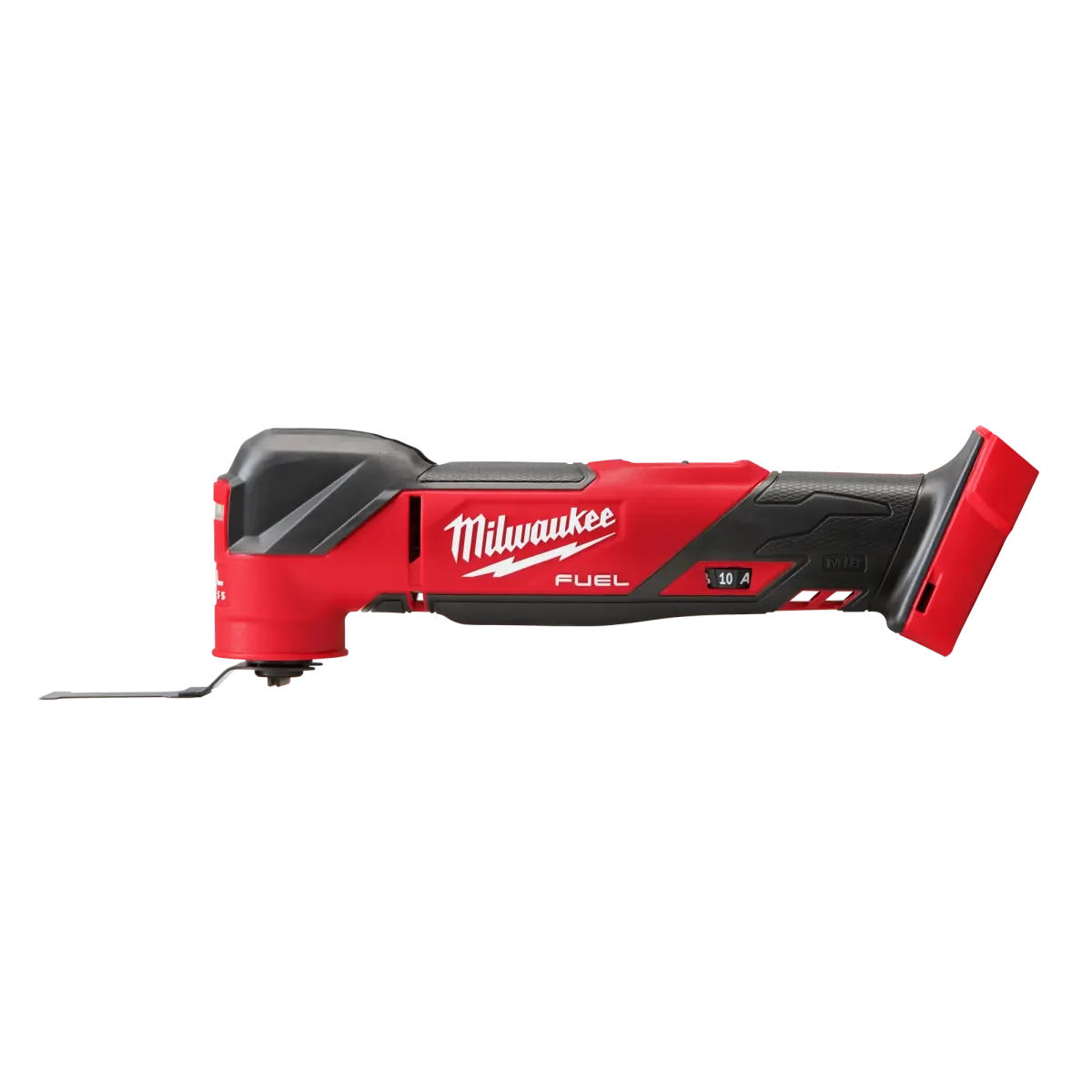
Milwaukee 2836-20 M18 FUEL
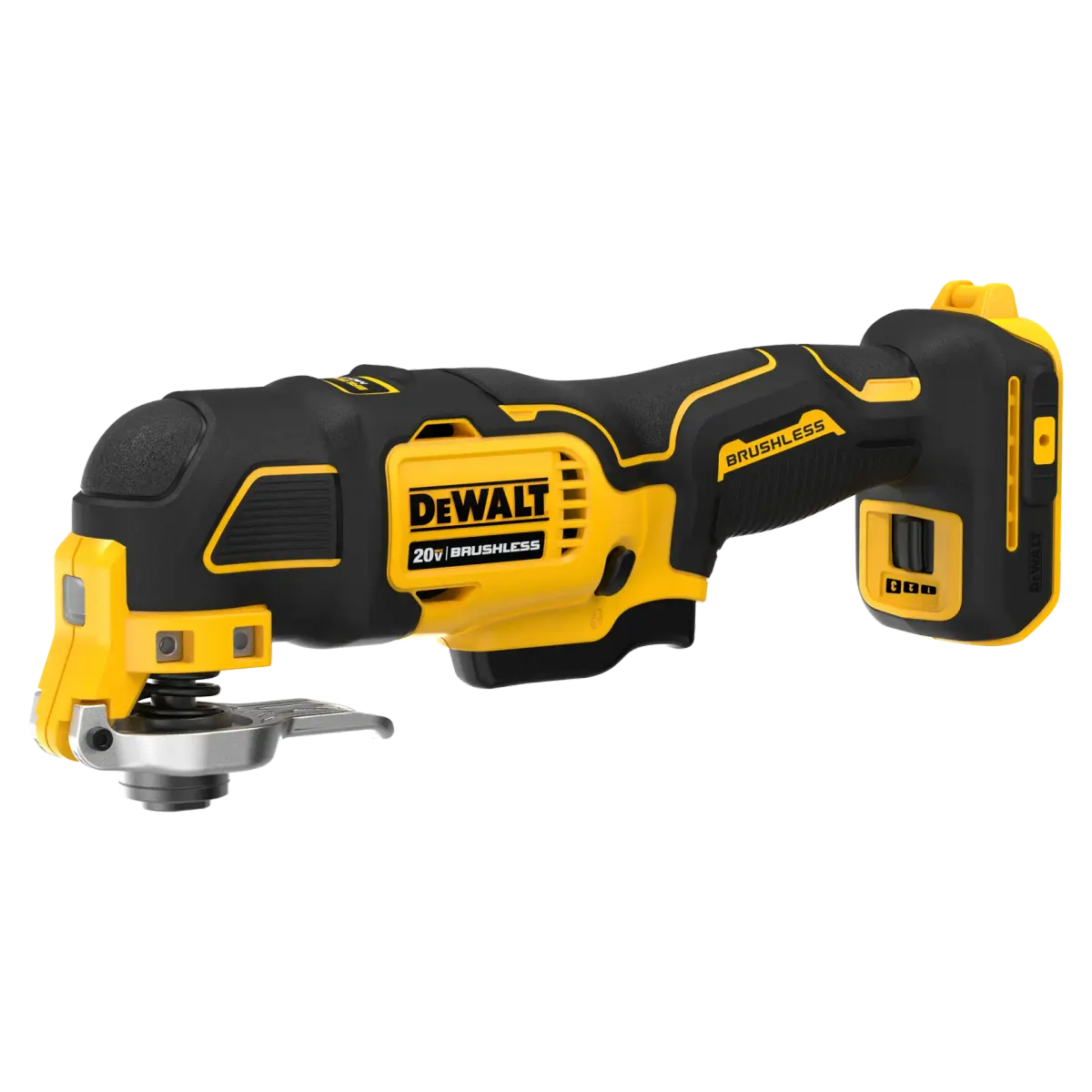
DeWalt DCS356B 20V MAX XR
| Spec | Milwaukee 2836-20 M18 FUEL | DeWalt DCS356B 20V MAX XR |
|---|---|---|
| Oscillation angle | 4.2 degrees | 3.2 degrees |
| Speed range | 10,000–20,000 OPM (10-step dial + Auto-Load) | 0–13,000 / 0–17,000 / 0–20,000 OPM (3-speed + variable trigger) |
| Motor | POWERSTATE Brushless | XR Brushless |
| Blade swap system | Tool-free threaded collar (3–4 turns) | Quick-Change lever (one motion) |
| Weight (bare tool) | 2.56 lbs | ~2.4 lbs |
| LED lighting | 180-degree LED arc | Single front LED |
| Auto-Load feature | Yes — slow-start ramp on trigger pull | No |
| Universal adapter included | Yes | Yes |
| Battery platform | M18 (battery not included) | 20V MAX (battery not included) |
| Price range (bare) | $230–$260 | $140–$160 |
Two platform flagships, one meaningful spec gap
Milwaukee's 2836-20 and DeWalt's DCS356B are both brushless cordless oscillating multi-tools at the upper end of the pro consumer tier. They use comparable motor technologies, accept the same blade universe through included adapters, weigh within 0.2 lbs of each other, and sell in overlapping but distinct price ranges. The competition between them reduces to two specific decisions: oscillation angle and blade-swap mechanism. Everything else is a wash.
Oscillation angle: 4.2 versus 3.2 degrees
Milwaukee's 4.2-degree oscillation angle is the widest among cordless oscillating tools at this weight class. The DeWalt DCS356B operates at 3.2 degrees — the same as the Makita XMT03Z. At the oscillating tool's application level, this means the Milwaukee blade travels a wider arc in each cycle, contacting and removing more material per stroke.
In grout removal — the task that most separates high-performance oscillating tools from adequate ones — the difference is noticeable over any grout line longer than a few inches. A full shower surround or kitchen backsplash replacement measured in linear feet of grout takes fewer total passes with the Milwaukee. For a single cracked tile repair requiring six inches of grout removal, neither tool's angle is the rate-limiting factor. For a bathroom remodel involving 40 feet of grout lines, the Milwaukee's advantage is accumulated time savings.
For flush cutting, the wider angle increases material removal speed in wood but also increases the aggressiveness of the cut — finishing near final depth requires slowing down regardless of the angle, so the practical speed advantage compresses as you approach a finished line.
Speed architecture: ten steps versus three tiers
The Milwaukee's 10-step indexed dial provides numbered, repeatable positions from 10,000 to 20,000 OPM in meaningful increments. The DeWalt's three-position selector locks maximum OPM at approximately 13,000, 17,000, or 20,000, and the variable trigger lets you run anywhere from zero to that selected maximum.
Both systems work well for their design philosophy. The Milwaukee's ten steps are better for users who want to dial in a precise intermediate speed and return to it reliably — position 5 for general wood cutting, for example. The DeWalt's three tiers are better for users who want to set a ceiling and not think further about it. For most remodeling tasks — flush-cutting door jambs at position 2 full throttle, sanding at position 1 partial trigger — the DeWalt system is completely sufficient. The Milwaukee's finer control pays back most clearly in mixed sessions that frequently transition between very different material types.
Blade swap mechanics in daily practice
The DeWalt's Quick-Change lever is the fastest blade-swap system among the cordless oscillating tools in this price tier. Lift the lever, the blade releases. Drop in a new blade. Close the lever. Elapsed time: under 10 seconds. The Milwaukee's threaded collar requires three to four rotations to release. It is toolless, but it is slower by a consistent margin.
For a remodeler who cycles between a wood-cutting blade, a carbide grout blade, and a scraper multiple times per day, those seconds accumulate into minutes of added setup time per shift. The DeWalt's blade-swap advantage is one of the clearest, most consistent points of feedback across professional user reviews of both tools.
LED illumination compared
Milwaukee's 180-degree LED arc wraps around the blade collar, casting light into the cut zone from multiple directions and eliminating the shadow that the blade itself throws onto the workpiece. The DeWalt's single front-facing LED is standard for the category and adequate in most conditions. In poorly lit crawl spaces, cabinet interiors, or narrow wall cavities, the Milwaukee's arc lighting provides a meaningfully clearer view of where the blade is cutting.
Price and platform logic
The bare-tool price gap — $230–$260 for the Milwaukee versus $140–$160 for the DeWalt — is large enough to matter in purchase decisions. For M18 platform owners who already carry batteries, the Milwaukee's premium is justified by the oscillation angle advantage and the superior LED system. For 20V MAX users, the DCS356B is the correct choice by platform fit, and the lower price either saves budget or allows better battery investment.
For fresh buyers on no platform, the DeWalt's lower bare-tool price and the simplicity of its three-speed selector make it the more accessible entry point.
Making the call
Buy the Milwaukee 2836-20 when you are on M18, perform frequent grout removal, adhesive scraping, or heavy oscillating tool work, and want the maximum oscillation angle available at this weight. The 10-step dial, Auto-Load, and 180-degree lighting are all refinements that professionals in heavy-use scenarios will appreciate.
Buy the DeWalt DCS356B when you are on 20V MAX, when the Quick-Change blade system is a priority for frequent mid-session swaps, or when the lower bare-tool price is the deciding factor. For general remodeling and finish carpentry, the DCS356B's 3.2-degree angle handles every common oscillating task correctly.
Advertisement
Frequently asked questions
- Does the 4.2-degree oscillation angle on the Milwaukee 2836-20 make a real difference?
- For sustained grout removal, adhesive scraping, and aggressive flush cutting, yes. A wider oscillation angle removes more material per stroke, so covering the same linear footage of grout takes fewer passes with the Milwaukee than with the DeWalt's 3.2-degree arc. The difference is most apparent on large-scale tile work and subfloor scraping measured in linear feet. For short cuts, drywall patches, and door jamb undercutting, neither the user nor the result reflects the 1-degree gap.
- Which tool swaps blades faster, the Milwaukee 2836-20 or the DeWalt DCS356B?
- The DeWalt DCS356B has the faster blade swap by a clear margin. Flipping the Quick-Change lever releases the blade in one motion and locks a replacement in one motion — under 10 seconds total. The Milwaukee's threaded collar requires three to four rotations to release a blade. For contractors who cycle between wood, metal, and grout blades multiple times in a session, the DeWalt's lever mechanism saves consistent time.
- What is the Auto-Load feature on the Milwaukee 2836-20?
- Auto-Load starts the tool at a slow speed when the trigger is first pulled, giving you a controlled entry into the material before the tool ramps up to the set speed. This prevents the blade from skating across tile or drywall on plunge entry. Users who want fully manual ramp control can switch the feature off. The DeWalt DCS356B does not have an equivalent auto-slow-start feature, but the variable trigger within each speed tier provides similar precision if you feather the trigger at the start of a cut.
- Is the Milwaukee 2836-20's 10-step dial too complex for everyday use?
- Not in practice. Most users find three or four positions they return to repeatedly — low for detail sanding, mid for wood cutting, high for grout and metal — and the numbered dial positions make repeating those settings reliable. Compared to the DeWalt's three fixed tiers, the Milwaukee's ten steps give more intermediate options but do not require more mental effort to use. If simplicity is a priority, the DeWalt's three-position selector is genuinely easier to use without thinking.
- Do both tools accept Bosch and Makita blades?
- Yes. Both the Milwaukee 2836-20 and DeWalt DCS356B ship with a universal accessory adapter that accepts blades from all major brands including Bosch, Makita, Ryobi, and aftermarket multi-fit profiles. Milwaukee's own Starlock blades seat directly in the 2836-20's collar without the adapter for the most rigid retention. DeWalt's Quick-Change system accepts DeWalt-profile blades directly; all others go through the included adapter.
- Should I choose the Milwaukee 2836-20 or DeWalt DCS356B if I am buying fresh on no platform?
- At bare-tool prices, the DeWalt DCS356B plus a 3.0Ah 20V MAX battery lands at $190–$240 total — within striking distance of the Milwaukee bare tool alone at $230–$260 before any battery cost. At that total cost comparison, the Milwaukee's wider oscillation angle becomes the deciding factor for users who do grout-heavy or adhesive-scraping work. For general remodeling and light renovation, the DeWalt at lower total cost is the more practical entry.
Ready to buy the 2836-20?
We may earn a commission if you buy through these links, at no extra cost to you.