
Milwaukee 2737-20 vs DeWalt DCS334B Cordless Jigsaw (2026)
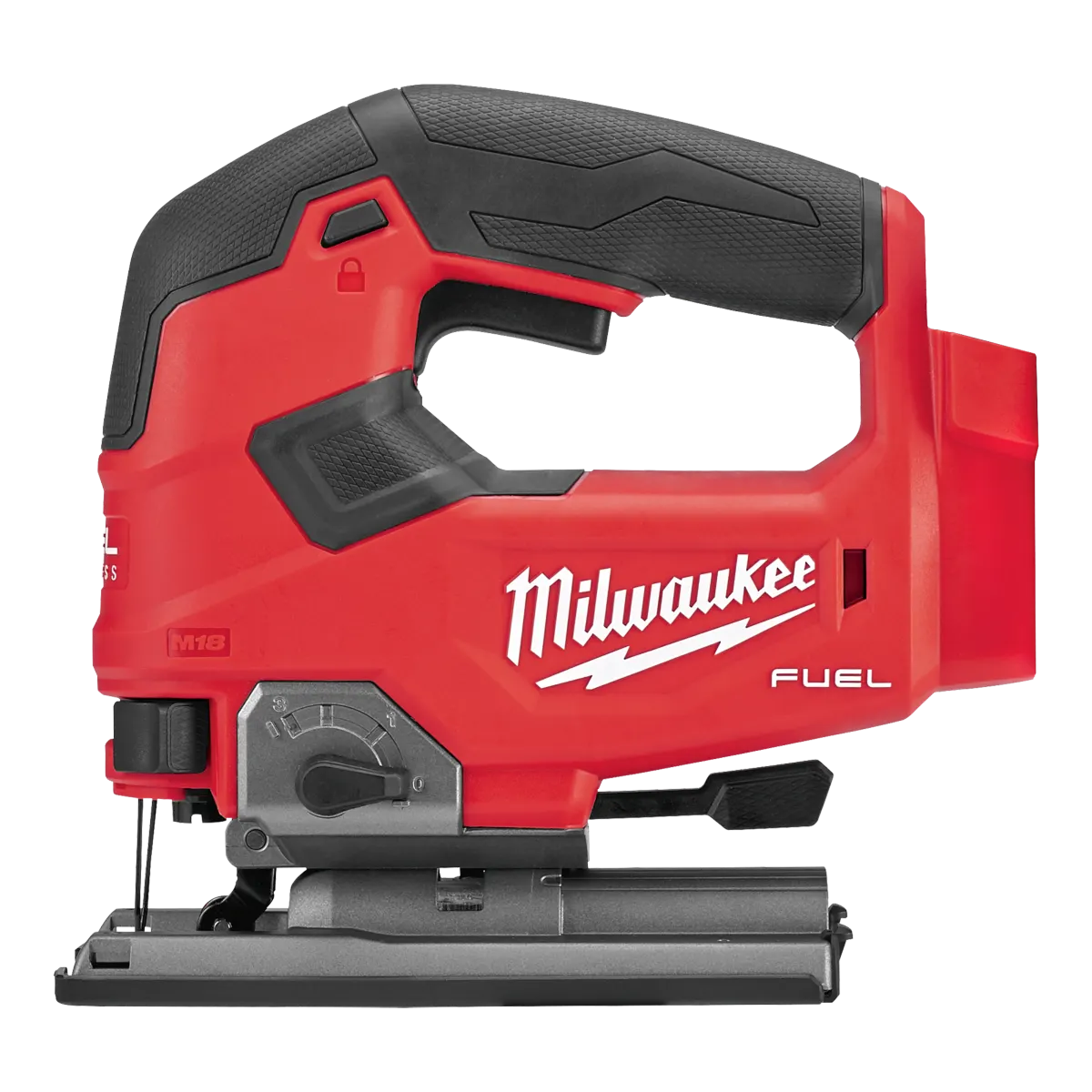
Milwaukee 2737-20 M18 FUEL
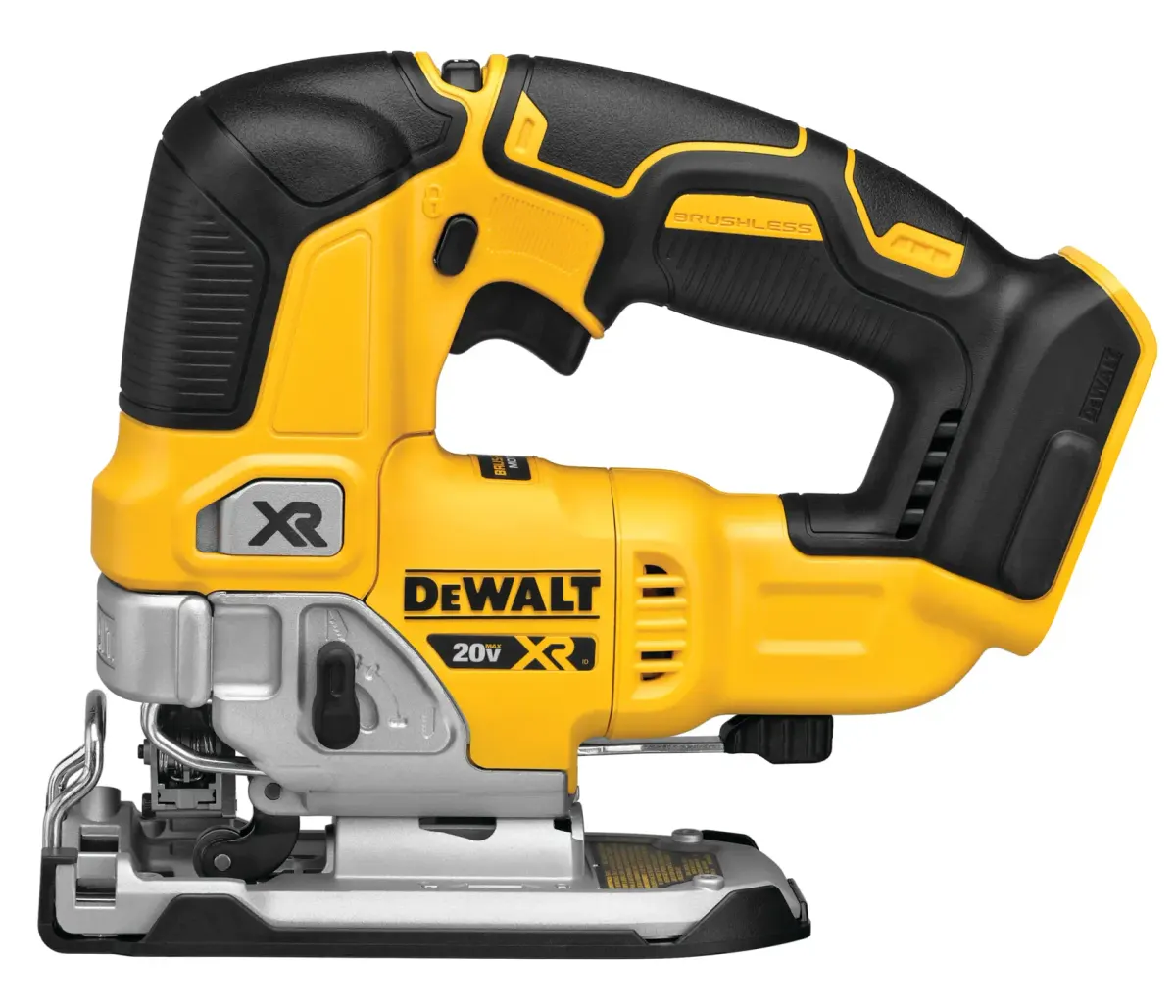
DeWalt DCS334B 20V MAX XR
| Spec | Milwaukee 2737-20 M18 FUEL | DeWalt DCS334B 20V MAX XR |
|---|---|---|
| No-load SPM | 0–3,500 SPM (variable) | 0–3,200 SPM (variable) |
| Motor type | POWERSTATE Brushless | XR Brushless |
| Stroke length | 1 inch | 1 inch |
| Orbital settings | 4-position orbital action | 4-position orbital action |
| Bevel capacity | 0°, 15°, 30°, 45° toolless | 0°, 15°, 30°, 45° positive stops |
| Wood cutting capacity | 5-1/2 in. (specialty blade) | 2 in. softwood |
| Blade system | Quik-Lok toolless clamp | Keyless tool-free clamp |
| Weight | 5.8 lbs (with 5.0Ah battery) | 4.62 lbs (bare tool) |
| Dust blower | On/off switchable blower | Fixed blower, no vacuum port |
| Battery platform | M18 (battery not included) | 20V MAX (battery not included) |
| Price range (bare) | $170–$220 | $105–$160 |
Competing brushless jigsaws, competing ecosystems
The Milwaukee 2737-20 M18 FUEL and the DeWalt DCS334B 20V MAX XR occupy the same market position: premium-tier cordless brushless jigsaws built for tradespeople and serious DIYers on their respective battery platforms. They share a 1-inch stroke, 4-position orbital action, and toolless T-shank blade clamping. The differences that separate them — 300 SPM, a large gap in cutting depth capacity, and meaningfully different weights — are the differences that determine which one belongs in your bag.
Cutting speed and motor characteristics
At 3,500 SPM, the Milwaukee 2737-20 is the fastest cordless jigsaw in this category. The DeWalt DCS334B reaches 3,200. In practical cutting, the difference is most pronounced in hardwood and stacked material: thick oak, doubled plywood, or engineered lumber with embedded fasteners all move faster under the Milwaukee's POWERSTATE motor than under the DCS334B's XR brushless. In 3/4-inch cabinet plywood and soft MDF — the bread-and-butter of kitchen and bath work — the 300 SPM gap is not the reason to choose one saw over the other.
Both motors maintain consistent speed under load, which is the primary advantage brushless technology provides over brushed alternatives. The Quik-Lok blade clamp on the Milwaukee allows one-handed blade changes with fingers clear of the hot blade collar; the DeWalt's keyless clamp is equally fast and equally competent. Either tool accepts the full universe of T-shank blades.
Cutting depth: the clearest specification gap
The Milwaukee 2737-20 is rated to 5-1/2 inches with a specialty blade. The DeWalt DCS334B is rated to 2 inches in softwood and 3/8 inch in mild steel. That is not a minor gap — it is the difference between a jigsaw that handles thick construction materials and one that does not. A standard 2×4 (1-1/2 inches actual) sits comfortably within the DCS334B's range; anything thicker does not.
For the cabinet installer, countertop fabricator, or flooring contractor whose jigsaws see 3/4-inch stock almost exclusively, the 2-inch ceiling never matters. For the remodeler who also needs to cut through thick stair treads, demolition situations involving doubled framing, or structural timber, the Milwaukee is not optional — the DCS334B simply cannot make those cuts.
Weight and ergonomics in daily use
The DeWalt DCS334B is lighter by any fair comparison, at 4.62 lbs bare versus the Milwaukee's 5.8 lbs with a 5.0Ah battery attached. In a day of trim work, countertop cutouts, and repeated horizontal cuts, the weight difference translates directly into less wrist and shoulder fatigue. The DCS334B's slightly shorter overall length also helps in tight panels and confined spaces.
The Milwaukee's switchable dust blower is a practical advantage over the DeWalt's fixed blower. For interior finish work — particularly laminate flooring installation near finished walls — shutting off the blower and connecting a shop vac produces a much cleaner working environment. DeWalt's blower has no on/off or vacuum port at all, which limits dust management options on sensitive surfaces.
Orbital action and bevel precision
Both saws offer four orbital positions with the same 0°, 15°, 30°, and 45° bevel detents, and both lock those angles with positive stops. The execution is comparable. Orbit 0 for clean curves and precise entry cuts; orbits 2–4 for production-speed rough cuts in dimensional lumber. Four-position orbital action is the full range, and neither manufacturer compromises on this spec.
Price and platform logic
The Milwaukee 2737-20 lists at $170–$220 bare; the DCS334B at $105–$160 bare. The price gap reflects both the higher SPM and the M18 FUEL premium. For buyers already owning M18 batteries, the Milwaukee is the natural high-performance upgrade. For buyers on 20V MAX, the DCS334B adds a capable brushless jigsaw without cross-platform battery expense. Fresh buyers should treat the platform they plan to grow into as the primary factor — the tools themselves are too closely matched on everyday tasks to justify platform-switching costs.
Who buys which
Buy the Milwaukee 2737-20 when you are on M18, need the highest SPM available in a cordless jigsaw, or regularly cut material thicker than 2 inches. Its 3,500 SPM, 5-1/2-inch capacity, and switchable blower make it the more capable tool.
Buy the DeWalt DCS334B when you are on 20V MAX, value the lightest possible tool for daily trim and sheet-goods work, or want the lower entry price. The DCS334B's light weight, brushless efficiency, and 3,200 SPM handle the full range of typical jigsaw tasks at a lower bare-tool cost.
Advertisement
Frequently asked questions
- Which jigsaw is faster, the Milwaukee 2737-20 or the DeWalt DCS334B?
- The Milwaukee 2737-20 reaches 3,500 SPM at no load versus the DeWalt DCS334B's 3,200 SPM — a 300 SPM advantage that is most noticeable cutting thick hardwood or stacked plywood, where more strokes per minute directly speeds up the cut. In thin sheet goods and light trim work, the gap between 3,200 and 3,500 SPM is not perceptible.
- Can the DeWalt DCS334B cut 2x4 lumber?
- Yes, but its 2-inch maximum wood cutting capacity is a firm ceiling. A standard 2×4 measures 1-1/2 inches actual thickness, which sits within the DCS334B's rating. It handles typical dimensional framing and trim stock comfortably. For material thicker than 2 inches — thick stair treads, doubled framing, or engineered beams — the Milwaukee 2737-20 is the correct choice with its 5-1/2-inch specialty-blade capacity.
- Does the Milwaukee 2737-20 come with a battery?
- No. The 2737-20 is a bare tool; a battery and charger are sold separately. If you are already on the M18 platform, any M18 pack works. For a complete kit, the 2737-21 bundles the same saw body with a 5.0Ah battery and charger. The DeWalt DCS334B is also bare tool only; the DCS334P1 kit adds a 5.0Ah 20V MAX battery and charger.
- Is the DeWalt DCS334B lighter than the Milwaukee 2737-20?
- The DCS334B is significantly lighter as a bare tool at 4.62 lbs. The Milwaukee's 5.8 lbs figure includes a 5.0Ah battery, so the measurements are not directly comparable, but with equivalent batteries installed the DeWalt remains lighter by over a pound. For overhead cuts, extended detail work, or any application where arm fatigue accumulates, the DCS334B's weight advantage is a genuine benefit.
- Which jigsaw should I choose if I have neither platform?
- For a fresh buyer choosing between the M18 and 20V MAX platforms, the tiebreaker is which ecosystem you plan to grow into. Both platforms are vast — over 270 tools each — so either is a sound long-term investment. At full price, the Milwaukee 2737-20's higher SPM and deeper cutting capacity justify the higher bare-tool cost if you do heavy or varied jigsaw work. If you primarily cut sheet goods and trim, the DCS334B's lower price, lighter body, and identical orbital spec give it a practical edge.
- What is the difference between the Milwaukee 2737-20 and 2737B-20?
- Both are M18 FUEL jigsaws with identical motors and cutting specs. The 2737-20 has a D-handle grip suited to most horizontal cuts; the 2737B-20 uses a barrel-grip format preferred for plunge cuts and detailed overhead work. The DeWalt DCS334B uses a top-handle configuration similar to the Milwaukee 2737-20. The choice between D-handle and barrel-grip depends on the type of cutting you do most.
Ready to buy the 2737-20?
We may earn a commission if you buy through these links, at no extra cost to you.