
Makita XFD131 vs DeWalt DCD800 18V Drill (2026)
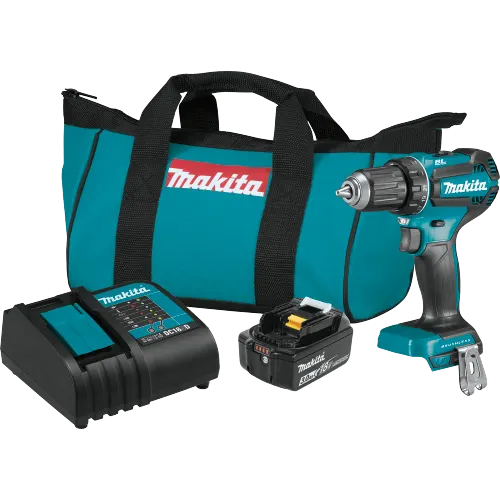
Makita XFD131
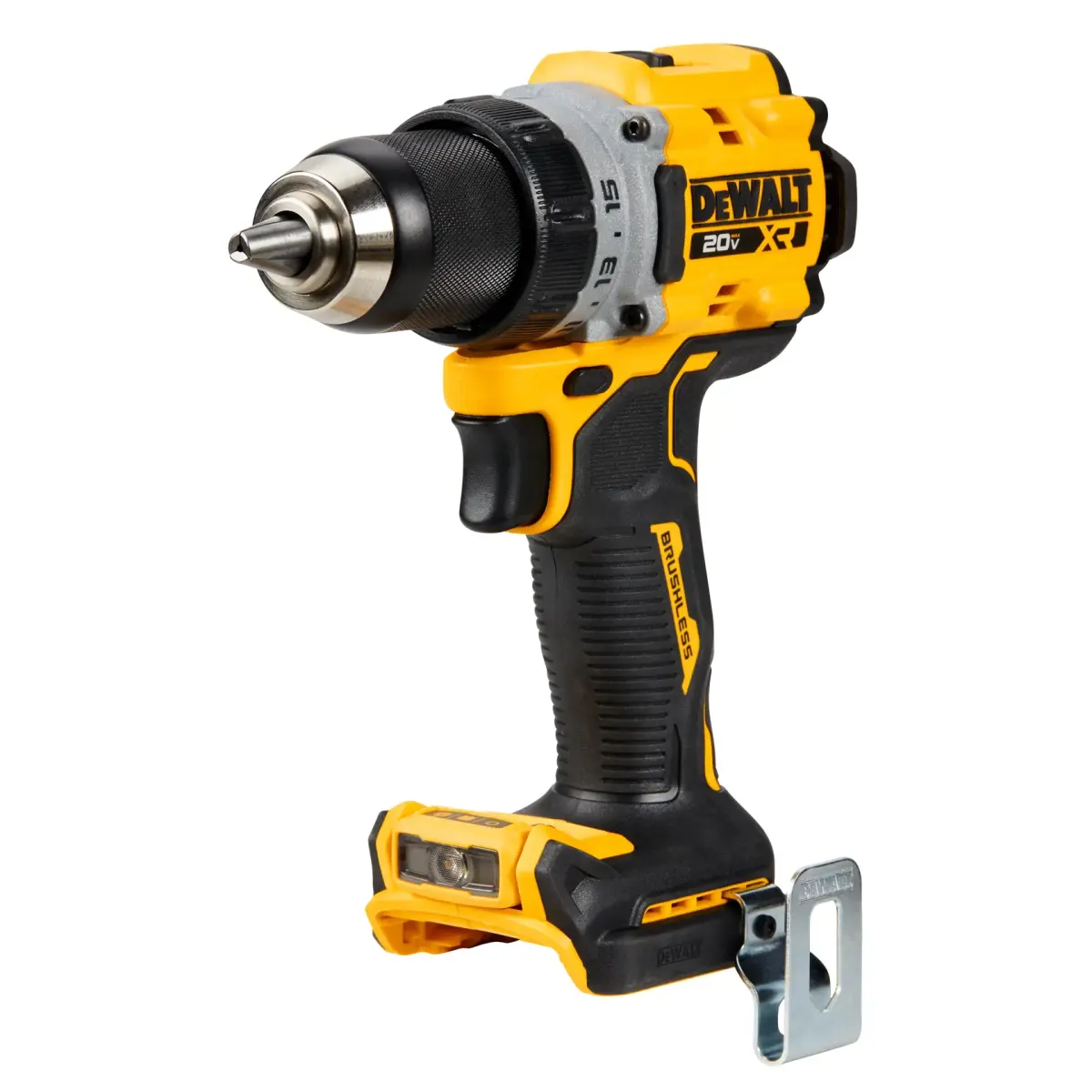
DeWalt DCD800
| Spec | Makita XFD131 | DeWalt DCD800 |
|---|---|---|
| Max torque | 440 in-lbs | Not published (UWO; ~40% over DCD791) |
| Top no-load speed | 0–1,900 RPM (2-speed) | 0–2,000 RPM (2-speed) |
| Weight | 3.8 lbs with 3.0Ah battery | 2.82 lbs (bare tool) |
| Motor | Brushless | XR brushless |
| Chuck | 1/2 in. all-metal ratcheting | 1/2 in. metal ratcheting |
| Clutch | Multi-position with 2-speed transmission | 15-position |
| Worklight | Dual LEDs flanking the chuck | 3-mode 70-lumen LED, 20-min spotlight |
| Bundled battery | One 18V LXT 3.0Ah | Two 20V MAX 2.0Ah (DCD800D2) |
| Charger | 30-minute rapid charger | DCB112 standard-rate charger |
| Warranty | 3-year limited (tool, battery, charger) | 3-year limited + 1-yr service, 90-day money-back |
| Price range | $150–$200 | $150–$200 |
Two compact 18V drills, two battery camps
Put the Makita XFD131 and the DeWalt DCD800 side by side and you are really comparing two near-identical compact brushless drill/drivers that happen to live on different battery platforms. Both are full-size compacts aimed at the remodeler, electrician, cabinet installer, or serious homeowner who wants one do-everything drill that will not wreck a wrist. The Makita is an 18V LXT tool rated at 440 in-lbs with a 0–1,900 RPM top gear; the DeWalt is a 20V MAX XR tool (18V nominal) that DeWalt markets as roughly 40% stronger than the DCD791 but, frustratingly, never assigns an in-lbs number. That single missing figure shapes a lot of the cross-shopping here, because it forces buyers to judge the DeWalt on feel and reputation rather than a spec they can line up against the Makita's 440.
The headline takeaway: this contest is decided less by the drills than by the batteries on your shelf. If you already own LXT packs, the XFD131 is the obvious pick; if you run a 20V MAX fleet, the DCD800 is. For the buyer starting fresh, the kit contents and a handful of small spec gaps tip the scale — and they tip, narrowly, toward Makita.
Power and speed
On raw drilling and driving, the two are close enough that most owners would struggle to tell them apart blindfolded. Makita publishes 440 in-lbs of max torque, comfortably handling 3-inch deck screws, moderate lag screws, and a full day of cabinet and drywall fastening. DeWalt withholds a torque figure and instead rates the DCD800 in Unit Watts Out, claiming about 40% more output than the DCD791; in practice the DeWalt feels right in the same class as the Makita. Neither is a heavy structural specialist — that is the Milwaukee 2904's territory at 1,400 in-lbs — and both will start to strain on large lag bolts and big self-feed bits.
Speed is where DeWalt opens a sliver of daylight. Its high gear tops out at 0–2,000 RPM against the Makita's 0–1,900, which clears larger twist-drilled holes in steel a touch quicker with sharp bits. It is a marginal edge, not a decisive one, but for anyone boring a lot of holes it nudges the DeWalt ahead on pure pace. The Makita answers with low-gear control: its 0–500 RPM bottom range gives confident command over big fasteners.
Ergonomics and weight
The DeWalt is the more compact, lighter tool, and it is not especially close once you account for size. At 2.82 lbs bare with a short 6.37-inch head, the DCD800 is built to slip between 16-inch on-center studs, reach into panels, and work up a ladder without fatigue. The Makita lists 3.8 lbs with its 3.0Ah battery installed, so the numbers are not measured identically, but in the hand the DeWalt is the one that disappears.
Where Makita pushes back is balance and lighting. The XFD131 sits neutral in the hand rather than tipping backward, a genuine advantage over nose-heavy high-torque drills, and its twin LEDs flank the chuck to cancel the shadow your hand throws across the bit. DeWalt counters with the best worklight in the entire four-drill set: a three-position, three-mode LED rated up to 70 lumens with a 20-minute spotlight shutoff that doubles as a usable work lamp in a dark cavity. Call lighting a DeWalt win and balance a Makita win; both grips are comfortable, slim, and well-textured.
Batteries and platform
This is the category that decides the matchup for fresh buyers. The Makita XFD131 kit ships with a single 3.0Ah LXT cell and a 30-minute rapid charger — a meaningful upgrade over the 2.0Ah packs that pad out most competing kits, delivering more screws per charge and quick turnaround between sessions. The DeWalt DCD800D2 kit instead bundles two 20V MAX 2.0Ah DCB203 packs and a standard-rate DCB112 charger. That two-small-packs strategy keeps a spare always charging and the tool light, but each cell holds less than Makita's 3.0Ah, so you swap more often on big jobs, and the charger is slower than Makita's rapid unit.
Platform depth is a wash. Both LXT and 20V MAX are vast — hundreds of compatible tools each — so neither brand can claim a meaningful ecosystem advantage. Both drills also accept larger cells: drop a 5.0Ah pack into either for long runtime at the cost of weight, and the DeWalt additionally takes FLEXVOLT cells.
Price and value
Pricing sits in the same $150–$200 band for both kits, which is exactly why the bundled contents carry so much weight. Spend the same money and the Makita hands you a larger battery and a faster charger out of the box, while the DeWalt hands you a spare pack, a better light, and a slightly faster, lighter tool. There is no wrong answer at the register; there is only the question of which trade-offs you value. It is also worth noting that DeWalt has launched the higher-output DCD801, which frequently drags the DCD800 down to a discount — and a discounted DCD800 swings the value math firmly back in DeWalt's favor.
Who should buy which
Buy the Makita XFD131 if you are on or joining the LXT platform, want the larger 3.0Ah battery and 30-minute charger in the box, and value a published torque number and neutral balance. It is the slightly safer all-rounder for a fresh buyer paying full price.
Buy the DeWalt DCD800 if you already own 20V MAX batteries, want the lightest and most compact body with the best worklight in the group, or can catch it on a post-DCD801 discount. For DeWalt-platform owners it is an easy call, and on sale it is arguably the better value of the two.
Either way, neither tool is for heavy structural fastening or masonry — for that, step up to the Milwaukee 2904. And if your budget is the tightest priority, the lighter, longer-warrantied Bosch GSR18V-400 deserves a look before you commit.
Advertisement
Frequently asked questions
- Is the Makita XFD131 better than the DeWalt DCD800?
- For most buyers the Makita XFD131 edges ahead, chiefly because its kit includes a single 3.0Ah battery and a 30-minute rapid charger versus DeWalt's two 2.0Ah packs and standard charger. The DCD800 counters with a lighter bare body, a faster 2,000 RPM top gear, and a superior worklight, so the gap is small. If you already own DeWalt 20V MAX batteries, stay with the DCD800 — the platform you own should decide it.
- Which drill is more powerful, the XFD131 or DCD800?
- On paper the Makita publishes 440 in-lbs of max torque while DeWalt declines to publish an in-lbs figure, rating the DCD800 in Unit Watts Out as roughly 40% stronger than the DCD791 it replaced. In hand the two feel comparable for everyday wood, metal, and fastening work, and both sit well below the high-torque Milwaukee 2904. The Makita's published number makes cross-shopping easier, but neither is a heavy structural-fastening specialist.
- Which is lighter, the Makita XFD131 or DeWalt DCD800?
- The DeWalt DCD800 is lighter, at 2.82 lbs as a bare tool against the Makita's 3.8 lbs measured with its 3.0Ah battery. The DeWalt also runs a shorter 6.37-inch head, so it is the easier tool for overhead work and tight cavities. Remember the figures are not measured the same way — Makita's includes a battery — but the DeWalt is genuinely the more compact of the pair.
- Does the Makita XFD131 or DeWalt DCD800 have a better battery kit?
- The Makita XFD131 kit has the stronger battery setup for most users: one 3.0Ah LXT cell plus a 30-minute rapid charger gives more screws per charge and quicker turnaround. The DeWalt DCD800D2 instead bundles two smaller 2.0Ah packs and a standard charger, which keeps a spare always charging but means more frequent swaps on long jobs. Both platforms accept larger packs if you want extended runtime.
- Is either drill a hammer drill?
- No, neither the Makita XFD131 nor the DeWalt DCD800 has a hammer mode — both are drill/drivers built for wood, metal, and fastening only. For masonry you would need Makita's XPH-series hammer drill, DeWalt's DCD805, or the Milwaukee 2904. If occasional brick and block drilling matters to you, neither of these two is the right tool.
- Should I buy the DeWalt DCD800 now that the DCD801 exists?
- Yes, the DCD800 is still a strong buy, and the arrival of the higher-output DCD801 often pushes the DCD800 to a discount that makes it one of the better cordless-drill values. The DCD801 adds more power output, but the DCD800 remains an excellent compact for everyday work. Buy the DCD800 when it is discounted and you do not need the extra grunt; choose the DCD801 if peak output matters.
Ready to buy the XFD131?
We may earn a commission if you buy through these links, at no extra cost to you.