
EGO LB6504 vs Ryobi RY404014BTL: 650 CFM Blower Face-Off
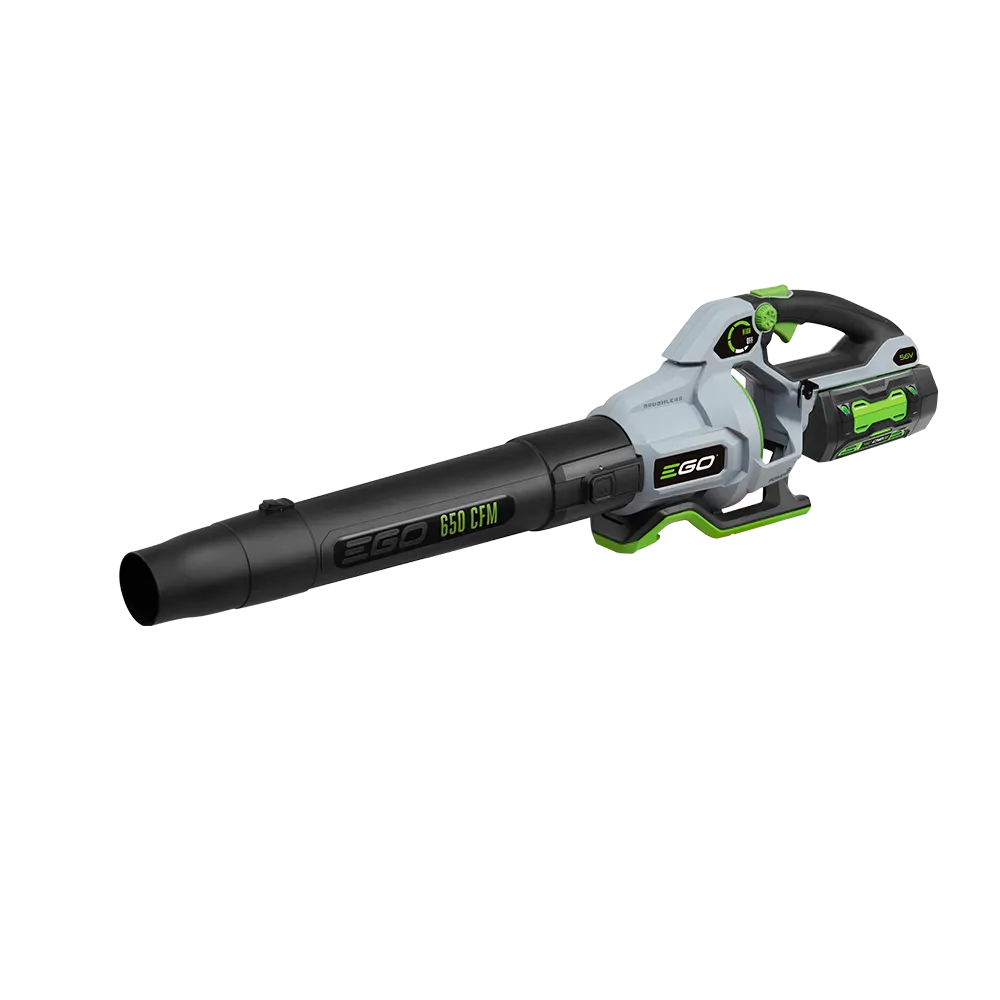
EGO LB6504
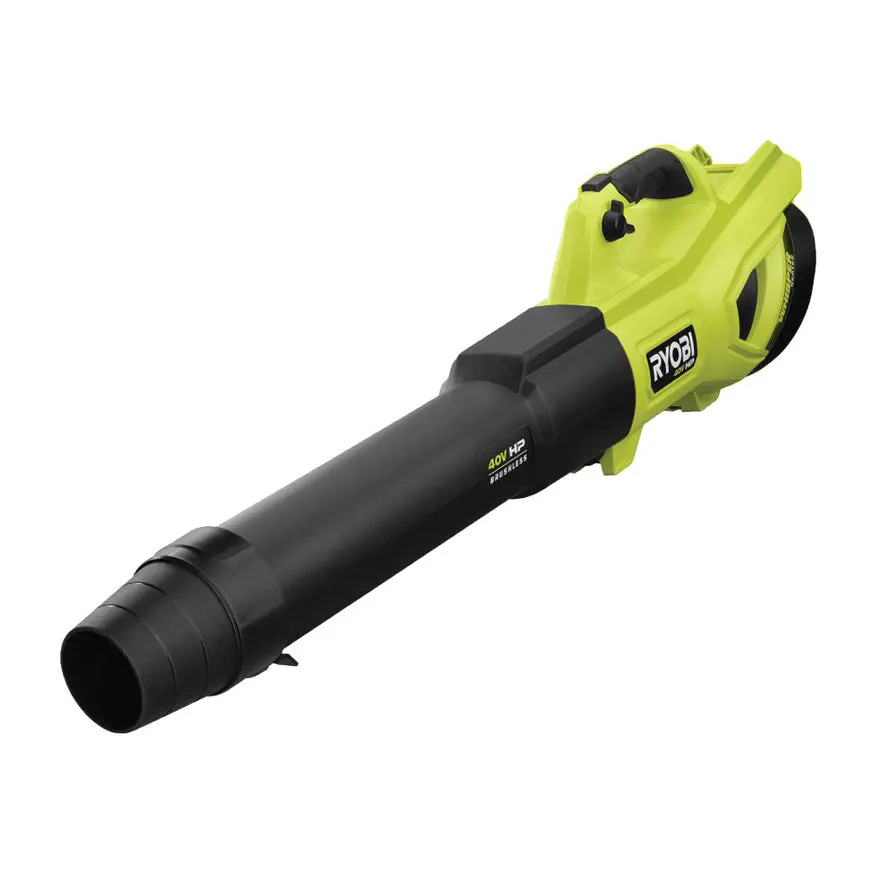
Ryobi RY404014BTL
| Spec | EGO LB6504 | Ryobi RY404014BTL |
|---|---|---|
| Air volume | 650 CFM (turbo) | 650 CFM |
| Air velocity | 180 MPH | 160 MPH |
| Bare tool weight | 4.77 lbs | 10.4 lbs |
| Noise level | ~66 dBA at full turbo | ~58–63 dBA (Whisper Series) |
| Included battery | 56V 5.0Ah ARC Lithium | Tool only (no battery) |
| Speed control | Variable-speed dial + turbo button | Variable trigger + cruise control + turbo |
| Weather resistance | IPX4 | Not rated |
| Voltage | 56V | 40V HP |
| Runtime (4Ah battery) | ~90 min average (5.0Ah included) | Over 45 min (4.0Ah) |
| Price range (standard) | $229–$279 (kit with 5.0Ah) | $180–$230 (tool only) |
Same CFM, different machines
If you open the spec sheets for the EGO LB6504 and Ryobi RY404014BTL and stop at the air volume figure, both read 650 CFM and the comparison appears to end there. Dig deeper and the two machines reveal sharply different engineering priorities that make each the better tool in different hands.
EGO built the LB6504 for maximum clearing performance from minimum weight: 180 MPH velocity, a 4.77-lb bare tool, IPX4 weather resistance, and a 5.0Ah battery included in the kit that enables 90 minutes of mixed-speed runtime. Ryobi built the RY404014BTL for acoustic comfort and platform economics: a Whisper Series motor-and-housing redesign that substantially reduces noise at full output, cruise control that eliminates trigger fatigue on long sessions, and a price-accessible tool-only SKU for existing 40V owners who already have batteries ready.
Both are excellent 650 CFM blowers. The question is which engineering priority fits your situation better.
Air velocity: EGO's performance edge
CFM measures volume of air moved per minute; MPH measures how fast that air travels at the nozzle exit. The two metrics interact to determine practical clearing force — a high-volume, low-velocity stream spreads wide but lacks punch; a high-velocity, moderate-volume stream cuts through debris with more directed force.
The EGO LB6504 produces 180 MPH against the Ryobi's 160 MPH at equal 650 CFM output. That 20-MPH gap is modest but measurable on the debris types that challenge both machines equally at their CFM maximum: wet leaves packed against a fence, pine needles matted into a gravel path, damp clippings compressed under foot traffic. At those tasks the EGO's higher velocity dislodges material from closer distance and with fewer passes. On loose dry leaves in open areas, both machines perform identically to any user's perception.
Bare tool weight: a significant difference
The Ryobi's Whisper Series acoustic design requires a heavier fan housing and internal diffuser structure. The result is a 10.4-lb bare tool — more than double the EGO's 4.77-lb bare weight. With a 5.0Ah battery installed, the EGO reaches approximately 10.2 lbs total, comparable to the Ryobi bare. With any battery installed, the Ryobi is notably heavier than the EGO.
This weight difference is most consequential in two scenarios. First, overhead clearing: holding 10-plus lbs extended overhead toward gutters or eaves for ten minutes creates meaningful shoulder and wrist load; the EGO at roughly 6 lbs with a compact battery is far more comfortable for sustained overhead work. Second, prolonged one-handed use when directing the nozzle into tight spaces with one hand while managing debris with the other — lower weight reduces fatigue in that position.
For standard two-handed yard clearing with the tool at waist height, the Ryobi's weight is manageable for most adults without special concern. The distinction shows up primarily in extended overhead use and in the experience of users with upper-body strength or mobility limitations.
Whisper Series acoustics: Ryobi's real advantage
Ryobi's 85% quieter-than-gas claim for the Whisper Series is benchmarked against a specific comparison, but the acoustic result is real: approximately 58–63 dBA at standard operating distances at most power levels. The EGO LB6504 runs similarly at moderate variable-speed but climbs toward 66 dBA at sustained turbo — still quieter than a gas blower but perceptibly louder than the Ryobi at matched CFM output.
For suburban homeowners with attentive neighbors, HOA restrictions, or noise ordinances, that acoustic gap matters. The ability to run a full 650 CFM clearing session on a Saturday morning at Whisper Series noise levels — equivalent to a normal conversation at distance — avoids conflicts that a louder machine might create. Noise is not a spec that shows up in traditional performance comparisons, but for a residential blower used seasonally in close proximity to other households, it deserves more weight than it typically receives.
Cruise control versus speed dial
The EGO uses a rotary speed dial for variable-speed control plus a separate turbo button for maximum output. It is intuitive and allows rapid transitions between gentle and maximum flow, but requires holding the dial position continuously — no trigger lock at a specific intermediate speed.
Ryobi's variable trigger plus cruise control combination is more ergonomically sophisticated for long sessions. Squeeze to your desired speed, engage cruise control, and the blower holds that output indefinitely without finger pressure. Over a 30-minute driveway clearing session, trigger-hold fatigue is a genuine factor, and the Ryobi eliminates it. The EGO's approach is sufficient; the Ryobi's is more comfortable for extended uninterrupted clearing.
Kit economics and platform investment
For a first-time buyer comparing total cost including battery, the EGO kit at $229–$279 includes a 5.0Ah 56V battery and standard charger — a meaningful portion of the kit price is the battery, which crosses over to every other EGO tool you own or buy. The Ryobi's standard SKU is tool-only; the RY404014K kit with a 4.0Ah battery brings total Ryobi cost comparable to the EGO.
For buyers already on a platform, the economics favor staying: a 40V Ryobi owner gets the tool-only SKU for less and runs an existing battery; a 56V EGO owner can sometimes find the LB6504 bare tool or use existing batteries with the kit at reduced net cost. Platform loyalty is not blind loyalty — it is a genuine economic argument when you already own cells that work.
Summary
Choose the EGO LB6504 for maximum clearing performance on a half-acre or larger lot, for overhead gutter work where lighter weight reduces fatigue, or when starting fresh and want the best-equipped kit out of the box.
Choose the Ryobi RY404014BTL when you already own 40V Ryobi batteries, when noise level is a priority in a dense neighborhood, when cruise control will be used on long sessions, or when the tool-only price fits a tight budget with batteries already on hand.
Advertisement
Frequently asked questions
- Which clears leaves faster — the EGO LB6504 or Ryobi RY404014BTL?
- At identical CFM settings both blowers move the same volume of air, but the EGO's 180 MPH velocity gives its air column more force per cubic foot — meaning it dislodges wet, matted, or stuck debris more effectively from the same working distance. For dry leaf clearing in open areas, both feel similar in use. For damp leaves in October after a rain, or pine needles packed against a curb, the EGO's extra velocity is a measurable advantage.
- Is the Ryobi RY404014BTL actually quieter than the EGO LB6504?
- Yes, at comparable power settings. Ryobi's Whisper Series design specifically re-engineers the impeller and housing geometry for acoustic reduction, putting the RY404014BTL in the 58–63 dBA range at typical operating distances. The EGO LB6504 runs around 59–62 dBA at moderate variable-speed settings but climbs to roughly 66 dBA at full turbo. For a neighbor-sensitive neighborhood or early-morning yard work, the Ryobi's Whisper Series holds a real acoustic edge at sustained high output.
- What is the Ryobi cruise control feature and does the EGO have it?
- Cruise control on the Ryobi locks the variable-speed trigger at your selected output level, holding that speed without requiring continuous finger pressure. The EGO LB6504 has a variable-speed dial and a separate turbo button, but no cruise control lock — you hold the trigger to maintain speed. For clearing sessions lasting 20 or more minutes, the Ryobi's cruise control substantially reduces hand fatigue, which is a meaningful ergonomic advantage on longer jobs.
- Should I buy the EGO kit or the Ryobi tool-only if I already have 5.0Ah batteries?
- If you already have a 5.0Ah (or larger) battery from the relevant platform, buy the tool-only version of whichever blower matches your platform. If you are on EGO 56V, buying the EGO LB6504 bare tool (when available) or using an existing battery with the kit makes both options competitive. If you are on Ryobi 40V, the RY404014BTL bare tool is an excellent value add-on. The battery you already own is the deciding factor — do not start a second platform just for a blower.
- Which is better for overhead gutter clearing, the EGO or Ryobi?
- The EGO LB6504 is considerably better for overhead work at 4.77 lbs bare tool. Extended overhead blowing with the Ryobi at 10.4 lbs bare creates significant shoulder and wrist load over a 10-to-15 minute gutter cleaning session. Both blowers include or accept nozzle attachments for directing flow into gutter channels, but the EGO's much lighter bare weight makes sustained overhead positioning far less fatiguing.
Ready to buy the LB6504?
We may earn a commission if you buy through these links, at no extra cost to you.