
DeWalt DXV10P vs Ryobi PCL735B: Corded vs Cordless Shop Vac
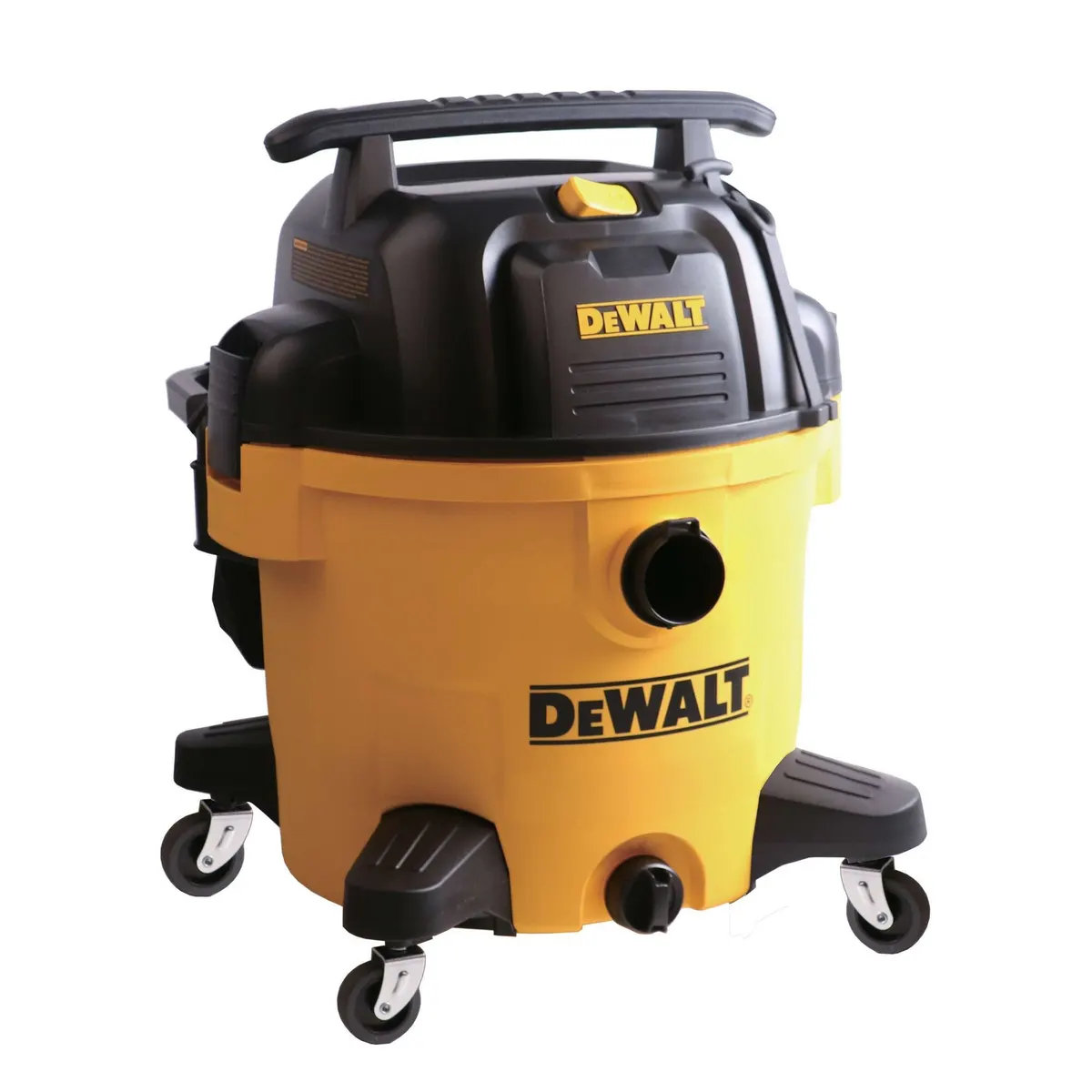
DeWalt DXV10P
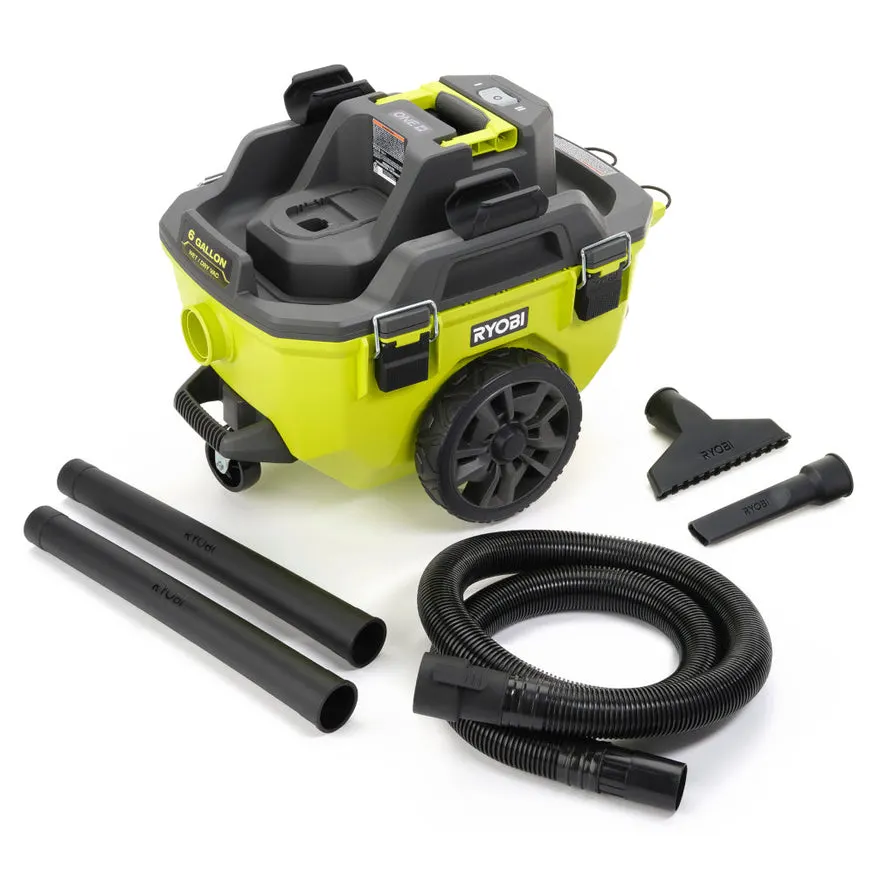
Ryobi PCL735B
| Spec | DeWalt DXV10P | Ryobi PCL735B |
|---|---|---|
| Power source | Corded (13 A, 20 ft.) | Cordless (18V ONE+, battery not included) |
| Capacity | 10 gallons | 6 gallons |
| Peak HP | 5.5 peak HP | Not rated in HP |
| Airflow | 90 CFM (at hose) | 80 CFM / 36 in. water lift |
| Motor type | 2-stage quiet motor | Brushless battery motor |
| Hose | 1-7/8 in. x 7 ft. | 1-7/8 in. x 7 ft. |
| Weight (tool only) | 27.78 lbs | 25.2 lbs (no battery) |
| Speed settings | Single speed | High / Low 2-speed |
| Price range | $100–$130 | $149–$199 (tool-only to kit) |
| Warranty | 3-year limited | 3-year limited |
The fundamental question: is cord freedom worth the trade-offs?
Comparing the DeWalt DXV10P and Ryobi PCL735B is really about a single decision: how much is complete cord freedom worth against the concrete advantages a corded machine brings in capacity, noise level, and cost per gallon? Both are well-built tools serving genuine use cases. The DeWalt represents the best a quiet, compact corded machine can do; the Ryobi represents the best a mainstream cordless vacuum can do on a proven residential battery platform.
For most buyers with outlet access, the math favors the DeWalt. For a specific subset — Ryobi 18V ONE+ owners who regularly vacuum in locations without outlets — the Ryobi earns its premium.
Capacity gap: real on renovation jobs
The 10-gallon DeWalt holds 67 percent more debris and liquid than the Ryobi's 6-gallon drum before requiring emptying. On a renovation cleanup — drywall chunks, tile fragments, wood chips from framing — a 6-gallon drum fills in roughly half the time. Each emptying trip interrupts the work, requires setting down the tool, walking to a dumpster or trash bag, and resetting. Over a four-hour renovation session, the compounded interruption is real.
For light, targeted cleanup tasks — clearing sawdust after a single router pass, cleaning a vehicle interior, sweeping a compact workshop floor after a project — 6 gallons is entirely adequate and the cordless convenience more than compensates for the smaller drum. The capacity argument matters most when the task is continuous cleanup over an extended session.
Suction and 2-stage motor: DeWalt's mechanical advantage
The DeWalt's 90 CFM at the hose tip is a real-world figure measured under operating load — an important distinction from drum-inlet measurements on most competing machines. The 1-7/8 inch hose is correctly sized for fine dust ports on circular saws, miter saws, and sanders, making the DXV10P effective for tool-side collection as well as general floor work.
The 2-stage motor is what separates the DeWalt acoustically from both the Ryobi and from the 16-gallon single-stage machines in this category. Compressing air in two stages reduces the sharp, high-frequency whine that makes standard shop vac motors fatiguing over long sessions in enclosed spaces. For contractors running a vacuum for four to six hours in a finished basement or garage, this noise reduction has a practical impact on both the operator and nearby occupants.
The Ryobi's brushless battery motor also avoids the worst characteristics of single-stage universal motors and is noticeably quieter than older-generation shop vac motors at comparable suction settings. On low speed, the PCL735B is a relatively quiet machine. It does not match the DeWalt's 2-stage design at sustained full output, but the gap is smaller than comparing either to a standard single-stage 16-gallon machine.
Battery economics: when the Ryobi makes sense
The Ryobi PCL735B's value proposition is specific: it serves the Ryobi 18V ONE+ owner who already has batteries in rotation from drills, circular saws, or outdoor equipment. For that buyer, the $149 tool-only price provides a genuinely capable cordless vacuum at a cost competitive with mid-range corded machines, with the added benefit of complete mobility. A 4Ah or 6Ah pack already charged from another Ryobi tool drops straight in — no additional battery investment required.
For the buyer with no existing ONE+ batteries, the calculus reverses. Adding a 4Ah battery and charger brings total entry cost to $199 or more. At that price point the DeWalt DXV10P delivers a quieter, higher-capacity machine with stronger suction from a wall outlet. The platform investment argument is what makes the Ryobi competitive, not the hardware comparison in isolation.
Weight and portability
The Ryobi is technically lighter as a bare tool — 25.2 lbs without battery versus the DeWalt's 27.78 lbs. Once a 4Ah battery is installed, the total weight roughly equals the DeWalt. The practical portability difference is actually the absence of a cord, not the weight. A cordless machine that needs no cord management moves more freely between locations even if the total weight is similar.
The Ryobi's 8-inch all-terrain wheels are a genuine advantage over the small hard casters typical of compact corded shop vacs — rolling the Ryobi over door thresholds, concrete cracks, and in and out of a vehicle cargo area is easier than maneuvering a typical corded machine with hard swivel casters.
Verdict by use case
Choose the DeWalt DXV10P for enclosed workshops and regular contractor work where noise accumulation matters, for tool-side dust collection at saws and sanders, or for any location with accessible outlets where 10-gallon capacity handles a full session without repeated emptying.
Choose the Ryobi PCL735B specifically when outlet access is genuinely limited — detached garages, outdoor work areas, vehicle interiors in a driveway, or construction sites without power yet — and when you already own Ryobi 18V ONE+ batteries. Its two-speed switch and cord-free mobility solve the specific problem it is built to address; do not buy it to solve a problem you do not have.
Advertisement
Frequently asked questions
- Which is better for garage cleanup, the DeWalt DXV10P or Ryobi PCL735B?
- For a garage with a wall outlet — which describes the vast majority of attached garages — the DeWalt DXV10P is the stronger choice. Its 10-gallon drum holds nearly double the Ryobi's capacity before requiring an emptying trip, the 2-stage motor runs quieter during sustained use, and 90 CFM at the hose provides consistent suction through the full cord length. The Ryobi PCL735B makes sense for detached garages without outlet access or for cleanup tasks at the car in a driveway where cord management is genuinely inconvenient.
- How long does the Ryobi PCL735B run on one battery?
- On the high setting with a 4Ah 18V ONE+ pack, the PCL735B runs approximately 20 to 30 minutes of continuous suction. On the low setting, runtime extends to roughly 40 to 50 minutes. That covers a typical post-project shop cleanup or vehicle interior in one charge. For longer sessions, a second battery or the 6Ah pack from other Ryobi tools substantially extends continuous operation.
- Can the DeWalt DXV10P connect directly to power tools?
- The DXV10P's 1-7/8 inch hose fits most DeWalt saw and sander dust ports directly. The machine does not include an auto-start outlet that triggers the vacuum when a connected tool starts — that feature is on the higher-end DeWalt DXV10S. For manual operation alongside a saw or sander, the DXV10P works well; for automated trigger-start, add an aftermarket auto-start switch or step up to the DXV10S.
- Is the Ryobi PCL735B worth it without existing 18V ONE+ batteries?
- Not compared to corded alternatives. The tool-only PCL735B at $149 requires adding an 18V battery and charger to function — bringing total first-buy cost to $199 or more. At that price, the corded DeWalt DXV10P at $100–$130 provides more capacity, more suction, and a quieter motor for less money. The PCL735B's value proposition relies on using batteries already owned from Ryobi drills, saws, or other ONE+ tools.
- Which is quieter, the DeWalt DXV10P or Ryobi PCL735B?
- The DeWalt DXV10P has the acoustic edge, owing to its 2-stage motor design that compresses air twice and substantially reduces the high-frequency motor whine that standard shop vac motors produce. The Ryobi's brushless battery motor is also relatively quiet compared to corded single-stage machines like the RIDGID HD1600 or Craftsman CMXEVBE17595, but it does not match the DeWalt's 2-stage design for pure noise reduction. Both are meaningfully quieter than a typical 16-gallon single-stage vac.
Ready to buy the DXV10P?
We may earn a commission if you buy through these links, at no extra cost to you.