
DeWalt DXPW3425E vs Ryobi RY142300: Gas vs Electric Pressure Washer (2026)
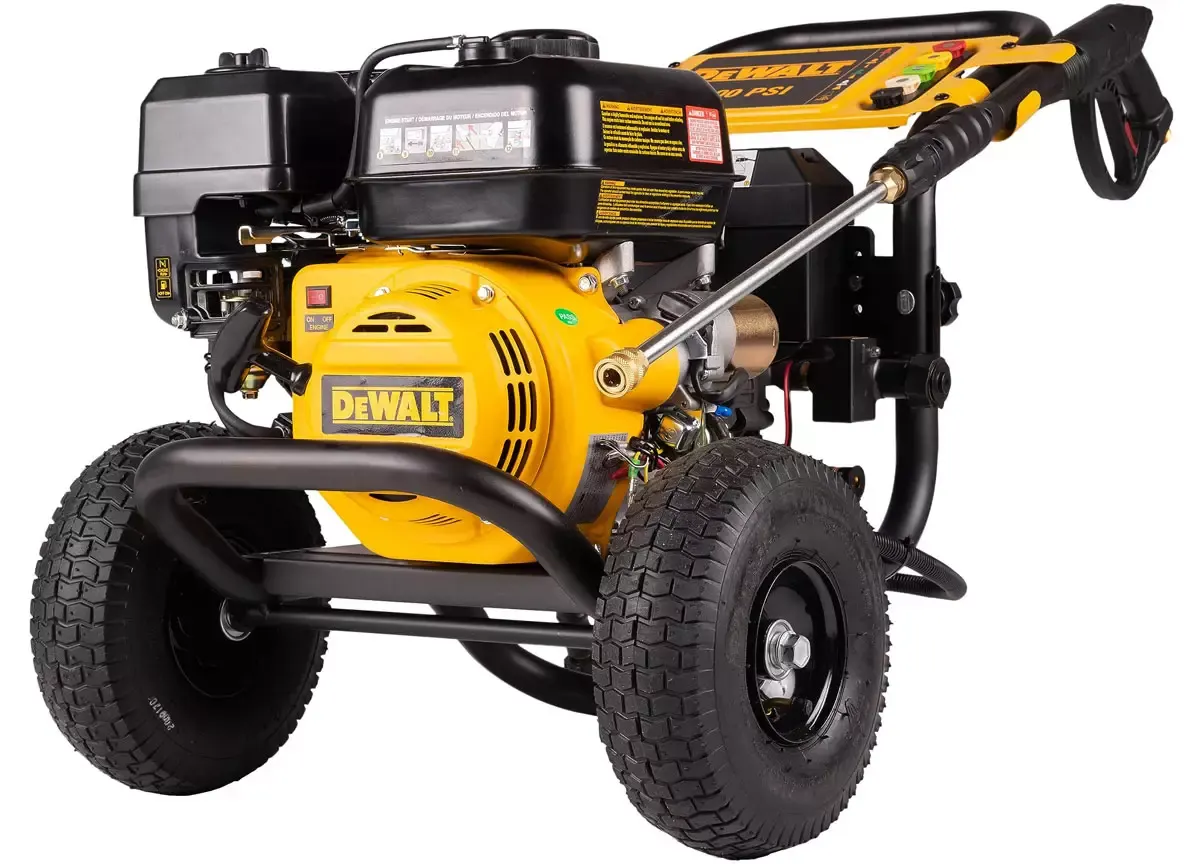
DeWalt DXPW3425E
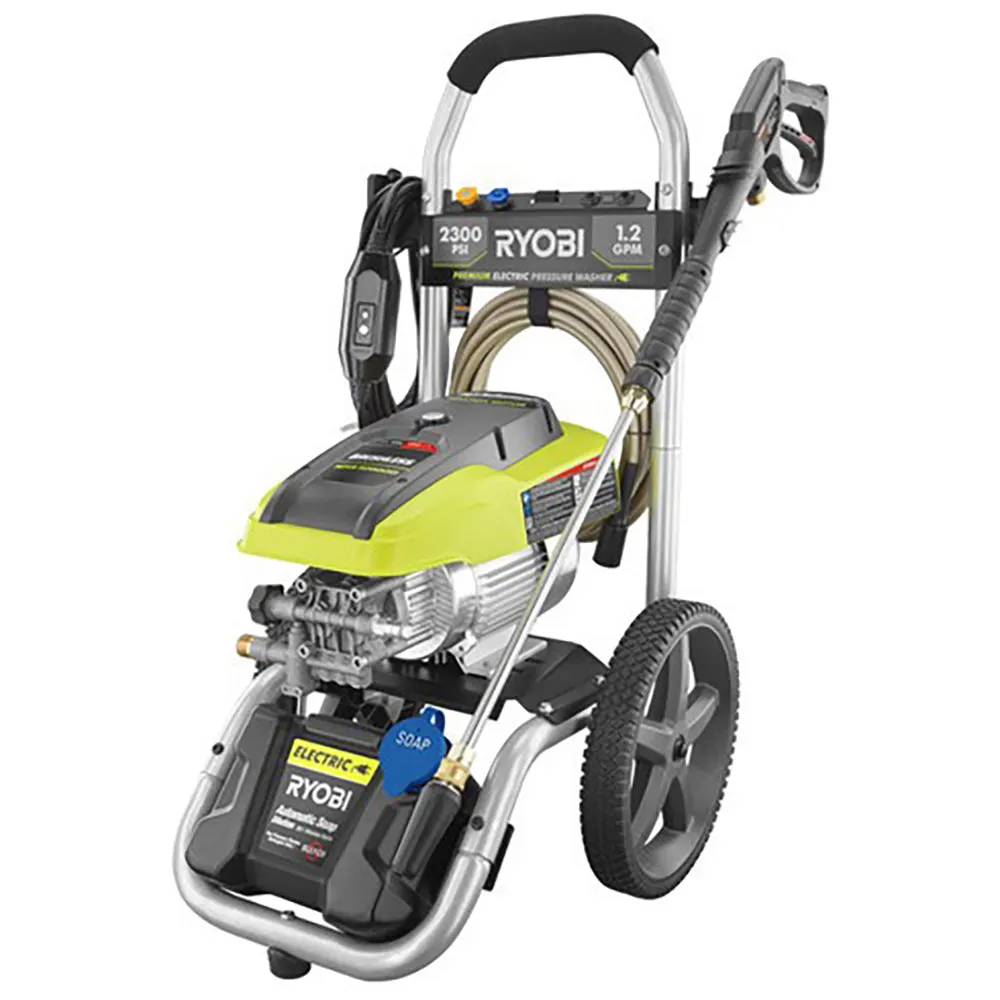
Ryobi RY142300
| Spec | DeWalt DXPW3425E | Ryobi RY142300 |
|---|---|---|
| PSI (max) | 3,400 PSI | 2,300 PSI |
| GPM (max) | 2.5 GPM | 1.2 GPM |
| Cleaning units (PSI × GPM) | 8,500 CU | 2,760 CU |
| Power source | 208cc gas engine (dual start) | 120V corded electric (13A brushless) |
| Weight | 81 lbs | 49.3 lbs |
| Hose length | 25 ft | 25 ft |
| Nozzles included | 5 quick-connect (0°, 15°, 25°, 40°, soap) | 5 quick-connect (0°, 15°, 25°, 40°, turbo) |
| Warranty | 5-year limited (pump 3 years) | 3-year limited |
| Noise / emissions | Loud, produces exhaust (outdoor use only) | Quiet, no fumes (safe indoors) |
| Maintenance | Oil changes, fuel stabilizer, winterization required | Minimal (store indoors, protect from freezing) |
| Price range | $550–$650 | $200–$250 |
Gas vs electric: two different worlds
Choosing between a gas pressure washer and an electric pressure washer is not really about brand — it is about what you will clean, how often, and how much time and money you want to invest in maintenance. The DeWalt DXPW3425E and the Ryobi RY142300 sit at opposite ends of that equation. Both are excellent in their class, but they serve fundamentally different users.
The DeWalt DXPW3425E is a full-size gas machine producing 3,400 PSI at 2.5 GPM. Its 208cc OHV engine with dual electric/pull-start powers an AAA axial cam pump with a thermal relief valve, all mounted on a welded steel wheelbarrow frame. It is designed for sustained heavy use — stripping paint, cleaning large commercial concrete pads, tackling jobs that would take an electric machine multiple sessions.
The Ryobi RY142300 is a corded electric pressure washer at 2,300 PSI and 1.2 GPM. Its brushless induction motor runs cooler and quieter than universal-motor competitors, and its hand-truck design rolls easily over pavement. It is built for the homeowner who wants reliable cleaning power for driveways, decks, siding, and vehicles without the fuel, fumes, and maintenance of gas.
Power and cleaning speed
The biggest gap between these two is raw cleaning power. At 8,500 cleaning units, the DeWalt has more than three times the cleaning capacity of the Ryobi's 2,760 units. That translates directly to real-world speed: a 500-square-foot concrete driveway that takes the Ryobi forty-five minutes with a turbo nozzle might take the DeWalt fifteen minutes with a 25-degree nozzle. Paint stripping that is impossible on the Ryobi becomes a single-session job on the DeWalt.
The Ryobi's 1.2 GPM flow rate is its main limitation. While 2,300 PSI is enough to lift most residential grime, the low flow means rinsing takes longer. You will spend extra time flushing soap and debris from a large surface. The DeWalt's 2.5 GPM rinses twice as fast.
Motor and drivetrain
The DeWalt's 208cc gas engine is a small-engine workhorse. It produces consistent torque across the RPM range, so spray pressure does not droop when you are bearing down on a tough stain. The dual-start system eliminates the cold-start frustration common to gas washers — provided you supply your own 12V battery. The pump's thermal relief valve adds a reliability layer absent on many residential-grade machines.
The Ryobi's brushless induction motor is a standout at its price. Brushless motors run cooler and quieter than universal-motor electrics and generally last longer. The axial cam pump is adequate for residential use, but lacks the thermal protection of the DeWalt's pump. For the typical homeowner using the washer 10–20 hours per year, the Ryobi motor will outlast most other components.
Weight and portability
At 81 lbs, the DeWalt is a two-person lift to get into a truck bed. The wheelbarrow frame and 10-inch pneumatic tires roll well on rough ground, but stairs, curbs, and tight storage are real obstacles. The Ryobi, at 49 lbs on a hand-truck frame, is easier to move and stores upright in a narrow garage space. Its solid wheels never go flat, though they transmit more vibration on uneven surfaces.
Kit and accessories
Both machines include five nozzles and a 25-foot high-pressure hose. The DeWalt provides a dedicated soap nozzle with a large onboard soap tank; the Ryobi includes a turbo nozzle that accelerates concrete cleaning. The Ryobi also has a built-in detergent tank for easy soap application. Neither includes a surface cleaner — an add-on both benefit from, though the need is greater for the DeWalt given its power.
Running costs and maintenance
This is the Ryobi's clearest advantage. Electric pressure washers require minimal maintenance: store the machine indoors, protect it from freezing, and check the inlet filter occasionally. The DeWalt demands regular oil changes (twice per season), fuel stabilizer at winterization, and pump protector antifreeze to avoid freeze damage. Gas engines also produce exhaust — the DeWalt cannot be run in a garage, while the Ryobi can be used indoors with good ventilation.
Fuel is an ongoing cost for the DeWalt, though consumption is modest on typical residential jobs. The Ryobi's electricity cost is negligible in comparison.
Price and value
At $200–$250, the Ryobi is less than half the price of the DeWalt's $550–$650. For a homeowner who cleans a driveway, deck, and car a few times a year, the Ryobi is clearly the better value. It does everything those tasks require and does not demand the extra purchase of a 12V battery or regular engine maintenance.
The DeWalt justifies its higher price only if you need its power. Contractors, property managers, and homeowners with large or heavily stained surfaces will get their money's worth. For the occasional home user, the premium is hard to justify.
Who should buy which
Buy the DeWalt DXPW3425E if you regularly strip paint, clean commercial concrete, handle large surface areas (multiple driveways, long fences, fleet vehicles), or need the fastest possible cleaning time. Be prepared for the weight, noise, fumes, and maintenance schedule.
Buy the Ryobi RY142300 if you are a homeowner cleaning a driveway, deck, fence, and car on a seasonal basis. You get enough pressure for effective cleaning, minimal maintenance, quiet operation, and a price that leaves room for accessories like a surface cleaner.
Final thoughts
There is no universal winner here — only the right tool for your specific job. The DeWalt DXPW3425E is the superior cleaning machine on paper and in practice for heavy work. The Ryobi RY142300 is the more practical, economical choice for the vast majority of homeowners. Match the tool to your workload and you will be satisfied with either.
Advertisement
Frequently asked questions
- Which pressure washer is more powerful, the DeWalt DXPW3425E or Ryobi RY142300?
- The DeWalt DXPW3425E is significantly more powerful. It delivers 3,400 PSI at 2.5 GPM for 8,500 cleaning units, compared to the Ryobi's 2,300 PSI at 1.2 GPM for 2,760 CU. The DeWalt can strip paint, clean heavily stained concrete, and handle large commercial surfaces in a fraction of the time it would take the Ryobi.
- Is the Ryobi RY142300 safe for washing a car?
- Yes, using the 40-degree white nozzle at 18 inches standoff and keeping the wand moving. At 2,300 PSI the risk of paint damage is manageable with proper technique. The turbo nozzle and 0-degree nozzle should never be used on vehicles. The DeWalt DXPW3425E is not recommended for cars — its pressure can damage paint and force water into seals.
- Do I need a battery for the DeWalt DXPW3425E electric start?
- Yes. The electric start requires a standard 12V lawn-and-garden battery, which is not included. You must purchase and install one separately. The machine also has a manual pull-start backup that works without the battery, so you can still operate it even if the battery is dead or missing.
- Which is easier to maintain, the DeWalt or Ryobi?
- The Ryobi RY142300 is much easier to maintain. As a corded electric, it requires only basic storage and protection from freezing. The DeWalt gas engine needs regular oil changes, fuel stabilizer, and thorough winterization to prevent carburetor varnishing and pump freeze-cracking. The Ryobi also produces no exhaust, so it can even be used in a garage with good ventilation.
- Can the Ryobi RY142300 clean a concrete driveway effectively?
- Yes, for normal residential dirt, mold, and algae. With the 25-degree nozzle and optional surface cleaner, it handles driveways effectively. Heavily oil-stained concrete may need degreaser and multiple passes. The DeWalt DXPW3425E would clean the same driveway much faster and handle tough stains in one pass.
- Is the extra cost of the DeWalt DXPW3425E worth it for home use?
- Only if you regularly tackle heavy-duty jobs like paint stripping, commercial concrete cleaning, or large surface areas. For typical home use — cleaning a driveway, deck, fence, and car a few times a year — the Ryobi RY142300 is more practical, quieter, and costs less than half the price. The DeWalt justifies its $550–$650 price for those who need the power.
Ready to buy the DXPW3425E?
We may earn a commission if you buy through these links, at no extra cost to you.