
DeWalt DWS780 vs Bosch GCM12SD 12" Miter Saw (2026)
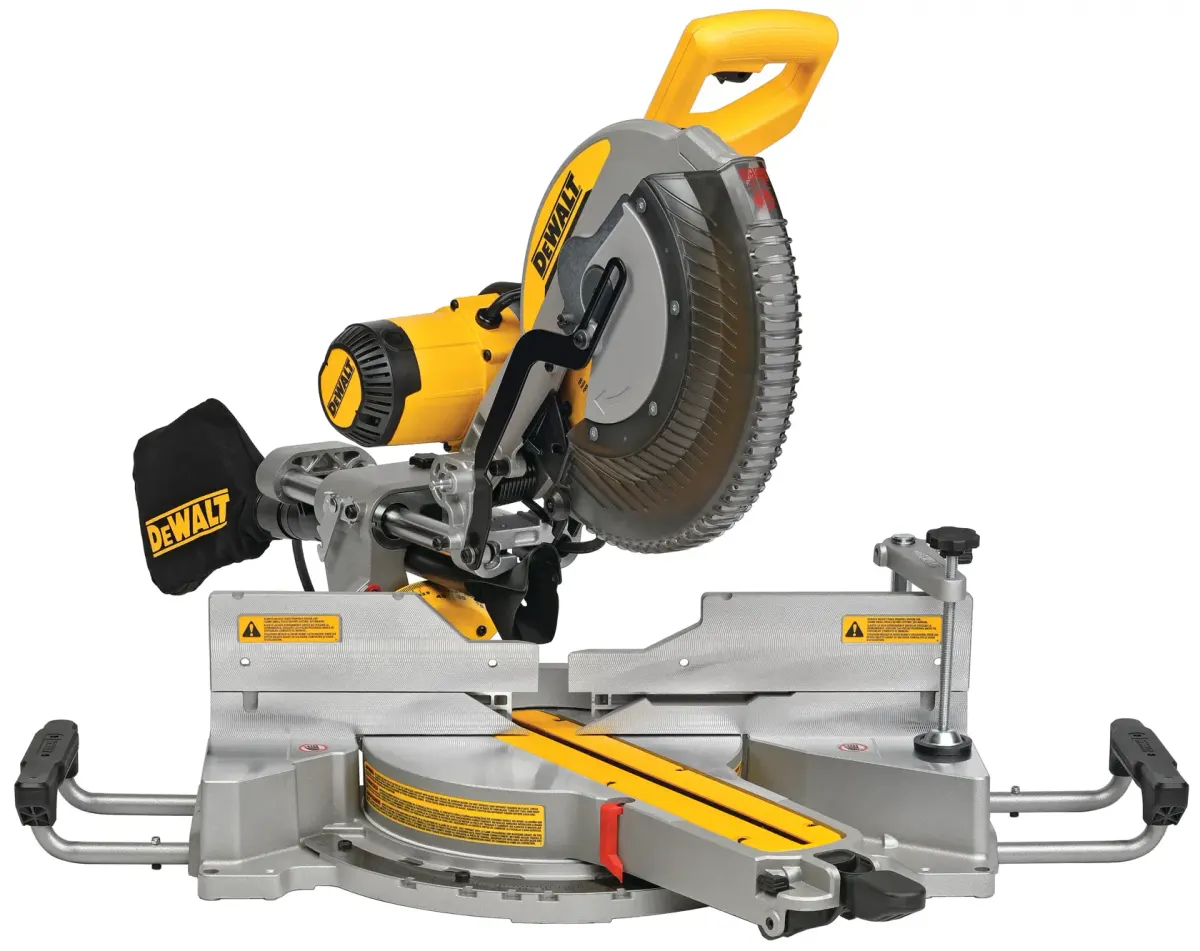
DeWalt DWS780
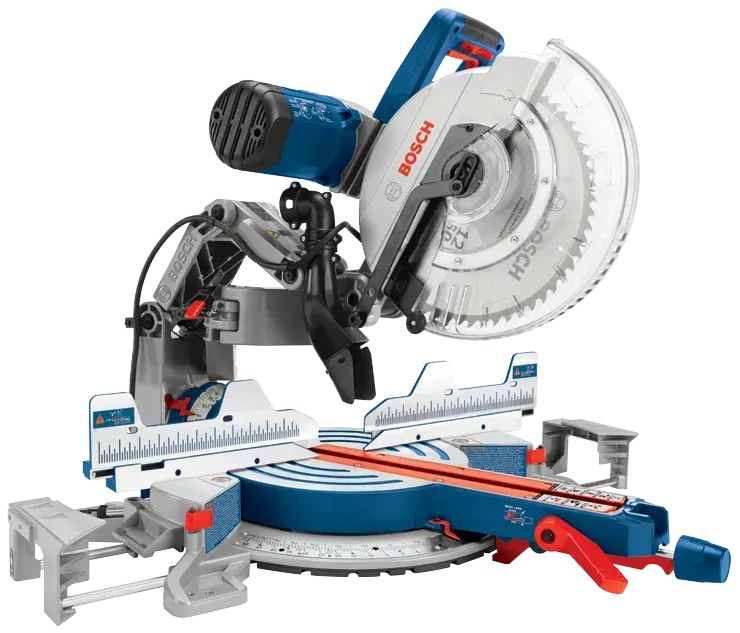
Bosch GCM12SD
| Spec | DeWalt DWS780 | Bosch GCM12SD |
|---|---|---|
| Blade size | 12 in. | 12 in. |
| Crosscut at 90° | 2 in. × 14 in. | 3-1/2 in. × 13-1/2 in. |
| Miter range | 60° right / 50° left | 60° right / 52° left |
| Bevel range | 48° left and right (dual) | 48° left and right (dual) |
| Motor | 15 Amp, 3,800 RPM | 15 Amp, 4,000 RPM |
| Cutline system | XPS LED shadow cutline (no calibration) | None — kerf shadow and blade guard only |
| Rear clearance required | 14–18 in. (traditional rail slider) | Zero (Axial-Glide mechanism) |
| Dust collection | Approx. 75% with vacuum | Approx. 90% with vacuum |
| Weight | Approx. 56 lbs | 65 lbs |
| Included blade | 32-tooth general-purpose | 60-tooth finish carbide |
| Price range | $449–$649 | $549–$649 |
Two routes to the same destination
Among professional 12-inch dual-bevel sliding compound miter saws, the DeWalt DWS780 and Bosch GCM12SD have been the most frequently compared options for over a decade. They share the same price tier, the same blade diameter, the same dual-bevel design, and the same 15-amp corded motor class. The differences between them are structural: the DWS780 uses a traditional rail slider with an XPS shadow cutline system; the GCM12SD uses an Axial-Glide pivot mechanism with no cutline indicator but zero rear clearance requirement and superior dust collection.
Neither design is objectively superior — each is the right saw for a different shop setup and a different professional workflow.
The XPS cutline: the DeWalt's most compelling argument
DeWalt's XPS cross-positioning system is the single feature most frequently cited by trim carpenters who choose the DWS780 over the GCM12SD. The principle is straightforward: an LED mounted above the blade casts a shadow that corresponds exactly to the kerf path. Before the trigger is pulled, the user sees the precise width of material that will be removed. There is no calibration offset to account for (as with a conventional laser), no misalignment after a blade change, and no interpretation required between a light beam and a pencil line.
For production trim work — cutting dozens of identical molding profiles, stepping through compound crown angles at a fast pace — the XPS reduces the cognitive load of each cut placement. Users moving from a laser-guided or unassisted saw to the XPS system consistently report that the first session with XPS feels like a workflow upgrade. The GCM12SD has no equivalent; it relies on a combination of the blade guard shadow and the user's eye alignment with the fence mark, which is the standard method for the industry but not the XPS method.
The Axial-Glide: the Bosch's structural edge
Bosch's Axial-Glide mechanism replaces extending rail sliders with a pivot arc. The blade arm swings forward on a curved path rather than shooting rails backward through the fence, which eliminates the rearward clearance requirement entirely. A GCM12SD placed against a wall can make its full slide stroke without any space behind the fence — a fact that changes the saw's feasibility in a significant percentage of working environments.
For a trim carpenter whose van has a fixed saw platform along one wall, the Axial-Glide means the platform can extend to the wall rather than stopping 18 inches short to accommodate the DeWalt's rail extension. For a contractor setting up in a finished room where furniture or cabinets are present, the Bosch fits against any wall surface. The DWS780 in the same scenario requires a clear 18-inch zone behind the fence, which eliminates some setups entirely.
Bosch also credits the Axial-Glide with improved long-term accuracy retention: without rails to drift out of alignment, the crosscut path remains consistent over the tool's service life. Long-term GCM12SD owners' feedback supports this claim — alignment complaints are less common in the GCM12SD's owner community than in the DWS780's, though both saws are well-regarded for accuracy.
Dust collection: the Bosch's performance lead
With a shop vacuum connected to the rear port, the GCM12SD captures approximately 90% of chips from standard 2x material — the highest figure in the 12-inch corded miter saw category. The DWS780 captures roughly 75% under the same conditions. That 15-percentage-point gap is visible in MDF cutting sessions, where fine particulate dust spreads around the fence area with the DeWalt and stays concentrated at the port with the Bosch. For interior trim work over finished floors, the Bosch's collection performance meaningfully reduces cleanup time and keeps dust out of HVAC systems.
The Bosch's chip deflector channels material rearward toward the collection port rather than allowing lateral ejection — a detail that makes the saw more suitable for confined room setups where a dust cloud to the left or right lands on completed work.
Weight and mobility
At approximately 56 lbs, the DWS780 is 9 lbs lighter than the GCM12SD's 65 lbs. On a stand, both saws are stationary workshop tools and the weight difference is irrelevant once positioned. For a mobile trim carpenter loading the saw into a truck twice daily, the 9-lb difference is felt cumulatively and the DeWalt is the more practical traveling companion. DeWalt's purpose-built stands — particularly the DWX726 — fold compactly and integrate with the DWS780's mounting points to make frequent setup manageable.
Capacity and motor
Both saws deliver 48 degrees of dual bevel and comprehensive miter range, but the specifics diverge slightly. The DWS780 cuts 2×14 lumber at 90° and handles miter angles to 60° right and 50° left. The GCM12SD cuts a 3-1/2-inch-thick board 13-1/2 inches wide at 90° — a slightly different capacity measurement that reflects its ability to handle 4x-dimensional lumber. The Bosch's 52° left miter range is also wider than the DWS780's 50°.
The GCM12SD's 4,000 RPM motor runs faster than the DWS780's 3,800 RPM, which contributes marginally to cut surface quality, though at 12-inch blade diameter, the blade tip speeds of both saws produce high-quality crosscuts with an appropriate finish blade installed.
Which saw for which buyer
Choose the DeWalt DWS780 if the XPS shadow cutline system is a priority for your production workflow, if portability and lighter transport weight matter, and if your shop or site setup allows adequate rear clearance. The DWS780's current availability at potential clearance pricing below $500 adds an economic argument that the GCM12SD cannot match.
Choose the Bosch GCM12SD if you need zero rear clearance for against-the-wall installation, want the best dust collection in the class for finished-surface work, and prefer a finish-grade 60-tooth blade without an upgrade purchase. The GCM12SD is the correct choice for a fixed-workshop installation where its extra weight is irrelevant and its structural advantages compound over years of daily use.
Advertisement
Frequently asked questions
- What is the XPS cutline system on the DeWalt DWS780 and why do carpenters prefer it?
- XPS (Cross Positioning System) uses a high-intensity LED to cast a precise shadow of the blade kerf onto the workpiece surface. The shadow represents the actual width of material the blade will remove — no offset to calibrate, no laser beam to align to a pencil mark. You see the exact kerf path before triggering the cut, which makes placing the cut line accurately faster and more reliable than eyeing a blade guard shadow. Carpenters who have used both the XPS and a laser cutline consistently rate the XPS system as more intuitive for production crosscutting. The LED is rated for the tool's service life, so no replacement is needed.
- Does the Bosch GCM12SD really need zero clearance behind the fence?
- Yes. The Axial-Glide mechanism pivots the blade arm on a curved arc rather than extending rails straight back through the fence. The saw can be pushed flush against a wall, a cabinet, or a trailer side without any rearward clearance requirement. A traditional rail slider like the DWS780 extends rails 14–18 inches behind the fence when the blade slides forward across the workpiece — that rearward extension demands free space that simply does not exist in many rooms, vans, and job-site setups. For a trim carpenter setting up in finished rooms with furniture or cabinets along the walls, the Bosch's zero-clearance design is a practical daily advantage.
- Which saw is easier to move between job sites?
- The DeWalt DWS780 at approximately 56 lbs is meaningfully easier to transport than the Bosch GCM12SD at 65 lbs. Single-person loading onto a truck or a saw stand is uncomfortable but manageable with the DWS780; the GCM12SD at 65 lbs is genuinely a two-person lift for any truck-bed loading that involves more than a step. Both saws require a dedicated stand for optimal working height — DeWalt's DWX726 and Bosch's GTA3800 are the respective purpose-built options.
- Is the 60-tooth blade that ships with the Bosch GCM12SD a real advantage?
- Yes, noticeably so. Most competing saws in this price tier bundle 32-tooth or 40-tooth general-purpose blades that produce rough crosscut surfaces on hardwood, painted MDF, and fine millwork. The GCM12SD's included 60-tooth carbide blade is a genuine finish-grade tool — the same tooth count most carpenters install as an upgrade on other saws. For a buyer who plans to cut architectural trim, painted casing, or hardwood molding immediately, the Bosch's blade eliminates a $40–$70 first-use purchase. The DeWalt's 32-tooth blade is useful for construction lumber but should be upgraded before any fine trim work.
- The DeWalt DWS780 is marked discontinued — should I still buy it?
- The DWS780 is marked discontinued on DeWalt's product page, but production inventory continues to move through Home Depot, Amazon, and authorized dealers as of mid-2026. Pricing has held in the $449–$649 range. The discontinuation announcement means no further production runs are planned — spare parts and warranty service remain available through DeWalt's service network, which covers discontinued tools for years after production ends. Buyers who can find the DWS780 at a promotional price below $500 are getting a professional-grade tool at clearance pricing.