
DeWalt DCW210B vs Makita BO5041 5-In Random Orbital Sander (2026)
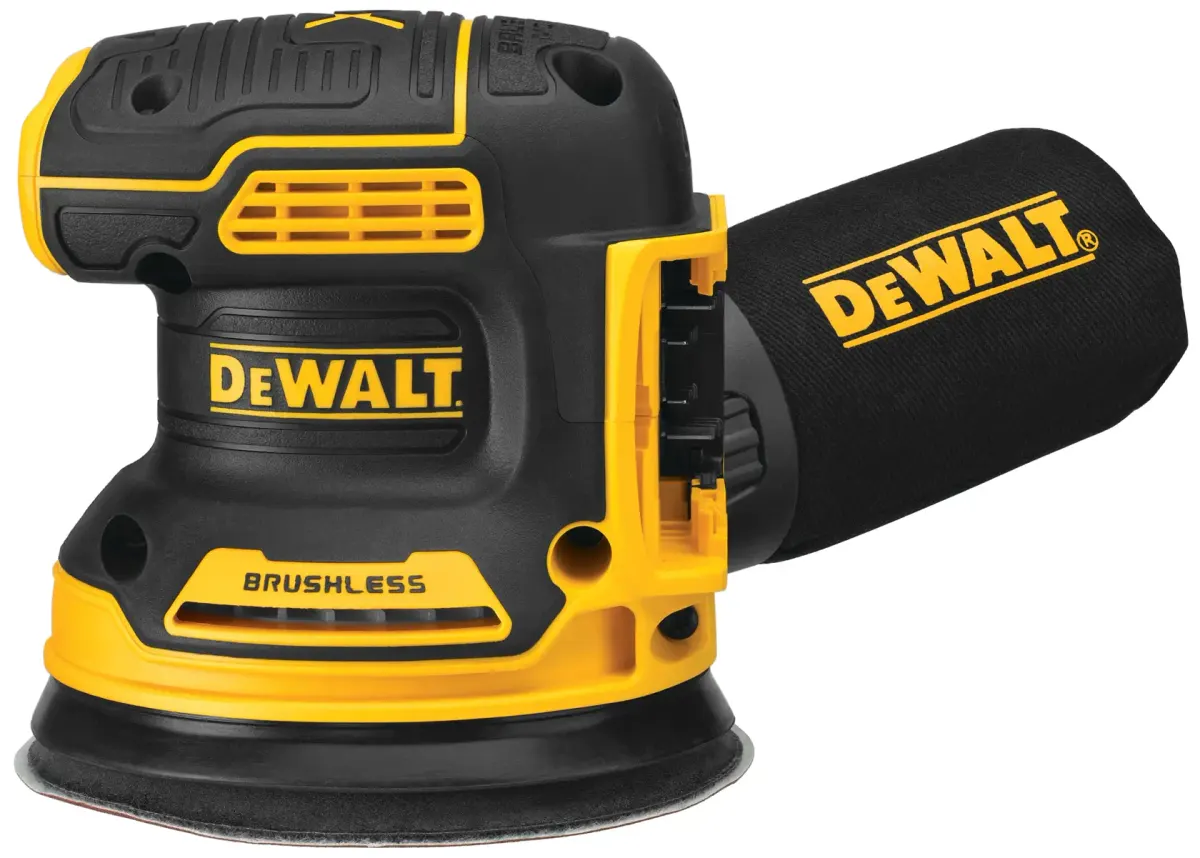
DeWalt DCW210B 20V MAX XR
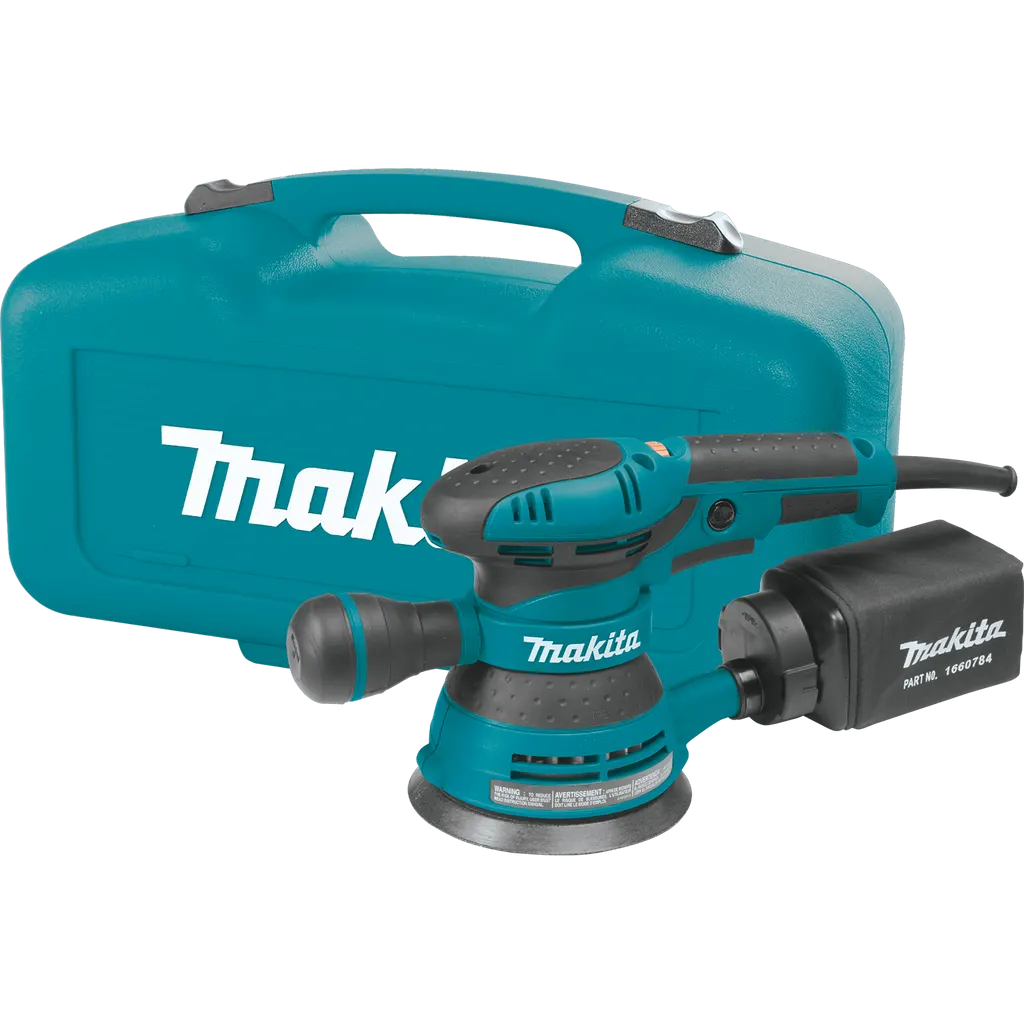
Makita BO5041 3-Amp Corded
| Spec | DeWalt DCW210B 20V MAX XR | Makita BO5041 3-Amp Corded |
|---|---|---|
| Power source | 20V MAX XR cordless (battery not included) | Corded 3.0 AMP, 120V |
| Speed range | 8,000–12,000 OPM variable | 4,000–12,000 OPM variable |
| Motor type | Brushless | Brushed (corded) |
| Orbit diameter | Not published | 1/8 in. (3.2 mm) eccentric |
| Pad size | 5 in. 8-hole hook-and-loop | 5 in. 8-hole hook-and-loop |
| Pad brake | None | Yes — slows pad on start/stop |
| Dust collection | Locking bag + DWV010/DWV012 port + 1-1/4 in. adapter | Through-pad bag + vacuum port adapter |
| Weight | 1.9 lbs (bare tool) | 3.1 lbs |
| Warranty | 3-year limited | 1-year limited |
| Price range | $99–$120 (bare tool) | $120–$140 |
Corded finishing precision versus cordless convenience
The DeWalt DCW210B and Makita BO5041 are both 5-inch random-orbit sanders with 8-hole hook-and-loop pads, variable speed, and effective dust collection. Put them on a spec sheet and they look like near-equals. Use them across a range of finishing tasks and two meaningful differences emerge: the Makita's wider speed range that starts 4,000 OPM lower, and the pad brake that protects delicate surfaces at startup and shutdown. Those two features define who should choose which tool.
Speed range: where the Makita pulls ahead
The BO5041's variable dial runs from 4,000 to 12,000 OPM. The DCW210B covers 8,000 to 12,000. The shared top end means both tools are equivalent for bulk stock removal, blending dried filler, and standard surface preparation. The difference shows at the bottom of the range.
Scuff-sanding between finish coats — a critical step in furniture and cabinet finishing — is done at the slowest safe speed the tool can deliver. Running 320-grit over a dried polyurethane coat at 12,000 OPM risks cutting through the coat on raised wood grain or at corners. The same pass at 4,000–5,000 OPM scuffs the surface just enough to improve adhesion for the next coat without breaking through. The DCW210B cannot go below 8,000, which is already in the middle of the BO5041's range. For finish coat preparation and veneer sanding, the Makita's slow-speed floor is a genuine capability the DeWalt lacks.
Pad brake: a small mechanism with real consequences
Makita's pad brake engages when the power switch is released, slowing the pad to a stop in roughly one second rather than letting it spin freely for four to six seconds of deceleration. The practical consequence: you can set the Makita down on the workpiece the moment you switch it off without worrying about the spinning pad creating swirl marks on a finished surface. With the DCW210B, holding the tool clear of the surface for several seconds after each shutdown is the correct technique — and a slip in attention or a moment of distraction produces exactly the kind of circular gouge that requires additional work to remove. For finish carpenters and cabinet finishers who switch the tool on and off repeatedly throughout a project, the pad brake is a meaningful quality-of-life and quality-of-result feature.
Brushless motor versus corded brushed
The DCW210B's brushless motor is more efficient than the BO5041's brushed AC motor in one important sense: it maintains consistent pad speed under varying load conditions. When a sanding disc loads up with softwood dust and the pad encounters increased resistance, the brushless controller compensates to maintain set OPM. A brushed motor under the same condition loses some speed, which can produce uneven scratch patterns over long passes. This is a real but subtle advantage — the difference is most noticeable during aggressive stock removal on resinous softwoods that load discs quickly.
The brushless motor also means longer tool life over heavy production use, since there are no brushes to replace. The BO5041's brushed motor is well-built and reliable in the Makita tradition, but it will require periodic brush inspection after several hundred hours of use in a production environment.
Weight and mobility
At 1.9 lbs bare, the DCW210B is the lightest 5-inch sander in this comparison — the BO5041 weighs 3.1 lbs. During overhead sanding, ceiling work, or any vertical surface where gravity works against you, the 1.2-lb difference is felt immediately and cumulatively across a long session. For shop-based flat-surface work where the sander rests on a horizontal workpiece, weight matters less.
Cordless freedom is the DCW210B's defining advantage for job site use. Sanding cabinet door faces at an installation site, finishing deck railings outdoors, or working in a space where running a cord requires an extension and cord management adds setup time — these are conditions where the DeWalt's 20V MAX battery genuinely improves the working experience. The BO5041 needs a six-foot cord managed around the workpiece.
Dust collection and warranties
Both sanders capture dust effectively when connected to a shop vacuum. The DCW210B's dust port connects to DeWalt extractors directly and to third-party shop vacs through the included adapter. The BO5041's vacuum port adapter fits standard shop vac hoses. Either setup captures the majority of sanding dust at the source, which matters for both surface quality — dust embedded in the next finish coat is a defect — and for respiratory safety with fine wood dust.
On warranty, the DCW210B's 3-year limited coverage is substantially better than the BO5041's 1-year term. For professional users planning heavy daily use, the longer warranty provides meaningful risk coverage.
Choosing between them
Buy the Makita BO5041 when finish coat preparation, veneer sanding, and fine furniture work are a regular part of your work, and when you have access to an outlet at your workstation. The 4,000 OPM minimum and pad brake address the two most common finishing-quality failure modes that the DCW210B cannot.
Buy the DeWalt DCW210B when you already own 20V MAX batteries, when job site mobility matters, or when the heaviest use case is standard stock preparation and general surface work that stays above 8,000 OPM. Its brushless motor, lighter body, and longer warranty are well-matched to platform owners who need sanding capability across a range of locations.
Advertisement
Frequently asked questions
- What is the main difference between the DCW210B and the BO5041?
- The most functionally important differences are speed floor and pad brake. The BO5041's variable range starts at 4,000 OPM — useful for scuff-sanding between finish coats and sanding over veneer where the DCW210B's 8,000 OPM minimum is too aggressive. The BO5041 also includes a pad brake that slows the pad on startup and shutdown, preventing surface gouges when you place or lift the tool. The DCW210B is cordless, lighter, and carries a longer 3-year warranty.
- Does the DeWalt DCW210B need a battery, and what battery should I use?
- Yes, the DCW210B is sold without a battery. Any DeWalt 20V MAX lithium-ion battery works. A compact 2.0Ah pack keeps weight low and delivers roughly 20–25 minutes of active sanding per charge. A 4.0Ah or 5.0Ah pack roughly doubles runtime at the cost of added weight. For platform owners, the same batteries that run your DeWalt drill, impact driver, or circular saw work directly in the sander.
- Why does the pad brake on the BO5041 matter?
- When a random-orbit sander is switched off, the pad continues to spin while it decelerates. If the spinning pad contacts the workpiece during that deceleration — when you set the tool down or brush it against the surface while reaching for a clamp — it creates circular swirl gouges in the finish that require additional sanding to remove. Makita's pad brake stops the pad quickly after shutoff, eliminating that window of risk. The DCW210B has no pad brake, so you need to hold the tool clear of the surface until it fully stops.
- Which sander is better for furniture finishing?
- The Makita BO5041 is better optimized for furniture finishing. Its 4,000 OPM minimum speed allows safe scuff-sanding between clear coats without cutting through, its pad brake protects delicate surfaces during tool placement, and its 1/8-inch orbit produces a fine scratch pattern matched to fine-finishing work. The DCW210B is capable for furniture work but its 8,000 OPM floor requires more care on veneer and thin substrates.
- Can I hook both sanders to a shop vacuum?
- Yes. The DCW210B includes a 1-1/4-inch universal adapter that fits most shop vac hoses and also connects directly to DeWalt's DWV010 and DWV012 extractors. The BO5041 includes a vacuum port adapter for standard shop vacs. Both setups capture significantly more fine dust than the included bags alone. Vacuum hookup improves surface visibility during sanding and is strongly recommended on any enclosed or finish-critical workspace.
Ready to buy the BO5041?
We may earn a commission if you buy through these links, at no extra cost to you.