
DeWalt DCF887B vs Makita XDT16Z Impact Driver (2026)
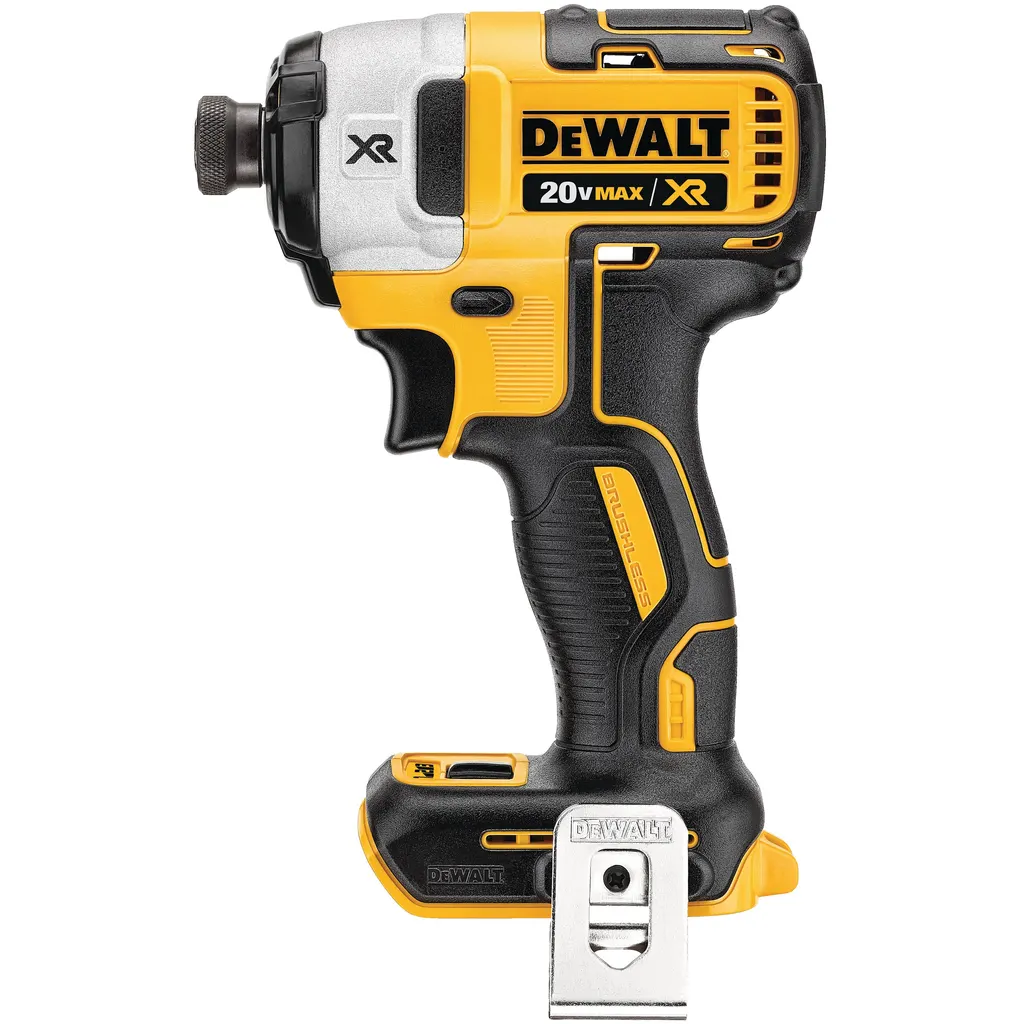
DeWalt DCF887B
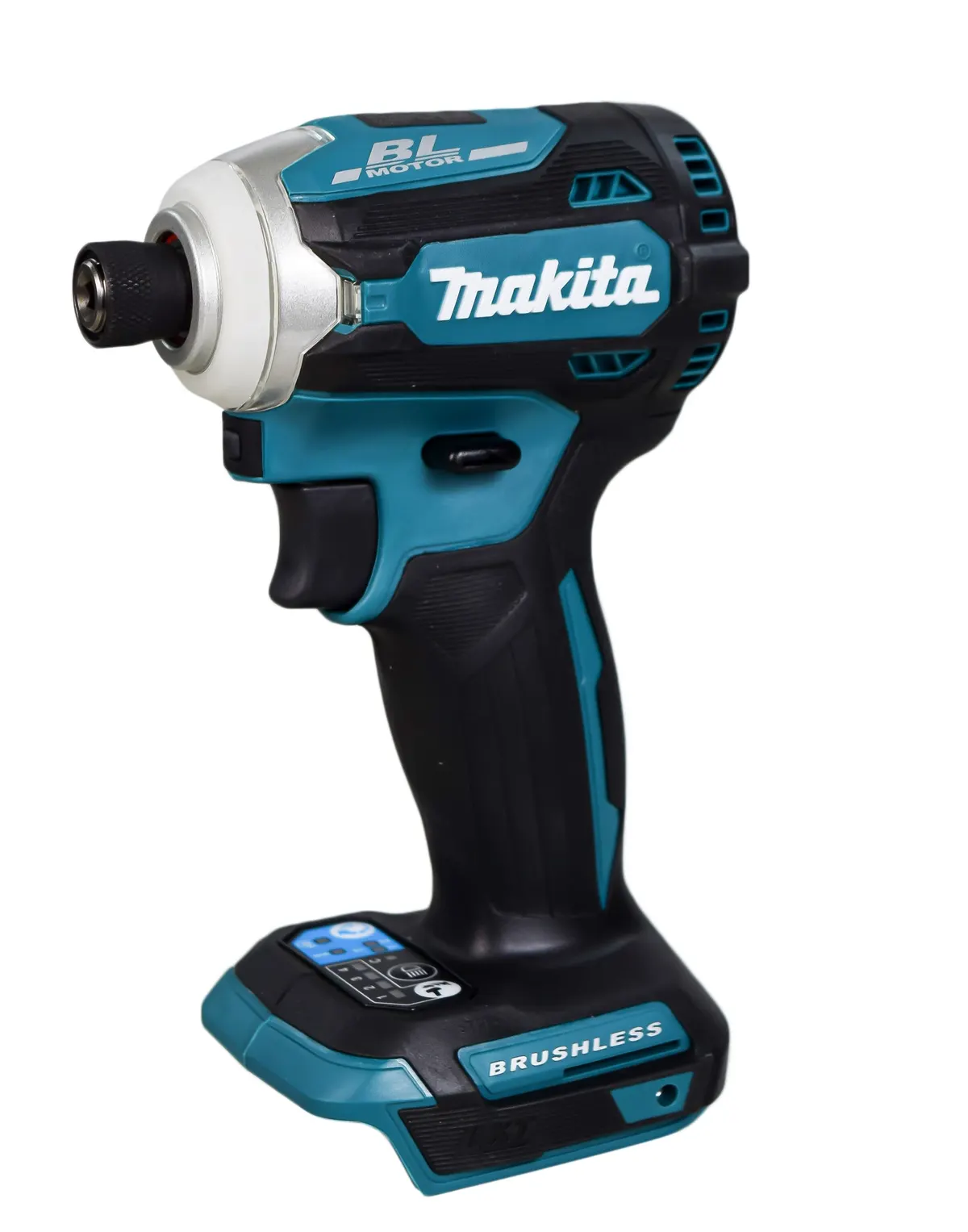
Makita XDT16Z
| Spec | DeWalt DCF887B | Makita XDT16Z |
|---|---|---|
| Max torque | 1,825 in-lbs | 1,600 in-lbs |
| Top no-load speed | 0–3,250 RPM (3-speed) | 0–3,600 RPM (4-speed) |
| Impact rate | 0–3,800 IPM | 0–3,800 IPM (top speed) |
| Speed modes | 3-speed (incl. Precision Drive) | 4-speed Quick-Shift Mode + T-mode |
| Weight | 2.0 lbs (bare tool) | 1.9 lbs (bare tool) |
| Head length | 5.3 in. | 4.6 in. |
| LED lighting | 3-LED array around collet | Single LED (motor housing) |
| Bare-tool price | $139–$159 | $189–$199 |
| Battery platform | 20V MAX / FLEXVOLT compatible | 18V LXT (300+ tools) |
| Warranty | 3-year limited, 1-year service, 90-day money-back | 3-year limited (tool) |
Two different takes on the 18V impact driver
The DeWalt DCF887B and the Makita XDT16Z are the two most specification-dense compact impact drivers in the professional 18V class, and they arrive at their designs from opposite directions. DeWalt's approach emphasizes maximum torque output in the lightest, most compact body at the sharpest price — the DCF887B produces 1,825 in-lbs, weighs exactly 2.0 lbs bare, and retails for $149. Makita's approach prioritizes speed-control sophistication: the XDT16Z runs four discrete speed settings with load-sensing Quick-Shift intelligence and T-mode tightening, delivers 1,600 in-lbs, and costs $40–$50 more bare.
For a buyer starting fresh with no battery investment, the price gap is meaningful at this end of the market. For a buyer already loyal to one platform, the decision is already made and the comparison exists only to confirm it.
Torque: where the DeWalt leads
At 1,825 in-lbs, the DCF887B holds the torque record in this pairing by a 225 in-lb margin. That advantage is most visible at the top of each driver's capability range — specifically on 3/8-inch lag bolts into dense hardwood, 3-inch structural screws through double lumber, and self-tapping metal framing screws through commercial-gauge steel track and stud. For those fastener types, the DeWalt finishes the job without stalling; the Makita reaches its limit a step sooner.
For the work that makes up the majority of a carpenter's or electrician's day — Phillips-head deck screws, cabinet fasteners, drywall screws, and conduit connector hardware — both drivers deliver torque well in excess of what any of those fasteners require. The 225 in-lb gap disappears entirely in everyday driving.
Speed is the one area where the Makita runs ahead: its 0–3,600 RPM top-end gear beats the DeWalt's 0–3,250 RPM. Both tools hit 3,800 IPM at their respective top speeds, so impact frequency is equal; the Makita simply reaches maximum impact speed while spinning the bit slightly faster between blows. For fast-moving installation work, the difference is marginal.
Speed control sophistication
The XDT16Z's four-speed Quick-Shift Mode is the feature that justifies its price premium for the right buyer. Speeds 1 and 2 cover precision and light-duty work at 1,100 and 2,100 RPM respectively; Speeds 3 and 4 move into general construction and structural territory at 3,200 and 3,600 RPM. The Quick-Shift electronics read the fastener's load characteristic and shift automatically between these settings rather than requiring the user to preselect — the result is better control at the start of a screw and more efficient driving in the mid-torque zone.
The T-mode tightening intelligence is the more practically impressive feature for finish work. As a fastener approaches full seating, T-mode detects the change in resistance curve and downshifts automatically to a gentler final tightening. On composite decking boards — where overdriving a screw produces a stress crack around the head — this single feature can prevent callbacks and rework on an entire deck job.
The DCF887B's Speed 1 Precision Drive accomplishes something similar via a simpler method: below a torque threshold, the tool's hammering action shuts off entirely and the driver behaves like a standard non-impact driver. For cabinet hinges, trim screws, and electronic hardware where hammering strips small fasteners, Speed 1 on the DeWalt is a reliable solution. For composite, PVC, and other materials where the exact final tightening torque matters, the Makita's sensing electronics are the more sophisticated tool.
Ergonomics and build quality
The most useful physical difference between these two tools is head length. At 4.6 inches, the XDT16Z's motor-to-chuck dimension is 0.7 inches shorter than the DCF887B's 5.3 inches. That gap is meaningful in 16-inch on-center stud bays, cabinet interiors, and electrical box fastening where the long axis of the tool determines whether the driver fits the space. For a finish carpenter reaching into tight cabinets repeatedly, the XDT16Z's shorter head reduces the number of times the tool does not fit.
The DeWalt answers with a superior lighting arrangement. Its three-LED array positioned around the collet collar illuminates the workpiece from multiple angles, canceling the shadow that a single under-trigger lamp casts across the bit tip. In dark wall cavities, dim attic spaces, and interior cabinet work, three-point lighting around the chuck is the correct design and the Makita's single housing LED does not match it.
Both tools use rubberized over-molded handles. The DCF887B's grip is slightly larger in circumference, which some users prefer for sustained driving; the XDT16Z's grip tapers forward, enabling a tighter hold during one-handed use. Neither is notably uncomfortable — the ergonomic preference divides users fairly evenly.
Platform depth and pricing
Both 18V platforms are vast. Makita's LXT covers over 300 tools; DeWalt's 20V MAX extends to FLEXVOLT compatibility for high-demand tools. Neither brand has a meaningful advantage in sheer breadth at this voltage class.
The price gap is real and significant. At $149 bare versus $195 bare, the DCF887B is $46 cheaper while delivering higher torque. That math makes the DeWalt the obvious pick for a first-time buyer or anyone who needs a high-torque impact driver without a strong battery-platform loyalty. For the XDT16Z to win the value argument, the buyer needs to be an existing LXT user who will put the Quick-Shift and T-mode features to productive use.
Who should buy which
Buy the DeWalt DCF887B if you want the highest torque in this comparison, the best worklight arrangement, a lower price, and a strong warranty — or if you are already on the 20V MAX platform. It is the stronger all-around performer for structural fastening and general construction.
Buy the Makita XDT16Z if you are on the LXT platform, do varied finish and structural fastening in the same session, and will actively use the four-speed Quick-Shift Mode and T-mode tightening. The precision advantages are genuine for the right kind of work — cabinet installation, composite decking, PVC trim, and mixed-material fastening where fastener sensitivity matters.
Advertisement
Frequently asked questions
- Is the DeWalt DCF887B more powerful than the Makita XDT16Z?
- Yes — the DCF887B produces 1,825 in-lbs of maximum torque against the XDT16Z's 1,600 in-lbs, a 225 in-lb margin that shows up most noticeably at the top of each driver's capability range. For 3/8-inch lag bolts into dense lumber or 3-inch structural timber screws, the DeWalt finishes the fastener where the Makita may require a second pass at maximum speed. For standard deck screws, cabinet hardware, and drywall fastening, both drivers deliver more torque than the fastener requires and the gap is imperceptible.
- What does the Makita XDT16Z's four-speed Quick-Shift Mode actually do?
- Quick-Shift Mode reads the load on the fastener electronically and automatically steps between four speed-torque settings to find the most efficient balance for that specific fastener and material. At the low end, Speed 1 starts each fastener slowly to prevent cross-threading and bit walking; at the top end, Speed 4 opens to full 3,600 RPM and 3,800 IPM for structural fastening. The Tightening Mode (T-mode) also slows the driver automatically before a fastener fully seats, preventing thread stripping on composite decking and soft-wood trim. These electronics matter most for finish carpenters driving a range of fastener sizes in the same session.
- Which impact driver is more compact?
- The Makita XDT16Z has the shorter, lighter body — 4.6 inches long and 1.9 lbs bare versus the DCF887B's 5.3 inches and 2.0 lbs. The extra 0.7 inches of head length on the DeWalt may seem minor, but it is meaningful in tight framing bays and cabinet face-frame access. For overhead fastening where arm fatigue accumulates, the slightly lighter Makita is the more comfortable tool over a full day.
- Does the DeWalt DCF887B have a precision drive mode like the Makita's T-mode?
- Speed 1 on the DCF887B operates at 0–1,000 RPM and eliminates hammering below a torque threshold, effectively creating a precision driving mode for delicate trim screws and cabinet hardware. It is not identical to the Makita's T-mode — the DeWalt shuts off hammering based on a speed setting rather than monitoring the fastener's resistance curve — but it accomplishes a similar goal of protecting delicate fasteners from overdriving. For pure precision work, the Makita's electronics are more sophisticated; for most production fastening, Speed 1 on the DeWalt is equally practical.
- Which driver should I buy if I already own batteries?
- Follow your battery platform without hesitation. If you own 20V MAX or FLEXVOLT packs, the DCF887B gives you the highest torque in this pairing with the best worklight arrangement at a lower price. If you own 18V LXT packs, the XDT16Z drops right into your existing system with superior speed-control sophistication. Neither tool's performance advantage is large enough to justify buying into a second battery platform.