
Bosch GDX18V-1800CN Freak vs DeWalt DCF887B Impact Driver (2026)
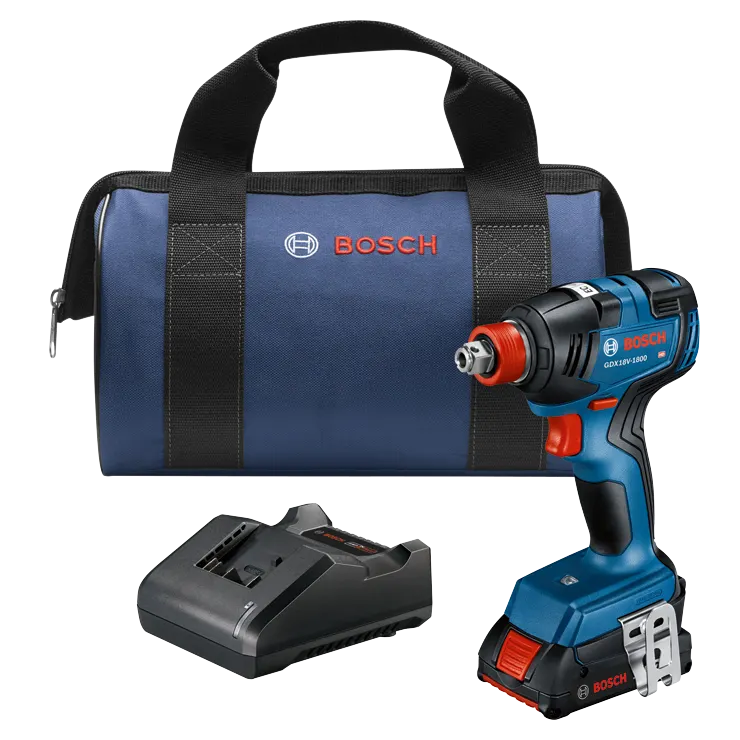
Bosch GDX18V-1800CN Freak
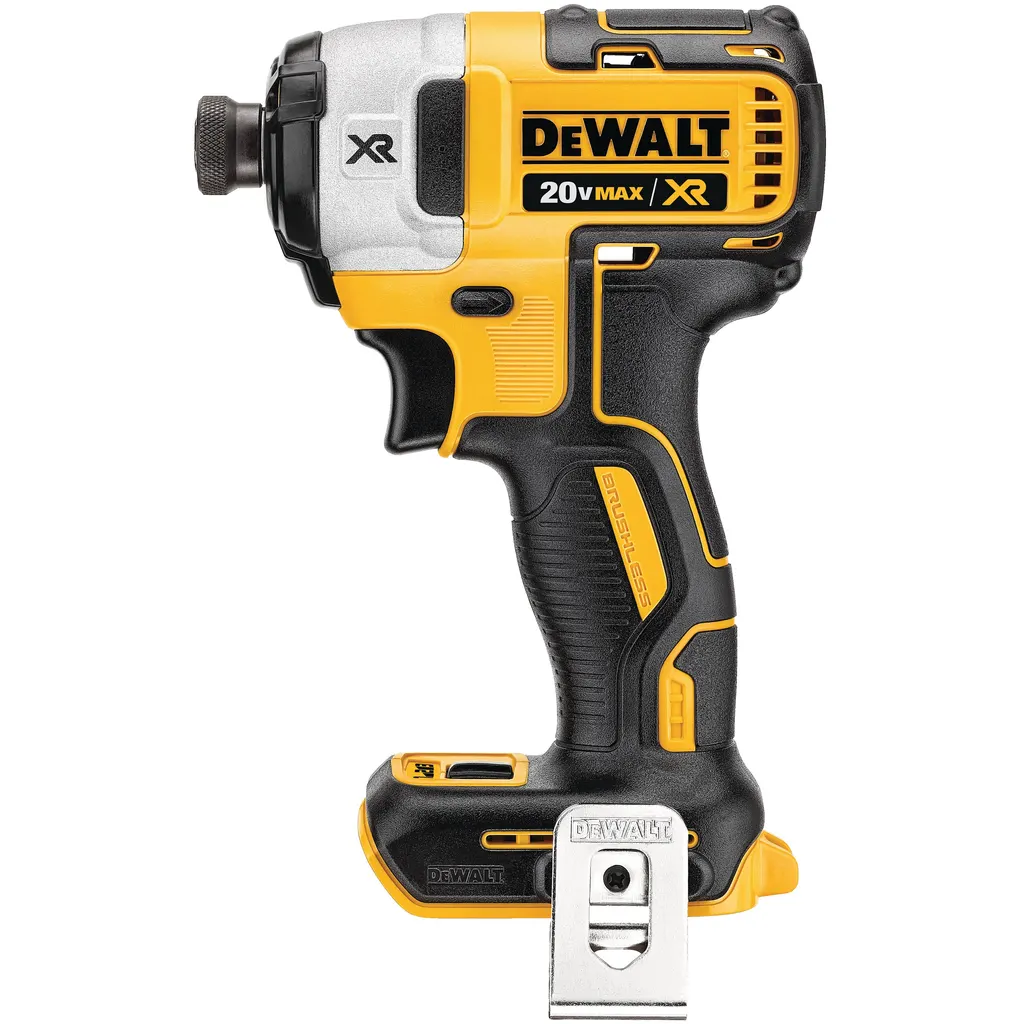
DeWalt DCF887B
| Spec | Bosch GDX18V-1800CN Freak | DeWalt DCF887B |
|---|---|---|
| Max torque | 1,800 in-lbs | 1,825 in-lbs |
| Top impact rate | 4,200 IPM | 3,800 IPM |
| Top no-load speed | 0–2,800 RPM (3-speed) | 0–3,250 RPM (3-speed) |
| Chuck system | 1/4 in. hex + 1/2 in. square drive (dual) | 1/4 in. hex quick-change only |
| Weight | 2.5 lbs (bare tool) | 2.0 lbs (bare tool) |
| Head length | 5.8 in. | 5.3 in. |
| Speed modes | 3-speed (no Precision Drive) | 3-speed (incl. Precision Drive in Speed 1) |
| Bare-tool price | $149–$169 | $139–$159 |
| Battery platform | Bosch 18V AMPShare | 20V MAX / FLEXVOLT |
| Warranty | 1-year full, 2-year limited | 3-year limited, 1-year service, 90-day money-back |
A novel design meets the reigning torque champion
The Bosch GDX18V-1800CN Freak and the DeWalt DCF887B are both premium 18V brushless impact drivers priced at $149–$169 bare, and on paper they look closely matched — 1,800 vs 1,825 in-lbs of torque, 3-speed control on both, similar kit pricing. The difference that matters is structural: the Freak has two chuck interfaces; the DeWalt has one, done better.
That divergence in design philosophy creates two tools that serve legitimately different buyers, which is unusual in a product segment where most tools converge on the same specifications. Understanding which design serves your work is the entire comparison.
What the Freak's dual chuck actually means on the job
Bosch's combined chuck assembly places a 1/4-inch hex collet and a 1/2-inch square drive in a single compact package. There is no switching mechanism, no adapter to pocket and lose — both interfaces are simultaneously present. For a plumber running PEX fittings alongside pipe flange bolts, or an HVAC technician threading screws and socket-drive hardware in the same rough-in pass, this eliminates the choice between carrying an impact driver and a separate impact wrench.
That dual capability is genuine and it has a genuine physical cost. The Freak's head is 5.8 inches long — 0.5 inches longer than the DCF887B's 5.3 inches — and it weighs 2.5 lbs bare against the DeWalt's 2.0 lbs. In framing bays where head clearance determines whether the driver fits a stud bay, that half-inch matters. Over a full day driving screws on a framing crew, the extra half-pound accumulates in the forearm.
For tradespeople whose work is entirely screw-driving, the dual chuck is dead weight — and the DeWalt is the better choice on size, weight, torque, and price.
Impact rate: the Bosch's genuine advantage
The GDX18V-1800CN's 4,200 IPM maximum impact rate is higher than the DeWalt's 3,800 IPM by 400 impacts per minute — the largest single specification gap between these two tools. In dense materials — hardwood decking, structural LVL lumber, and self-tapping screws through commercial-gauge metal framing — faster cycling maintains momentum through material resistance and reduces the momentary stalling that slower-cycling drivers exhibit. In softwood framing and standard interior fastening, the difference is difficult to detect in practice.
For a tradesperson whose work frequently involves dense or hard materials, the Freak's higher IPM is a real performance advantage. For general interior construction and drywall work, the gap closes to insignificant.
Speed control: where the DeWalt leads
The DCF887B's three-speed system includes a Precision Drive mode in Speed 1: at 0–1,000 RPM with no hammering below threshold, it converts the impact driver into a standard driver for delicate applications. Cabinet hinges, trim screws, and electronic hardware that strip easily under impact action are all handled cleanly by Speed 1 on the DCF887B.
The Bosch Freak's three speeds cover the range from 1,300 to 2,800 RPM, but none of them eliminate the hammering action for precision fastening. For a tradesperson who never drives delicate trim hardware, this is irrelevant. For a contractor mixing finish and structural work on the same day, the DCF887B's Precision Drive is the more versatile tool.
The DCF887B also achieves a higher top RPM at 3,250 against the Freak's 2,800, meaning the DeWalt spins the bit faster between blows at maximum speed. Combined with its Precision Drive capability, the three-speed system on the DeWalt is better calibrated for mixed-duty work than the Freak's equivalent three-speed range.
Platform, warranty, and value
The DeWalt 20V MAX / FLEXVOLT ecosystem is substantially larger than Bosch's AMPShare 18V lineup, offering more tool models, more battery options including FLEXVOLT high-capacity packs, and typically more promotional kit configurations. For a buyer adding this driver to an existing tool collection, platform breadth translates directly to battery-investment value.
Warranty coverage also favors the DeWalt meaningfully: three years limited plus one year free service and a 90-day money-back guarantee versus the Bosch's one-year full and two-year limited coverage. At comparable bare-tool prices, the DeWalt's warranty provides substantially more post-purchase security.
Who should buy each tool
Buy the DeWalt DCF887B if your work is primarily screw-driving — framing, drywall, cabinet installation, electrical rough-in — and you want the highest torque, a lighter and shorter body, Precision Drive for delicate fastening, the deeper battery ecosystem, and a stronger warranty at the same price.
Buy the Bosch GDX18V-1800CN Freak if you regularly drive both hex-bit fasteners and 1/2-inch socket bolts on the same job, are already on AMPShare, and want to carry one impact tool rather than two. The dual-chuck design is genuinely useful — but only if that mixed-fastener workflow describes your actual work rather than an edge case.
Advertisement
Frequently asked questions
- What makes the Bosch GDX18V-1800CN Freak different from a standard impact driver?
- The Freak's defining feature is its combined chuck assembly: the inner portion is a standard 1/4-inch hex collet for driver bits, and the outer sleeve is a 1/2-inch square drive for sockets. No adapter is required to switch between the two interfaces — you insert a hex bit directly, or slide a socket onto the square drive. This makes the Freak genuinely useful for plumbers, HVAC techs, and multi-trade contractors who drive both screws and 1/2-inch bolts in the same session without carrying a separate impact wrench.
- Is the DeWalt DCF887B more powerful than the Bosch GDX18V-1800CN?
- By the narrowest margin: the DCF887B delivers 1,825 in-lbs of maximum torque against the Freak's 1,800 in-lbs. That 25 in-lb difference is effectively imperceptible in real-world use — both tools handle the same fasteners at the top of their ranges and neither sinks 4-inch lag bolts into hardwood comfortably. The Bosch holds a more meaningful edge in impact rate at 4,200 IPM versus 3,800 IPM, which shows up in dense materials where cycling speed matters more than peak torque.
- Does the Bosch Freak replace an impact wrench?
- Not entirely. The Freak's 1/2-inch square drive and 1,800 in-lbs handle 1/2-inch pipe flange nuts, valve body fasteners, and typical conduit hardware comfortably. For passenger vehicle lug nuts torqued to factory specification (80–100 ft-lbs), it has sufficient loosening torque under normal conditions. For seized, corroded, or overtightened fasteners requiring 300+ ft-lbs, a dedicated impact wrench is the right tool — the Freak is a capable backup for bolt-driving, not a primary garage wrench.
- Which driver is better in tight spaces?
- The DeWalt DCF887B fits more easily into confined spaces. Its 5.3-inch head length is 0.5 inches shorter than the Freak's 5.8 inches, and its 2.0-lb bare weight is 0.5 lbs lighter. Both differences are a direct consequence of the Freak's dual-chuck mechanism — the extra length and mass are the physical cost of the integrated socket drive. For framing carpenters and electricians who work primarily in hex-bit territory, the DeWalt's more compact body is simply the better fit.
- Is the Bosch AMPShare battery platform a risk for a new buyer?
- Bosch's AMPShare 18V platform is smaller than DeWalt's 20V MAX or Makita's LXT ecosystem in terms of total tool count, but it covers the core professional tools most users need: drill/drivers, circular saws, reciprocating saws, rotary hammers, and grinders. For a tradesperson who already uses Bosch Professional (blue line) tools, AMPShare integration is a genuine advantage. For a buyer starting fresh with no brand allegiance, DeWalt's 20V MAX offers a broader selection and typically more promotional kit pricing.